
Navigating the legal processes of personal administration can often feel like a complex journey, especially when considering significant life changes. For residents of the Sunshine State, understanding how to formally change one’s name in Florida is a crucial step for many, whether due to marriage, divorce, personal preference, or other significant life events. This process, while involving specific legal requirements, is designed to be accessible to all residents who wish to update their legal identity. The primary method for a name change in Florida is through a court order, a detailed procedure that ensures the change is legally recognized and documented.
The Legal Framework for Name Changes in Florida
In Florida, the legal process for changing your name is governed by statutes that outline the necessary steps and documentation. The most common route involves petitioning a Florida Circuit Court. This court has the authority to grant a formal name change, which will then be reflected on all official documents, including your birth certificate, driver’s license, social security card, and passport. It’s important to note that while the process is generally straightforward, adherence to specific legal procedures is paramount to ensure the validity of the name change.
Petitioning the Court
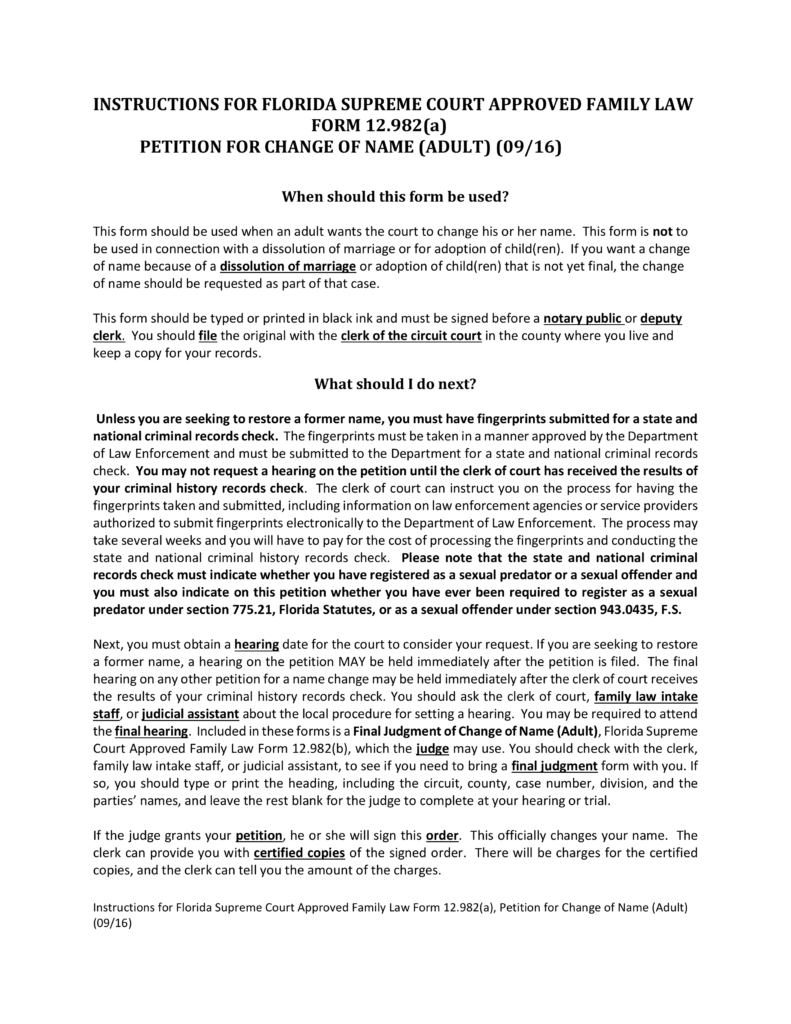
The first formal step is to file a “Petition for Change of Name” with the Clerk of the Circuit Court in the county where you reside. This petition is a legal document that formally requests the court to grant your name change. It requires specific information, including your current legal name, the desired new name, your date of birth, your address, and a clear statement of the reason for the name change.
Key Information Required in the Petition:
- Current Legal Name: Your name as it appears on your birth certificate or most recent legal identification.
- Proposed New Name: The exact name you wish to be legally known by. This can include a new first name, middle name, last name, or any combination thereof.
- Date and Place of Birth: Essential for identifying you accurately within the legal system.
- Current Residential Address: Demonstrates residency within the court’s jurisdiction.
- Reason for Name Change: While not always requiring extensive detail, a clear and lawful reason is necessary. Common reasons include marriage, divorce, personal preference for a name that better reflects identity, or to escape a history of abuse. It’s important to note that name changes cannot be sought to defraud creditors or evade legal obligations.
- Affirmation of No Fraudulent Intent: The petition must include a statement that the requested name change is not for fraudulent purposes.
Required Supporting Documents
Beyond the petition itself, several supporting documents are typically required. These may include:
- Proof of Identity: A valid government-issued photo ID, such as a driver’s license or passport.
- Proof of Residency: Utility bills, lease agreements, or voter registration cards showing your address in the county.
- Criminal Background Check: In most cases, you will need to provide a criminal history report from the Florida Department of Law Enforcement (FDLE) and potentially a national report from the FBI. This is to ensure the name change is not sought to evade law enforcement or criminal proceedings.
- Fingerprints: You may be required to submit fingerprints for the criminal background check.
The Publication Requirement
A crucial aspect of the Florida name change process is the requirement for public notice. This is designed to inform any potential creditors or interested parties of your intent to change your name. You will typically need to publish a notice of your petition in a newspaper of general circulation in your county of residence for a specified period, usually for a certain number of weeks. The court clerk will provide information on approved newspapers and the exact publication requirements. After publication, you will need to file an affidavit with the court proving that the notice was published as required. This step ensures transparency and allows anyone with a valid objection to come forward.
The Court Hearing
Once all documents are filed and the publication period has concluded, the court will schedule a hearing. At this hearing, the judge will review your petition and supporting documents. You, or your attorney, will be present to answer any questions the judge may have. If all requirements have been met and there are no valid objections, the judge will grant the name change and issue a “Final Judgment of Name Change.” This document is the official court order that legally changes your name.
Special Circumstances and Exceptions
While the general court order process applies to most adult name changes, there are specific scenarios and exceptions that are important to understand.
Name Changes for Minors
Changing the name of a minor is a more complex process and requires the consent of both parents, unless one parent has been legally declared unfit or is unavailable. If both parents do not consent, the petitioning parent must demonstrate to the court that the name change is in the best interest of the child. A court hearing is almost always required, and the child may be present to express their wishes, depending on their age and maturity. The petition must clearly outline the reasons for the name change and how it benefits the child.

Name Changes Due to Marriage
In Florida, changing your name due to marriage is often a simpler process and does not typically require a separate court petition. When you obtain a marriage license and the marriage is solemnized, your marriage certificate serves as legal proof of your new name. You can then present this certificate to the Social Security Administration, Department of Motor Vehicles, and other relevant agencies to update your identification. However, if you wish to change your name to something other than a common marital surname change (e.g., combining surnames or adopting a completely new one), the standard court order process would be necessary.
Name Changes Due to Divorce
Following a divorce, a party may wish to revert to their maiden name or a prior surname. This can often be requested as part of the divorce proceedings. The final judgment of divorce can include a provision that legally restores your former name. If this was not addressed in the divorce decree, or if you are seeking to change to a name different from your maiden name, you will need to follow the standard court petition process outlined previously.
Name Changes for Criminal Record Expungement or Sealing
Individuals seeking to change their name as part of a process related to expunging or sealing criminal records must follow specific legal guidelines. While the name change petition itself is a court process, the underlying reasons for the name change must be legitimate and not for the purpose of evading legal responsibility. The court will scrutinize such requests carefully.
Updating Your Identification After a Name Change
Receiving the Final Judgment of Name Change from the court is a significant milestone, but the process isn’t complete until your identification documents are updated. This is a critical step to ensure your legal identity aligns with your everyday life and facilitates all official transactions.
Social Security Administration (SSA)
Your first stop should be the Social Security Administration (SSA). You will need to visit a local SSA office with your court order and a valid form of identification (like a driver’s license or passport with your old name). You’ll fill out a Form SS-5, Application for a Social Security Card, and they will issue you a new card with your updated name. This is essential because your Social Security number is linked to your legal identity.
Driver’s License or State ID
Next, you’ll need to visit the Florida Department of Highway Safety and Motor Vehicles (FLHSMV) to update your driver’s license or state identification card. You will need to present your original Final Judgment of Name Change, your current driver’s license or ID, and potentially other supporting documents as required by the FLHSMV. There will be a fee associated with issuing a new license or ID.
Passport
If you have a U.S. passport, you’ll need to apply for a new one with your updated name. The process depends on when your current passport was issued. If it was issued less than one year ago, you can generally use Form DS-5504, Application for a U.S. Passport – Name Change, Data Correction, and You Can Also Replace a Lost or Stolen Passport. If it was issued more than one year ago, or if you have a U.S. passport card, you will likely need to use Form DS-11, Application for a U.S. Passport, and appear in person at a passport acceptance facility. You will need your original name change court order and other required documentation.
Other Important Institutions
Beyond these primary documents, you will need to notify numerous other institutions and update your name on various records:
- Banks and Financial Institutions: Inform your bank, credit card companies, and any other financial institutions where you hold accounts.
- Employer: Update your employee records with your human resources department.
- Voter Registration: Register to vote under your new name with your local Supervisor of Elections.
- Landlord or Mortgage Company: Inform your landlord if you rent or your mortgage company if you own property.
- Insurance Providers: Update your name on all insurance policies (health, auto, home, life).
- Schools and Universities: If applicable, update your records with any educational institutions you are affiliated with.
- Professional Licenses: If you hold any professional licenses (e.g., for nursing, law, real estate), contact the relevant licensing board.
- Post Office: While not a formal legal step, informing your local post office can help ensure mail delivery.
- Online Accounts: Update your name on social media, email accounts, and any other online platforms.
Seeking Legal Assistance
While many individuals navigate the name change process in Florida without legal representation, consulting with an attorney can be highly beneficial, especially in complex cases. An experienced family law attorney can ensure that your petition is correctly filed, all necessary documentation is provided, and that you understand the implications of the name change. They can also represent you in court, answer judge’s questions, and help expedite the process. For minor name changes, name changes involving criminal record issues, or any situation where there is potential for opposition, legal counsel is strongly recommended. Many attorneys offer initial consultations at no charge, allowing you to discuss your specific situation and determine if legal assistance is appropriate for you.
Understanding and adhering to the legal requirements is key to a successful name change in Florida. By carefully following the steps outlined, from petitioning the court to updating your identification, you can ensure your legal identity is accurately reflected, allowing you to move forward with confidence.
LifeOutOfTheBox is a participant in the Amazon Services LLC Associates Program, an affiliate advertising program designed to provide a means for sites to earn advertising fees by advertising and linking to Amazon.com. Amazon, the Amazon logo, AmazonSupply, and the AmazonSupply logo are trademarks of Amazon.com, Inc. or its affiliates. As an Amazon Associate we earn affiliate commissions from qualifying purchases.