
The question “How long are the Florida Keys?” is deceptively simple, inviting a straightforward answer that belies the true complexity and charm of this unique archipelago. Stretching southwest from mainland Florida into the turquoise embrace of the Gulf of Mexico and the Atlantic Ocean, the Keys are not a single entity but a chain of over 1,700 islands, islets, and coral reefs. When people ask about their “length,” they are typically referring to the main inhabited islands connected by the iconic Overseas Highway, a feat of engineering that spans approximately 113 miles from Key Largo to the furthest point in Key West. However, to truly understand the “length” of the Florida Keys is to appreciate the journey, the experiences, and the distinct character of each segment of this captivating destination.

The Measured Miles: From Key Largo to Key West
The most commonly cited measurement for the length of the Florida Keys refers to the contiguous chain of islands accessible by road. This journey begins at the northernmost inhabited island, Key Largo, and concludes at the southernmost point of the continental United States, Key West.
Key Largo: The Dive Capital and Northern Gateway
Key Largo, often referred to as the “Dive Capital of the World,” marks the beginning of the road-accessible Keys. Famous for the John Pennekamp Coral Reef State Park, the first underwater park in the United States, it’s a paradise for snorkelers and divers eager to explore vibrant coral formations and shipwrecks like the Christ of the Deep statue. While not a significant stretch in terms of linear distance from the mainland, its identity as the start of the island chain gives it a unique place in the Keys’ overall narrative.
Islamorada: The Sportfishing Capital
Continuing south, the Islamorada “village” of islands, comprising five distinct keys, is renowned as the Sportfishing Capital of the World. Here, the focus shifts from underwater exploration to the thrill of the catch. The rich offshore waters teem with a variety of game fish, attracting anglers from across the globe. The length of the islands themselves is relatively short, but the reputation and the depth of the sportfishing experience make it a crucial stop.
Marathon: The Middle Keys Hub
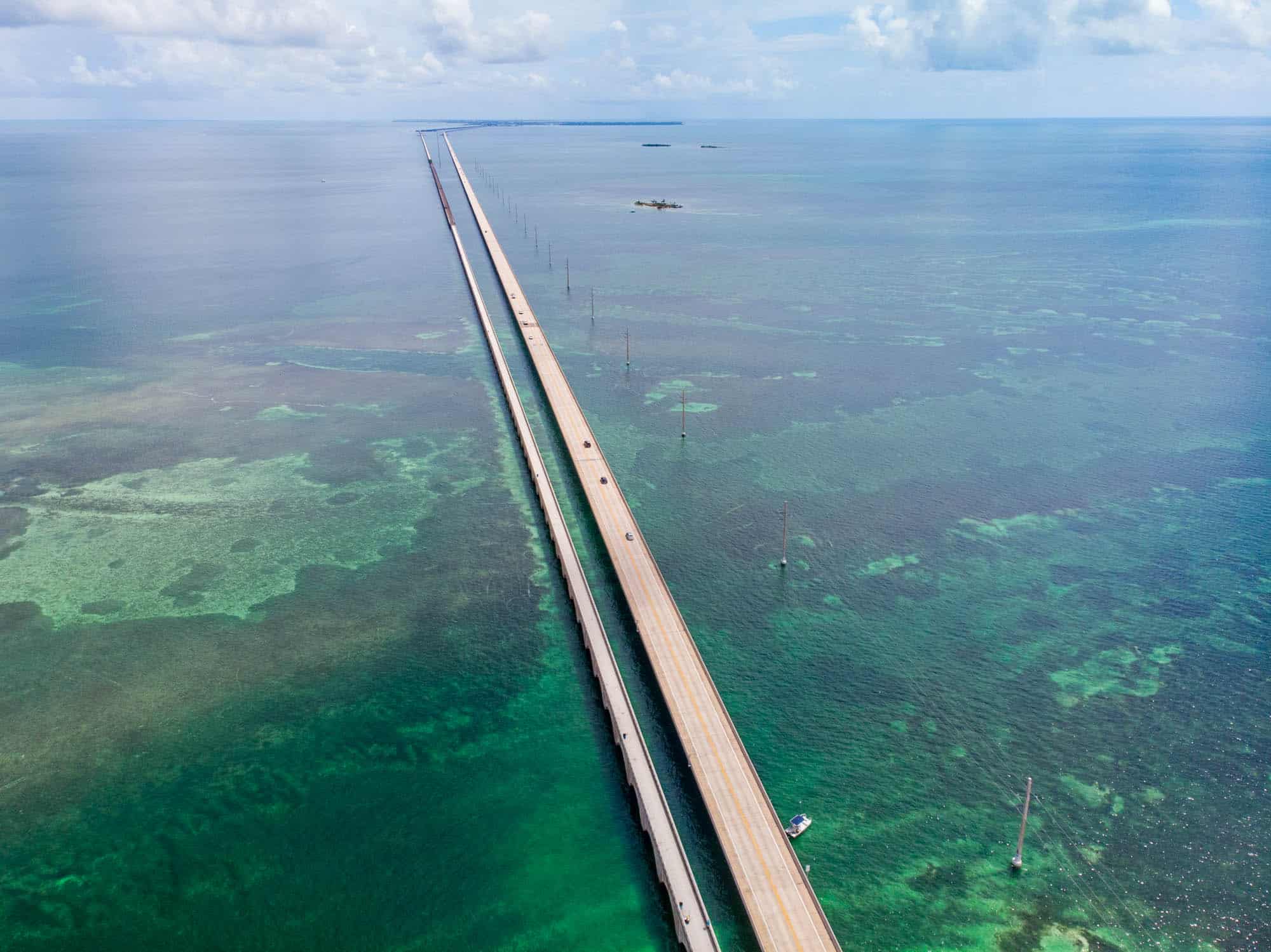
Marathon, situated in the heart of the Florida Keys, serves as a central hub and offers a diverse range of activities. It’s home to the Seven Mile Bridge, an engineering marvel that was once part of Henry Flagler’s Overseas Railroad and now offers breathtaking views for those who traverse its modern counterpart. The length of Marathon itself is several miles, but its strategic location makes it a vital point along the 113-mile journey. Attractions like the Turtle Hospital and pristine beaches contribute to its appeal.
Big Pine Key and the Lower Keys
As you venture further south, the landscape becomes more wild and less developed. Big Pine Key is the largest island in the Lower Keys and is known for the endangered Key deer, a unique subspecies that roams the protected areas. The National Key Deer Refuge encompasses a significant portion of this island and others nearby. The drive through the Lower Keys is characterized by causeways interspersed with natural beauty, offering glimpses of mangrove forests and tranquil waters.
Key West: The Southernmost City
The ultimate destination, Key West, is a vibrant and historic city located at the very end of the Overseas Highway. While the island itself is only about 4 miles long and 2 miles wide, its cultural significance, artistic flair, and unique atmosphere make it feel like a world apart. The journey to Key West from Key Largo is approximately 113 miles, a drive that is as much about the destination as the passage.
Beyond the Road: The Archipelago’s True Extent
The 113-mile measurement of the Overseas Highway only accounts for the main, inhabited islands connected by road. The Florida Keys archipelago is far more extensive, encompassing a vast network of smaller islands, uninhabited cays, and vital coral reef systems that stretch further into the ocean.
The Uninhabited Cays and National Wildlife Refuges
Scattered throughout the Keys are numerous uninhabited cays and islands, many of which are protected as national wildlife refuges or state parks. These areas, such as the Great White Heron National Wildlife Refuge and the National Key Deer Refuge, extend the ecological “length” of the Keys considerably, forming a crucial sanctuary for diverse wildlife, including migratory birds and marine life. Access to many of these is by boat, offering a more secluded and pristine experience of the Keys’ natural environment.
The Submerged Landscape: Coral Reefs and Marine Sanctuaries
Perhaps the most significant, yet often overlooked, “length” of the Florida Keys is its submerged landscape. The Florida Keys National Marine Sanctuary protects a vast area of ocean, encompassing the living coral reef tract that runs parallel to the islands. This reef system, a vital ecosystem for countless marine species, stretches for approximately 126 miles, making it the third-largest barrier reef in the world. The health and preservation of this underwater “length” are critical to the ecological integrity and the continued appeal of the Florida Keys as a destination.
Experiencing the Length: A Journey of Discovery
The question of “how long are the Florida Keys?” is best answered not by a single number, but by the cumulative experience of traversing this extraordinary chain of islands. The 113-mile drive along the Overseas Highway is a journey through distinct microclimates, cultures, and ecosystems.
The Scenic Drive: A Mile-by-Mile Exploration
The Overseas Highway, a continuation of US Route 1, is an attraction in itself. Each mile offers new vistas, from mangrove-fringed coastlines to open ocean panoramas. Stopping in small towns, exploring local seafood shacks, and simply taking in the ever-changing scenery is part of the extended experience. The duration of the drive can vary significantly. A direct, uninterrupted drive from Key Largo to Key West can take around 3.5 to 4 hours. However, this approach misses the essence of the Florida Keys. Most visitors plan for at least a few days, if not a week or more, to truly appreciate the different “lengths” of experience each island offers.
Embracing the Pace of Island Life
The “length” of the Florida Keys is also defined by its pace of life. The laid-back atmosphere encourages visitors to slow down, to savor each moment. Whether it’s kayaking through mangrove tunnels, watching a sunset at Mallory Square in Key West, or enjoying fresh conch fritters, the time spent here feels expansive. The true “length” is measured in memories created and experiences savored, far exceeding the linear mileage of the road.

The Nautical Perspective: Boating and Island Hopping
For those who prefer to explore by water, the “length” of the Florida Keys takes on an entirely different dimension. Boating allows access to secluded beaches, remote fishing spots, and the outer reef system. Island hopping between the larger keys and exploring the smaller, uninhabited ones reveals a more intimate and untamed side of the archipelago. The nautical perspective emphasizes the interconnectedness of these islands, separated by water rather than connected by asphalt.
In conclusion, the question of “how long are the Florida Keys?” is a gateway to understanding a destination that is multifaceted and deeply rewarding. While the 113-mile stretch of the Overseas Highway provides a tangible measurement for the road trip, the true “length” encompasses the ecological expanse of the reef system, the cultural breadth of its island communities, and the immeasurable duration of the memories made during an unforgettable journey.
LifeOutOfTheBox is a participant in the Amazon Services LLC Associates Program, an affiliate advertising program designed to provide a means for sites to earn advertising fees by advertising and linking to Amazon.com. Amazon, the Amazon logo, AmazonSupply, and the AmazonSupply logo are trademarks of Amazon.com, Inc. or its affiliates. As an Amazon Associate we earn affiliate commissions from qualifying purchases.