
When navigating the vibrant and geographically diverse landscape of the San Francisco Bay Area, understanding its public transportation is paramount for any visitor. Chief among the essential transit systems is BART, the Bay Area Rapid Transit. More than just a series of trains, BART is a vital artery connecting San Francisco to its surrounding communities, facilitating commutes, tourism, and everyday life. This comprehensive guide will delve into what BART is, its significance to the region, and how it serves as an indispensable tool for exploring the Golden Gate City and beyond.
Understanding BART: A Public Transit Backbone
BART stands for Bay Area Rapid Transit. It is a heavy rail rapid transit system that serves the San Francisco Bay Area, a metropolitan region encompassing nine counties. Established in the 1960s and opening its first line in 1972, BART was conceived as a solution to the burgeoning traffic congestion and the need for a modern, efficient public transportation network. Its distinctive features include a unique car design, advanced (for its time) automated control systems, and an extensive network of underground, at-grade, and aerial tracks.
The Network and Its Reach
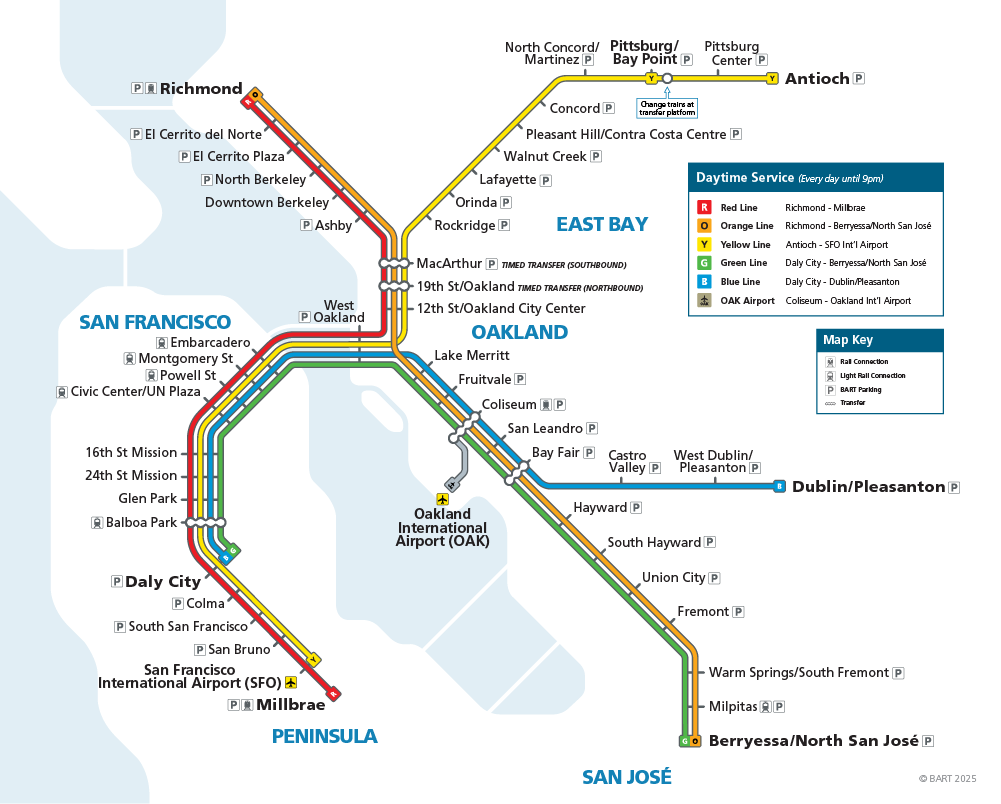
BART operates 131 miles of track and serves 50 stations across five counties: Alameda, Contra Costa, San Mateo, Santa Clara, and San Francisco. Its lines are color-coded for ease of navigation:
- Red Line: Typically connects Richmond to Millbrae, often serving parts of the East Bay and the San Francisco Peninsula.
- Blue Line: Usually runs from Antioch to Dublin/Pleasanton or Warm Springs, serving the eastern and southern parts of the system.
- Green Line: Connects Richmond to Daly City, covering the northern East Bay and parts of the Peninsula.
- Yellow Line: Connects Antioch to San Francisco International Airport (SFO) and Millbrae, offering direct access to the airports and reaching further south on the Peninsula.
- Orange Line: Operates between Richmond and San Jose, providing a long-distance link across several counties.
It is important to note that line designations and terminal stations can vary by time of day and service changes, making it crucial to check real-time schedules.
Connectivity to Key Hubs
BART is strategically designed to connect major population centers and key destinations. It provides direct access to:
- San Francisco International Airport (SFO): A critical link for international and domestic travelers.
- Oakland International Airport (OAK): While not directly served by BART, a free AirTrain connects OAK to the adjacent Coliseum Station.
- Downtown San Francisco: Serving major business districts, shopping areas, and cultural attractions.
- East Bay cities: Including Oakland, Berkeley, and Walnut Creek, offering access to universities, parks, and diverse neighborhoods.
- Peninsula communities: Connecting to cities like San Mateo and Palo Alto.
- South Bay connection: Through the Warm Springs extension, eventually linking to Santa Clara County.
This extensive reach makes BART an essential component of the regional transit ecosystem, often integrated with local bus services, Caltrain, and VTA light rail for last-mile connections.
The BART Experience: Navigating the System
Understanding how to use BART is key to a smooth travel experience in the San Francisco Bay Area. The system is designed for efficiency and accessibility, though like any large urban transit network, it has its nuances.
Fares and Ticketing
BART operates on a distance-based fare system. This means the cost of your ride depends on how far you travel.
- Clipper Card: The primary method of payment is the Clipper Card, a rechargeable transit card used across various Bay Area transit systems. You can purchase a Clipper Card at BART stations, participating retailers, or online. Funds are added to the card, and you tap it at the fare gates to enter and exit the system.
- Mobile Ticketing: BART also offers a mobile ticketing app, allowing riders to purchase tickets directly from their smartphones.
- Paper Tickets: Single-ride paper tickets are available for purchase at station vending machines, though the Clipper Card is generally more convenient for frequent use and offers potential discounts.
When entering BART, you tap your card or ticket at the gate to open it. Upon exiting at your destination, you tap again. The system calculates your fare based on the distance traveled and deducts it from your card. It’s crucial to tap at both entry and exit gates; failing to tap out will result in the maximum fare being charged.
Station Amenities and Accessibility
BART stations are designed with accessibility in mind. Most stations feature:
- Elevators and Escalators: Providing access to all platform levels.
- Tactile Warning Strips: Helping visually impaired passengers navigate platforms.
- ADA Compliant Features: Ensuring that passengers with disabilities can use the system safely and independently.
- Restrooms: Available at most stations.
- Bicycle Parking: Secure bike racks and lockers are provided at many stations, encouraging multi-modal commutes.
- Information Kiosks and Displays: Offering real-time train information and system maps.
Onboard Experience
BART trains consist of several cars, each designed to accommodate a significant number of passengers. Inside, you’ll find:
- Seating: A mix of forward-facing seats and bench-style seating.
- Standing Room: Ample space for passengers during peak hours.
- Overhead Racks: For luggage and larger items.
- Digital Displays: Showing the current location, next stop, and destination.
- Audio Announcements: Informing passengers of upcoming stations.
It’s advisable to listen to announcements and check the digital displays, as station names can sometimes be difficult to discern from the platform.
BART’s Role in Tourism and Local Exploration
For tourists and visitors, BART is an indispensable tool for experiencing the breadth of what the San Francisco Bay Area has to offer, often providing a more convenient and cost-effective alternative to driving and parking.
Exploring San Francisco’s Landmarks
Within San Francisco itself, BART stations serve as gateways to numerous iconic attractions:
- Powell Street Station: Located in the heart of Union Square, it’s an excellent starting point for exploring the city’s premier shopping district, theaters, and hotels like the Fairmont Hotel and the Palace Hotel. From here, you can easily access Cable Cars, the Chinatown district, and the Museum of Modern Art (SFMOMA).
- Embarcadero Station: Situated along the waterfront, this station provides access to the Ferry Building Marketplace with its artisan foods and local vendors, and is a short walk from attractions like the Exploratorium and Pier 39. It’s also a convenient connection point for ferry services across the bay.
- 16th Street Mission and 24th Street Mission Stations: These stations immerse visitors in the vibrant culture of the Mission District, known for its colorful murals, diverse culinary scene featuring some of the best taquerias in the city, and lively atmosphere.
Beyond the City: East Bay and Peninsula Excursions
BART extends its reach far beyond the city limits, enabling exploration of diverse attractions in the surrounding counties:
- Berkeley: A short ride on the Red Line or Green Line from San Francisco brings you to downtown Berkeley. The stations here offer access to the renowned University of California, Berkeley campus, the vibrant Telegraph Avenue with its unique shops and street vendors, and the Berkeley Repertory Theatre.
- Oakland: BART serves multiple stations throughout Oakland, including the Oakland Coliseum Station (for sporting events and concerts) and downtown Oakland stations that connect to the historic Paramount Theatre and the Oakland Museum of California.
- Sausalito and Marin Headlands: While BART doesn’t directly serve Sausalito, you can take BART to the Embarcadero Station and then catch a ferry to Sausalito, a picturesque bayside town known for its art galleries and scenic views.
- San Jose: The extended lines now connect to downtown San Jose, offering access to the San Jose Museum of Art and the historic San Pedro Square Market.
Practical Tips for [BART] Users
To maximize your use of BART and ensure a pleasant journey, consider these practical tips:
Planning Your Trip
- Use the Official BART App or Website: These resources provide real-time train schedules, service advisories, trip planners, and fare information.
- Check for Service Disruptions: BART occasionally experiences delays or track work, especially during weekends. Staying informed can help you adjust your plans accordingly.
- Understand Line Colors and Destinations: While the color coding is helpful, always confirm the final destination of your train, as lines can split or change terminals.
During Your Journey
- Mind the Gap: Be aware of the space between the train and the platform when boarding and alighting.
- Secure Your Belongings: Keep your valuables close and be mindful of your surroundings, especially during crowded times.
- Utilize the First/Last Car: The first and last cars of the train are often less crowded.
- Be Courteous: Offer seats to elderly passengers, pregnant women, or those with disabilities. Keep conversations at a reasonable volume.
- Report Issues: If you encounter any problems or see something suspicious, report it to BART personnel or use the customer service channels.

Connecting to Other Transit
- Seamless Transfers: BART stations often have direct connections to local bus routes, making it easier to reach destinations not directly served by rail. The Clipper Card can often be used on these connecting services as well.
- Caltrain and Amtrak: For longer journeys down the Peninsula or into Northern California, BART stations like Millbrae and San Francisco provide convenient transfer points to Caltrain and Amtrak services.
In conclusion, BART is more than just a train system; it’s the circulatory system of the San Francisco Bay Area. For visitors, understanding its network, fare system, and operational nuances is the first step to unlocking a rich and diverse exploration of San Francisco, its surrounding cities, and the unique spirit of this iconic region.
LifeOutOfTheBox is a participant in the Amazon Services LLC Associates Program, an affiliate advertising program designed to provide a means for sites to earn advertising fees by advertising and linking to Amazon.com. Amazon, the Amazon logo, AmazonSupply, and the AmazonSupply logo are trademarks of Amazon.com, Inc. or its affiliates. As an Amazon Associate we earn affiliate commissions from qualifying purchases.