
The political landscape of the United States is often viewed through the lens of its constituent states, and Florida has, in recent decades, become a prominent focal point in this discussion. Frequently labeled a “red state,” this designation refers to a state that predominantly votes for the Republican Party in presidential and congressional elections. Understanding the duration and nuances of Florida’s red state status requires a deep dive into its historical voting patterns, demographic shifts, and the key political and social factors that have shaped its electoral trajectory. While the term “red state” is a relatively modern political shorthand, the underlying partisan leanings of Florida have evolved over time, with a more pronounced shift towards the Republican Party becoming evident in the latter half of the 20th century and solidifying in the 21st.

The Shifting Sands of Floridian Politics
Historically, Florida was not always the reliably Republican state it is often perceived to be today. For much of its early to mid-20th-century history, Florida leaned Democratic, a reflection of the broader national political alignment of the time. The post-Civil War era saw the South largely dominated by the Democratic Party, and Florida was no exception. This era was characterized by a one-party system where the Democratic Party held sway, influenced by historical legacies and social structures of the time. However, the seeds of change were being sown, driven by a complex interplay of economic development, migration patterns, and evolving national political ideologies.
Early 20th Century: A Democratic Stronghold
From the early 1900s through the mid-1960s, Florida generally cast its electoral votes for Democratic presidential candidates. This period was marked by significant national Democratic policies and a strong regional identity that often aligned with the party. Even as the national political climate began to shift with the Civil Rights Movement and the rise of conservative sentiments in certain parts of the country, Florida remained largely Democratic. The state’s economy was developing, attracting a mix of agricultural interests and a growing tourism sector, particularly in areas like Miami and Tampa. However, these economic drivers did not immediately translate into a partisan realignment.
The Mid to Late 20th Century: A Gradual Transition
The mid-20th century marked a turning point. Several factors began to contribute to Florida’s gradual drift towards the Republican Party. One of the most significant drivers was the massive influx of new residents, particularly retirees and those seeking economic opportunities. Many of these new arrivals came from Northern states, often bringing with them more conservative political leanings that contrasted with the established Democratic base. The Republican Party began to actively court these new demographics, framing its platform as one that favored lower taxes, less government regulation, and a more traditional social agenda, all of which resonated with segments of the burgeoning population.
The Civil Rights Movement also played a crucial role. As the national Democratic Party embraced civil rights legislation, it alienated some conservative Southern Democrats. While Florida was not as deeply entrenched in the same legacy issues as some other Southern states, the national realignment still had an impact. The Republican Party’s “Southern Strategy,” aimed at attracting these disaffected Democrats, found fertile ground in states like Florida.
By the 1960s and 1970s, Florida began to show more divided voting patterns. While still capable of electing Democrats, Republican candidates started to achieve notable successes, particularly in statewide races and congressional elections. The state’s increasing population and its developing urban centers, such as Orlando and Jacksonville, started to create a more complex electoral map, with a growing number of swing districts and a more competitive political environment.
The Solidification of Red: Post-1990s Florida
The true solidification of Florida’s identity as a “red state” can be more accurately traced to the 1990s and the early 21st century. Several key elections and sustained demographic and ideological shifts cemented this status.

The 1990s and Early 2000s: A Republican Ascendancy
The 1990s witnessed a significant increase in Republican victories in Florida. Presidential elections became particularly telling. In 1996, Bob Dole, the Republican nominee, lost Florida to incumbent Bill Clinton, but the margin was closer than in many other Southern states. However, by 2000, Florida was at the center of a historic presidential election. The 2000 United States Presidential Election, famously decided by a narrow margin in Florida after a contentious recount, saw Republican George W. Bush narrowly defeat Democrat Al Gore. This election, while highly contested, underscored the state’s growing Republican leanings and its critical role in national politics.
The momentum continued. In the 2004 election, George W. Bush won Florida more comfortably, solidifying his victory and signaling a clear Republican preference. This period also saw a strong trend of Republican dominance in state-level politics, with the party consistently winning governorships, legislative majorities, and numerous congressional seats.
Key Factors Driving the Red Shift
Several interconnected factors have contributed to Florida’s sustained Republican advantage in recent decades:
- Demographic Evolution: Continued migration from other states, particularly the Midwest and Northeast, has brought a significant number of voters whose political affiliations often lean Republican. Furthermore, the state’s growing elderly population, historically a reliable Republican voting bloc, has played a crucial role. While demographic shifts are complex and ongoing, the overall trend has favored Republican candidates in statewide elections.
- Economic Policies: Florida’s Republican leadership has consistently championed policies aimed at economic growth through reduced taxation and deregulation. These policies, often aligned with the Republican Party’s platform, have appealed to business owners and a significant portion of the population that prioritizes economic freedom and limited government intervention.
- Social Conservatism: While Florida is a diverse state, certain segments of its population hold socially conservative views that align more closely with the Republican Party’s platform on issues such as family values and religious freedom.
- Urban vs. Rural Divide: Like many states, Florida experiences a political divide between its urban centers, which tend to be more Democratic, and its more rural and suburban areas, which lean Republican. As suburban populations have grown and many rural areas have maintained or increased their conservative leanings, the Republican advantage has often been sustained.
- Party Organization and Mobilization: The Republican Party in Florida has historically demonstrated strong organizational capacity and effective voter mobilization strategies, particularly in getting its base to the polls during critical elections.
Florida’s Current Political Standing
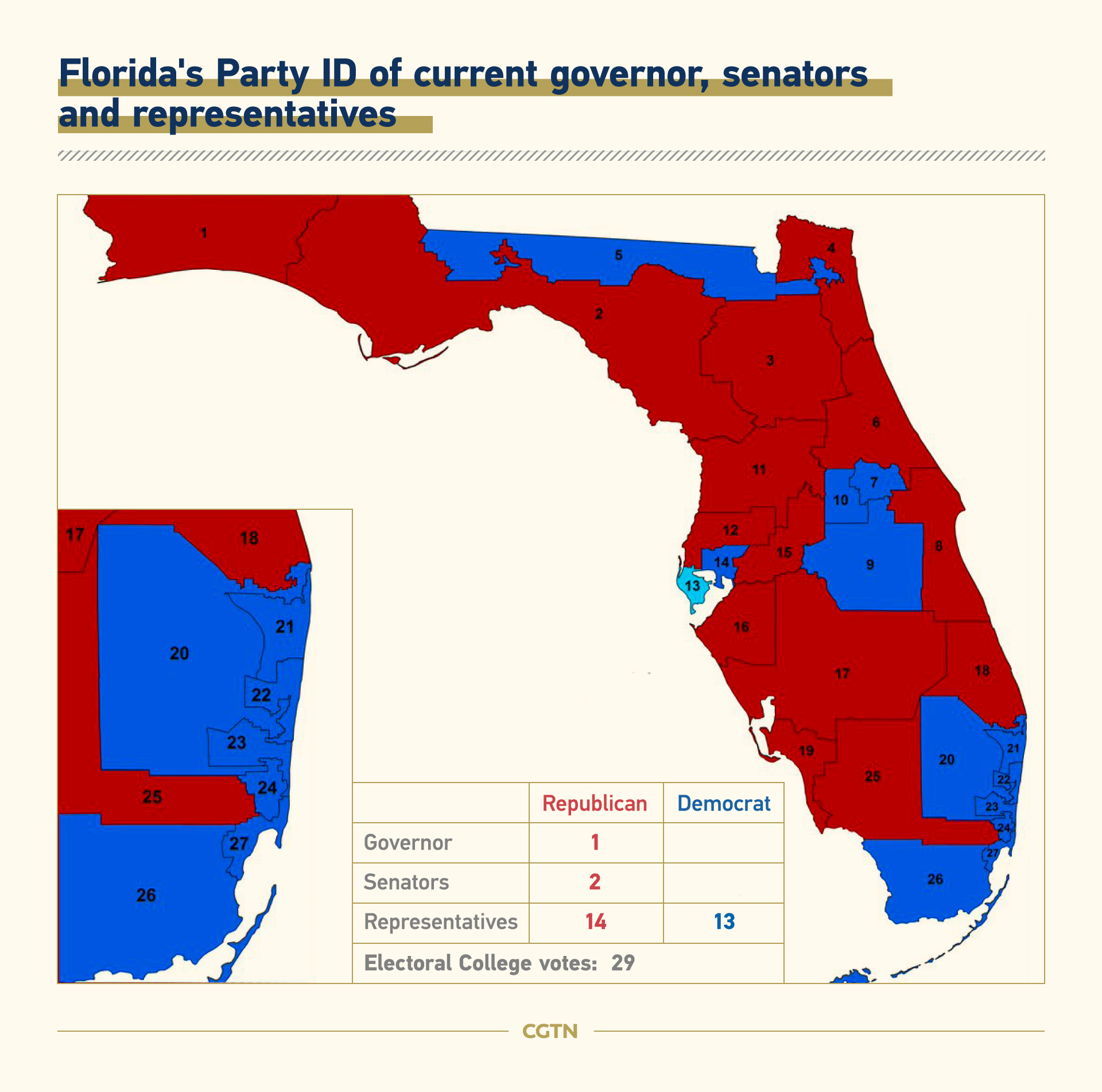
As of the early 2020s, Florida is widely considered a firmly established “red state.” While it remains a battleground for national attention due to its size and electoral significance, the electoral outcomes in recent presidential, congressional, and gubernatorial races have consistently favored the Republican Party. The state has seen Republican candidates win by significant margins in recent elections, including the 2020 presidential election where Donald Trump secured a victory, and the 2022 gubernatorial election where Ron DeSantis was re-elected with a substantial lead.
This classification as a “red state” is not static and can be influenced by evolving demographics, national political trends, and the specific candidates and issues at play in any given election cycle. However, the historical trajectory and recent electoral results suggest that Florida’s leanings have shifted considerably over the past half-century, moving from a Democratic stronghold to a predominantly Republican one.
The Nuances of “Red”
It is important to note that “red state” is a broad generalization. Florida is a large and diverse state with significant pockets of Democratic voters, particularly in counties like Miami-Dade, Broward, and Palm Beach, as well as in urban centers like Orlando and Tampa. These areas often contribute substantial votes to the Democratic candidate, making statewide races competitive. The outcome of elections in Florida often hinges on the turnout and performance of these Democratic-leaning regions compared to the strong Republican performance in the rest of the state, especially in the northern and central parts of Florida.
Furthermore, Florida’s political identity is not monolithic. The state encompasses a wide array of political ideologies and demographic groups, each with its own concerns and priorities. While the Republican Party has consistently won statewide elections, the Democratic Party remains a significant force, continually working to mobilize voters and influence policy.
In conclusion, while Florida began its modern political journey as a predominantly Democratic state, a complex interplay of migration, economic development, and ideological shifts has gradually transformed its electoral landscape. The transition was not instantaneous but rather a decades-long process. By the turn of the 21st century, and certainly in the decades since, Florida has solidified its position as a reliably “red state,” a designation that reflects its consistent voting patterns in favor of the Republican Party in major elections. This enduring characteristic has made Florida a crucial and often decisive battleground in American national politics.
LifeOutOfTheBox is a participant in the Amazon Services LLC Associates Program, an affiliate advertising program designed to provide a means for sites to earn advertising fees by advertising and linking to Amazon.com. Amazon, the Amazon logo, AmazonSupply, and the AmazonSupply logo are trademarks of Amazon.com, Inc. or its affiliates. As an Amazon Associate we earn affiliate commissions from qualifying purchases.