
The acquisition of Puerto Rico by the United States is a pivotal moment in the island’s history, fundamentally reshaping its political status, economic trajectory, and cultural identity. This transition, occurring at the turn of the 20th century, was not a simple transaction but a consequence of a larger geopolitical conflict that dramatically altered the Caribbean landscape. Understanding when the [United States] acquired [Puerto Rico] requires delving into the Spanish-American War and its aftermath, a period that saw a decisive shift in imperial power dynamics.
The Spanish-American War and its Immediate Aftermath
The genesis of the [United States]’s claim over [Puerto Rico] lies squarely within the conflict with Spain that erupted in 1898. Driven by a confluence of factors, including humanitarian concerns over Cuba‘s struggle for independence, burgeoning American expansionism, and sensationalist media coverage of Spanish atrocities (the “yellow press”), the war was relatively short-lived but had profound territorial consequences.

The Invasion and Military Occupation
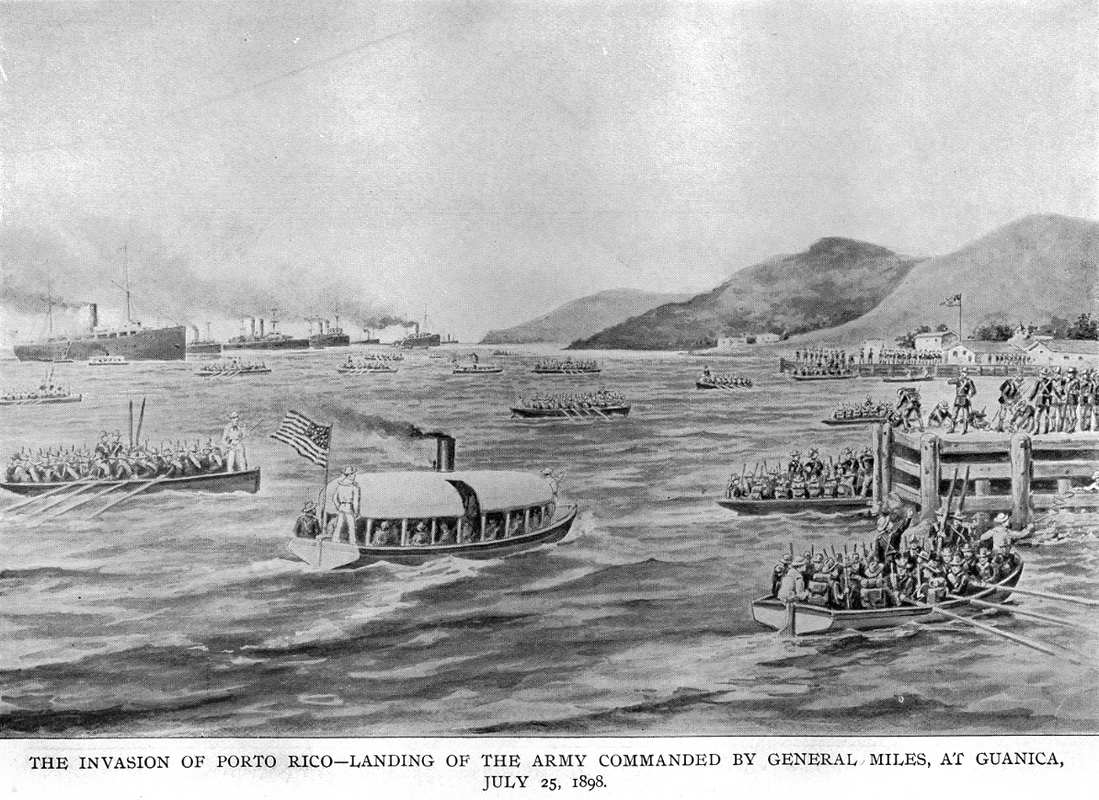
On July 25, 1898, just weeks after the naval victory at Santiago de Cuba, U.S. forces, under the command of Major General Nelson A. Miles, landed near Ponce, Puerto Rico. The invasion was met with limited resistance, as Spain was already weakened by the war. U.S. troops advanced across the island, encountering sporadic engagements. The occupation was swift, and by August 12, 1898, an armistice was signed, bringing an end to the hostilities.
The Treaty of Paris and the Formal Cession
The formal transfer of sovereignty over Puerto Rico from Spain to the United States was codified in the Treaty of Paris, signed on December 10, 1898. This treaty, negotiated in Paris, marked the official end of the Spanish-American War and the dissolution of the Spanish Empire’s remaining Caribbean and Pacific holdings.
Key Provisions of the Treaty

The Treaty of Paris stipulated that Spain would cede Cuba, Puerto Rico, and Guam to the United States. In exchange for the Philippines, the [United States] agreed to pay Spain $20 million. For Puerto Rico and Guam, the cession was absolute, meaning Spain relinquished all claims of sovereignty. This act effectively transformed Puerto Rico from a Spanish colony into an unincorporated territory of the [United States].
The Foraker Act and the Establishment of Civilian Government
Following the military occupation and the treaty’s ratification, the [United States] faced the challenge of establishing a civil government for its newly acquired territories. This led to the passage of the Organic Act of 1900, commonly known as the Foraker Act.
Defining Puerto Rico’s Political Status
The Foraker Act was a landmark piece of legislation that defined Puerto Rico’s initial political status under U.S. governance. It declared Puerto Rico an unincorporated territory, meaning that the U.S. Constitution did not automatically apply in full. Instead, Congress would determine the extent to which constitutional rights and laws would be extended to the island. The act established a civil government with a governor and an executive council appointed by the U.S. President, an elected House of Delegates, and a judiciary. This arrangement effectively placed Puerto Rico under congressional authority, setting the stage for a long and complex relationship.
The Evolution of U.S.-Puerto Rico Relations
The acquisition of Puerto Rico in 1898 marked the beginning of a new chapter, one characterized by evolving political statuses, economic dependencies, and a rich tapestry of cultural exchange. While the initial acquisition was a direct result of military conquest and treaty, the subsequent decades have seen a continuous dialogue and struggle over the island’s ultimate destiny.
From Territory to Commonwealth
Over the years, Puerto Rico has seen several shifts in its relationship with the United States. The Jones-Shafroth Act of 1917 granted Puerto Ricans U.S. statutory citizenship, and in 1952, Puerto Rico adopted its own constitution and established a commonwealth status, or Estado Libre Asociado, with the United States. This status, while granting significant local autonomy, still leaves the island subject to federal laws and without full representation in the U.S. Congress. The question of statehood, independence, or enhanced commonwealth status remains a central theme in Puerto Rican political discourse to this day, a testament to the enduring legacy of that pivotal moment in 1898 when the island transitioned from Spanish to American sovereignty. The acquisition was not an end but a beginning, initiating a complex and ongoing evolution of identity and governance on the island.
LifeOutOfTheBox is a participant in the Amazon Services LLC Associates Program, an affiliate advertising program designed to provide a means for sites to earn advertising fees by advertising and linking to Amazon.com. Amazon, the Amazon logo, AmazonSupply, and the AmazonSupply logo are trademarks of Amazon.com, Inc. or its affiliates. As an Amazon Associate we earn affiliate commissions from qualifying purchases.