
Florida, often referred to as the Sunshine State, is renowned for its vibrant tourism industry, pristine beaches, and abundant recreational opportunities. Beyond its allure for vacationers and retirees, Florida also boasts a robust and diverse higher education landscape. For prospective students, parents, and even curious travelers, understanding the sheer number and variety of colleges within this southern gem is crucial. This exploration delves into the educational institutions that dot the Sunshine State, offering a panoramic view of academic pursuits alongside the state’s celebrated lifestyle.
The Spectrum of Higher Education in Florida
The educational institutions in Florida span a wide spectrum, encompassing public universities, private colleges, community colleges, and specialized technical institutes. This diversity ensures that a broad range of academic interests and career aspirations can be met. The sheer volume of these institutions contributes significantly to the state’s intellectual capital and economic development, drawing students from across the nation and the globe.
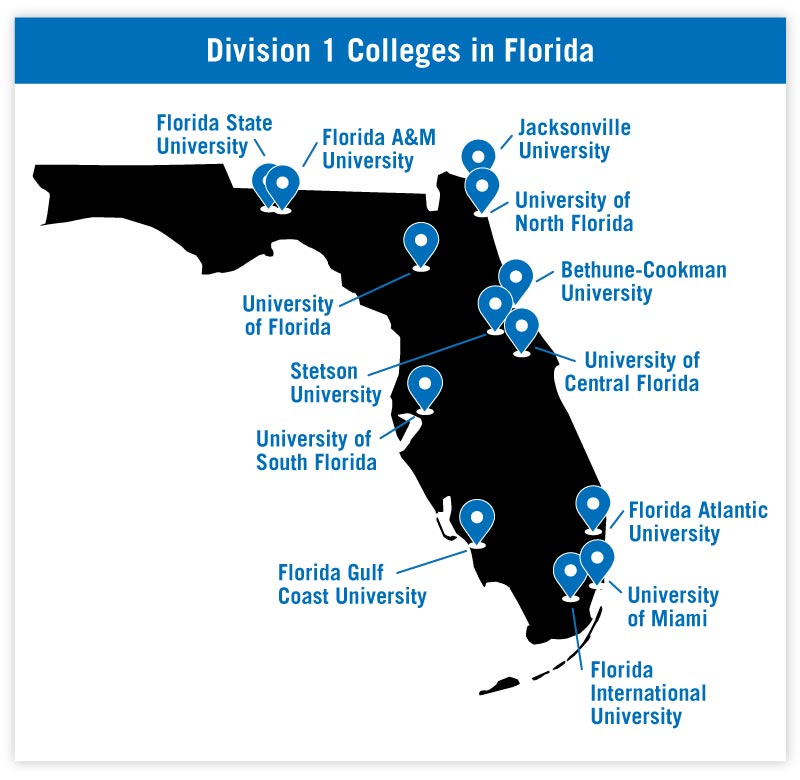
Public University Systems
Florida is home to two major public university systems: the State University System of Florida (SUS) and the Florida College System. The SUS comprises 12 state universities, each with its unique mission and specializations. These institutions are flagship research universities, often attracting significant federal and private funding for their advanced research initiatives.
The universities within the SUS include:
- University of Florida (Gainesville): A premier research institution known for its comprehensive programs in agriculture, engineering, law, and medicine.
- Florida State University (Tallahassee): Recognized for its strengths in areas such as law, business, and the arts, with a strong emphasis on research.
- University of Central Florida (Orlando): One of the largest universities in the nation by enrollment, with notable programs in aerospace engineering, hospitality, and digital media.
- University of South Florida (Tampa): A major urban research university with campuses in Tampa, St. Petersburg, and Sarasota-Manatee, excelling in health sciences, marine biology, and cybersecurity.
- Florida International University (Miami): A leading public research university in South Florida, distinguished by its diverse student body and strong programs in international business, hospitality, and environmental studies.
- Florida Atlantic University (Boca Raton): Located in South Florida, it offers a wide array of undergraduate and graduate programs, with a growing research profile in areas like ocean engineering and computer science.
- University of North Florida (Jacksonville): Known for its focus on student success and community engagement, with strong programs in business, education, and health sciences.
- Florida A&M University (Tallahassee): A historically Black university with a legacy of excellence in areas such as pharmacy, engineering, and journalism.
- University of West Florida (Pensacola): Serving the panhandle region, it provides undergraduate and graduate education with a focus on areas like marine science, education, and business.
- Florida Gulf Coast University (Fort Myers): A relatively newer university, it emphasizes interdisciplinary studies and environmental sustainability, with popular programs in nursing and business.
- New College of Florida (Sarasota): A unique public honors college renowned for its rigorous academic curriculum and independent study system.
- Florida Polytechnic University (Lakeland): The state’s newest university, exclusively focused on science, technology, engineering, and mathematics (STEM) disciplines.
The Florida College System comprises 28 community colleges, offering associate degrees, technical certificates, and baccalaureate degrees in specific workforce-oriented fields. These institutions play a vital role in providing accessible and affordable higher education, serving as crucial pathways for students transitioning to four-year universities or entering the workforce. They are geographically dispersed throughout the state, ensuring that educational opportunities are available in communities of all sizes.
Private Colleges and Universities
Beyond the public systems, Florida hosts a significant number of private colleges and universities. These institutions often provide smaller class sizes, a more intimate learning environment, and specialized curricula. They range from religiously affiliated colleges to secular institutions with unique academic focuses.
Prominent private institutions include:
- University of Miami (Coral Gables): A highly selective private research university with a strong reputation in medicine, law, and business, offering a distinct collegiate experience in South Florida.
- Rollins College (Winter Park): A private liberal arts college known for its student-centered approach, international programs, and picturesque campus.
- Nova Southeastern University (Fort Lauderdale): A private research university with a wide range of professional programs, including health sciences, business, and law, serving a diverse student body.
- St. Thomas University (Miami Gardens): A Catholic, Archdiocese of Miami-sponsored institution offering undergraduate and graduate programs with a strong emphasis on ethics and service.
- Barry University (Miami Shores): A private Catholic liberal arts university sponsored by the Adrian Dominican Sisters, known for its programs in nursing, education, and business.
These private institutions, while fewer in number than public colleges, contribute significantly to the educational tapestry of Florida, offering diverse academic philosophies and learning experiences.

Specialized Institutions and Technical Colleges
Adding to the comprehensive educational offerings, Florida also features numerous specialized institutions, including art and design schools, theological seminaries, and a robust network of technical colleges and career centers. These institutions cater to specific vocational training needs, preparing students for immediate entry into skilled trades and specialized professions. They are often integral to local economic development, providing a pipeline of qualified workers for industries such as healthcare, manufacturing, and information technology.
The Role of Colleges in Florida’s Lifestyle and Tourism
While this article primarily focuses on the quantity of colleges, it’s impossible to ignore their profound influence on Florida’s overall lifestyle and, by extension, its tourism appeal. College towns, whether vibrant urban centers or charming smaller communities, offer a dynamic cultural scene. They host theaters, museums, sporting events, and diverse culinary experiences that are attractive to visitors.
College Towns as Tourist Destinations
Many Florida cities are synonymous with their esteemed universities. The presence of a major university often transforms a city into a hub of activity, drawing not only students and academics but also visitors for sporting events, cultural festivals, and academic conferences. For instance, game days at the University of Florida in Gainesville or Florida State University in Tallahassee draw tens of thousands of fans, impacting local hotels, restaurants, and entertainment venues. Similarly, the cultural offerings at institutions like the University of Miami in the Miami metropolitan area enrich the visitor experience with performances, art exhibitions, and lectures.
The influx of students and faculty also contributes to a diverse and evolving local culture. This dynamic creates an environment that is often more sophisticated and engaging than typical tourist destinations. Furthermore, the presence of world-class research institutions can drive innovation and attract businesses, further bolstering the state’s economy and its appeal as a place to live and visit. The intellectual vibrancy emanating from these campuses adds another layer to Florida’s multifaceted charm, appealing to those interested in more than just beaches and theme parks.
Educational Tourism and Experiential Learning
Beyond traditional tourism, Florida’s colleges and universities are increasingly becoming destinations for educational tourism. This can range from prospective students and their families visiting campuses as part of their college search, to lifelong learners participating in continuing education programs or summer camps. Many institutions offer summer programs for high school students interested in specific fields like marine biology at the Mote Marine Laboratory & Aquarium (associated with the University of South Florida) or space exploration at the Kennedy Space Center Visitor Complex (with ties to the University of Central Florida‘s aerospace programs).
These experiences offer a unique blend of learning and leisure, allowing visitors to engage with the academic environment of the Sunshine State while enjoying its many attractions. The focus on experiential learning at many Florida institutions, such as internships with local businesses or field research in the Everglades, also provides opportunities for visitors to gain practical skills and insights into various industries. This aspect of educational tourism contributes to Florida’s reputation as a state that values lifelong learning and intellectual curiosity, complementing its image as a premier vacation destination.

The Grand Total and Conclusion
To answer the question definitively: the exact number of higher education institutions in Florida fluctuates slightly with new programs, mergers, or closures, but it is consistently in the hundreds. This includes the 12 public universities within the State University System of Florida, the 28 institutions within the Florida College System, and a substantial number of private colleges, universities, and specialized technical institutes. When all these categories are combined, Florida hosts well over 150 degree-granting institutions, with the total number of post-secondary education providers, including certificate programs, easily exceeding this figure.
The presence of such a vast network of colleges and universities underscores Florida’s commitment to education and its role as a significant academic hub. For travelers, this means that even away from the beaches, there are opportunities for intellectual engagement, cultural enrichment, and the chance to witness firsthand the dynamism that higher education brings to the Sunshine State. Whether one is a prospective student, a visiting parent, or simply a curious traveler appreciating the diverse facets of Florida, the sheer volume and variety of its educational institutions are a testament to its multifaceted appeal, extending far beyond its sunny shores.
LifeOutOfTheBox is a participant in the Amazon Services LLC Associates Program, an affiliate advertising program designed to provide a means for sites to earn advertising fees by advertising and linking to Amazon.com. Amazon, the Amazon logo, AmazonSupply, and the AmazonSupply logo are trademarks of Amazon.com, Inc. or its affiliates. As an Amazon Associate we earn affiliate commissions from qualifying purchases.