
Navigating the Sunshine State’s roadways often involves a fundamental requirement: a properly registered vehicle adorned with valid Florida license plates. For residents and newcomers alike, understanding the cost and nuances of these essential identifiers is paramount. Beyond the initial purchase price, various factors contribute to the overall expense, from the type of plate chosen to potential fees and taxes. This guide aims to demystify the costs associated with Florida license plates, providing a comprehensive overview for anyone looking to get their vehicle legally on the road or update their existing registration.
The cost of Florida license plates is not a single, fixed figure. Instead, it’s a composite of several components, primarily determined by the type of plate, the vehicle’s weight and type, and applicable fees. Understanding these elements ensures that individuals are adequately prepared for the financial commitment involved in vehicle registration.

Understanding the Core Costs of Florida License Plates
The foundation of any license plate cost in Florida lies in the standard registration fees. These fees are generally consistent across the state, though they can be subject to minor adjustments by the Florida Department of Highway Safety and Motor Vehicles (FLHSMV).
Standard Registration Fees
For a typical passenger vehicle, the base registration fee in Florida is relatively modest. However, this fee is often intertwined with the cost of the physical license plate itself. The FLHSMV categorizes vehicles based on weight, and this plays a direct role in the annual registration cost.
- Passenger Vehicles (Under 5,000 lbs): These typically incur the lowest base registration fee.
- Larger Vehicles (Over 5,000 lbs): As vehicle weight increases, so does the registration fee. This is a common practice across many states to account for the greater wear and tear larger vehicles can inflict on roadways.
- Commercial Vehicles: These often have different fee structures, usually higher than those for personal vehicles, due to their commercial use and potential for heavier loads.
It’s important to note that these base fees cover the administrative costs of issuing the plate and maintaining the registration system. They do not include any optional specialty plate surcharges or taxes.
Plate Manufacturing and Issuance Fees
Alongside the registration fee, there’s a nominal charge for the physical license plate and its associated decal. This fee covers the manufacturing costs of the plates, which are typically made of aluminum or a similar durable material, and the decals that indicate the expiration month and year. While this amount is usually small, it’s an integral part of the initial purchase and subsequent renewal costs.
Exploring Specialty and Personalized Plates: Adding to the Expense
Florida offers a wide array of specialty license plates, allowing vehicle owners to display support for various causes, organizations, or interests. While these plates enhance the aesthetic appeal and allow for personal expression, they invariably come with additional costs.
Specialty License Plates: Supporting a Cause
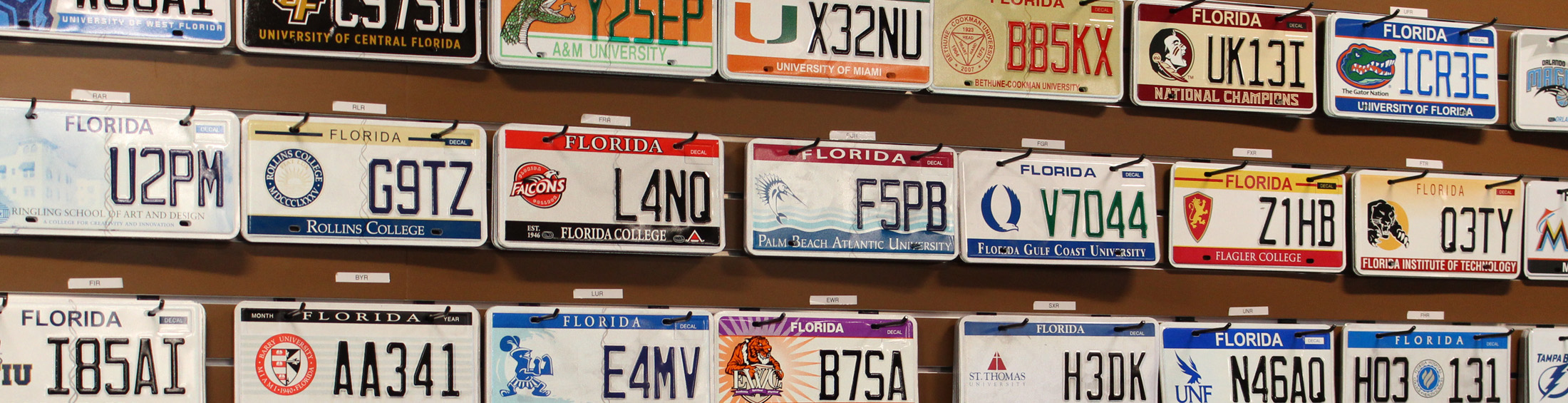
Florida is renowned for its diverse selection of specialty license plates, ranging from collegiate plates representing Florida universities like the University of Florida and Florida State University, to plates supporting environmental causes, animal welfare, or specific charities.
The revenue generated from these specialty plates often goes directly to the sponsoring organization or cause. Consequently, purchasing one of these plates involves an additional annual surcharge on top of the standard registration fee. These surcharges can vary significantly, from a few dollars to over a hundred dollars annually, depending on the plate’s popularity and the administrative overhead of the sponsoring entity.
Some popular examples include:
- Collegiate Plates: Supporting Florida‘s universities.
- Environmental Plates: Such as those for protecting marine life or state parks.
- Charitable Plates: Benefiting organizations focused on cancer research, children’s hospitals, or animal shelters.
- Special Interest Plates: Representing interests like surfing, motorsports, or military branches.
The exact cost of each specialty plate is detailed by the FLHSMV and available at county tax collector offices.
Personalized (Vanity) Plates: A Premium for Uniqueness
For those seeking ultimate personalization, Florida offers the option of vanity plates. These allow drivers to choose their own combination of letters and numbers, within certain character limits and subject to availability and state regulations.

The privilege of displaying a personalized message on your license plate comes with a distinct surcharge. This fee is in addition to the standard registration and any applicable specialty plate fees if you choose a vanity plate from a specialty plate design. The vanity plate surcharge is a premium for the uniqueness and customization it offers. This fee is also an annual charge, renewable with your vehicle registration.
When ordering a vanity plate, drivers must propose several options, as their first choice may already be in use. The FLHSMV has strict guidelines on what is permissible, prohibiting offensive or misleading combinations.
Additional Fees and Taxes That Can Impact the Total Cost
Beyond the direct plate and registration costs, several other fees and taxes can influence the final price of Florida license plates. These often arise during the initial registration of a vehicle, especially if it’s newly purchased or brought into the state.
Sales Tax on Vehicle Purchases
When purchasing a new or used vehicle in Florida, sales tax is levied on the purchase price. This tax is collected at the time of registration and is a significant component of the overall cost of vehicle ownership. The standard state sales tax rate applies, potentially with additional local discretionary sales surtaxes, depending on the county. This tax is separate from the license plate fees but is typically paid at the same time during the initial registration process.
Title Fees
Registering a vehicle for the first time or transferring ownership of an existing vehicle requires obtaining a Florida title. There is a fee associated with issuing this title, which is a legal document establishing ownership of the vehicle. This fee is a one-time charge when the title is first issued or transferred.
Registration Fees for Different Vehicle Types
While this guide primarily focuses on passenger vehicles, it’s crucial to acknowledge that Florida has specific registration fee structures for other vehicle types:
- Motorcycles: Generally have a lower registration fee than passenger cars.
- Recreational Vehicles (RVs) and Motorhomes: May have different fee structures based on size and weight, often falling into classifications similar to larger trucks.
- Trailers: Utility trailers, boat trailers, and other types of towed vehicles have their own registration fees, often based on weight.
- Mopeds and Low-Speed Vehicles: These often have simplified and lower registration requirements.
Each category is designed to align with the vehicle’s intended use and impact on infrastructure.
Late Fees and Penalties
Operating a vehicle with expired registration and license plates is illegal in Florida and can result in significant penalties. If registration is not renewed by the expiration date, late fees will be assessed. These fees are designed to encourage timely renewal and can add to the overall cost if registration is allowed to lapse. Repeated offenses can lead to more substantial fines and other legal consequences.
How to Find the Exact Cost for Your Vehicle
Determining the precise cost of license plates for a specific vehicle involves considering all the aforementioned factors. The Florida Department of Highway Safety and Motor Vehicles (FLHSMV) provides resources to help drivers calculate these costs.
Utilizing Online Resources and Calculators
The FLHSMV website offers tools and information that can assist in estimating registration costs. While a precise real-time calculator for every variable might not always be available, the site provides fee schedules and explanations of different plate types and their associated surcharges. This is the most reliable source for up-to-date information.
Visiting a County Tax Collector’s Office
For personalized assistance and the most accurate calculation, visiting a local Florida county tax collector’s office is highly recommended. These offices are equipped to process registrations, answer specific questions about vehicle types and specialty plates, and provide a detailed breakdown of all applicable fees and taxes at the time of renewal or initial registration. They can advise on the availability of particular specialty plates and the exact costs associated with vanity plates.
Florida license plates are more than just identification markers; they represent a necessary component of vehicle ownership and contribute to state revenue and various charitable causes. By understanding the breakdown of costs, from standard registration fees to the premiums for specialty and personalized plates, drivers can navigate the process with clarity and ensure their vehicles are legally compliant and uniquely represented on the road.
LifeOutOfTheBox is a participant in the Amazon Services LLC Associates Program, an affiliate advertising program designed to provide a means for sites to earn advertising fees by advertising and linking to Amazon.com. Amazon, the Amazon logo, AmazonSupply, and the AmazonSupply logo are trademarks of Amazon.com, Inc. or its affiliates. As an Amazon Associate we earn affiliate commissions from qualifying purchases.