
Navigating the process of establishing official residency in the Sunshine State can seem complex, but with a clear understanding of the requirements and a systematic approach, it’s a straightforward endeavor. Whether you’re drawn to Florida for its vibrant culture, stunning coastlines, or favorable tax climate, becoming a legal resident unlocks a host of benefits, including in-state tuition for education, eligibility for certain state programs, and the ability to vote in local and state elections. This guide breaks down the essential steps and considerations for anyone looking to make Florida their permanent home.
Understanding the Criteria for Florida Residency
Florida law defines residency based on intent and physical presence. To be considered a resident for official purposes, you must demonstrate both your intention to make Florida your permanent home and your physical presence within the state. This isn’t merely about spending a few months on vacation; it’s about establishing a genuine connection and commitment to living in Florida.

The Intent Component
Proving your intent to reside in Florida is crucial. This can be demonstrated through a variety of actions and documents that signify your commitment to the state as your primary domicile. Key indicators of intent include:
- Declaration of Domicile: This is a formal legal document filed with the Clerk of the Circuit Court in the county where you intend to reside. It’s a powerful statement of your intent to make Florida your permanent home.
- Voter Registration: Registering to vote in Florida is a strong indicator of your intent to make the state your permanent residence.
- Driver’s License or State ID: Obtaining a Florida driver’s license or identification card signifies your commitment to living in the state.
- ** Homestead Exemption Application:** Applying for a homestead exemption on your Florida property is a significant declaration of residency, as this benefit is exclusively for primary residences.
- Children’s School Enrollment: Enrolling your children in Florida public or private schools demonstrates an intention for long-term settlement.
- Business Operations: If you own or operate a business in Florida, this can be seen as evidence of your intent to reside there.
- Lease Agreements or Property Ownership: Signing a lease for a year or more or purchasing property in Florida clearly points to your intention to live there.
- Bank Accounts and Financial Records: Maintaining bank accounts and conducting financial transactions primarily in Florida can support your claim.
- Membership in Florida Organizations: Active membership in community groups, religious organizations, or professional associations in Florida also contributes to establishing intent.
- Location of Personal Belongings: The primary location of your personal belongings, such as furniture and vehicles, can be a supporting factor.
The Physical Presence Component
In addition to intent, you must establish physical presence in Florida. While there isn’t a strict number of days mandated by law for general residency, certain benefits or applications may have specific requirements. For instance, to qualify for certain educational programs or benefits, you might need to have resided in the state for a continuous period.
- Continuous Presence: While not always explicitly stated for all applications, demonstrating a significant and continuous period of physical presence strengthens your residency claim.
- Primary Dwelling: Your primary residence, where you spend the majority of your time, must be located in Florida. This is the place you return to after work or travel.
- Absences from the State: Extended absences from Florida can potentially jeopardize your residency status, especially if they occur during critical periods or if your intent appears to shift. It’s important to maintain your primary home and activities within the state.
Key Steps in Applying for Florida Residency
The application process for Florida residency is often tied to obtaining specific state-issued documents or benefits. The most common and foundational steps involve establishing your legal domicile and obtaining state identification.
Step 1: Establishing Domicile and Obtaining a Declaration of Domicile
The Declaration of Domicile is a foundational document. It’s a sworn statement, legally recognized, that declares your intention to make Florida your permanent home and abandon any previous domicile.
- Locate the Clerk of the Circuit Court: Find the Clerk of the Circuit Court in the Florida county where you intend to reside. Each county has its own office.
- Obtain the Declaration Form: Most Clerks’ offices provide a standardized form for the Declaration of Domicile. You may be able to download it from their website or pick it up in person.
- Complete the Form Accurately: Fill out the form truthfully and completely. You will need to provide personal information, your new Florida address, and information about your previous domicile.
- Sign Before a Notary Public: The Declaration of Domicile must be signed in the presence of a notary public. Many Clerks’ offices offer notary services, or you can use a third-party notary.
- File the Document: Submit the notarized Declaration of Domicile to the Clerk of the Circuit Court. There is typically a small filing fee.
- Keep a Copy: Retain a certified copy of your filed Declaration of Domicile for your records. This document serves as crucial evidence of your intent.
Step 2: Obtaining a Florida Driver’s License or State Identification Card
A Florida Driver’s License or State Identification Card is a vital piece of evidence for establishing residency. It’s issued by the Florida Department of Highway Safety and Motor Vehicles (FLHSMV).
- Gather Required Documents: You will need to provide proof of identity, Social Security number, date of birth, and residential address in Florida. Accepted documents typically include:
- Proof of Identity: Original U.S. birth certificate or a valid U.S. passport.
- Proof of Social Security Number: Original Social Security card or W-2 form.
- Proof of Residential Address: Two different documents showing your Florida address, such as a utility bill, bank statement, lease agreement, or mortgage statement. The Declaration of Domicile can also serve as proof of address.
- Proof of Legal Presence: If you are not a U.S. citizen, you’ll need documentation like a permanent resident card or visa.
- Visit a Driver License Service Center: You must visit an FLHSMV office in person. Appointments are often recommended or required.
- Pass Vision and Knowledge Tests: You will need to pass a vision test. If applying for a driver’s license for the first time or transferring from out-of-state, you may also need to pass a written knowledge test and a driving skills test.
- Pay Fees: There are fees associated with obtaining a driver’s license or ID card.
- Receive Your License/ID: You will typically receive a temporary license or ID on-site, with the permanent card mailed to your Florida address.
Step 3: Registering to Vote
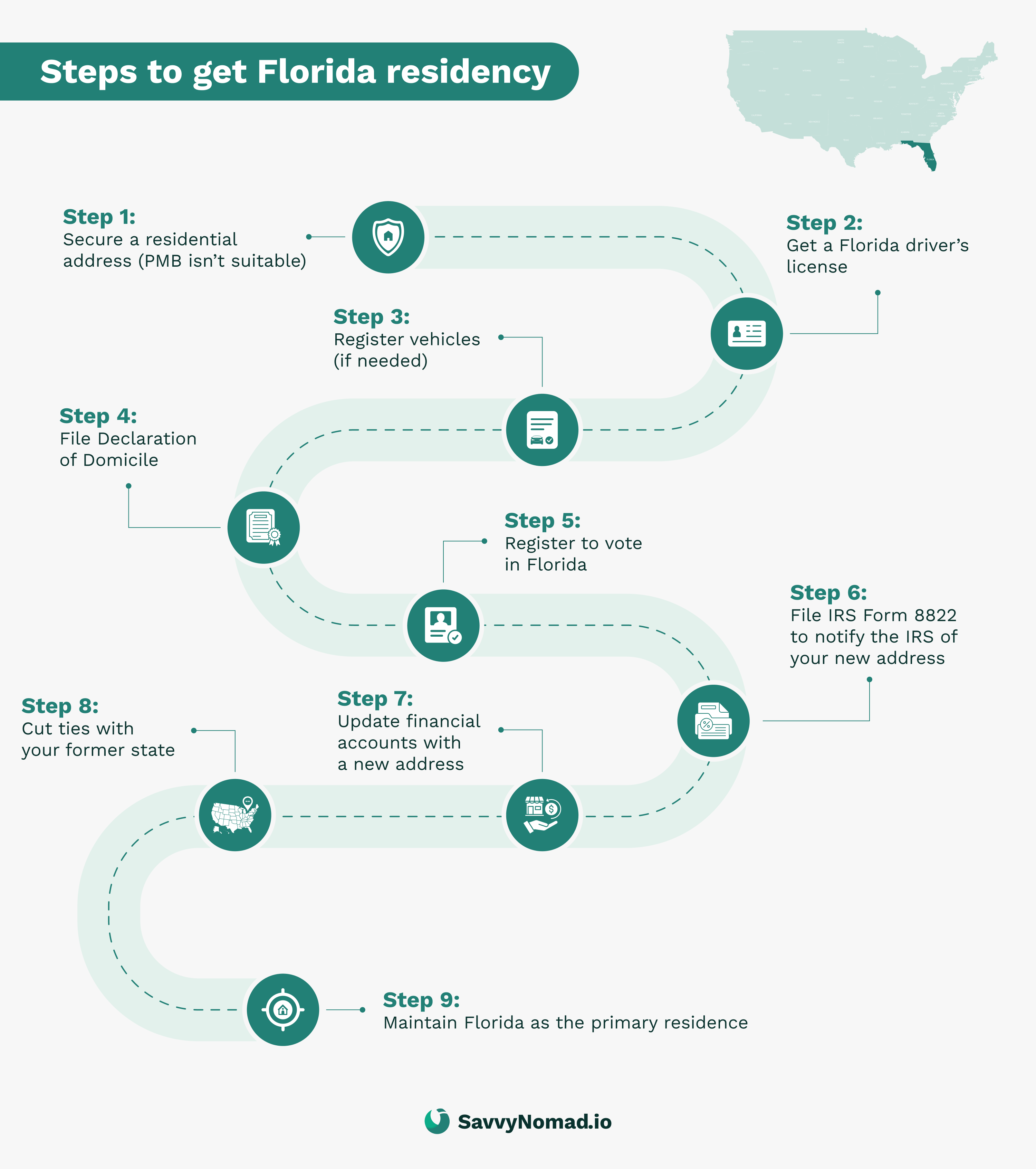
Registering to vote in Florida is another significant step in solidifying your residency. This allows you to participate in the democratic process at the state and local levels.
- Eligibility Requirements: You must be a U.S. citizen, a legal resident of Florida, and at least 18 years old. You cannot be currently serving a sentence for a felony conviction unless civil rights have been restored.
- How to Register:
- Online: Visit the Florida Department of State’s Division of Elections website.
- By Mail or In Person: Download a voter registration application form from the Division of Elections website and mail it to your county Supervisor of Elections, or drop it off at a Supervisor of Elections office.
- At State Agencies: You can register when applying for or renewing a driver’s license or state ID at an FLHSMV office, or when visiting other state agencies like the Department of Health or the Agency for Health Care Administration.
- Deadline: Be aware of registration deadlines for upcoming elections.
Additional Considerations for Establishing Residency
Beyond the core steps, several other actions and considerations can further cement your Florida residency and ensure you meet the requirements for various benefits and services.
Securing a Primary Residence
Having a permanent place to live in Florida is fundamental. This can be achieved through:
- Purchasing a Home: Owning property in Florida is a clear indicator of long-term commitment. This also opens the door to applying for the Homestead Exemption, which can significantly reduce your property taxes. To qualify for the Homestead Exemption, the property must be your permanent residence as of January 1st of the tax year, and you must file an application with your county property appraiser’s office.
- Leasing an Apartment or Home: Signing a lease agreement for a substantial period, such as one year, demonstrates intent to reside. Ensure the lease clearly lists your Florida address as your primary residence.
- Living with Family or Friends: If you are staying with relatives or friends, having official documentation that confirms your residency at that address, such as mail addressed to you there, can be beneficial.
Financial and Banking Considerations
Aligning your financial life with your new Florida domicile is an important aspect of residency.
- Opening a Florida Bank Account: Establishing a primary bank account with a Florida-based financial institution is a strong indicator of your commitment.
- Direct Deposit and Bill Payments: Have your salary or income directly deposited into your Florida bank account and set up automatic bill payments from this account.
- Tax Filings: If you were previously a resident of another state, ensure you file final tax returns in that state and begin filing your tax returns as a Florida resident. Florida has no state income tax for individuals, which is a significant draw for many new residents.
Educational and Professional Ties
Further integrating into the Florida community through education and professional activities can reinforce your residency status.
- Enrolling Children in Schools: As mentioned earlier, enrolling your children in Florida’s public or private school systems is a clear sign of permanent settlement. This allows them to benefit from in-state tuition rates at Florida colleges and universities.
- Seeking Employment or Starting a Business: Obtaining employment in Florida or establishing a business within the state strongly suggests your intention to reside there long-term.
- Professional Licenses: If your profession requires licensing, obtaining a Florida license demonstrates a commitment to practicing your profession within the state.
Healthcare and Insurance
Adjusting your healthcare and insurance coverage to reflect your Florida residency is essential for practical reasons and can also serve as supporting evidence.
- Transferring Medical Records: Have your medical records transferred to physicians and healthcare providers located in Florida.
- Updating Insurance Policies: Ensure your auto, homeowner’s, or renter’s insurance policies reflect your Florida address as your primary residence.

Maintaining Florida Residency
Once you have established residency, it’s important to understand that maintaining it requires ongoing commitment. The key is to continuously demonstrate that Florida is your primary home.
- Avoid Establishing Domicile Elsewhere: Do not maintain a domicile in another state. This includes things like keeping a driver’s license, registering to vote, or owning property in another state that could be construed as your primary residence.
- Spend Significant Time in Florida: While there’s no strict number of days for general residency, spending the majority of your time in Florida is crucial. Extended absences can raise questions about your intent.
- Update Your Information: Consistently update your address with all relevant institutions, including employers, banks, insurance providers, and government agencies, to reflect your Florida residency.
- Be Prepared to Provide Proof: If questioned about your residency status for specific benefits or programs, be ready to provide documentation that supports your claim, such as your Declaration of Domicile, Florida driver’s license, voter registration, and utility bills.
By diligently following these steps and consistently demonstrating your intention to reside in Florida, you can successfully establish and maintain your residency in the Sunshine State, unlocking the many benefits it has to offer.
LifeOutOfTheBox is a participant in the Amazon Services LLC Associates Program, an affiliate advertising program designed to provide a means for sites to earn advertising fees by advertising and linking to Amazon.com. Amazon, the Amazon logo, AmazonSupply, and the AmazonSupply logo are trademarks of Amazon.com, Inc. or its affiliates. As an Amazon Associate we earn affiliate commissions from qualifying purchases.