
Applying for homestead in Florida is a crucial step for any homeowner looking to reduce their property tax burden and protect their primary residence. This powerful tax exemption, known as homestead exemption, allows eligible homeowners to exclude a portion of their home’s value from taxation. While the process is generally straightforward, understanding the requirements, necessary documentation, and submission deadlines is essential to successfully navigating the application. This guide aims to demystify the process, providing a comprehensive overview for residents of the Sunshine State.
Understanding Homestead Exemption in Florida
Florida’s homestead exemption is designed to provide property tax relief to individuals and families who own and occupy their primary residence. It is a significant benefit, offering substantial savings on annual property tax bills. Beyond the tax savings, Florida law also provides certain protections for homestead property against forced sale by creditors. This dual benefit makes understanding and applying for homestead exemption a priority for Florida homeowners.
What is Homestead Property?
In Florida, homestead property is defined as a person’s dwelling, including the land it occupies, if it is owned and used as the principal residence of the owner. This means the property must be where you live for the majority of the year, your legal residence, and where you intend to return. It’s not simply a vacation home or a rental property. The property can be a single-family home, a condominium, a mobile home, or even a duplex where you occupy one unit.
Types of Homestead Exemptions
Florida offers several types of homestead exemptions, each with its own eligibility criteria and benefits:
- Homestead Exemption: This is the standard exemption available to all eligible homeowners. It exempts up to $25,000 of the assessed value of your home from all ad valorem taxes (state, county, and municipal). For taxes levied by school districts, the first $25,000 is exempt.
- Additional Homestead Exemption (or Homestead Improvement Exemption): For homes with an assessed value exceeding $50,000, an additional exemption can be applied. This exemption applies to taxes levied by specific local governing bodies, excluding school district taxes. The additional exemption is capped at $25,000 of the assessed value over $50,000. Therefore, a home with an assessed value of $75,000 would receive a total exemption of $50,000 ($25,000 standard + $25,000 additional).
- Homestead Exemption for Totally and Permanently Disabled Persons: Florida offers a full property tax exemption for homestead property owned by individuals who are totally and permanently disabled. There are specific income limitations associated with this exemption, which are adjusted annually.
- Homestead Exemption for Veterans with Permanent and Total Service-Connected Disabilities: Veterans who are disabled due to service-connected injuries or illnesses can qualify for a full property tax exemption on their homestead property, regardless of income.
- Homestead Exemption for Surviving Spouses: A surviving spouse who was married to a homeowner who qualified for homestead exemption at the time of their death may be eligible to receive the homestead exemption on the same property, provided they continue to reside there.
Eligibility Requirements
To qualify for Florida homestead exemption, you must meet several criteria:
- Ownership: You must own the property. This can be sole ownership, joint ownership, or ownership through a trust, as long as you are the beneficial owner and reside on the property.
- Residency: The property must be your permanent, primary residence. This means you live there for more than six months of the year. You cannot claim homestead exemption on more than one property.
- Occupancy: You must occupy the property as your principal home on January 1st of the tax year for which you are applying.
- Florida Driver’s License/ID: You will likely need a Florida driver’s license or identification card that matches the property address.
- Vehicle Registration: Your vehicle(s) must be registered in Florida at the property address.
- Voter Registration: If you are registered to vote, you should be registered to vote in Florida at the property address.
- Social Security Numbers: You will need to provide your Social Security number and that of any other owner(s) applying for the exemption.
The Application Process
Applying for homestead exemption is typically done through your county’s property appraiser’s office. While the exact steps and required forms may vary slightly from county to county, the general process remains consistent.
Gathering Necessary Documentation
Before you begin the application, ensure you have the following documents readily available:
- Proof of Ownership: This could be your recorded deed or other evidence of legal ownership.
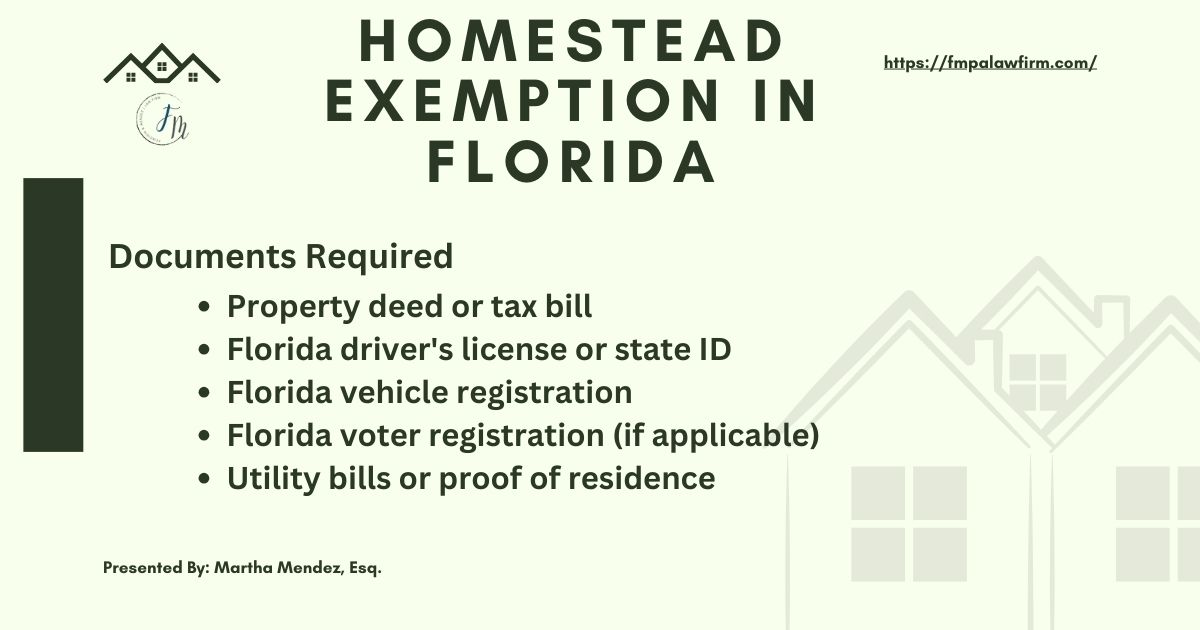
- Proof of Residency: This can include a Florida driver’s license or ID card, a Florida vehicle registration, and a Florida voter registration card, all showing the property address.
- Social Security Numbers: Social Security cards or numbers for all owners applying.
- Deed/Title Information: If you purchased the property recently, have your closing statement (HUD-1 or similar) or title information handy.
- Previous Homestead Exemption Information (if applicable): If you are transferring your homestead exemption from a previous property in Florida, you will need to indicate this on the application. You will also need to inform the previous county’s property appraiser that you are no longer residing at that property.
- Proof of Disability (if applicable): For disabled person exemptions, you will need a letter from the Social Security Administration or a physician’s certification stating total and permanent disability. For veterans, documentation of service-connected disability from the Department of Veterans Affairs is required.
Where and When to Apply
Applications for homestead exemption are filed with your local County Property Appraiser. Most counties offer online application portals, allowing for a convenient and efficient submission process. You can also typically download the application form from the property appraiser’s website and mail it in or submit it in person.
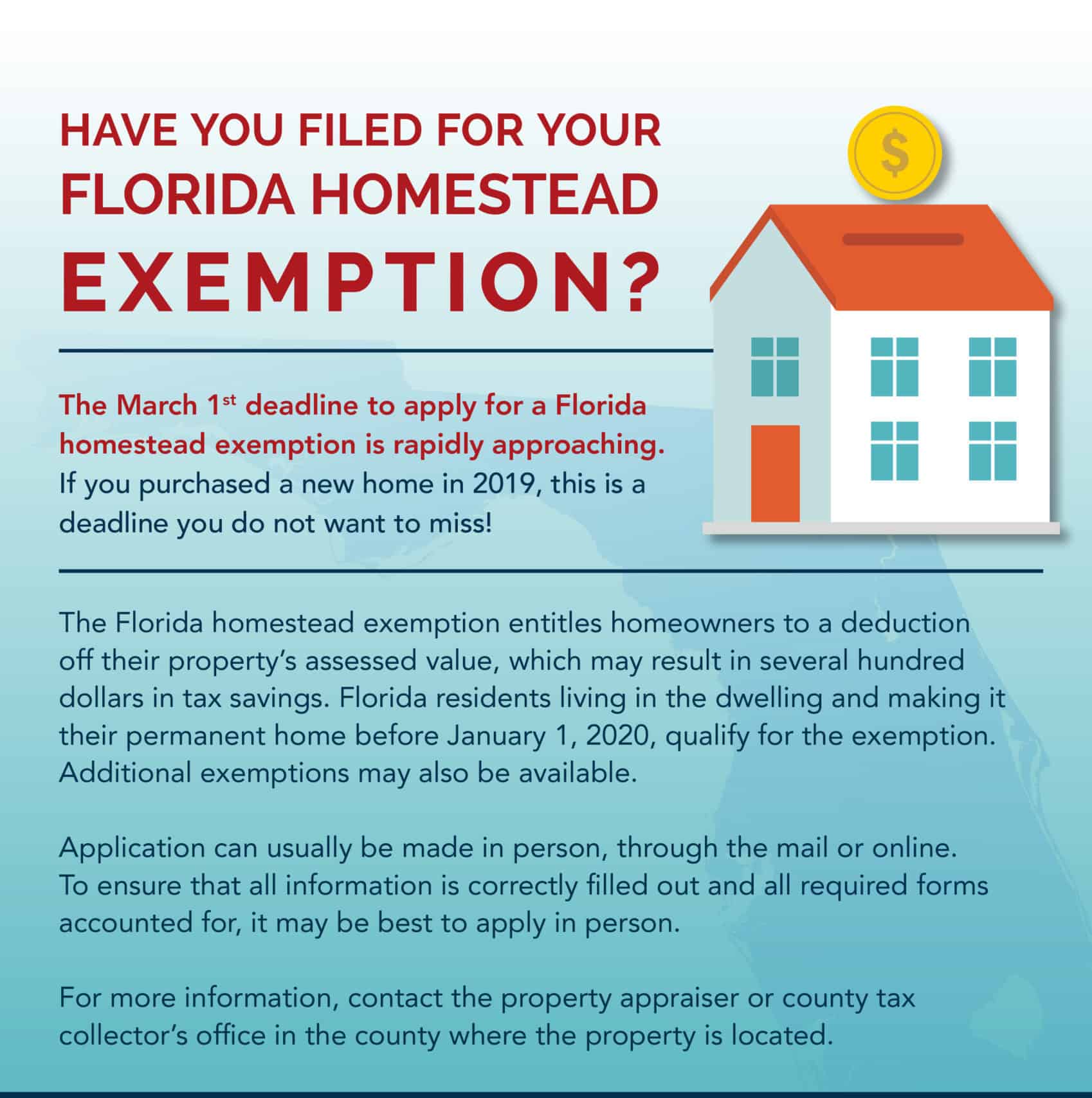
The deadline to apply for homestead exemption is March 1st of the tax year for which you are seeking the exemption. For example, to receive the exemption for the 2024 tax year (which runs from January 1, 2024, to December 31, 2024), you must have owned and occupied the property as your primary residence on January 1, 2024, and filed your application by March 1, 2024.
If you miss the March 1st deadline, you may still be able to apply for the following tax year. Some counties allow for late applications for the current year under specific circumstances, such as military deployment, but this is not guaranteed. It is always best to file as early as possible.
Completing the Application Form

When completing the application, be thorough and accurate. Ensure all owner names are listed correctly, as they appear on the deed. Provide all requested information, including the property’s parcel identification number (PIN), which can be found on your property tax bill or the county property appraiser’s website.
You will be asked to affirm that the property is your primary residence and that you have not applied for homestead exemption on any other property in Florida or elsewhere. Lying on a homestead application can have serious legal consequences, including back taxes, penalties, and interest.
Subsequent Years
Once your homestead exemption is approved, it generally renews automatically each year. You will not need to reapply annually unless there is a change in ownership, your residency status, or the property’s use. However, it is wise to review your property tax bill each year to confirm that the exemption has been applied. If you move to a new primary residence, you will need to apply for homestead exemption on the new property and notify the property appraiser of the previous property that you no longer reside there.
Potential Challenges and Considerations
While the process is designed to be accessible, some homeowners may encounter challenges or have specific situations that require further attention.
Non-Resident Owners and Property
If you own property in Florida but reside elsewhere for a significant portion of the year, you cannot claim homestead exemption on that property. Similarly, if you own multiple properties in Florida, you can only claim homestead on the one that is your principal residence. The property appraiser’s office has systems in place to detect duplicate homestead filings.
Property Owned by Trusts
If your property is held in a trust, you can still qualify for homestead exemption, provided that you are the beneficiary of the trust and the trust document grants you the right to reside in the property and that it is your principal residence. You will need to provide a copy of the trust document to the property appraiser’s office along with your application.
Rental Property and Second Homes
Properties that are rented out, used as vacation homes, or are not your primary residence are not eligible for homestead exemption. If you rent out a portion of your homestead property (e.g., a separate apartment), you may still qualify, but it’s essential to check with your county’s property appraiser for specific rules regarding partial rental use.
appeals and disputes
If your homestead exemption application is denied, you have the right to appeal the decision. The property appraiser’s office will send you a notice of denial, which will outline the reasons for the denial and the steps you can take to appeal. Typically, you will have a deadline to file an appeal with the Value Adjustment Board of your county.
Maximizing Your Homestead Benefits
Beyond the standard homestead exemption, understanding other property tax relief programs and ensuring your application is correctly processed can lead to further savings.
Portability of Homestead Benefits
Florida law allows homeowners to “port” or transfer their homestead tax benefits when they move to a new homestead property within the state. This means that the assessed value of your previous homestead, along with any accumulated “Save Our Homes” benefit (which caps the annual increase in assessed value), can be transferred to your new home. This can be particularly advantageous if you are moving from a home with a significantly lower assessed value to one with a higher market value. The portability benefit is initiated when you apply for homestead exemption on your new property.
Additional Exemptions for Specific Groups
As mentioned earlier, Florida offers additional exemptions for seniors, disabled individuals, and veterans. It is crucial to explore these options if you fall into one of these categories. The requirements and benefits can vary, so carefully review the specific criteria for each. For instance, the Senior Citizen Homestead Exemption, while often referred to, is generally folded into the standard homestead benefits or specific local ordinances that may offer further relief, often tied to income limitations. The specific terminology and benefits can differ by county.
Staying Informed
Property tax laws and exemption rules can change. It’s beneficial to stay informed by regularly visiting your county property appraiser’s website or contacting their office directly with any questions. They are the primary resource for accurate and up-to-date information regarding homestead applications and other property tax matters. Keeping abreast of legislative changes can help you leverage any new benefits or programs that become available.
Applying for homestead exemption in Florida is a straightforward yet vital process for homeowners. By understanding the eligibility requirements, gathering the necessary documentation, and adhering to the application deadlines, you can secure valuable property tax savings and benefit from the protections afforded to your primary residence. The county property appraiser’s office is your key partner in this endeavor, providing the forms, guidance, and support needed to successfully navigate the homestead application.
LifeOutOfTheBox is a participant in the Amazon Services LLC Associates Program, an affiliate advertising program designed to provide a means for sites to earn advertising fees by advertising and linking to Amazon.com. Amazon, the Amazon logo, AmazonSupply, and the AmazonSupply logo are trademarks of Amazon.com, Inc. or its affiliates. As an Amazon Associate we earn affiliate commissions from qualifying purchases.