
The allure of the Sunshine State extends far beyond its pristine beaches and vibrant theme parks. For many, Florida represents an opportunity for a thriving career, and one profession that consistently offers stability and growth is insurance. Securing an insurance license in Florida is a gateway to a rewarding career, allowing you to help individuals and businesses protect their assets and futures. This guide will navigate you through the essential steps, requirements, and considerations for obtaining your insurance license in the state of Florida.
Understanding the Florida Insurance Licensing Process
The journey to becoming a licensed insurance agent in Florida involves a structured process overseen by the Florida Department of Financial Services. This process ensures that prospective agents possess the necessary knowledge and ethical understanding to serve the public effectively. There are different types of licenses available, each catering to specific insurance lines. The most common include:

Types of Insurance Licenses in Florida
- Life Only: This license permits you to sell life insurance policies, including term life, whole life, and annuities.
- Health Only: This license allows you to sell health insurance policies, such as major medical, disability insurance, and long-term care insurance.
- Life, Health, and Annuities (2-15 License): This is a comprehensive license that combines both life and health insurance authority, along with the ability to sell annuities. This is a popular choice for agents seeking broader market reach.
- Personal Lines (4-40 License): This license is for agents who wish to sell property and casualty insurance specifically for individuals and families, such as auto, homeowners, and renters insurance. It does not include commercial lines.
- Commercial Lines (2-20 License): This license grants authority to sell property and casualty insurance for businesses, including commercial auto, general liability, and workers’ compensation. This license typically requires more experience and a more comprehensive exam.
- All Lines Adjuster (6-20 License): While not an agent license, this is a crucial role in the insurance industry, allowing individuals to investigate insurance claims and determine the extent of liability.
The specific license you pursue will dictate the pre-licensing education and examination requirements. It is crucial to identify your career goals and select the appropriate license type early in the process.
Initial Requirements for Licensure
Before you can even begin your studies, Florida has certain prerequisite qualifications that applicants must meet. These are designed to ensure a baseline of integrity and suitability for the role:
- Age: You must be at least 18 years old to be eligible for an insurance license in Florida.
- Residency: You must be a legal resident of the state of Florida or have your principal place of business in Florida. Non-residents may also apply, but specific requirements apply.
- Background Check: A thorough background check, including a fingerprint submission, is mandatory. This is to ensure that applicants have no disqualifying criminal history.
- Social Security Number: You must provide a valid Social Security number.
Meeting these initial criteria is the first step in proving your eligibility to become a licensed insurance professional in Florida.
Navigating Pre-Licensing Education and Examinations
Once you’ve confirmed your eligibility, the core of the licensing process begins: pre-licensing education and passing the state-administered examination. Florida mandates specific educational courses to equip you with the foundational knowledge required for your chosen license type.
The Importance of Pre-Licensing Education
Pre-licensing education courses are designed to cover the principles of insurance, relevant state laws and regulations, ethics, and the specific types of insurance products you intend to sell. These courses are offered by state-approved education providers. Choosing a reputable provider is paramount to your success. Look for providers with:
- Accreditation: Ensure the provider is approved by the Florida Department of Financial Services.
- Comprehensive Curriculum: The course material should align with the exam content outline.
- Study Aids: Access to practice exams, flashcards, and other study resources can significantly boost your comprehension and retention.
- Flexible Learning Options: Many providers offer online, classroom, or blended learning formats to accommodate different schedules and learning styles.
The number of hours required for pre-licensing education varies by license type. For instance, the Life, Health, and Annuities (2-15) license typically requires 60 hours of instruction, while the Personal Lines (4-40) license may require fewer hours.
The State Licensing Examination
After completing your pre-licensing education, you will be eligible to schedule your state licensing examination. This exam is administered by a third-party testing service, typically Pearson VUE. The examination is designed to test your understanding of the material covered in your pre-licensing course and your knowledge of Florida’s insurance laws.
The exam format usually consists of multiple-choice questions, and you must achieve a passing score to be granted your license. The difficulty and length of the exam depend on the specific license you are pursuing.
- Exam Preparation: Thoroughly review your course materials and utilize practice exams provided by your education provider. Many candidates find it beneficial to take multiple practice exams to identify areas where they need further study. Understanding the structure of the exam, including the time limits and question types, can also reduce test-day anxiety.
- Exam Day: Arrive at the testing center early, bring the required identification, and read each question carefully before answering. It’s often advisable to answer questions you are confident about first and then revisit more challenging ones.
Passing the state exam is a significant milestone, signifying your readiness to enter the insurance field.
Applying for Your Insurance License
With your pre-licensing education completed and your state examination successfully passed, the final step is to formally apply for your insurance license with the Florida Department of Financial Services. This application process involves submitting specific documentation and fees.
The Application Submission Process
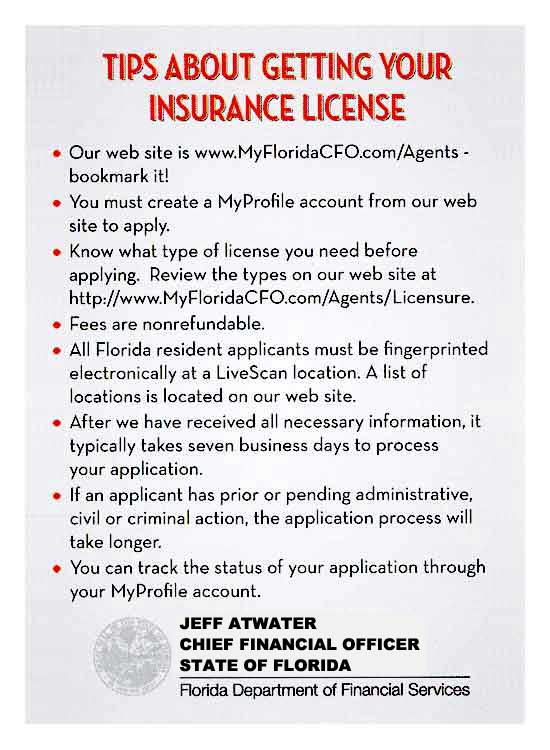
The application is typically submitted online through the Florida Department of Financial Services’ MyProfile portal. You will need to provide:
- Proof of completed pre-licensing education: This is usually verified electronically by your education provider.
- Examination score report: You will need to input your successful exam score.
- Fingerprint submission: As mentioned earlier, you will need to have your fingerprints taken and submitted for a background check. This is often done at the same testing center where you take your exam, or through a designated service.
- Application fees: There are fees associated with the license application and examination. These fees are subject to change, so it’s advisable to check the official website for the most up-to-date information.
Post-Application and Background Checks
After submitting your application, the Department of Financial Services will review it and conduct a thorough background check. Any discrepancies or disqualifying factors identified during the background check may lead to a denial of your application. It is crucial to be honest and accurate in all information provided during the application process.
Once your application is approved and all requirements are met, you will receive your official insurance license. Congratulations, you are now a licensed insurance agent in Florida!
Maintaining Your Insurance License
Obtaining your insurance license is a significant achievement, but it’s not the end of your professional journey. To remain actively licensed and continue practicing in Florida, you must adhere to ongoing requirements, primarily continuing education and renewal.
Continuing Education (CE) Requirements
Florida mandates that licensed insurance agents complete a certain number of continuing education (CE) hours to maintain their licenses. The number of hours and specific course requirements vary depending on your license type and the number of years you have been licensed. Generally, agents must complete:
- Annual CE: A minimum number of hours of CE must be completed annually.
- Specific Coursework: Certain CE courses are mandatory, such as those covering ethics, flood insurance, or Florida insurance law updates.
- Reporting: CE providers will report your completed hours to the state. It is your responsibility to ensure these hours are properly reported before your license renewal deadline.
Failure to complete the required CE hours can result in fines, suspension, or even revocation of your license. Staying proactive with your CE is essential to avoid any lapses in your license.
License Renewal
Your Florida insurance license is typically valid for a two-year period. Prior to your license’s expiration date, you must submit a renewal application and pay the required renewal fees. You will also need to attest that you have completed your continuing education requirements.
- Renewal Timelines: Pay close attention to your license expiration date and the renewal period. Missing the deadline can lead to your license lapsing, requiring you to go through the initial licensing process again.
- MyProfile Portal: The renewal process is also managed through the MyProfile portal, allowing for a streamlined experience.
By diligently adhering to continuing education requirements and renewing your license on time, you can ensure uninterrupted practice and a sustained career in the dynamic Florida insurance market. This commitment to professional development not only keeps you compliant but also ensures you remain knowledgeable about evolving industry trends and regulations.
LifeOutOfTheBox is a participant in the Amazon Services LLC Associates Program, an affiliate advertising program designed to provide a means for sites to earn advertising fees by advertising and linking to Amazon.com. Amazon, the Amazon logo, AmazonSupply, and the AmazonSupply logo are trademarks of Amazon.com, Inc. or its affiliates. As an Amazon Associate we earn affiliate commissions from qualifying purchases.