
The Golden State, renowned for its sun-drenched beaches, iconic landmarks, and vibrant culture, is also synonymous with geological dynamism. California’s position astride the restless San Andreas Fault and a complex network of other seismic systems makes it a perennial hotspot for seismic activity. This inherent geological reality prompts a recurring question: Is California due for a major earthquake? Understanding the science behind seismic forecasting, the history of significant temblors in the region, and the preparedness measures in place offers crucial insights for residents and visitors alike.
The Science of Seismic Activity in California
California’s seismic drama unfolds due to the intricate interaction between the Pacific Plate and the North American Plate. These colossal tectonic plates are in constant, albeit slow, motion. The San Andreas Fault, a transform fault, marks a significant portion of this boundary, where the plates slide past each other horizontally. However, this sliding is not smooth; friction causes stress to build up along the fault lines. When this accumulated stress exceeds the strength of the rocks, it is released in the form of seismic waves, resulting in an earthquake.
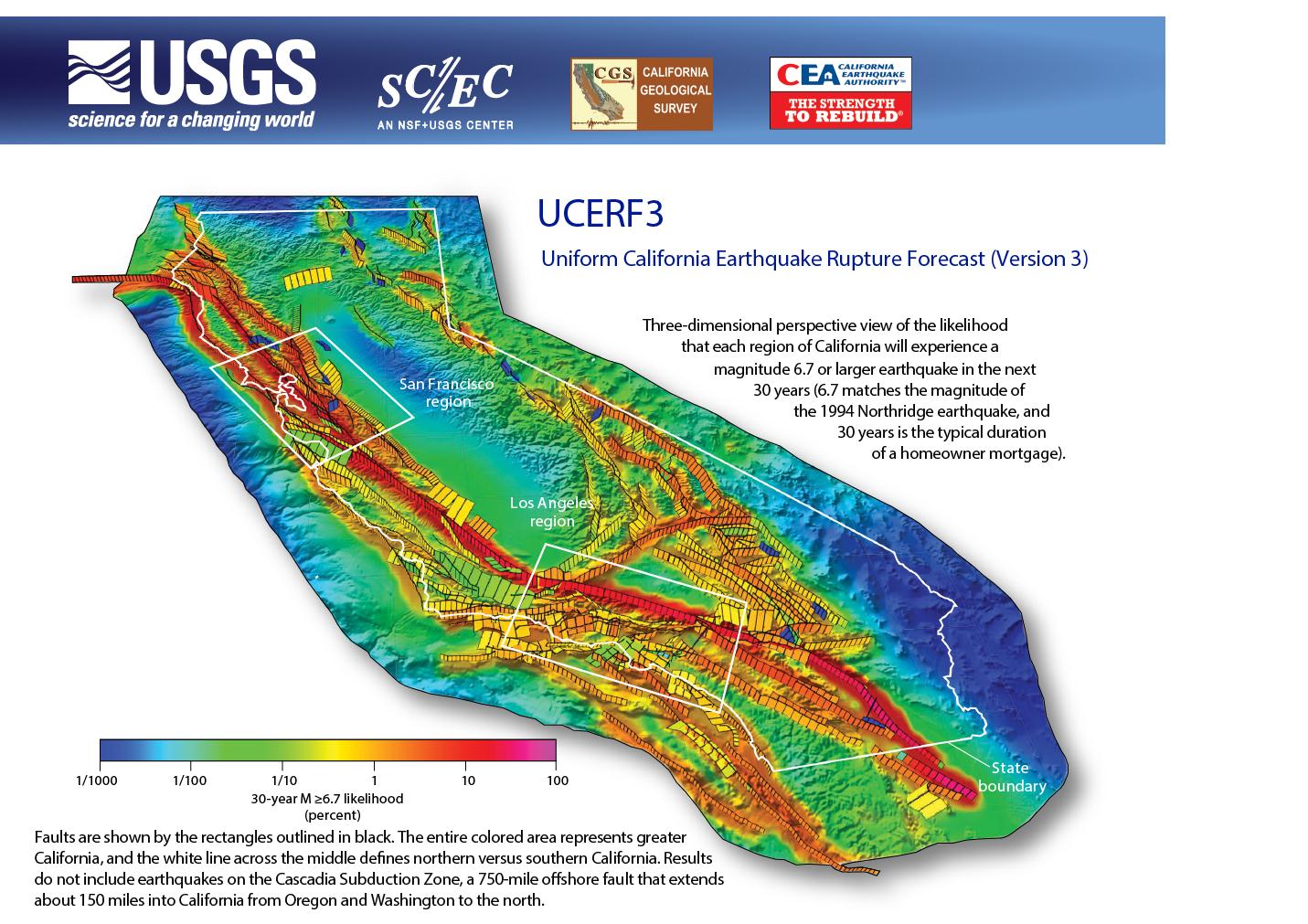
Understanding Fault Lines and Their Behavior
Beyond the San Andreas Fault, California is crisscrossed by numerous other fault systems, many of which are capable of producing significant earthquakes. These include the Hayward Fault, the Garlock Fault, and the Owens Valley Fault, among others. Each fault has its own unique characteristics, including its length, depth, rate of slip, and historical rupture patterns. Geologists study these features extensively, using techniques like GPS monitoring, creep meters, and paleoseismology (the study of ancient earthquakes) to understand fault behavior.
Stress Accumulation and Release
The fundamental principle governing earthquakes is the accumulation and release of stress. As tectonic plates grind against each other, energy is stored in the rocks along the fault. This energy can build up over decades, centuries, or even millennia. When the strain becomes too great, the fault ruptures, releasing this stored energy. The magnitude of an earthquake is directly related to the amount of energy released.
The Concept of “Earthquake Forecasting”
It’s crucial to distinguish between earthquake prediction and forecasting. True prediction, which would pinpoint the exact time, location, and magnitude of a future earthquake, remains elusive. However, seismologists can engage in earthquake forecasting, which involves assessing the probability of an earthquake of a certain magnitude occurring in a specific region over a given period. These forecasts are based on historical earthquake data, fault slip rates, and the understanding of stress accumulation.
A History of Significant Seismic Events
California has a rich and often destructive history of earthquakes, serving as stark reminders of the state’s geological volatility. These events have not only shaped the landscape but also profoundly impacted the lives of its inhabitants.
The Great San Francisco Earthquake of 1906
Perhaps the most infamous earthquake in California’s history, the Great San Francisco Earthquake of April 18, 1906, struck with a magnitude estimated at 7.9. Its epicenter was near San Francisco. The violent shaking caused widespread destruction, but the subsequent fires, fueled by ruptured gas lines and a compromised water supply, devastated the city. Over 3,000 lives were lost, and the city was largely reduced to rubble. This event spurred advancements in earthquake-resistant construction and urban planning.
The Long Beach Earthquake of 1933
On March 10, 1933, a magnitude 6.4 earthquake struck near Long Beach, causing significant damage to school buildings and other structures in the area. The Long Beach Earthquake highlighted the vulnerability of public infrastructure and led to the Field Act, a landmark piece of legislation mandating stricter building codes for school construction in California.
The Northridge Earthquake of 1994
The magnitude 6.7 Northridge Earthquake on January 17, 1994, jolted the Los Angeles metropolitan area, causing widespread damage and over 60 fatalities. The earthquake exposed weaknesses in freeway overpasses and apartment buildings, leading to further revisions in building codes and seismic retrofitting efforts, particularly in the southern part of the state.

The Loma Prieta Earthquake of 1989
On October 17, 1989, a magnitude 6.9 earthquake, known as the Loma Prieta Earthquake, struck the San Francisco Bay Area. The shaking caused substantial damage, most notably the collapse of a section of the Cypress Street Viaduct on Interstate 880 and damage to the San Francisco–Oakland Bay Bridge. The earthquake famously interrupted the broadcast of the World Series, which was being played between the San Francisco Giants and the Oakland Athletics.
Are We Overdue? Examining Probability and Preparedness
The question of whether California is “due” for an earthquake is a complex one that centers on probability rather than a fixed timetable. Scientists use various models and data to estimate the likelihood of future seismic events.
Probabilistic Seismic Hazard Assessments
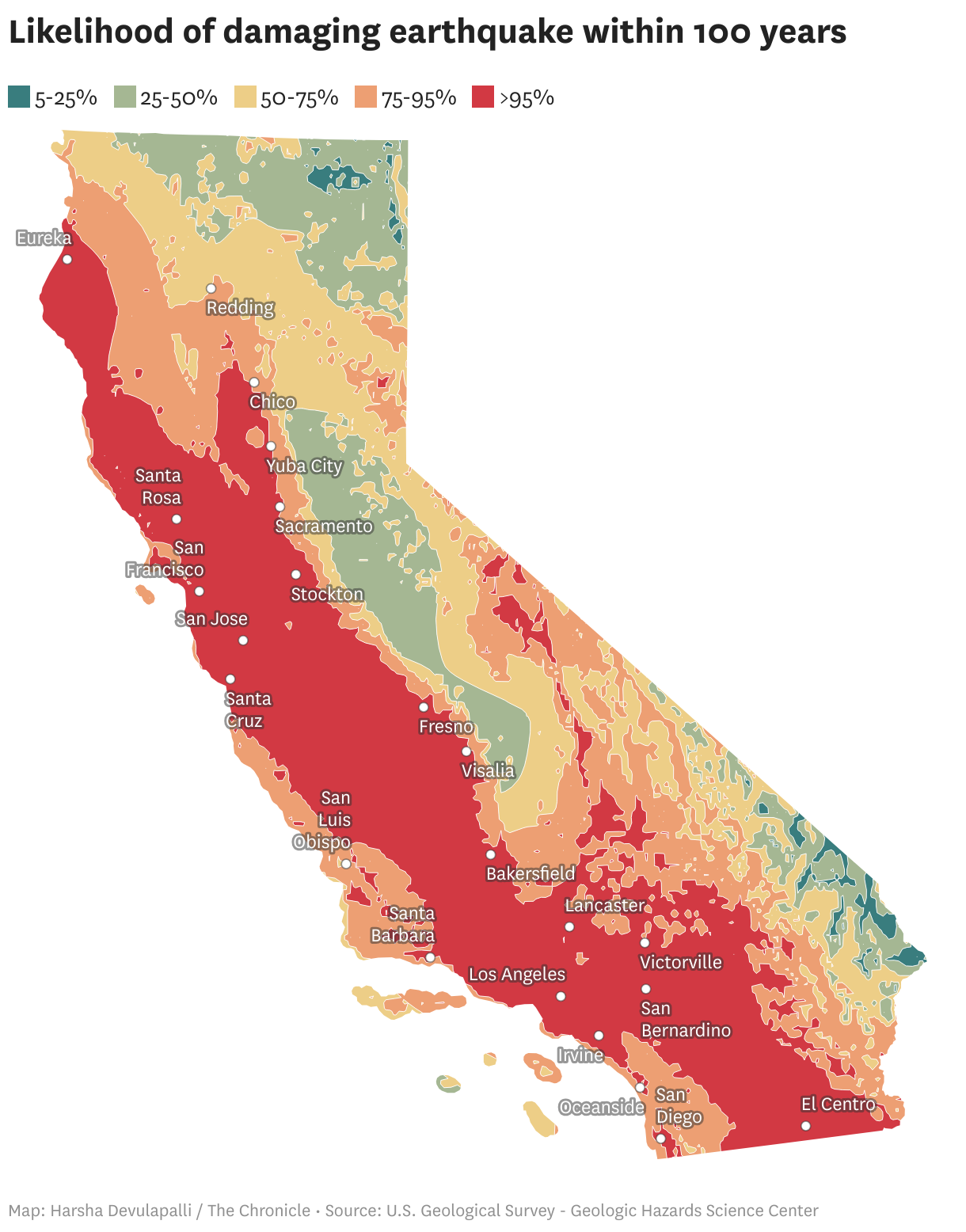
Organizations like the United States Geological Survey (USGS) regularly update probabilistic seismic hazard assessments for California. These assessments consider the frequency and magnitude of past earthquakes, the rate of strain accumulation on faults, and the geological characteristics of fault systems. For instance, the USGS has estimated that there is a high probability of a magnitude 6.7 or greater earthquake striking the San Francisco Bay Area within the next 30 years, and a similar high probability for the Los Angeles region. These probabilities are not predictions but rather statistical likelihoods based on current scientific understanding.
The Concept of the “Big One”
The term “The Big One” often refers to a hypothetical, very large earthquake (magnitude 7.8 or greater) that could occur on the southern section of the San Andreas Fault. This section of the fault has not experienced a major rupture in over 300 years, suggesting that a significant amount of stress has accumulated. A rupture on this section would have devastating consequences for Southern California. However, the timing of such an event remains uncertain.
Technological Advancements in Monitoring
Modern seismological monitoring in California is sophisticated. A network of seismometers, GPS stations, and other sensors constantly measures ground motion and deformation. This data allows scientists to detect even minor tremors, track the movement of tectonic plates, and identify areas where stress may be building. Early warning systems, such as the ShakeAlert® system developed by the USGS, can provide seconds to minutes of warning before strong shaking arrives, offering a critical window for people to take protective action.
Preparing for the Inevitable
Given California’s inherent seismic risk, preparedness is not merely advisable; it is essential. Both individuals and communities can take proactive steps to mitigate the impact of future earthquakes.
Individual and Household Preparedness
- Secure your space: Bolt down bookcases, water heaters, and other heavy furniture to walls. Secure appliances. Store heavy items on lower shelves.
- Create a disaster plan: Discuss with your family how to communicate and where to meet if you are separated. Identify safe places in each room of your home (under a sturdy table or desk).
- Assemble an emergency kit: Include water, non-perishable food, a flashlight, batteries, a first-aid kit, a whistle, a dust mask, medications, and a multi-tool.
- Know your utilities: Learn how to shut off natural gas, electricity, and water in an emergency.
Community and Infrastructure Resilience
Government agencies, researchers, and infrastructure developers are continuously working to enhance California’s resilience. This includes:
- Building codes and retrofitting: Strict building codes are in place for new construction, and significant efforts are underway to retrofit older, vulnerable buildings and infrastructure, such as bridges and overpasses.
- Public education campaigns: Initiatives like the Great California ShakeOut encourage millions of people to practice earthquake drills annually, fostering a culture of preparedness.
- Emergency response planning: First responders and emergency management agencies regularly conduct drills and update their plans to ensure an effective response following a major seismic event.
While the exact timing of the next major earthquake in California remains unknown, the scientific consensus is that such an event is not a matter of “if” but “when.” By understanding the geological forces at play, learning from historical events, and prioritizing preparedness at individual and community levels, Californians can significantly enhance their safety and resilience in the face of this predictable, yet unpredictable, natural phenomenon.
LifeOutOfTheBox is a participant in the Amazon Services LLC Associates Program, an affiliate advertising program designed to provide a means for sites to earn advertising fees by advertising and linking to Amazon.com. Amazon, the Amazon logo, AmazonSupply, and the AmazonSupply logo are trademarks of Amazon.com, Inc. or its affiliates. As an Amazon Associate we earn affiliate commissions from qualifying purchases.