
The question of Florida’s time zone often sparks debate, particularly for those planning trips to the Sunshine State. While most of Florida adheres to Eastern Standard Time (EST), understanding the nuances, especially concerning the western panhandle, is crucial for seamless travel and avoiding scheduling mishaps. This exploration delves into the time zone landscape of Florida, its historical context, and practical implications for visitors.
Florida’s Time Zone Landscape
The Predominance of Eastern Standard Time
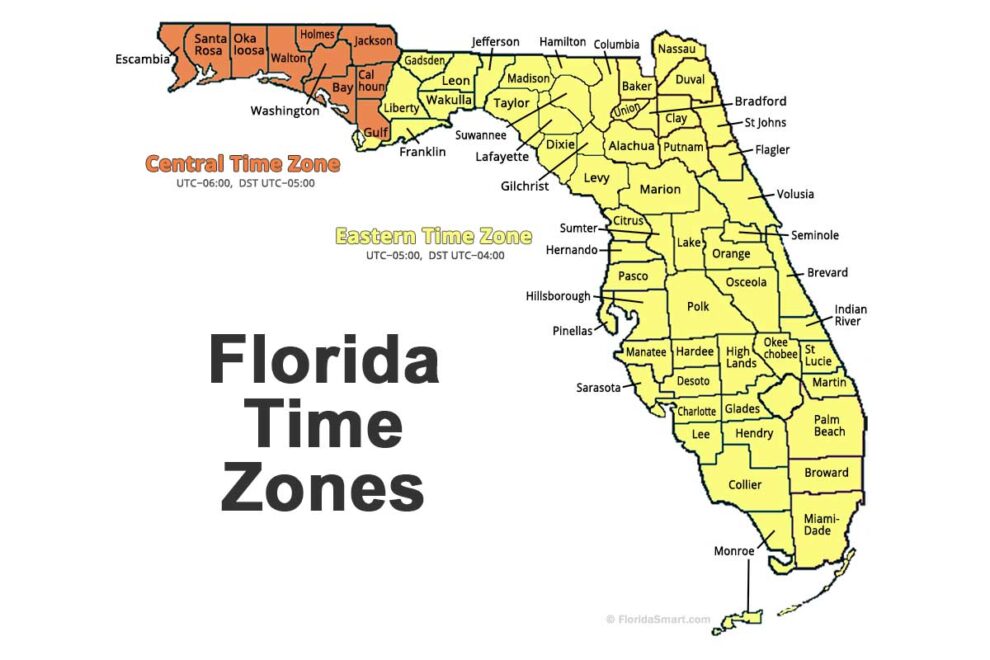
The vast majority of Florida operates on Eastern Standard Time (EST), which is UTC-5 during standard time and Eastern Daylight Time (EDT), UTC-4, during daylight saving time. This includes major tourist hubs like Orlando, Miami, Tampa, and the historic city of St. Augustine. This alignment places Florida in sync with much of the Eastern Seaboard of the United States, simplifying scheduling for national travelers and business dealings.
However, the concept of “Standard Time” versus “Daylight Saving Time” is a key element. Florida observes Daylight Saving Time, meaning clocks spring forward an hour in March and fall back an hour in November. This practice is consistent across the state, regardless of the specific time zone boundary.
The Peculiar Case of the Panhandle
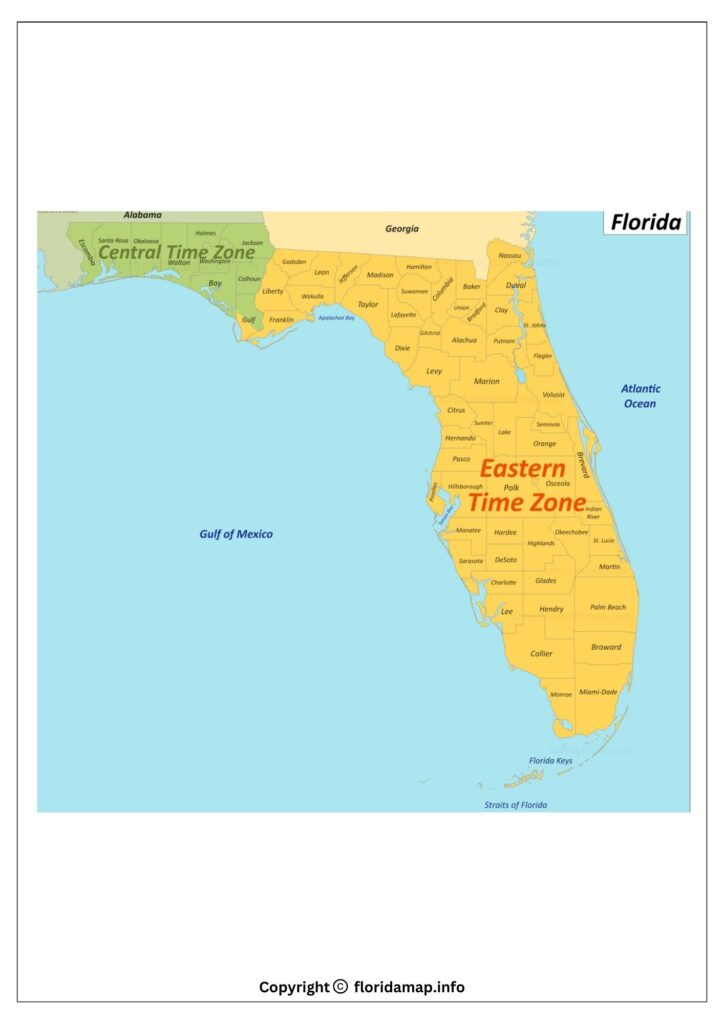
A notable exception to the statewide EST rule lies in the western reaches of Florida’s Panhandle. Specifically, counties west of the Apalachicola River observe Central Standard Time (CST), which is UTC-6 during standard time and Central Daylight Time (CDT), UTC-5, during daylight saving time. This geographic anomaly means that a traveler driving from, say, Tallahassee, the state capital, westward towards Pensacola or Destin will actually cross a time zone boundary.
The counties currently observing Central Time include Escambia, Santa Rosa, Okaloosa, Walton, Bay, and Gulf. This division is largely a legacy of historical economic and social ties to the Central Time Zone, particularly with neighboring states like Alabama, which also predominantly uses Central Time.
Historical Context and the Time Zone Divide
The current time zone configuration in Florida is not an arbitrary decision but rather a result of historical federal legislation and local adaptations. The Uniform Time Act of 1966 established daylight saving time nationwide, but it also allowed states to opt out of observing it. Florida, however, has chosen to observe DST, a decision that has been subject to occasional debate.
The division within the Panhandle has deeper roots. For decades, the exact boundary line has been a subject of discussion and occasional shifting due to the practicalities of commerce and communication. The Apalachicola River has long served as a de facto boundary, a geographical feature that naturally delineates regions. This division has influenced everything from local news broadcasts to business hours and personal travel plans for residents living near the border.
The federal government, through the Department of Transportation, is responsible for the contiguous United States’ time zones. While states can opt out of Daylight Saving Time, they cannot independently change their Standard Time zone designation without congressional approval. This has led to the somewhat unique situation where a state can be split across two different time zones.
Practical Implications for Travelers
Understanding Florida’s time zone duality is not just an academic exercise; it has direct and practical implications for anyone visiting or conducting business in the state.
Planning Your Itinerary

If your travel plans include destinations in both the eastern and western parts of the Panhandle, it is imperative to factor in the one-hour time difference. For instance, if you have a dinner reservation in Panama City Beach (Central Time) at 7:00 PM, and you are coming from Jacksonville (Eastern Time), you will need to account for the time zone shift when calculating your travel time. Missing a flight, a tour, or a critical meeting due to a simple oversight of the time zone can lead to significant frustration and expense.
Communication and Connectivity
When communicating with people or businesses in different parts of Florida, always confirm their local time. This is particularly important for booking accommodations, making restaurant reservations, or scheduling appointments. For example, if you are calling a hotel in Fort Myers (Eastern Time) from Pensacola (Central Time), be mindful of the hour difference when making your call, especially during business hours. Many businesses in the western Panhandle align their operating hours with Central Time, which may differ from those in the rest of the state.
Embracing the Local Rhythm
For those who love to immerse themselves in the local culture, understanding the time zone can add another layer of appreciation. The pace of life in different regions can sometimes feel subtly influenced by their temporal alignment. While this is largely a perception, being aware of the time zone can help travelers better synchronize with the local rhythm.
Navigating Florida’s Time Zones with Ease
To avoid confusion, here are some best practices for managing Florida’s time zones:
Verify Your Destination’s Time Zone
Before finalizing any travel plans, explicitly verify the time zone of your specific destination within Florida. Most GPS devices and smartphone applications will automatically adjust to the local time zone. However, it is always prudent to double-check, especially if you are relying on printed materials or have outdated device settings.
Stay Updated on Daylight Saving Time
Remember that Florida observes Daylight Saving Time. Clocks will move forward in the spring and backward in the fall. Ensure your devices are set to update automatically to avoid confusion during these transitions. The dates for Daylight Saving Time changes are standardized across the U.S., but being aware of them is always helpful.
Consult Local Resources
When in doubt, consult local resources. Most tourism websites, local government sites, and even hotel concierges can provide accurate information about the current time and relevant time zone for their specific location. For instance, if you are planning to visit the beautiful beaches of the Florida Panhandle, checking the time zone for your chosen city, be it in Bay County or Escambia County, is a wise step.
Consider the Impact on Activities
The time zone can also influence your enjoyment of certain activities. For example, sunset times will differ by an hour between the eastern and western parts of the state, impacting beach visits and evening excursions. Planning your day around these natural phenomena becomes more nuanced when crossing time zones within the same state.
In conclusion, while the answer to “Is Florida On Eastern Standard Time?” is largely yes, the exception in the western Panhandle necessitates awareness. By understanding the temporal geography of the Sunshine State, travelers can ensure a smooth, enjoyable, and precisely scheduled visit, maximizing their experience from the Atlantic coast to the Gulf shores.
LifeOutOfTheBox is a participant in the Amazon Services LLC Associates Program, an affiliate advertising program designed to provide a means for sites to earn advertising fees by advertising and linking to Amazon.com. Amazon, the Amazon logo, AmazonSupply, and the AmazonSupply logo are trademarks of Amazon.com, Inc. or its affiliates. As an Amazon Associate we earn affiliate commissions from qualifying purchases.