
Navigating the requirements for a REAL ID in Florida is a crucial step for many residents, especially those who frequently travel. The federal government mandates that by May 7, 2025, your standard state-issued driver’s license or identification card will need to be REAL ID compliant to board domestic commercial flights and enter certain federal facilities. This initiative aims to enhance national security by establishing a higher standard for identification. For residents of the Sunshine State, understanding the documentation and processes involved is key to avoiding last-minute scrambles and ensuring a smooth transition.

The Florida Department of Highway Safety and Motor Vehicles (FLHSMV) oversees the issuance of these enhanced identification cards. While the process might seem daunting, it’s designed to be thorough yet manageable. The core of obtaining a REAL ID lies in proving your identity, Social Security number, and Florida residency. Gathering the correct documents beforehand will significantly expedite your visit to a local Florida Department of Highway Safety and Motor Vehicles (FLHSMV) office.
Understanding REAL ID Requirements
The REAL ID Act of 2005 set forth stricter standards for identification documents. In Florida, this translates to a need for specific types of proof that verify your personal information and connection to the state. The primary goal is to ensure that the person presenting the identification is indeed who they claim to be. This involves a multi-layered approach to document verification.
Essential Documentation Categories
To successfully apply for a REAL ID in Florida, you must present original or certified copies of documents from three distinct categories:
- Proof of Identity: This is the most critical step, confirming your legal identity.
- Proof of Social Security Number: This verifies your unique nine-digit number, essential for federal identity verification.
- Proof of Florida Residency: This demonstrates that you are a current resident of Florida.
It’s imperative that the names on all your documents match exactly. If there are discrepancies, such as a married name on one document and a maiden name on another, you will need additional proof, such as a marriage certificate or a court order, to bridge the gap.
Gathering Your Documents: A Detailed Guide
The key to a stress-free REAL ID application process in Florida is meticulous preparation. Here’s a breakdown of acceptable documents for each category.
Proof of Identity (One Document Required)
You need to present one document from this list that bears your full legal name and date of birth.
- U.S. Birth Certificate: This must be an original or certified copy issued by a U.S. state, territory, or the District of Columbia. Ensure it includes your full legal name and date of birth. Hospital birth certificates are generally not accepted.
- Valid U.S. Passport: A current, unexpired U.S. passport is a universally accepted form of identification.
- Consular Report of Birth Abroad: If you were born abroad to U.S. parents, this document serves as proof of U.S. citizenship.
- Certificate of Citizenship: Issued by the U.S. Citizenship and Immigration Services (USCIS).
- Certificate of Naturalization: Also issued by USCIS.
- Valid Permanent Resident Card: For non-U.S. citizens who are lawful permanent residents.
- Employment Authorization Card (I-766): For certain non-U.S. citizens authorized to work in the U.S.
- Foreign Passport with Valid I-94 and Approved I-551 Stamp or I-551: This applies to individuals who are not U.S. citizens but have lawful status to be in the U.S.
Important Note: If your name has changed since the issuance of your identity document, you must also bring a document that legally establishes the name change. This could include a marriage certificate, divorce decree, or a court order.
Proof of Social Security Number (One Document Required)
You need to present one document that clearly shows your full Social Security number.
- Social Security Card: An original or certified copy of your Social Security card is the most straightforward option.
- W-2 Form: This tax form will display your full Social Security number.
- SSA-1099 Form: Another tax-related document that includes your Social Security number.
- Non-SSA-1099 Form: Some other 1099 forms may also be acceptable if they contain the full SSN.
- Pay Stub with Full Social Security Number: Ensure the pay stub is recent and clearly displays your complete SSN.
Important Note: If you do not have a Social Security number, you will need to provide proof of ineligibility. This typically involves obtaining a letter from the Social Security Administration stating that you are not eligible for a Social Security number.
Proof of Florida Residency (Two Documents Required)
To prove you reside in Florida, you must present two different documents from the approved list. These documents must show your residential address. Post office boxes are not accepted as proof of residency.
- Deed or Title to Residential Real Property: If you own your home in Florida, this document is excellent proof.
- Mortgage Statement: A recent mortgage statement from your financial institution.
- Florida Vehicle Registration or Title: Your car’s registration or title showing your Florida address.
- Homeowner’s Insurance or Automobile Insurance Policy: A current policy document.
- Utility Bill: This can include bills for electricity, water, gas, or cable television. The bill should be recent, typically within the last 60 days.
- Bank or Financial Institution Statement: A statement from your bank or credit union showing your Florida address.
- Medical Bill: A recent bill from a healthcare provider.
- School Transcript or Report Card: If you are a student, official school documents can serve as proof.
- Lease Agreement or Rental Contract: If you rent your home, this document is essential.
- Mail from Federal, State, or Local Government Agencies: Official correspondence from government entities.
- Florida Voter Registration Card: If you are registered to vote in Florida.
- Current Electric, Telephone, or Cable Bill: As mentioned above, these are common and accepted.
- Any Mail from a Florida Business: This requires that the mail is a bill or statement of account that clearly shows your name and Florida residential address.
Important Note: The two residency documents must be from different sources. For example, you cannot use two different utility bills.
The Application Process at the FLHSMV Office
Once you have meticulously gathered all your required documents, the next step is to visit an FLHSMV office to apply for your REAL ID. It’s highly recommended to schedule an appointment in advance to minimize your wait time. Many FLHSMV locations offer online appointment scheduling.
What to Expect During Your Visit
- Check-in and Document Verification: Upon arrival, you will check in, and a customer service representative will review your collected documents to ensure they meet all REAL ID requirements.
- Application Completion: You will fill out the necessary application forms.
- Photo Capture: A new photograph will be taken for your REAL ID.
- Vision Test: A brief vision test will be administered, similar to what you would experience for a standard driver’s license renewal.
- Fee Payment: There will be a fee for the REAL ID issuance, which is typically the same as for a standard driver’s license or identification card. Payment methods may vary by location, so it’s wise to check with your local office beforehand.
- Issuance of Temporary ID: You will typically receive a temporary paper REAL ID on-site. Your permanent card will be mailed to you within a few weeks.
Tips for a Smooth Application
- Verify Document Names: Double-check that the full legal name on your identity document precisely matches the name on your Social Security document and your residency documents.
- Use Official Sources: Always obtain documents from official issuing agencies.
- Check the FLHSMV Website: The FLHSMV website provides the most up-to-date and comprehensive information regarding required documents and office locations. It’s also the best place to find links for scheduling appointments.
- Arrive Early: Even with an appointment, arriving a little early can help you navigate any unexpected queues.
- Be Patient: The process can take some time, as each application is carefully reviewed.
Frequently Asked Questions About Florida REAL IDs
Many residents have questions as they prepare to obtain their REAL ID. Here are some common inquiries:
Q: Can I use a digital copy of my documents?
A: No, only original or certified copies of documents are accepted. Digital copies are not sufficient.
Q: What if my name has changed multiple times?
A: You will need to provide a document for each name change, such as a marriage certificate, divorce decree, or court order, to create a clear chain of legal name changes leading to your current legal name.
Q: How long is a REAL ID valid in Florida?
A: A REAL ID in Florida has the same validity period as a standard driver’s license or identification card, which is typically eight years for U.S. citizens.
Q: What happens if I don’t get a REAL ID by the deadline?
A: After May 7, 2025, you will not be able to use your standard Florida driver’s license or ID card to board domestic commercial flights or enter certain federal facilities. You will need a valid U.S. passport or another acceptable form of federal identification for these purposes.

Q: Is a Florida Driver’s License inherently a REAL ID?
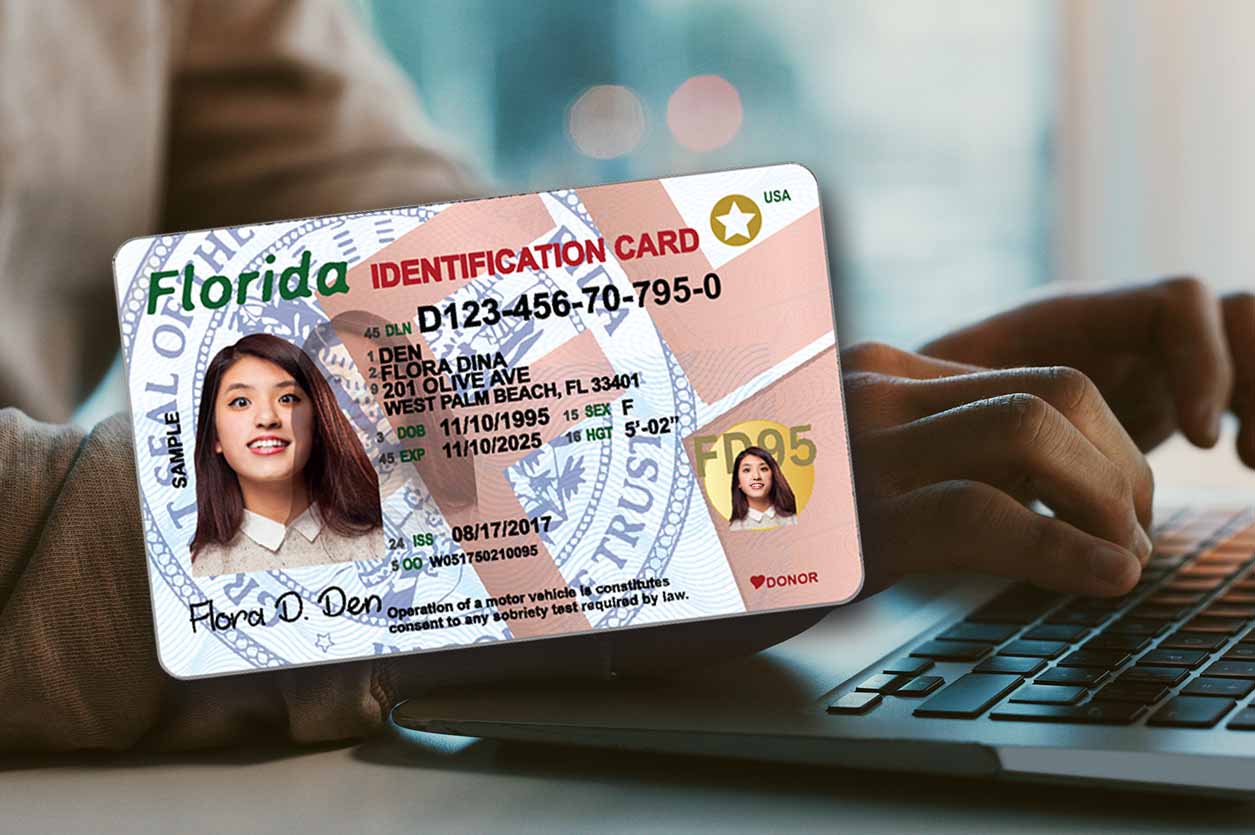
A: No. While Florida has been issuing REAL ID compliant licenses and ID cards, not all existing licenses are REAL ID compliant. You must specifically apply for and obtain a REAL ID to meet the federal requirement. Look for the star symbol on your card to confirm if it’s REAL ID compliant.
Obtaining your REAL ID in Florida is an essential step for many, particularly for those who wish to maintain the convenience of air travel and access to federal sites without needing alternative identification. By understanding the documentation requirements and following the outlined process, you can ensure a smooth and successful application, keeping you compliant with federal mandates and ready for your future travels. The FLHSMV is committed to making this transition as clear as possible for all Florida residents.
LifeOutOfTheBox is a participant in the Amazon Services LLC Associates Program, an affiliate advertising program designed to provide a means for sites to earn advertising fees by advertising and linking to Amazon.com. Amazon, the Amazon logo, AmazonSupply, and the AmazonSupply logo are trademarks of Amazon.com, Inc. or its affiliates. As an Amazon Associate we earn affiliate commissions from qualifying purchases.