
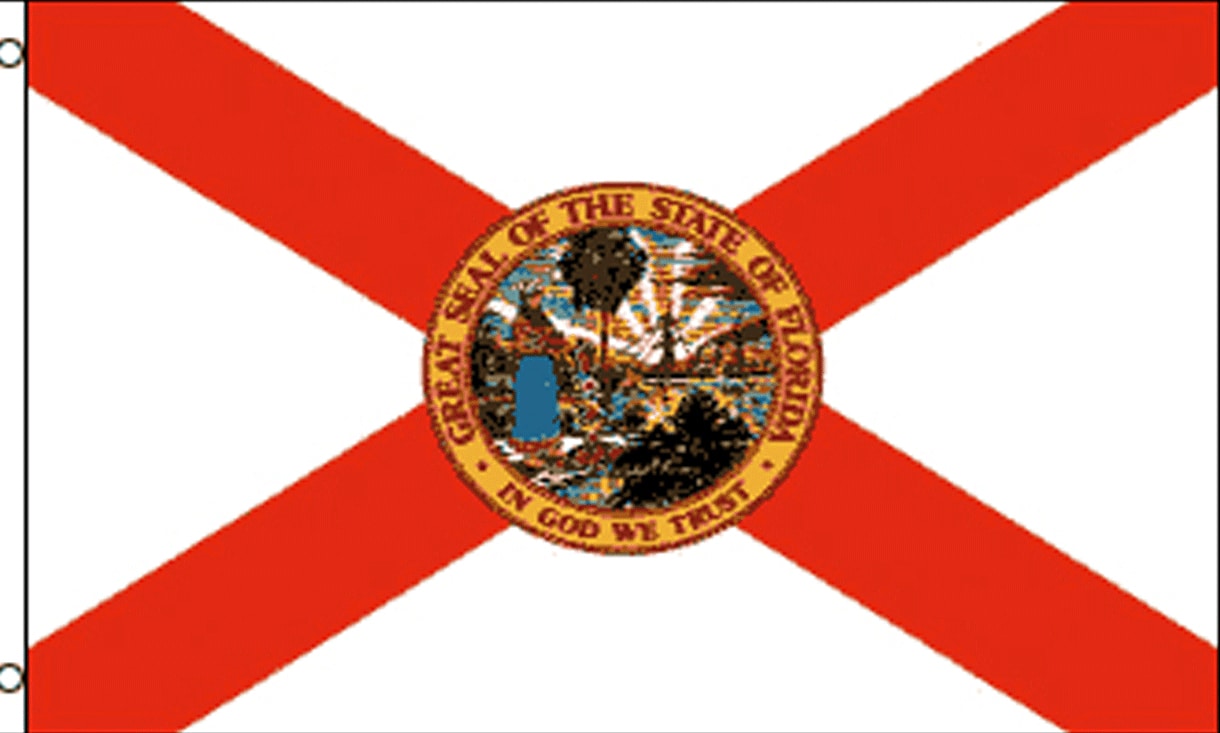
The Florida State Flag is a striking emblem, rich with history and symbolism that reflects the Sunshine State’s unique identity. While its design might seem straightforward at first glance, a closer examination reveals layers of meaning and evolution. Understanding the flag’s appearance is more than just a visual exercise; it’s an entry point into the heritage and spirit of Florida.
The Core Design: A Cross and a Seal
At its heart, the Florida State Flag features a prominent red St. Andrew’s Cross set against a white field. This bold crimson cross divides the flag into four equal quadrants. The red cross is a direct nod to the flag of Confederate States of America, specifically the Battle Flag of the Army of Northern Virginia, though its adoption in Florida predates the Civil War, drawing inspiration from earlier Spanish maritime flags and the Cross of Burgundy. This detail often sparks historical discussion, connecting the state to a complex past while simultaneously asserting a distinct identity.

The true focal point, however, is the state seal, which is emblazoned in the center of the flag, superimposed over the intersection of the cross. This seal is not merely decorative; it is a vibrant tableau that encapsulates the essence of Florida.
The State Seal: A Microcosm of Florida
The current design of the state seal was officially adopted in 1868, undergoing minor modifications over the years. It depicts a Seminole woman scattering flowers, symbolizing the abundant natural beauty and the indigenous heritage of the state. She is shown standing in a landscape with a tall palm tree, representing Florida’s distinctive flora. In the background, a steamboat sails on a body of water, signifying the importance of commerce and transportation throughout the state’s history. The sun rises on the horizon, underscoring Florida’s nickname, “The Sunshine State.” The words “In God We Trust” are inscribed along the top rim of the seal, a motto that has been part of the state’s identity since 1903.
The choice of a Seminole woman as the central figure is particularly significant. It acknowledges the historical presence and resilience of the Seminole people, who are deeply intertwined with the state’s narrative. The scattering of flowers further emphasizes the state’s rich agricultural bounty and its reputation as a verdant paradise.
Historical Evolution of the Flag
The journey to the current Florida State Flag was not a direct one. The state’s first official flag, adopted in 1845 upon admission to the Union, was a simple blue field with the state seal. However, this design was quickly altered.
Early Flags and the Civil War Era
During the turbulent years leading up to and including the Civil War, Florida saw several unofficial flags and variations. The adoption of a flag featuring the red St. Andrew’s Cross became more prominent during this period, often seen as a symbol of Southern solidarity. The 1868 redesign, which introduced the current central seal, solidified the flag’s appearance, largely retaining its essence even as the state’s identity continued to evolve.
Modernizations and Refinements
While the core elements of the 1868 flag have remained, there have been refinements to the seal’s details and the overall depiction of the elements. These changes have been aimed at enhancing clarity and ensuring that the flag accurately represents the state’s progressive image. The constant presence of the St. Andrew’s Cross and the vibrant seal ensures that the Florida State Flag is instantly recognizable and deeply meaningful to those who call Florida home.

Symbolism and Significance
The Florida State Flag is more than just a piece of cloth; it’s a powerful symbol that encapsulates the state’s history, natural beauty, and cultural heritage. Each element carries weight and contributes to the overall narrative of Florida.
The Red Cross: A Symbol of Resilience and Heritage
The red St. Andrew’s Cross on a white field is a design element that connects Florida to a long lineage of maritime and military flags. While its historical associations are complex, in the context of the modern state flag, it serves as a strong, unifying graphic element. Its bold presence is unmistakable, making the flag stand out whether it’s displayed on a flagpole at the Florida State Capitol, at a local park in Miami, or during a ceremony at the Kennedy Space Center. It signifies a foundational aspect of the state’s visual identity.
The Seal: A Living Portrait of Florida
The state seal, placed at the heart of the flag, is a narrative in itself. The Seminole woman, the diverse flora, the steamboat, and the rising sun all combine to paint a picture of Florida as a land of opportunity, natural wonder, and historical depth. The scattering of flowers is particularly evocative, suggesting growth, abundance, and the state’s role as a welcoming destination. The inclusion of “In God We Trust” adds a spiritual dimension, reflecting a common value held across many communities within the state. The seal’s visual richness invites contemplation and appreciation for all that Florida represents.
The Flag in Context: Where You’ll See It
The Florida State Flag is a ubiquitous presence throughout the state, serving as a constant reminder of its distinct identity. It flies proudly at government buildings, public schools, and military installations. It’s a common sight at state parks and recreational areas, adding to the patriotic ambiance of places like Everglades National Park or the beaches of Clearwater.
Official Settings and Public Spaces
At the Florida State Capitol in Tallahassee, multiple flags are often flown, with the state flag holding a prominent position. It is also a common fixture in courthouses, post offices, and other civic buildings, representing the authority and presence of the state government. For residents and visitors alike, seeing the flag is a constant affirmation of their location within the vibrant and diverse state of Florida.
Celebrations and Commemorations
The flag plays a significant role in state holidays, patriotic events, and public ceremonies. It is unfurled during parades, sporting events, and festivals across Florida, from the Orange Bowl in Miami to local community gatherings. Its presence at such occasions reinforces a sense of shared identity and pride among Floridians.
Conclusion: A Symbol of State Pride
The Florida State Flag is a compelling visual narrative. Its distinctive design, featuring the bold red St. Andrew’s Cross and the intricately detailed state seal, communicates a rich tapestry of history, natural beauty, and cultural heritage. From the Seminole woman scattering flowers to the steamboat navigating its waters, every element tells a story that defines the Sunshine State. As it flutters in the warm breeze, the flag stands as an enduring emblem of Florida’s unique spirit and its place in the American tapestry.
LifeOutOfTheBox is a participant in the Amazon Services LLC Associates Program, an affiliate advertising program designed to provide a means for sites to earn advertising fees by advertising and linking to Amazon.com. Amazon, the Amazon logo, AmazonSupply, and the AmazonSupply logo are trademarks of Amazon.com, Inc. or its affiliates. As an Amazon Associate we earn affiliate commissions from qualifying purchases.