
Navigating the Sunshine State’s time zones can be a surprisingly important detail for travelers planning their itineraries. While the majority of Florida operates under a single time zone, a small but significant portion adheres to another. Understanding this distinction is crucial for making flight connections, booking tours, coordinating with local contacts, and simply ensuring your plans unfold without a hitch. This guide will demystify Florida’s time zones, offering clarity and practical advice for anyone visiting or relocating to this vibrant state.
Understanding Florida’s Time Zones
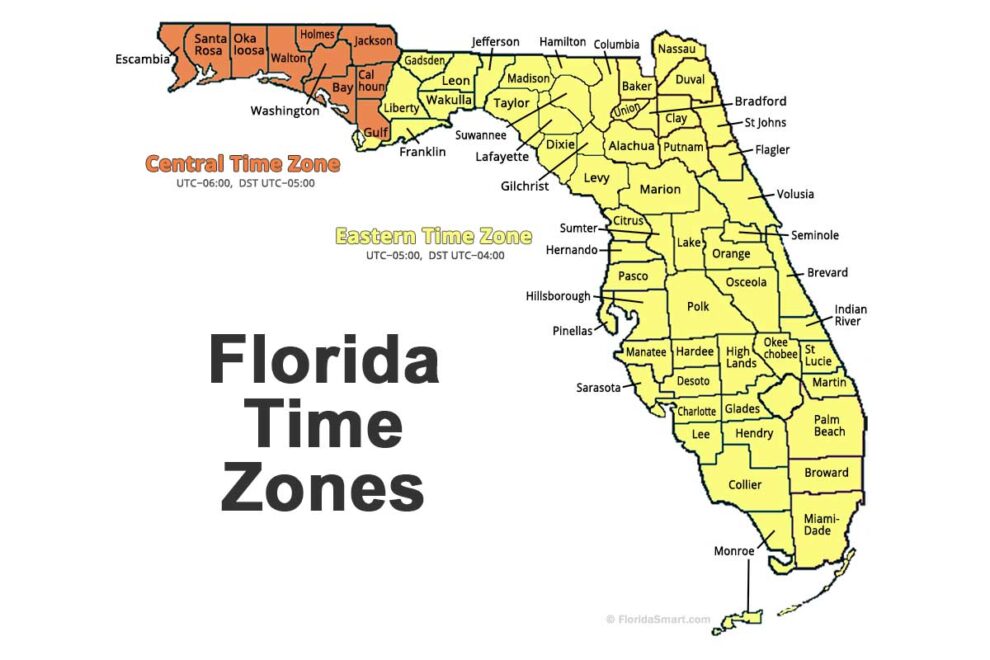
Florida, like much of the United States, observes Daylight Saving Time (DST). During DST, clocks are advanced by one hour, and during standard time, they are set back. The key to understanding Florida’s time zones lies in its geographical division. The state is primarily split between the Eastern Time Zone and the Central Time Zone.
The Dominant Eastern Time Zone
The overwhelming majority of Florida, encompassing its most populous areas and major tourist hubs, observes Eastern Standard Time (EST) and Eastern Daylight Time (EDT). This includes iconic destinations such as:
- Miami and its surrounding metropolitan area, known for its vibrant arts scene,[^1] stunning beaches, and bustling nightlife.
- Orlando, the theme park capital of the world, home to world-renowned attractions like Walt Disney World Resort and Universal Orlando Resort.
- Tampa, a major cultural and economic center on Florida’s west coast, offering a mix of historical charm and modern attractions, including Busch Gardens Tampa Bay.
- Jacksonville, the largest city by land area in the contiguous United States, situated in the northeast corner of the state.
- The Florida Keys, a string of tropical islands stretching from Key West northward, famous for their laid-back atmosphere and exceptional diving opportunities.
Travelers heading to these popular destinations will find themselves operating on the same time as New York City, Washington D.C., and Atlanta. This means that if it’s 9:00 AM in Miami, it’s also 9:00 AM in Manhattan and 6:00 AM in Los Angeles.
The Western Edge: Central Time Zone
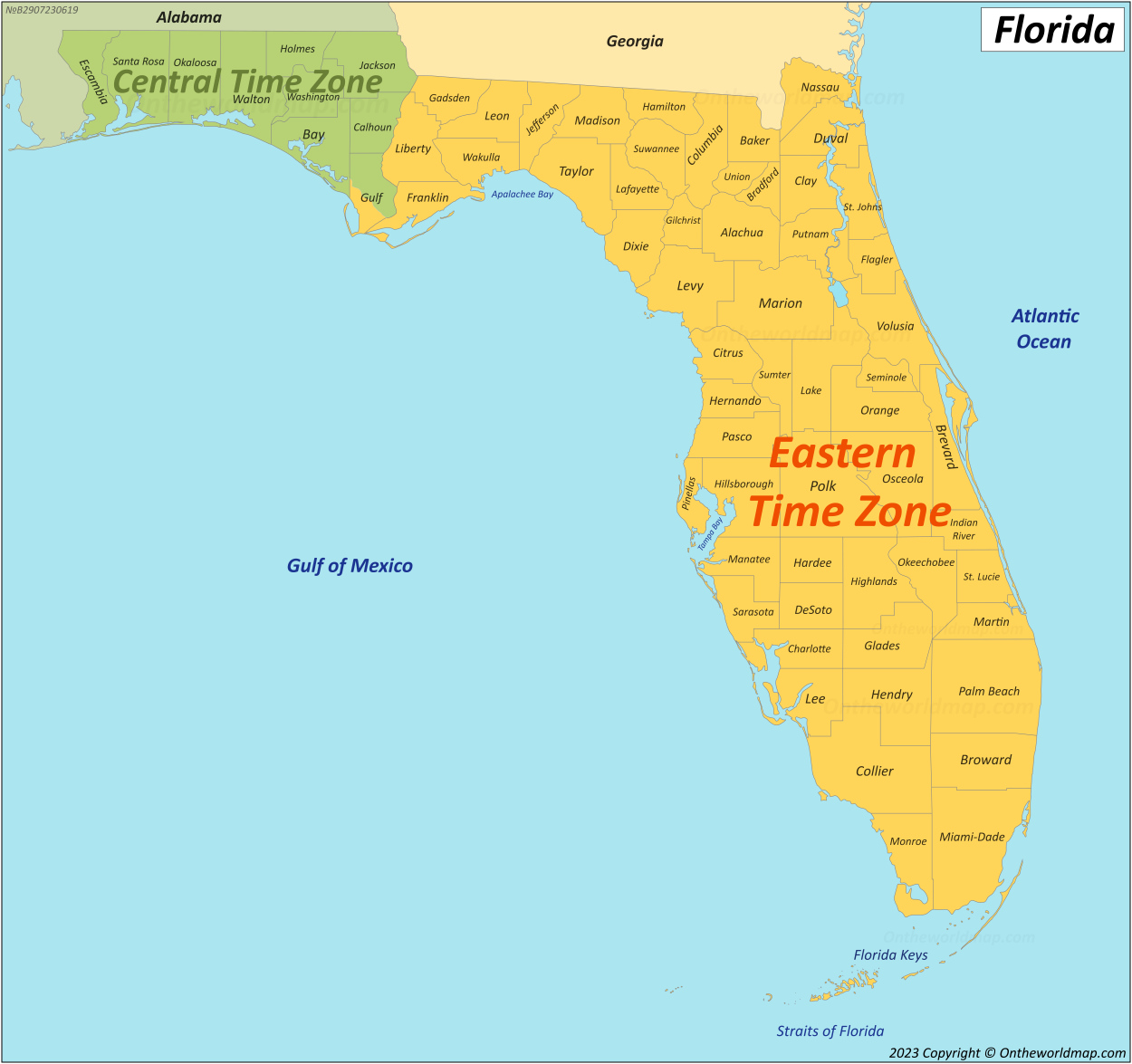
A smaller, western portion of Florida falls within the Central Time Zone. This demarcation line is not a straight, easily discernible boundary but rather follows county lines. The counties that observe Central Standard Time (CST) and Central Daylight Time (CDT) are generally those west of the Apalachicola River and extend to the Florida-Alabama border.
Key areas within the Central Time Zone include:
- Pensacola, a historic city on the Florida Panhandle, known for its beautiful beaches and military history.
- Panama City Beach, a popular spring break destination and a year-round beach resort town.
- Tallahassee, the state capital, although much of Leon County (where Tallahassee is located) actually remains in the Eastern Time Zone. This is a point of frequent confusion. The counties firmly in the Central Time Zone are west of Taylor and Dixie counties.
For travelers moving between regions, particularly those exploring the Panhandle, understanding this shift is vital. If it’s 9:00 AM in Orlando (Eastern Time), it will be 8:00 AM in Pensacola (Central Time). This one-hour difference can impact ferry schedules, restaurant reservations, and the timing of tours, especially when crossing between these zones.
Practical Implications for Travelers
The time zone difference, though seemingly minor, can have tangible effects on your travel experience. Being aware of this can prevent minor inconveniences from becoming significant disruptions.
Travel Planning and Logistics
- Flights: When booking flights into or out of Florida, always double-check the arrival and departure times listed against the time zone of the destination airport. Most airline systems will automatically adjust to local time, but it’s good practice to be aware. For example, a flight from Dallas (Central Time) to Miami (Eastern Time) will show an earlier arrival time in local Miami time than if you were comparing it to Dallas time.
- Car Rentals: If you’re picking up a rental car in one time zone and dropping it off in another, ensure your rental agreement and return time are clearly understood.
- Interstate Travel: When driving across the time zone line, remember to adjust your watch. This is particularly important if you have timed appointments or need to meet someone at a specific hour. For instance, if you are driving from Mobile, Alabama (Central Time) to Tallahassee, Florida (mostly Eastern Time, though the easternmost parts of the county can be confusing), you will need to adjust your clock.
- Cruise Departures: If you’re embarking on a cruise from a port like Port Canaveral (Eastern Time) or Tampa (Eastern Time), ensure you arrive at the port well before the scheduled departure time, factoring in any potential time zone shifts if your journey to the port originated from the Central Time Zone of Florida.
Accommodation and Activities

- Hotel Check-ins and Check-outs: While most hotels will operate on the local time of their location, confirm any specific timings if you are moving between time zones. For example, a hotel in Destin (Central Time) will have a different checkout time relative to its local clock than a hotel in Key West (Eastern Time).
- Tour Bookings: Many tours, from airboat rides in the Everglades to dolphin watching excursions, operate on precise schedules. Booking a tour in the Florida Panhandle requires understanding its Central Time location, while booking a tour in South Florida means adhering to Eastern Time.
- Restaurant Reservations: Dinner reservations, popular brunch spots, and even early morning fishing charters will all be dictated by the local time. A 7:00 PM reservation in St. Petersburg (Eastern Time) is an hour later in real-time than a 7:00 PM reservation in Fort Walton Beach (Central Time).
- Theme Park Hours: If visiting attractions like SeaWorld Orlando or Busch Gardens in Tampa, their operating hours are based on Eastern Time. Conversely, if you were to hypothetically visit an attraction that might exist on the very edge of the Central Time Zone within Florida, its hours would be based on that.
Daylight Saving Time in Florida
Like most of the United States, Florida observes Daylight Saving Time. The DST period typically begins on the second Sunday in March and ends on the first Sunday in November. During this period, clocks are advanced by one hour.
- During DST (Spring/Summer/Fall):
- Eastern Time becomes Eastern Daylight Time (EDT).
- Central Time becomes Central Daylight Time (CDT).
- The one-hour difference between the two zones remains.
- During Standard Time (Fall/Winter):
- Eastern Time is EST.
- Central Time is CST.
- The one-hour difference between the two zones persists.
It is important to note that the exact observance of DST has been a topic of discussion in Florida. While the state currently participates in DST, there have been legislative efforts and public discussions about potentially adopting permanent DST or permanent standard time. However, as of current federal law, any change to DST observance requires congressional approval. For the traveler, this means assuming standard DST rules will apply unless official announcements indicate otherwise.
The Importance of Verification
Given the potential for confusion, especially around the border counties and with the ongoing DST discussions, it is always best practice to:
- Check the local time for your specific destination using a reliable online source or your smartphone’s timekeeping app before and during your trip.
- Confirm timings with tour operators, hotels, and activity providers when making bookings, explicitly mentioning the time zone if there’s any doubt.
- Pay attention to signage at airports and major transportation hubs which will indicate local times.
Navigating the Panhandle’s Unique Geography
The most common point of time zone confusion in Florida arises in the northwestern part of the state, the Panhandle. The transition from Eastern Time to Central Time isn’t always clearly marked by highway signs. Travelers moving west from cities like Gainesville or Tallahassee (which is predominantly Eastern Time) towards Pensacola will experience the one-hour shift.
Understanding County Lines
The official demarcation follows county boundaries. The counties typically considered to be in the Central Time Zone are:
- Bay County (home to Panama City Beach)
- Calhoun County
- Franklin County (western part)
- Gadsden County (some debate exists, but generally considered Eastern)
- Gulf County
- Holmes County
- Jackson County
- Jefferson County (generally considered Eastern)
- Leon County (Tallahassee is here, and it’s predominantly Eastern Time)
- Liberty County
- Okaloosa County (home to Fort Walton Beach and Destin)
- Santa Rosa County
- Taylor County (eastern part is Eastern Time)
- Walton County
- Washington County
The counties in the Panhandle that are firmly in the Eastern Time Zone are generally east of the Apalachicola River, including areas around Apalachicola itself. This makes the geographical boundary more complex than a simple east-west line. For instance, while Tallahassee is in the Panhandle, its county, Leon County, is predominantly in the Eastern Time Zone. However, travel just a short distance west into neighboring counties can place you in the Central Time Zone.
This nuanced division means that while many residents of the Panhandle might consider themselves “in the Panhandle,” their specific location dictates their time zone. It’s a detail that can catch even seasoned travelers off guard.
Final Thoughts for a Seamless Florida Visit
Florida’s time zones are a small but essential piece of logistical information for any visitor. The vast majority of the state operates on Eastern Time, simplifying affairs for those visiting its world-famous theme parks, vibrant cities, and tropical islands. However, the western Panhandle’s adherence to Central Time requires a little extra attention.
By understanding the geographical split, the implications of Daylight Saving Time, and the specific county boundaries, you can ensure your travel plans are precisely timed. Whether you’re catching a sunrise on the Atlantic coast or planning a sunset stroll on the Gulf of Mexico, knowing “What Time Zone Am I In Florida?” will contribute to a smoother, more enjoyable, and perfectly punctual experience in the Sunshine State.
[^1]: This is a common descriptor for Miami. LifeOutOfTheBox is a participant in the Amazon Services LLC Associates Program, an affiliate advertising program designed to provide a means for sites to earn advertising fees by advertising and linking to Amazon.com. Amazon, the Amazon logo, AmazonSupply, and the AmazonSupply logo are trademarks of Amazon.com, Inc. or its affiliates. As an Amazon Associate we earn affiliate commissions from qualifying purchases.