
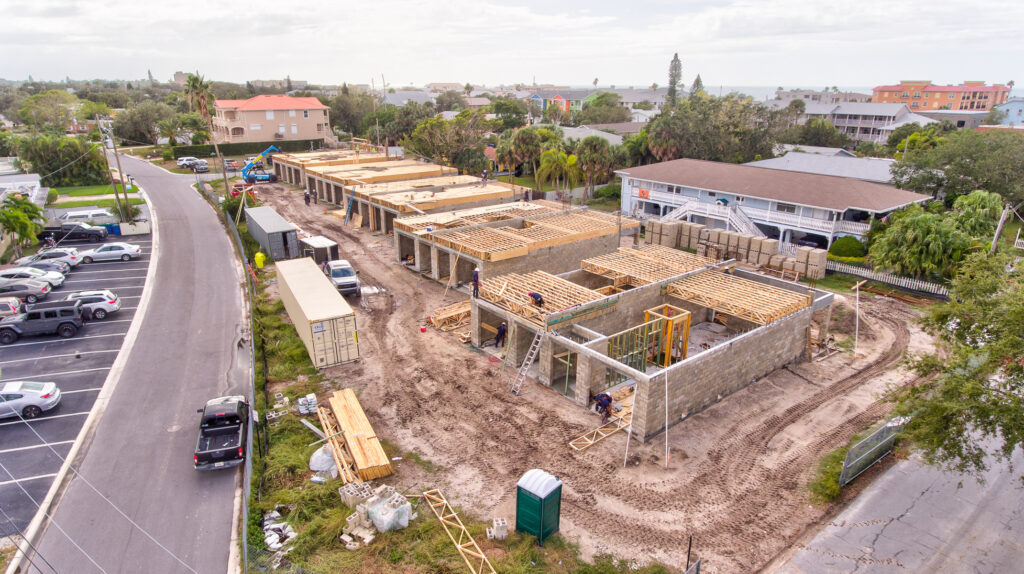
To the casual visitor driving through the sun-drenched streets of Miami or the suburban sprawling neighborhoods of Orlando, the visual landscape of Florida presents a distinct architectural consistency. Unlike the timber-framed houses common in the Northeast or the brick-heavy structures of the Midwest, Florida is a land of stucco-covered masonry. Beneath that smooth, pastel-colored finish lies the backbone of the Sunshine State: the cinder block, or more accurately, the Concrete Masonry Unit (CMU). This preference for concrete over wood is not merely an aesthetic choice or a regional quirk; it is a sophisticated response to the unique environmental, biological, and historical challenges of the United States‘ most tropical peninsula.

The Structural Imperative: Hurricane Resilience and Safety
The most pressing reason for the prevalence of cinder blocks in Florida architecture is the constant threat of extreme weather. Situated between the Atlantic Ocean and the Gulf of Mexico, the state serves as a primary target for tropical cyclones. The history of building practices in the region is marked by a “before and after” defined by one catastrophic event: Hurricane Andrew in 1992. When the storm leveled thousands of wood-framed homes in South Florida, it prompted a radical overhaul of the Florida Building Code.
Withstanding High-Velocity Winds
Cinder blocks provide a level of structural rigidity that timber framing simply cannot match. In cities like Fort Lauderdale and Miami Beach, buildings must be constructed to withstand wind speeds exceeding 150 miles per hour. A concrete block wall, reinforced with steel rebar and filled with liquid concrete (grout), creates a continuous, heavy-duty barrier. This “reinforced masonry” acts as a solid monolith that can absorb the incredible pressure exerted by hurricane-force winds without buckling or detaching from the foundation.
Protection from Flying Debris
In a major storm, the wind itself is only half the battle; the debris carried by the wind—roof tiles, tree branches, and lawn furniture—essentially becomes high-speed projectiles. While a piece of lumber might penetrate the siding and plywood of a frame house, it is unlikely to pierce a thick cinder block wall. For residents in coastal areas like Naples and Sarasota, this physical mass offers a vital layer of protection for both the structure and the lives within it.
Thermal Mass and Energy Efficiency in the Tropics
Beyond the violence of a hurricane, Florida architecture must contend with the relentless heat and humidity of a sub-tropical climate. The choice of cinder blocks plays a significant role in how buildings manage temperature, influencing the comfort of everything from luxury resorts in Palm Beach to residential villas in Coral Gables.
The Science of Thermal Mass
Cinder blocks possess high thermal mass, meaning they can absorb and store heat energy. During the scorching afternoon sun in Tallahassee or Tampa, the concrete walls absorb the heat, preventing it from immediately transferring to the interior of the building. As the temperature drops slightly at night, this stored heat is slowly released. When combined with modern insulation and the ubiquitous stucco finish—which reflects a significant portion of solar radiation—cinder block construction helps maintain a more stable internal temperature, significantly reducing the load on air conditioning systems.
Managing Humidity and Moisture
In the humid environment near the Everglades or the Florida Keys, moisture is the enemy of longevity. Wood is porous and prone to absorbing atmospheric moisture, which can lead to warping, swelling, and eventually, structural failure. Concrete, while also porous to some degree, does not lose its structural integrity when exposed to high humidity. By using cinder blocks and sealing them with waterproof stucco or masonry paint, builders in Jacksonville and Daytona Beach ensure that the skeletal structure of the building remains unaffected by the damp air that characterizes the region.
Biological Warfare: Termites, Rot, and Humidity
One of the less-glamorous but most practical reasons for using cinder blocks in Florida is the state’s massive population of wood-destroying organisms. The warm, wet climate is a paradise for subterranean and Formosan termites, which can decimate a wood-framed structure in a surprisingly short amount of time.
Immunity to Termite Damage
In parts of Central Florida, including the areas surrounding Disney World and Cape Canaveral, termite prevention is a primary concern for property owners. Cinder blocks offer a simple solution: concrete is not an organic food source. By utilizing masonry for the first floor—or the entire structure—builders eliminate the risk of termites hollowing out the load-bearing walls. This increases the longevity of landmarks and homes alike, reducing the need for expensive chemical treatments and structural repairs over the decades.
Fire Resistance in Densely Populated Areas
Concrete is inherently non-combustible. In densely populated urban centers like Downtown Miami or the historic neighborhoods of Ybor City, fire safety is paramount. Cinder block walls provide an excellent fire rating, preventing the spread of flames from one unit to another. This is particularly important for the multi-family apartments and townhomes that have become a staple of Florida real estate development, offering residents peace of mind in an environment where lightning strikes—a common cause of fires in the state—are frequent.
Economic and Historical Foundations of Florida Masonry
The reliance on cinder blocks is also deeply rooted in the history of Florida and the economics of its development. From the earliest Spanish settlements to the mid-century building boom, masonry has defined the local aesthetic.
The Legacy of Spanish and Mediterranean Architecture
The architectural history of Florida began with masonry. In St. Augustine, the oldest continuously inhabited European-established settlement in the United States, the Castillo de San Marcos was built using coquina—a natural limestone composed of shell fragments. This early reliance on stone and “tabby” (a mixture of lime, sand, and shells) set a precedent for durable, thick-walled construction. Later, during the Florida Land Boom of the 1920s, architects drew inspiration from Spanish Colonial and Mediterranean styles. These designs naturally favored masonry, as the look of thick, plastered walls was central to the aesthetic of Boca Raton and West Palm Beach.
Cost-Effectiveness and Local Industry
During the post-World War II era, Florida experienced an unprecedented population explosion. Developers needed a way to build homes quickly, cheaply, and durably. The cinder block became the perfect medium. Florida has an abundance of the raw materials needed for concrete—limestone and sand—making the production of concrete blocks a localized and cost-effective industry. It was often cheaper to transport heavy blocks from a local plant in Hialeah or Lakeland than to ship high-quality timber from the Pacific Northwest.

Defining the Modern Landscape
Today, the use of cinder blocks has evolved from a survival necessity to a hallmark of Florida design. The Art Deco buildings of South Beach and the modern, minimalist estates of Key Biscayne all utilize masonry to achieve their clean lines and structural endurance. Even as modern construction technology introduces new materials like insulated concrete forms (ICF), the classic cinder block remains the gold standard for its reliability and familiarity among local tradespeople.
Whether it is the resilience against the winds of the Atlantic Ocean, the thermal protection against the Florida sun, or the historical echoes of Spanish Colonial design, the cinder block is the silent hero of the state’s built environment. It is the material that has allowed Florida to transform from a rugged frontier into a global destination for tourism, commerce, and culture. To understand why they use cinder blocks in Florida is to understand the state’s very survival and its enduring commitment to building a landscape that lasts.
LifeOutOfTheBox is a participant in the Amazon Services LLC Associates Program, an affiliate advertising program designed to provide a means for sites to earn advertising fees by advertising and linking to Amazon.com. Amazon, the Amazon logo, AmazonSupply, and the AmazonSupply logo are trademarks of Amazon.com, Inc. or its affiliates. As an Amazon Associate we earn affiliate commissions from qualifying purchases.