
When travelers touch down at Daniel K. Inouye International Airport in Honolulu, they are often immediately swept up in the tropical breeze, the scent of plumeria, and the stunning vista of Diamond Head. However, behind the scenes of every luxury stay at the Sheraton Waikiki or a sunset dinner in Lahaina, there is a complex and fascinating story of how Hawaii produces electricity. For the modern tourist, understanding the energy landscape of these islands is more than just a lesson in utility management; it is an insight into the cultural values of Malama Aina—caring for the land—and the state’s ambitious journey toward a 100% renewable future.

The Energy Transformation of the Hawaiian Islands
The story of electricity in the United States’ 50th state is defined by its extreme isolation. Located over 2,400 miles from the nearest continent in the middle of the Pacific Ocean, Hawaii cannot simply plug into a regional power grid like California or New York. Each island—Oahu, Maui, Kauai, Molokai, Lanai, and the Big Island—must operate its own independent microgrid.
The Legacy of Imported Oil
Historically, Hawaii has been the most oil-dependent state in the nation. For decades, massive tankers would arrive at Barbers Point on the coast of Oahu, carrying petroleum to be burned in power plants like the Kahe Power Plant. This reliance on fossil fuels meant that energy prices for locals and the tourism industry were subject to the whims of global oil markets. For a visitor staying at the Hilton Hawaiian Village, this often translated to higher resort fees and a noticeable emphasis on energy conservation in guest rooms.
The Shift to Renewable Energy
The turning point for the islands came with the Hawaii Clean Energy Initiative, a bold commitment to reach 100% renewable energy by 2045. This shift is not just an environmental goal; it is a necessity for the survival of the local economy and the preservation of the natural attractions that draw millions of tourists annually. From the lush valleys of the Na Pali Coast to the volcanic craters of Haleakala National Park, the environment is Hawaii’s greatest asset. Protecting it through clean energy is the ultimate form of tourism sustainability.
Harnessing the Elements: A Diverse Energy Portfolio
To move away from oil, the islands have turned to their most abundant natural resources: sun, wind, water, and volcanic heat. Each island uses a different mix of these technologies based on its unique geography.
Solar Power: The Golden Child of Oahu
Oahu is the most populated island and home to the iconic Waikiki district. Here, solar energy is king. If you take a helicopter tour over the Ewa Plain or look down from the hiking trails of the Waianae mountains, you will see vast arrays of photovoltaic panels. Hawaii has one of the highest rates of rooftop solar adoption in the country. Many vacation rentals and boutique hotels in Kailua are powered entirely by the sun, feeding excess energy back into the grid during the bright afternoon hours.
Wind Energy on the Ridges
The consistent trade winds that make Kaanapali Beach so pleasant are also a source of massive power. On the island of Maui, the Kaheawa Wind Farm stands prominently on the slopes above Maalaea. Visitors driving the road to Lahaina can see these giant white turbines spinning against the blue sky. Similarly, on the North Shore of Oahu, wind farms near Kahuku provide clean electricity to the local community and the nearby Turtle Bay Resort.
Geothermal Power: The Heat of the Earth
The Big Island is unique because it is home to Kilauea, one of the world’s most active volcanoes. Deep beneath the surface of the Puna district, volcanic heat is used to produce steam, which in turn drives turbines at the Puna Geothermal Venture. This facility provides a stable, “baseload” source of electricity that doesn’t depend on whether the sun is shining or the wind is blowing. For tourists visiting Hawaii Volcanoes National Park, this is a tangible example of how the destructive power of a volcano can be harnessed for the benefit of the community.
Hydro and Biomass on the Garden Isle
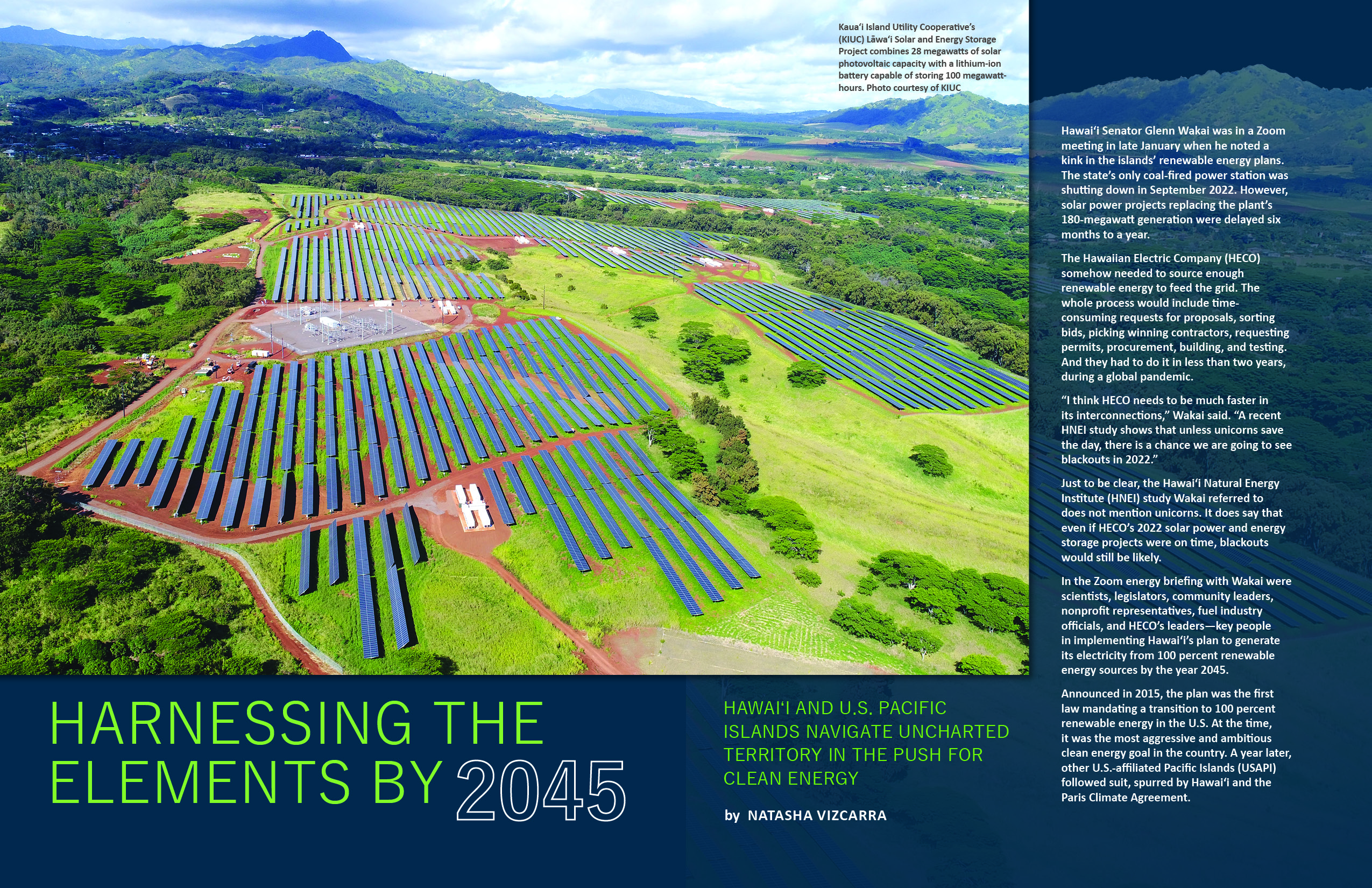
Kauai is often considered the leader in the renewable transition. The Kauai Island Utility Cooperative has made incredible strides, sometimes running the entire island on 100% renewables during midday hours. In addition to solar and battery storage provided by Tesla, Kauai utilizes small-scale hydroelectric plants in the mountains near Lihue and biomass facilities that convert organic matter into energy.
How Tourism and Electricity Intersect
Tourism is the engine of Hawaii’s economy, and it is also the largest consumer of its electricity. From the massive air conditioning units at the Grand Hyatt Kauai Resort & Spa to the nightly luau performances at the Polynesian Cultural Center, the visitor industry requires a staggering amount of power.
Sustainable Stays and Green Resorts
In recent years, many of the most famous resorts have taken it upon themselves to produce their own electricity. Aulani, A Disney Resort & Spa in Ko Olina features extensive energy-saving designs, while the Four Seasons Resort Maui at Wailea has implemented sophisticated systems to reduce its carbon footprint. These efforts are often showcased to guests as part of their experience, highlighting the resort’s commitment to preserving the Pacific Ocean and the local reef systems.
The Battery Revolution
One of the biggest challenges in Hawaii is what happens after the sun goes down. To keep the lights on in Honolulu during the evening, the state has invested heavily in battery storage. Massive battery farms, such as the one in Kapolei, store the solar energy gathered during the day and release it at night. This technology ensures that even during a midnight stroll along Waikiki Beach, the streetlights and hotel amenities are increasingly powered by the sun that set hours earlier.
Tips for the Eco-Conscious Traveler
As a visitor, your energy consumption has a direct impact on the islands. While the transition to renewables is well underway, electricity in Hawaii remains expensive and precious. Following a few simple tips can help you travel more sustainably and support the local energy goals.
- Mind Your Air Conditioning: When you leave your room at the The Westin Maui Resort & Spa, Ka’anapali to head to the pool or a snorkeling trip at Molokini Crater, turn off the AC or set it to a higher temperature.
- Support Green Businesses: Look for the Hawaii Green Business Program seal when choosing restaurants in Kona or tour operators in Hanalei. These businesses have been recognized for their efforts in energy efficiency and waste reduction.
- Use Public and Electric Transport: Consider using the Waikiki Trolley or renting an electric vehicle to explore the North Shore. Charging stations are becoming increasingly common at major landmarks like Pearl Harbor.
- Choose Eco-Tours: Many tours, such as those visiting Mauna Kea for stargazing or Waimea Canyon for hiking, now incorporate educational segments about Hawaii’s unique environment and energy challenges.

The Future: A Model for the World
Hawaii’s energy journey is being watched by the entire world. If a group of isolated islands can successfully transition from total oil dependence to 100% renewable energy while hosting millions of tourists, then it serves as a blueprint for other destinations globally.
When you visit Hawaii, you are witnessing a living laboratory of innovation. The electricity that charges your phone, chills your mai tai, and lights up the stage at a Hana cultural event is part of a grand experiment in sustainability. By understanding “How Does Hawaii Produce Electricity?”, tourists can move beyond being mere spectators and become active participants in the preservation of this island paradise. Whether it is through the solar panels on the roof of your Poipu villa or the wind turbines on the hills of Lanai, the energy of the islands is as much a part of the Hawaiian experience as the surf and the sand.
As you plan your next trip to Hilo or a luxury getaway at the Fairmont Orchid, take a moment to appreciate the invisible infrastructure. The transition to clean energy is Hawaii’s gift to future generations and a testament to the enduring power of the Aloha Spirit. By choosing to be an energy-aware traveler, you help ensure that the beauty of Kilauea and the clear waters of Hanauma Bay remain vibrant for decades to come.
LifeOutOfTheBox is a participant in the Amazon Services LLC Associates Program, an affiliate advertising program designed to provide a means for sites to earn advertising fees by advertising and linking to Amazon.com. Amazon, the Amazon logo, AmazonSupply, and the AmazonSupply logo are trademarks of Amazon.com, Inc. or its affiliates. As an Amazon Associate we earn affiliate commissions from qualifying purchases.