
Traveling from the heart of the Midwest to the isolated volcanic archipelago of Hawaii is one of the longest domestic journeys a traveler can undertake within the United States. Spanning nearly 4,000 miles across the North America continent and a vast portion of the Pacific Ocean, this trip represents a significant transition from the lakeside culture of Minnesota to the tropical rhythms of the islands. Understanding the duration, logistics, and variations of this flight is essential for anyone planning a getaway to the “Aloha State.”
Understanding the Transpacific Journey from the Midwest
The flight time from Minneapolis to the Hawaiian Islands varies significantly based on your final destination, whether you have a direct connection, and the prevailing atmospheric conditions. On average, a non-stop flight from Minneapolis-St. Paul International Airport to Honolulu takes approximately 8.5 to 9.5 hours. However, the return journey is typically shorter, often clocking in between 7.5 and 8.5 hours due to the powerful influence of the jet stream.

Direct Flight Durations and Airlines
Direct flights are the gold standard for travelers looking to maximize their time on the beach. Currently, Delta Air Lines is the primary carrier offering year-round non-stop service from Minneapolis to Daniel K. Inouye International Airport on the island of Oahu. During peak travel seasons, typically in the winter months when Minnesotans seek refuge from the cold, Sun Country Airlines has also been known to offer seasonal direct routes to Honolulu.
When flying direct, the westbound leg against the wind usually takes about 9 hours and 15 minutes. This long-haul flight requires a wide-body aircraft, such as the Airbus A330, which provides the range and fuel capacity necessary to cross the ocean. Passengers on these flights enjoy full meal services and extensive in-flight entertainment systems, which are necessary to pass the time during the nearly ten-hour stint in the air.
Connecting Flight Options and Layover Times
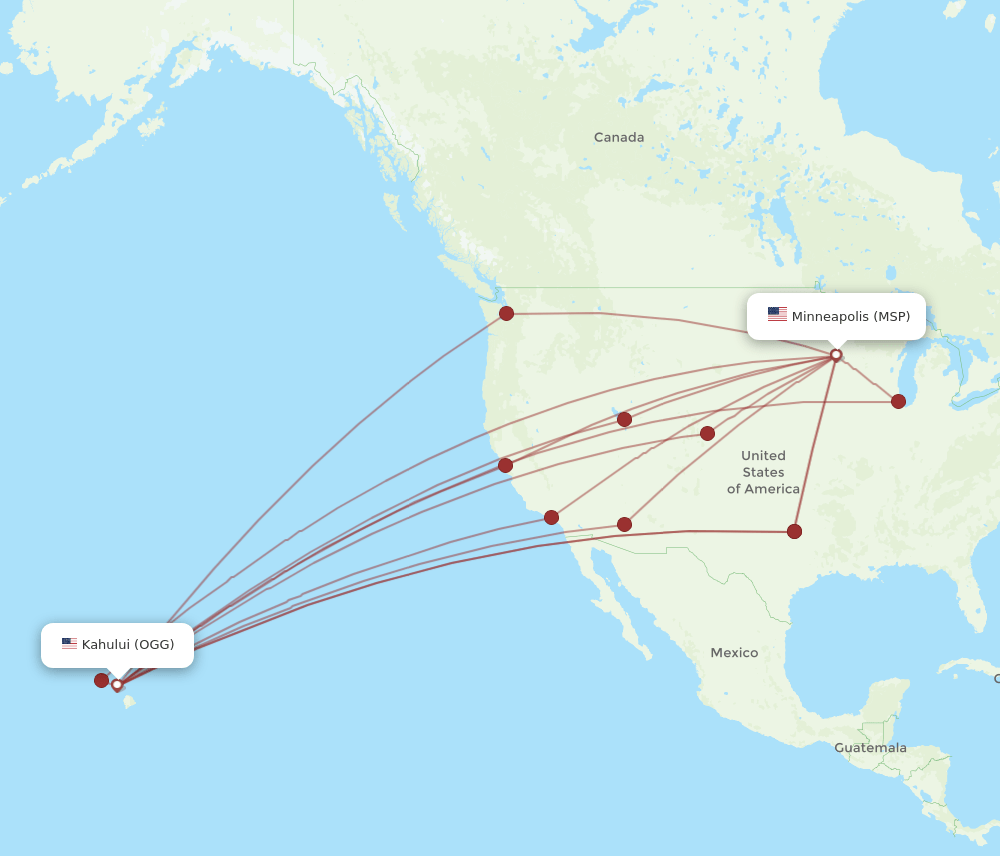
For many travelers, a connecting flight is more practical or cost-effective. Common layover cities for this route include Los Angeles, San Francisco, Seattle, and Phoenix. While a direct flight is roughly 9 hours, a connecting flight will usually take between 11 and 15 hours total.
A typical itinerary might involve a four-hour flight from Minneapolis to Los Angeles International Airport, a two-hour layover, and then another five to six-hour flight over the Pacific Ocean to reach Kahului Airport on the island of Maui. Carriers such as United Airlines, American Airlines, and Alaska Airlines frequently provide these multi-leg journeys, often offering competitive pricing that makes the longer travel time worthwhile for budget-conscious families.
The Impact of Winds and Jet Streams
The jet stream—a high-altitude, fast-moving air current—plays a pivotal role in flight durations between the mainland and Hawaii. When traveling west from Minneapolis, planes are flying against these prevailing winds, which can slow the ground speed of the aircraft and add up to an hour to the flight time. Conversely, on the return trip heading east, the jet stream acts as a powerful tailwind, “pushing” the aircraft and significantly reducing the time spent in the air. It is not uncommon for a return flight to Minneapolis-St. Paul International Airport to arrive 45 minutes ahead of schedule if the winds are particularly strong.
Navigating Minneapolis-St. Paul International Airport (MSP)
Starting your journey at Minneapolis-St. Paul International Airport is generally a pleasant experience, as it is consistently ranked among the best large airports in North America. However, for a flight of this magnitude, preparation at the departure gate is key.
Terminal Information and Departure Logistics
Most flights to Hawaii depart from Terminal 1, which serves Delta Air Lines and most major international carriers. If you are flying with Sun Country Airlines, you will likely depart from Terminal 2. Because Hawaii has strict agricultural regulations, you may encounter specific signage regarding what can and cannot be brought into the state, even before you board.
For a 9-hour flight, it is recommended to arrive at the airport at least two and a half to three hours before departure. This ensures enough time to clear TSA security, which can be busy during the morning hours when most Hawaii flights depart.
Amenities for Long-Haul Travelers
Since the flight to Honolulu is essentially an international-length journey, Minneapolis-St. Paul International Airport offers several amenities to help passengers prepare. The airport features numerous lounges, such as the Delta Sky Club and the Escape Lounge, where travelers can enjoy a quiet environment and a meal before the long haul. Additionally, many travelers choose to purchase snacks or bottled water at the various shops in the Mall of America satellite stores within the airport to supplement the in-flight meals.
Arriving in the Aloha State: Major Hawaiian Hubs
Your flight duration and experience will also depend on which island you choose as your primary destination. While Honolulu is the most common entry point, other islands offer direct or easy connecting access.
Daniel K. Inouye International Airport (Oahu)

The majority of travelers from Minneapolis land at Daniel K. Inouye International Airport in Honolulu. This is the busiest airport in the state and serves as the primary gateway for international and domestic long-haul flights. Upon arrival, you are greeted by the open-air design of the terminals, a stark contrast to the enclosed gates of the Midwest. From here, famous landmarks like Waikiki Beach, Pearl Harbor, and Diamond Head are just a short drive away.
Kahului Airport (Maui)
If your heart is set on the “Valley Isle,” you will likely fly into Kahului Airport. While there are fewer direct flights from Minneapolis to Maui than to Honolulu, it remains a top destination. Travelers often connect through California or take a quick 30-minute “inter-island” flight from Honolulu. Once you land, the stunning views of Haleakala National Park and the lush landscapes of the Road to Hana await.
Kona International Airport (The Big Island)
For those visiting the Big Island, Kona International Airport provides a unique arrival experience. The airport is famous for its outdoor terminals built on a lava field. Traveling here from Minneapolis usually involves a connection, adding to the total travel time, but the reward is the chance to see active volcanoes at Hawaii Volcanoes National Park and world-class coffee plantations.
Lihue Airport (Kauai)
Kauai, known as the “Garden Isle,” is accessed through Lihue Airport. This island is a favorite for nature lovers and those seeking a slower pace of life. Due to its smaller size, direct flights from Minneapolis are rare, so most travelers will connect through Seattle or Honolulu. The flight duration is comparable to other islands, but the transition into the lush, emerald cliffs of the Na Pali Coast makes every hour of travel worth it.
Strategies for Managing a 9-Hour Flight
A flight of this length requires more than just a good book; it requires a strategy for physical comfort and mental well-being.
Overcoming Jet Lag and Time Zones
One of the biggest challenges when flying from Minneapolis to Hawaii is the significant time difference. Hawaii follows Hawaii-Aleutian Standard Time, which does not observe Daylight Saving Time. Depending on the time of year, Hawaii is either four or five hours behind Minneapolis.
To combat jet lag, experts suggest adjusting your sleep schedule a few days before departure. Staying hydrated during the flight is also critical. Because you will likely arrive in the afternoon Hawaiian time, it is best to stay awake until at least 8:00 PM local time to help your body synchronize with the new environment.
Packing Essentials for the Journey
When packing for a 9-hour flight, think in layers. While Minneapolis might be freezing and Hawaii will be balmy, the airplane cabin can be notoriously chilly. A light jacket or a pashmina is essential. Noise-canceling headphones are highly recommended to drown out the engine noise, and a portable power bank ensures your devices remain charged if the seat-back power fails.
In-Flight Comfort and Wellness
Sitting in a pressurized cabin for nearly ten hours can take a toll on the body. It is important to move around the cabin periodically to maintain circulation. Simple leg stretches and staying hydrated by avoiding excessive caffeine and alcohol can make a significant difference in how you feel upon landing. Many travelers also find that using a neck pillow and an eye mask helps them catch a few hours of sleep, making the time pass much faster.
Planning Your Hawaiian Itinerary Based on Travel Time
Given that you will spend nearly a full day traveling each way, it is important to plan your itinerary to make the most of your time in the islands.
Seasonal Considerations and Peak Travel
The best time to fly from Minneapolis to Hawaii often aligns with the harshest parts of the Minnesota winter. However, this is also peak season in Hawaii, meaning flights can be more expensive and airports more crowded. If you have flexibility, traveling during the “shoulder seasons” of late spring (May and June) or early fall (September and October) can result in shorter lines, cheaper fares, and more pleasant weather both in the Midwest and in the Pacific.
Island Hopping After Arrival
Once you have completed the long flight from Minneapolis, you might want to see more than just one island. Hawaiian Airlines and Southwest Airlines offer frequent, affordable flights between the islands. These “puddle jumpers” usually take between 20 and 50 minutes, allowing you to breakfast on Oahu and enjoy a sunset dinner on Kauai. Planning these short flights into your itinerary can maximize your exposure to the diverse landscapes of Hawaii without adding significant travel fatigue.
The journey from Minneapolis to Hawaii is undeniably long, but it is a rite of passage for many Midwestern travelers. By understanding the flight times, preparing for the airport experience at Minneapolis-St. Paul International Airport, and knowing what to expect upon arrival at hubs like Honolulu or Maui, you can turn a grueling travel day into a seamless part of your tropical adventure. Whether you are flying non-stop or connecting through the West Coast, the moment you step off the plane and smell the fragrant plumeria in the air, the 9-hour journey will feel like a small price to pay for paradise.
LifeOutOfTheBox is a participant in the Amazon Services LLC Associates Program, an affiliate advertising program designed to provide a means for sites to earn advertising fees by advertising and linking to Amazon.com. Amazon, the Amazon logo, AmazonSupply, and the AmazonSupply logo are trademarks of Amazon.com, Inc. or its affiliates. As an Amazon Associate we earn affiliate commissions from qualifying purchases.