
Traveling from the heart of California to the tropical shores of the Pacific Ocean involves more than just a five-hour flight; it requires a mental shift in how we perceive time. For residents of Sacramento, planning a getaway to Hawaii begins with a simple yet crucial question: how many hours will I gain or lose? Understanding the temporal gap between the Central Valley and the Hawaiian Islands is essential for coordinating flights, booking dinner reservations, and managing the inevitable effects of jet lag.
Understanding the Time Difference Between Northern California and the Pacific Islands
The time difference between Sacramento and Hawaii is not a fixed number year-round. This is due to the way the United States handles daylight savings. While most of North America observes the seasonal shift of clocks, Hawaii remains steadfast in its timekeeping, choosing not to participate in the annual “spring forward” or “fall back” ritual.
The Impact of Daylight Saving Time
In Sacramento, time is governed by the Pacific Time Zone. During the winter months, the city operates on Pacific Standard Time (PST), which is eight hours behind Coordinated Universal Time (UTC-8). However, from mid-March to early November, the city transitions to Pacific Daylight Time (PDT), moving the clocks forward by one hour to UTC-7.
Conversely, Hawaii operates on Hawaii-Aleutian Standard Time (HST) all year long. This zone is consistently ten hours behind Coordinated Universal Time (UTC-10). Because Hawaii does not change its clocks, the gap between the two locations fluctuates. When Sacramento is on Standard Time (winter), it is two hours ahead of Hawaii. When Sacramento is on Daylight Saving Time (summer), it becomes three hours ahead of Hawaii.
Calculating the Gap: A Quick Guide
For a traveler leaving the Tower Bridge behind for a sunset in Waikiki, the calculation is straightforward. If you are traveling in July and it is noon in Sacramento, it is only 9:00 AM in Honolulu. If you make the same trip in December, that same noon hour in California would translate to 10:00 AM in the islands. This distinction is vital for those who need to maintain contact with the mainland for business or family obligations.
Logistics of Traveling from the Capital City to the Aloha State
The journey from Sacramento International Airport to the various islands of Hawaii has become increasingly convenient over the last decade. As a major hub for Northern California, Sacramento offers a variety of transit options that cater to different budgets and schedules.
Flight Durations and Popular Routes
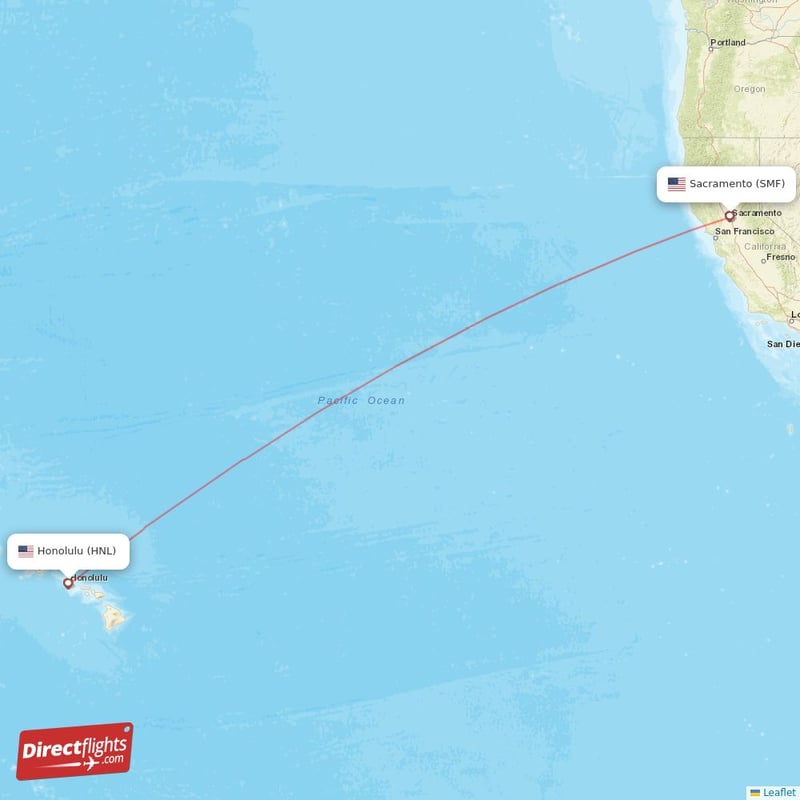
A non-stop flight from Sacramento to Honolulu typically takes between five and a half to six hours. Returning to the mainland is often slightly shorter due to the prevailing tailwinds of the jet stream, often clocking in at just under five hours.
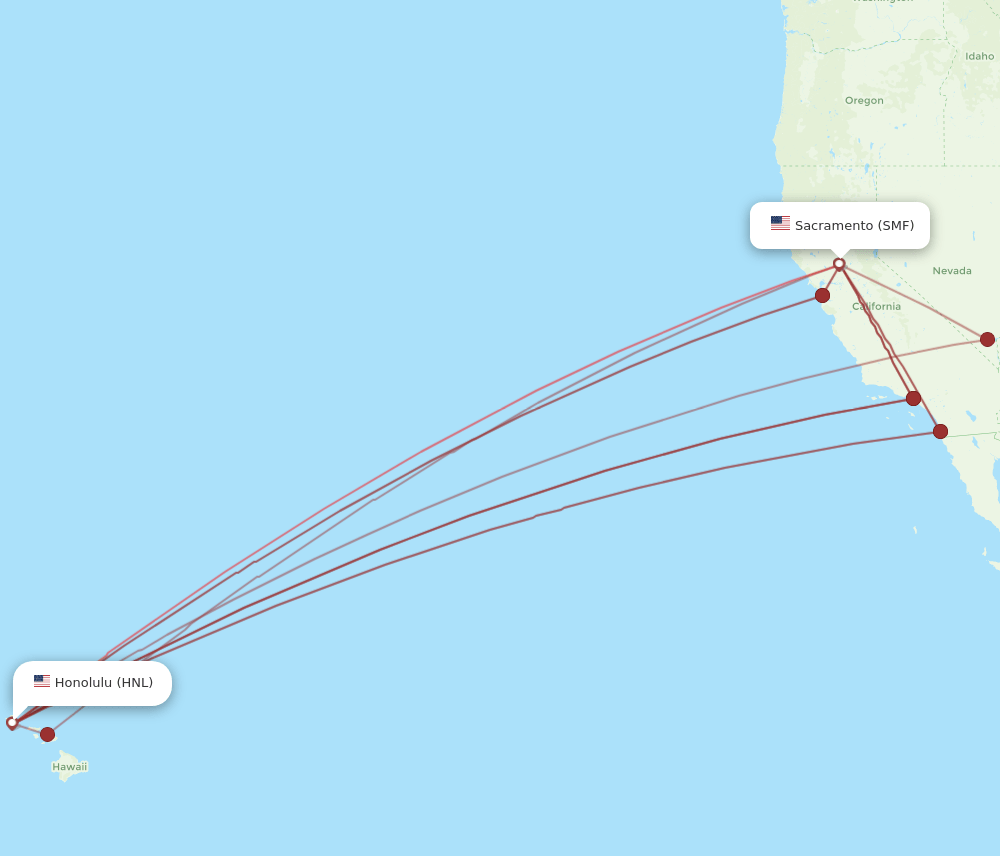
Several major carriers serve this route, providing travelers with flexibility. Hawaiian Airlines is a favorite for many, offering a taste of island hospitality the moment you step on the plane. Southwest Airlines has also expanded its presence at Sacramento International Airport, offering competitive fares and direct flights to Honolulu, Kahului on Maui, and Kona on The Big Island. For those who don’t mind a quick connection, Alaska Airlines often routes through Seattle or Portland, while United Airlines frequently connects through San Francisco or Los Angeles.
Navigating Airports: SMF to HNL
Starting your trip at Sacramento International Airport is generally a stress-free experience compared to the larger hubs like San Francisco International Airport. The terminals are modern, and the security lines are typically manageable. Upon arrival at Daniel K. Inouye International Airport in Honolulu, travelers are greeted by the open-air architecture that defines the island experience. If your final destination is Kauai or Molokai, you may find yourself boarding a smaller inter-island flight, which offers spectacular aerial views of the Pacific Ocean.
Managing Jet Lag and Itinerary Adjustments
While a two or three-hour time difference may seem negligible compared to a flight to Europe or Asia, it is enough to disrupt your circadian rhythm. “Island time” is a real phenomenon, and your body will need a day or two to adjust to the slower pace and the shift in daylight.

Strategies for West-to-West Travel
When traveling west from Sacramento to Hawaii, you are essentially gaining hours. This means you will likely feel tired earlier in the evening and wake up well before sunrise. While this might sound like a drawback, it is actually a blessing for travelers who want to beat the crowds at popular destinations like Hanauma Bay or secure a parking spot at Diamond Head State Monument.
To minimize the impact of the shift:
- Hydrate aggressively: The dry air in airplane cabins can exacerbate the feeling of fatigue.
- Adjust your watch immediately: Change your clocks to Hawaii-Aleutian Standard Time the moment you board the plane in Sacramento.
- Seek sunlight: Upon arrival, spend time outdoors. The bright Pacific sun helps reset your internal clock by signaling to your brain that it is still daytime.
Setting Your Internal Clock for Early Adventures
One of the greatest advantages of the time difference for Sacramento travelers is the ability to easily participate in early morning activities. If you are staying on Maui, catching the sunrise at Haleakala National Park is a must-do experience. Since your body will still think it is 6:00 AM when it is actually 3:00 AM in Hawaii, waking up for the drive to the summit feels much less daunting than it would for a local resident.
Key Cultural and Environmental Shifts for Travelers
The transition from Sacramento to Hawaii is about more than just numbers on a clock; it is a profound change in environment. While Sacramento is known for its proximity to the Sierra Nevada Mountains and the American River, the Hawaiian Islands offer a unique volcanic landscape and a deeply rooted Polynesian culture.
From the Central Valley to the Tropical Shoreline
Travelers leaving the Mediterranean climate of the Sacramento Valley will find Hawaii consistently warm and humid. In Sacramento, summer temperatures can soar above 100 degrees Fahrenheit with very low humidity. In contrast, locations like Hilo or Lihue maintain temperatures in the 80s, but the moisture in the air is much more palpable.
Culturally, the “Aloha Spirit” is a tangible concept that dictates the pace of life in Hawaii. While Sacramento has a bustling downtown scene anchored by the Golden 1 Center and a fast-paced political environment, the islands encourage a more relaxed, communal approach. Visitors are encouraged to slow down, respect the land (the Aina), and embrace the local customs.
Seasonal Travel Considerations
When planning your trip, consider how the time of year affects both your experience and your budget. The “high season” in Hawaii typically runs from mid-December through March, as travelers from the mainland United States and Canada seek refuge from the winter cold. During this time, the time difference is only two hours.
The “shoulder seasons” of April to June and September to November offer a more tranquil experience. If you travel during the summer months, keep in mind that the three-hour time difference means that by the time you are finishing breakfast in Lahaina, your colleagues back at the State Capitol in Sacramento are already heading to lunch.
Maximizing Your Stay in Hawaii Based on the Time Gap
To make the most of your travel from Northern California, it is wise to structure your itinerary around the time difference. Use your “early bird” status in the first few days to tackle the most physically demanding or popular attractions.
On Oahu, use your early wake-up call to visit the Pearl Harbor National Memorial before the heat and the crowds intensify. On Kauai, an early start is essential for those planning to hike the Kalalau Trail or explore the Waimea Canyon State Park, often referred to as the “Grand Canyon of the Pacific.”
As your stay progresses and your body adjusts to the local time, you can transition into the late-night offerings of the islands. Enjoy a traditional luau on the Kohala Coast or explore the vibrant nightlife at the Old Sacramento Waterfront equivalent in Honolulu.
The journey from Sacramento to Hawaii is a spectacular transition between two very different versions of the American dream. By understanding that Sacramento is two to three hours ahead, travelers can better prepare for a seamless vacation, ensuring that every moment spent in the islands is maximized for relaxation and adventure. Whether you are surfing the waves at the North Shore or exploring the volcanic craters of Volcanoes National Park, the time you “gain” on the way there is a gift that allows you to experience the beauty of the islands to their fullest.
LifeOutOfTheBox is a participant in the Amazon Services LLC Associates Program, an affiliate advertising program designed to provide a means for sites to earn advertising fees by advertising and linking to Amazon.com. Amazon, the Amazon logo, AmazonSupply, and the AmazonSupply logo are trademarks of Amazon.com, Inc. or its affiliates. As an Amazon Associate we earn affiliate commissions from qualifying purchases.