
When we think about global mobility, business travel, and dream vacations, we rarely pause to consider the sheer scale of the hospitality industry. Behind the glossy brochures of the Ritz-Carlton or the bustling lobbies of urban convention hotels lies a staggering volume of human movement. Every single night, millions of people check into a room away from home. But just how many people stay in hotels every year? Calculating this figure requires looking at global tourism statistics, room-night calculations, occupancy rates, and shifting travel patterns across different continents.
Understanding the volume of hotel guests helps us comprehend the massive economic footprint of the hospitality sector. From massive multinational chains to boutique properties in Paris and Tokyo, the hospitality industry acts as the backbone of modern tourism. Let us break down the numbers, the demographics, and the driving forces behind the billions of hotel stays logged annually around the world.
The Global Scale of Hotel Stays
To understand how many people stay in hotels annually, industry analysts look at a combination of total available rooms, average occupancy rates, and the average length of stay per guest. Globally, the numbers are astronomical, reaching into the billions of individual guests each year.
Measuring Room Nights and Occupancy Rates
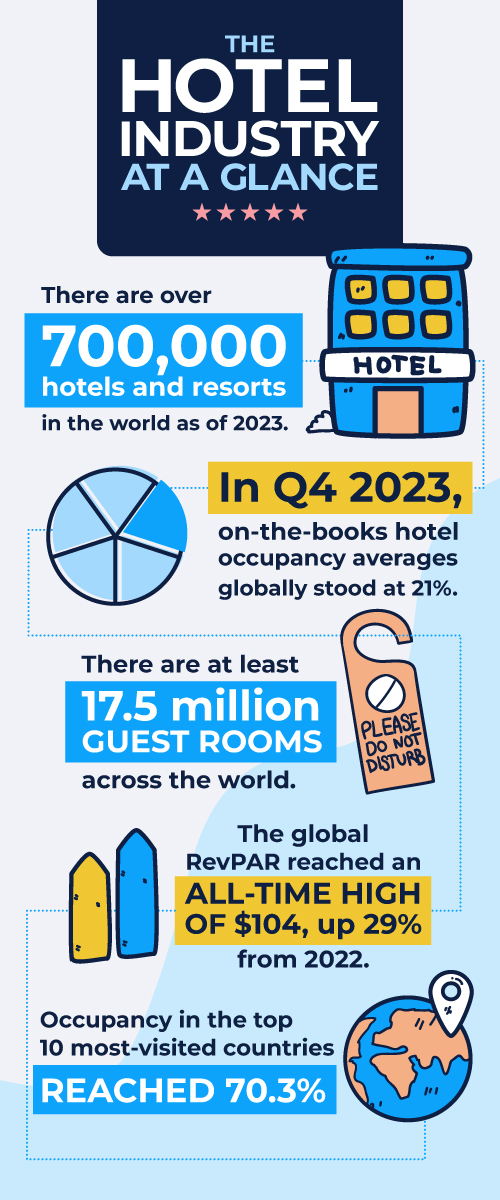
Before the disruptions of the 2020s, the global hotel industry was on an uninterrupted upward trajectory, and it has since roared back with remarkable resilience. Industry reports from organizations like the American Hotel & Lodging Association and the World Tourism Organization estimate that there are over 17 million to 18 million hotel rooms distributed across roughly 200,000 properties worldwide.
If we take an average global hotel occupancy rate hovering between 60% and 70%, and multiply that by millions of available rooms, the math reveals that billions of room nights are booked every single year. Because many hotel rooms accommodate more than one person—such as couples, families, or business colleagues sharing suites—the actual number of individual human beings checking into hotels annually easily exceeds 1.5 to 2 billion people.
Regional Distribution: Where Do Guests Stay Most?
Hotel stays are not distributed evenly across the globe. Certain regions dominate the hospitality market due to high concentrations of business hubs, historical landmarks, and leisure hotspots.
- North America: Home to massive corporate travel networks and iconic destinations in the United States, this region generates hundreds of millions of stays annually. Brands like Marriott International and Hilton Worldwide anchor this massive volume.
- Europe: Driven by cultural tourism, historical cities, and seamless cross-border travel within the European Union, countries like Spain, Italy, and the United Kingdom welcome hundreds of millions of hotel guests every year.
- Asia-Pacific: As the fastest-growing tourism market, countries like China and India contribute an immense share of both domestic and international hotel stays, fueled by a booming middle class and rapid urbanization.
Who Fills the Rooms? Business Versus Leisure
Not all hotel guests are cut from the same cloth. The motivations driving billions of people to stay in hotels every year are generally split into two primary categories: corporate travel and leisure tourism.
The Corporate Traveler and MICE Industry
Business travel is a foundational pillar of the hotel industry. Even in an era dominated by video conferencing and digital communication, face-to-face meetings, trade shows, and corporate retreats remain vital for global commerce.
The MICE sector—Meetings, Incentives, Conferences, and Exhibitions—pumps millions of guests into urban business hotels every week. Cities known for hosting massive conventions, such as Las Vegas and Frankfurt, see a relentless churn of business professionals checking into properties like the Bellagio or local convention centers. Business travelers tend to book shorter stays, typically ranging from one to three nights, but they travel with higher frequency throughout the year.

The Leisure Traveler and Vacationers
Leisure travel represents the emotional and experiential side of the hospitality industry. Families, solo backpackers, honeymooners, and retirees make up this massive demographic. Unlike business travelers, leisure guests often extend their stays, averaging four to seven nights per booking, particularly when visiting major resorts or coastal retreats.
Destinations renowned for vacationers—such as the beaches of Cancun, the historic streets of Rome, or the tropical paradises of Bali—rely heavily on this segment. When major holiday seasons arrive, such as the summer months or the winter year-end holidays, global hotel occupancy rates spike dramatically, showcasing the sheer seasonal appetite for travel.
The Economic and Infrastructure Impact
The fact that billions of people stay in hotels every year has a profound ripple effect on the global economy. Hotels are not merely places to sleep; they are complex ecosystems that drive employment, real estate development, and local supply chains.
Employment and Hospitality Labor
To service billions of annual guests, the hospitality industry must employ tens of millions of people worldwide. From front desk receptionists and concierges to executive chefs, housekeeping staff, maintenance engineers, and security personnel, hotels are major job creators. Major hospitality hubs often find their local economies entirely dependent on the operational success of their hotel sectors.
Supply Chains and Local Commerce
Every person who stays in a hotel contributes to a vast downstream economy. Hotels purchase massive quantities of food and beverage from local farmers, linens from textile manufacturers, and amenities from specialty suppliers. Furthermore, hotel guests spend money outside their rooms—dining at local restaurants, hiring tour guides, visiting museums like the Louvre, and shopping in neighborhood boutiques. Thus, the economic impact of hotel stays extends far beyond the lobby doors.
Emerging Trends Shaping Future Hotel Stays
As the world evolves, the way people interact with hotels is shifting. Several key trends are redefining the annual statistics of hotel guests and the nature of accommodation itself.
Bleisure and Digital Nomads
The rigid boundary between work and leisure has begun to blur. The rise of remote work has given birth to the “bleisure” traveler—someone who extends a business trip into a personal vacation—as well as digital nomads who live out of suitcases and hotel rooms for months at a time. This trend has led hospitality brands to adapt by offering high-speed Wi-Fi, co-working spaces in lobbies, and extended-stay amenities tailored to long-term guests.
Sustainability and Eco-Conscious Stays
Modern travelers are increasingly mindful of their environmental footprint. With billions of people generating waste and consuming resources in hotels annually, sustainability has moved from a niche marketing tactic to an operational imperative. Eco-certified hotels, energy-efficient building designs, elimination of single-use plastics, and locally sourced menus are becoming deciding factors for guests choosing where to spend their nights.

Conclusion
The question of how many people stay in hotels every year reveals a breathtaking picture of human connectivity, economic exchange, and wanderlust. With upwards of 1.5 to 2 billion individual guests checking into rooms globally, the hotel industry remains a powerhouse of modern civilization. Whether driven by the necessity of corporate deal-making or the joy of discovering new cultures in iconic destinations, our collective desire to explore the world—and find a comfortable bed at the end of the day—ensures that the hospitality industry will continue to thrive for generations to come.
LifeOutOfTheBox is a participant in the Amazon Services LLC Associates Program, an affiliate advertising program designed to provide a means for sites to earn advertising fees by advertising and linking to Amazon.com. Amazon, the Amazon logo, AmazonSupply, and the AmazonSupply logo are trademarks of Amazon.com, Inc. or its affiliates. As an Amazon Associate we earn affiliate commissions from qualifying purchases.