
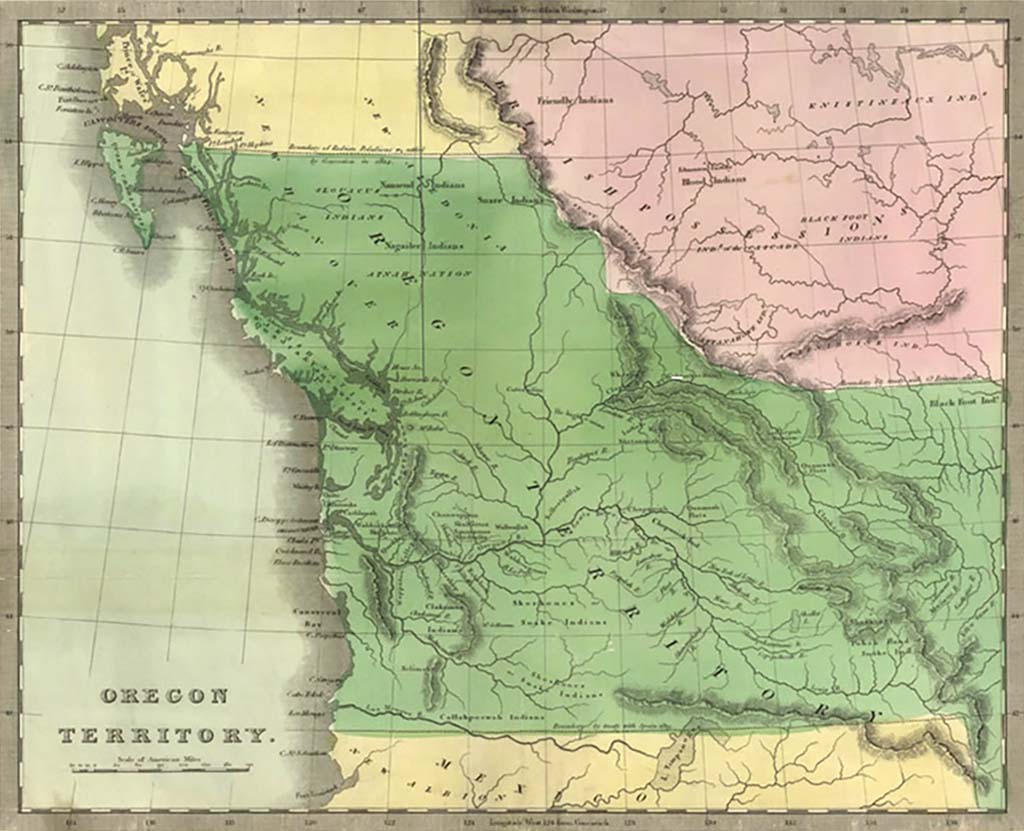
The vast expanse of the Pacific Northwest, once a region defined by mist-covered forests and rugged coastlines, stands today as a testament to one of the most complex geopolitical chess matches in North American history. Long before it became the scenic destination known for the Columbia River, the Willamette Valley, and the towering peaks of the Cascade Range, the Oregon Territory was a contested frontier, caught in the friction between the expanding United States and the global ambitions of the British Empire.
The Era of Joint Occupation and Rival Claims
For much of the early 19th century, the Pacific Northwest was not a clearly defined political entity but rather a sphere of influence shared by two dominant global powers. Following the Louisiana Purchase, the American government began looking toward the setting sun, eager to connect their republic from the Atlantic Ocean to the Pacific Ocean. However, they were not the only ones with a vested interest in the region.

The British Presence and the Hudson’s Bay Company
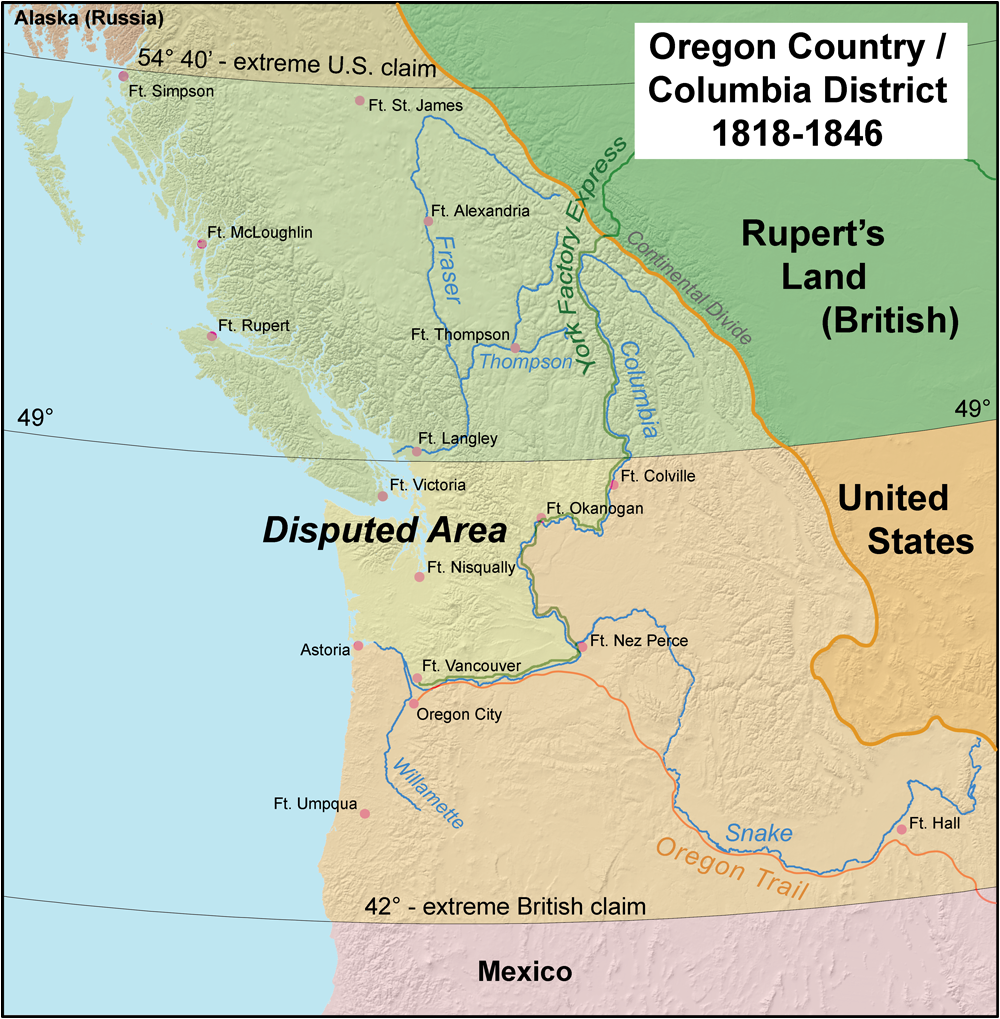
The United Kingdom maintained a strong foothold in the region primarily through the Hudson’s Bay Company. Operating out of hubs like Fort Vancouver, British traders dominated the fur trade, establishing deep economic and social roots that stretched from Alaska down to California. For decades, the region existed under a precarious agreement known as “Joint Occupation.” Under the Treaty of 1818, citizens of both the United States and Great Britain were granted equal rights to trade and settle in the territory, delaying a permanent border solution while both sides built up their presence.
The Role of Early American Pioneers
As the 1830s turned into the 1840s, the demographic landscape of the region began to shift. The arrival of missionaries and independent settlers—many of whom trekked along the arduous Oregon Trail—created a new reality on the ground. These pioneers, seeking fertile land and a new start, began to outnumber the transient fur trappers who had previously defined the American presence. This shift in population density gave American politicians leverage, transforming a dispute over trade rights into a question of national sovereignty.
Manifest Destiny and the “54-40 or Fight!” Rallying Cry
By 1844, the American political climate had reached a fever pitch. The concept of Manifest Destiny—the belief that the nation was divinely ordained to expand across the continent—became the central theme of the presidential election.
James K. Polk and the Expansionist Agenda
James K. Polk campaigned on an aggressively expansionist platform, promising to secure the entire Oregon country. The slogan “54-40 or Fight!” referred to the latitude line 54 degrees, 40 minutes north, the southern boundary of the Russian claims in Alaska. If the British refused to acknowledge this claim, the United States threatened to go to war. It was a high-stakes gamble that sought to leverage American sentiment against the established power of London.
The Diplomatic Pivot
Despite the fiery rhetoric, Polk recognized that fighting a war on two fronts—with Mexico brewing in the south and the British in the north—would be a strategic catastrophe. When the British government signaled an interest in a compromise rather than a full-scale conflict, the administration pivoted toward diplomacy. The resulting negotiations were far less dramatic than the campaign slogans suggested, focusing instead on pragmatic cartography rather than ideological expansionism.
The Oregon Treaty of 1846: Setting the Border
The resolution to the impasse arrived in 1846 through the Oregon Treaty. This agreement established the 49th Parallel as the permanent boundary between the United States and British North America, which would later become Canada.
Geographic Compromise and the Puget Sound
The treaty allowed the British to retain Vancouver Island, ensuring they maintained control of Victoria and their access to the northern reaches of the Puget Sound. Conversely, the United States gained full control of the fertile river valleys to the south and clear access to the Pacific coast. This line effectively brought an end to the era of joint administration and provided a firm legal basis for the later establishment of the Oregon Territory as an official administrative unit.
The Long-Term Cultural and Historical Legacy
The acquisition of this territory was not merely a matter of moving lines on a map; it fundamentally altered the trajectory of the American West. The establishment of a firm border allowed for the development of major urban centers like Portland, Seattle, and Eugene. The cultural heritage of the region, marked by the intersection of indigenous history, early British exploration, and the influx of American settlers, created a distinct regional identity that persists to this day.
The Transformation of the Pacific Northwest
Today, travelers exploring the Pacific Northwest can see the remnants of this history in many of the region’s most beloved sites. The story of how the territory was acquired is woven into the geography itself.
Preserving the Historical Landscape
From the reconstruction of the Fort Vancouver National Historic Site to the interpretive trails that follow the path of Lewis and Clark, the United States government and local historical societies have made significant efforts to preserve the narrative of the 19th-century frontier. Visitors can walk through the same forests that once dictated the movements of trappers and traders, gaining a deeper understanding of the immense scale of the landscape that sparked such intense international dispute.
The Modern Frontier
The Pacific Northwest has evolved from a contested geopolitical border into a global destination for nature lovers, urban explorers, and history enthusiasts. The Cascade Mountains, the pristine waters of Crater Lake, and the bustling markets of Seattle all occupy land that, less than two centuries ago, was the subject of an impending war. The resolution of the border dispute in 1846 ensured that this region would develop into a unique cross-section of cultural exchange and economic vitality.
By understanding the diplomatic nuance and the demographic shifts that defined the acquisition of the Oregon Territory, visitors gain a richer appreciation for the places they explore. Every mountain pass, river crossing, and historic town serves as a silent witness to the era when the map of the United States was still being drawn. The transition from a region defined by colonial rivalry to one of the most vibrant corners of the North American continent remains one of the most fascinating chapters in the annals of expansion, leaving a legacy of cross-border cooperation and unparalleled natural beauty that continues to inspire exploration today.
LifeOutOfTheBox is a participant in the Amazon Services LLC Associates Program, an affiliate advertising program designed to provide a means for sites to earn advertising fees by advertising and linking to Amazon.com. Amazon, the Amazon logo, AmazonSupply, and the AmazonSupply logo are trademarks of Amazon.com, Inc. or its affiliates. As an Amazon Associate we earn affiliate commissions from qualifying purchases.