
When picturing a tropical escape to Mexico, images of pristine white-sand beaches, swaying palm trees, and bohemian-chic architecture usually come to mind. For many travelers, Tulum represents the ultimate laid-back sanctuary. However, as the town has exploded in popularity, navigating its distinct zones has become a primary concern for visitors. Specifically, travelers often ask: how walkable is the famed Hotel Zone Tulum?
Understanding the layout and pedestrian infrastructure of this coastal strip is essential for planning a seamless vacation. While the coastal strip offers breathtaking ocean views and world-class dining right at your doorstep, traversing it entirely on foot presents a unique set of challenges. This comprehensive guide breaks down the reality of walking through the coastal stretch, what you can expect from its infrastructure, and how to best navigate the area during your stay.
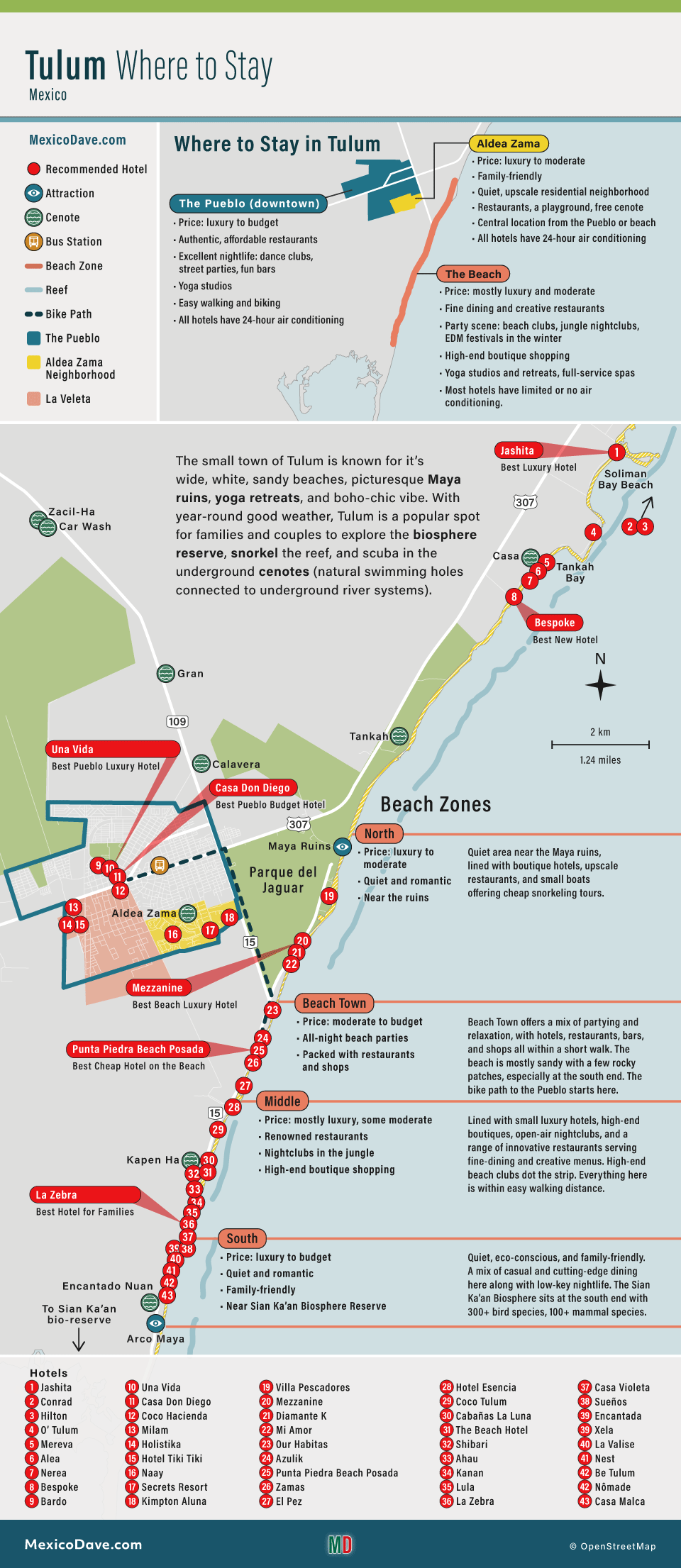
The Geography and Layout of the Strip
To understand the walkability of the coastal strip, you first need to understand its geography. The area stretches roughly eight to ten kilometers along the Caribbean coastline, wedged between the pristine blue ocean and the lush mangroves of the Sian Ka’an Biosphere Reserve. Because of this narrow strip of land, the geography is essentially a single, long corridor.
The main artery running through this corridor is Carretera Tulum-Boca Paila. This two-lane coastal road serves as the backbone for all vehicular and pedestrian traffic. Every boutique resort, trendy restaurant, wellness center, and artisanal boutique sits directly along this single stretch of road.
Because everything is clustered along this one main thoroughfare, the illusion is that everything is close by. On a map, a restaurant might look like it is only a kilometer away from your resort. However, the reality of navigating the actual physical environment can be quite different. While you technically can walk almost anywhere along the strip, the conditions underfoot dictate whether that walk will be a romantic evening stroll or an exhausting obstacle course.
Sidewalks, Infrastructure, and Safety on Foot
When evaluating pedestrian friendliness, infrastructure is the ultimate deciding factor. Unfortunately, the coastal strip was never originally planned to handle the massive influx of modern tourism it experiences today. As a result, pedestrian infrastructure is sparse, inconsistent, and often non-existent.
The Reality of the Main Road
The main coastal road has very few dedicated sidewalks. Where sidewalks do exist, they are often narrow, uneven, and interrupted by lush jungle foliage, utility poles, or outdoor seating extensions from local businesses. For large stretches of the road, pedestrians are forced to walk directly on the edge of the pavement, sharing the asphalt with cars, delivery trucks, roaring ATVs, and flocks of rental bicycles.
Lighting and Nighttime Walking
As the sun sets, the charm of the area transforms, but the safety and ease of walking diminish. Many sections of the coastal road lack street lighting. While upscale properties like Azulik Tulum or Habitas Tulum illuminate their immediate frontages, the spaces in between can plunge into near-total darkness. Walking at night requires caution, comfortable footwear, and perhaps the flashlight on your smartphone to avoid uneven patches of ground or stray roots.
Traffic Congestion
During peak tourist seasons, traffic along the coastal road can crawl at a snail’s pace. While this means vehicles are moving slower, it also means you will be walking closely alongside idling engines, exhaust fumes, and impatient drivers. During the rainy season, sudden tropical downpours can quickly turn parts of the roadside into muddy puddles, making walking a decidedly unglamorous endeavor.
Navigating Specific Sections: North vs. South

Not all parts of the coastal strip are created equal when it comes to pedestrian mobility. The area is generally divided into two distinct sections, each offering a vastly different experience for those on foot.
The Northern End: Near the Ruins and Beach Access
The northern section of the coastal strip begins near the Tulum Archaeological Site and extends down past public beach access points like Playa Paraiso.
- Pedestrian Friendliness: This section is relatively more accessible. Because it is closer to the main town intersection and historical sites, there are slightly better walking paths in certain spots.
- Atmosphere: It is characterized by wider open spaces, ancient Mayan ruins whispering history into the sea breeze, and slightly less dense commercialization. If you stay in this area, walking to nearby public beaches is entirely feasible and enjoyable during the cooler morning hours.
The Southern End: The Boutique and Restaurant Hub
Moving further south toward the entrance of the biosphere reserve, the density of high-end establishments increases dramatically. This is where you will find world-renowned dining spots like Hartwood Tulum and architectural marvels nestled into the jungle.
- Pedestrian Friendliness: This is the most congested part of the strip. The road narrows, traffic peaks, and boutique shops sit practically on top of each other.
- Micro-Walkability: While walking between adjacent venues—such as strolling from your hotel to a nearby taco bar or concept store—is very manageable, walking the length of this southern stretch from end to end is a tiring undertaking. It is best enjoyed by picking a specific pocket of activity and exploring that small cluster entirely on foot.
Alternative Transportation Methods
Given the limitations of pedestrian infrastructure, relying solely on your feet can quickly become tiring. Fortunately, a variety of alternative transportation options allow you to experience the area efficiently while still enjoying the open-air tropical environment.
Bicycles
Renting a bicycle is practically a rite of passage in this region. Many boutique properties offer complimentary bikes to their guests, while rental shops line the road. Cycling allows you to move much faster than walking, giving you the flexibility to stop whenever a cute boutique or juice bar catches your eye. However, you must remain vigilant, as sharing the narrow road with cars requires defensive cycling, especially after dark.
Taxis and Private Drivers
Taxis are ubiquitous along the coastal road, often idling outside major resorts and beach clubs. While they are a convenient way to hop between distant restaurants, be aware that traffic jams can inflate travel times. Furthermore, taxis in the area do not use meters, so you must always negotiate and agree upon the fare before stepping inside the vehicle.
Walking in Micro-Pockets
The best approach to walkability here is strategic adoption. Rather than attempting to walk the entire length of the coastal strip in the midday heat, plan your day around micro-pockets. Spend your morning walking the beachfront, your afternoon resting at your resort, and your evening exploring a tight cluster of restaurants and shops within a 500-meter radius of where you are standing.
Tips for a Successful Walking Experience
If you plan to incorporate walking into your daily routine during your stay, a few practical adjustments will ensure your outings remain pleasant, safe, and memorable.
Footwear Matters
Leave your stilettos and delicate sandals in your suitcase when planning a walking excursion. The terrain varies from sandy paths and gravel driveways to uneven concrete and damp pavement. Opt for sturdy walking sandals, breathable sneakers, or flat espadrilles that can handle a bit of dust and uneven ground.
Beat the Heat
The tropical sun is intensely powerful, particularly between the hours of 11:00 AM and 3:00 PM. If you plan to explore on foot, schedule your walking excursions for the early morning hours when the temperature is mild and the streets are quiet, or wait until the late afternoon as the sun begins to dip below the jungle canopy. Always carry a reusable water bottle to stay hydrated along the way.

Stay Visible at Night
If you find yourself walking back to your accommodation after a late dinner, wear light-colored or reflective clothing if possible. Because street lighting is minimal, making yourself visible to oncoming drivers is a crucial safety measure. Always stay alert to your surroundings and trust your instincts as you navigate the unlit patches of the road.
Ultimately, exploring the coastal strip on foot offers an intimate way to absorb the vibrant sights, sounds, and scents of the jungle meeting the sea. While it requires patience, flexibility, and a willingness to navigate uneven paths, the reward is stumbling upon hidden artistic installations, boutique treasures, and culinary delights that you would easily miss from the backseat of a car.
LifeOutOfTheBox is a participant in the Amazon Services LLC Associates Program, an affiliate advertising program designed to provide a means for sites to earn advertising fees by advertising and linking to Amazon.com. Amazon, the Amazon logo, AmazonSupply, and the AmazonSupply logo are trademarks of Amazon.com, Inc. or its affiliates. As an Amazon Associate we earn affiliate commissions from qualifying purchases.