
The Roots of a Legacy: The Dallas Texans Era
Long before the roar of the crowd echoed through Arrowhead Stadium on a crisp autumn Sunday, the franchise that would become a Midwestern institution had entirely different origins. The story of the Kansas City Chiefs actually begins deep in the heart of Texas. In 1960, visionary businessman Lamar Hunt sought to establish a professional football team. After failing to secure an expansion franchise in the established National Football League, Hunt took matters into his own hands. He spearheaded the creation of an entirely new league, the American Football League, and positioned himself as the owner of its newest charter franchise.
This inaugural team was christened the Dallas Texans. For three seasons, from 1960 through 1962, the Texans shared the bustling metropolitan landscape of Dallas, Texas with the formidable Dallas Cowboys, an NFL franchise that had also just entered the market. While Hunt’s team enjoyed remarkable on-field success—culminating in a dramatic, double-overtime victory in the 1962 AFL Championship Game against the Houston Oilers—the financial reality of a two-team market proved too strained for long-term viability. Dallas simply could not comfortably support two professional football teams at that nascent stage of the sport’s modern popularity.
Recognizing the writing on the wall, Lamar Hunt began casting his gaze northward in search of a greener, more welcoming pasture. He needed a city with a passionate sports culture, a central geographic location, and a fanbase eager to embrace top-tier professional football. Several cities vied for his attention, but one Midwestern hub stood head and shoulders above the rest, possessing the civic pride and infrastructure necessary to support a major league team.
The Historic Migration North: 1963
The definitive answer to when the franchise moved is 1963. Ahead of the 1963 AFL season, Lamar Hunt officially relocated his team from Dallas to Kansas City, Missouri. This pivotal transition fundamentally changed the sporting landscape of the American Midwest and planted deep roots that have flourished for decades.
Why Kansas City?
The courtship between Lamar Hunt and Kansas City was expedited by visionary local leadership. The mayor of Kansas City at the time, H. Roe Bartle, played an instrumental role in convincing Hunt to bring his franchise to the banks of the Missouri River. Bartle, whose imposing physical stature and persuasive charm earned him the affectionate nickname “The Chief,” promised Hunt that the city would rally around the team with unmatched enthusiasm and provide a suitable home arena while a permanent stadium was planned.
The Rebranding: From Texans to Chiefs
Upon arriving in Missouri, the team could no longer retain its geographic identity as the Dallas Texans. A contest was initially held to choose a new moniker, with early favorites pointing toward names like the Kansas City Royals or the Kansas City Mules. However, Lamar Hunt ultimately drew inspiration from Mayor H. Roe Bartle’s nickname, “The Chief,” combined with the city’s reverence for local Native American history and culture. Thus, the Kansas City Chiefs were officially born in the spring of 1963, sporting their iconic red, gold, and white color scheme.
Settling In: The Early Years at Municipal Stadium

When the newly minted Kansas City Chiefs first took the field in 1963, they did not immediately play in the sprawling suburban sports complex known today. Instead, they played their home games at Municipal Stadium, a venue steeped in classic baseball and football history located near the intersection of 22nd and Brooklyn streets in the urban core of Kansas City.
Originally constructed in the 1920s and later expanded, Municipal Stadium had previously served as the home of the legendary Kansas City Monarchs of the Negro Leagues, as well as the Kansas City Athletics Major League Baseball team. The stadium possessed a uniquely intimate, old-school charm characterized by close-to-the-action seating and a raucous, vocal fan base that quickly embraced the team as their own.
During their tenure at Municipal Stadium, the Kansas City Chiefs experienced a golden era of competitive excellence under the guidance of legendary head coach Hank Stram and star players like quarterback Len Dawson, middle linebacker Willie Lanier, and tight end Elegants “Bo” Thomas. It was on this historic turf that the team captured the 1966 AFL Championship, earning the right to play in the very first AFL-NFL World Championship Game—now universally recognized as Super Bowl I—against the Green Bay Packers. Just a few years later, in January 1970, the franchise capped off its AFL era by decisively defeating the Minnesota Vikings in Super Bowl IV, cementing Kansas City as a premier football town.
The Modern Era: Moving to the Truman Sports Complex
As the popularity of the National Football League surged throughout the late 1960s, the limitations of Municipal Stadium became increasingly apparent. Parking was scarce, traffic congestion in the surrounding residential neighborhoods was a persistent headache, and the facility lacked the modern amenities required for a growing fan base.
Recognizing these challenges, Lamar Hunt and local civic planners conceived a bold, forward-thinking solution: a dedicated, state-of-the-art sports complex situated on the eastern outskirts of Kansas City, easily accessible via major interstate highways.
The Birth of Arrowhead Stadium
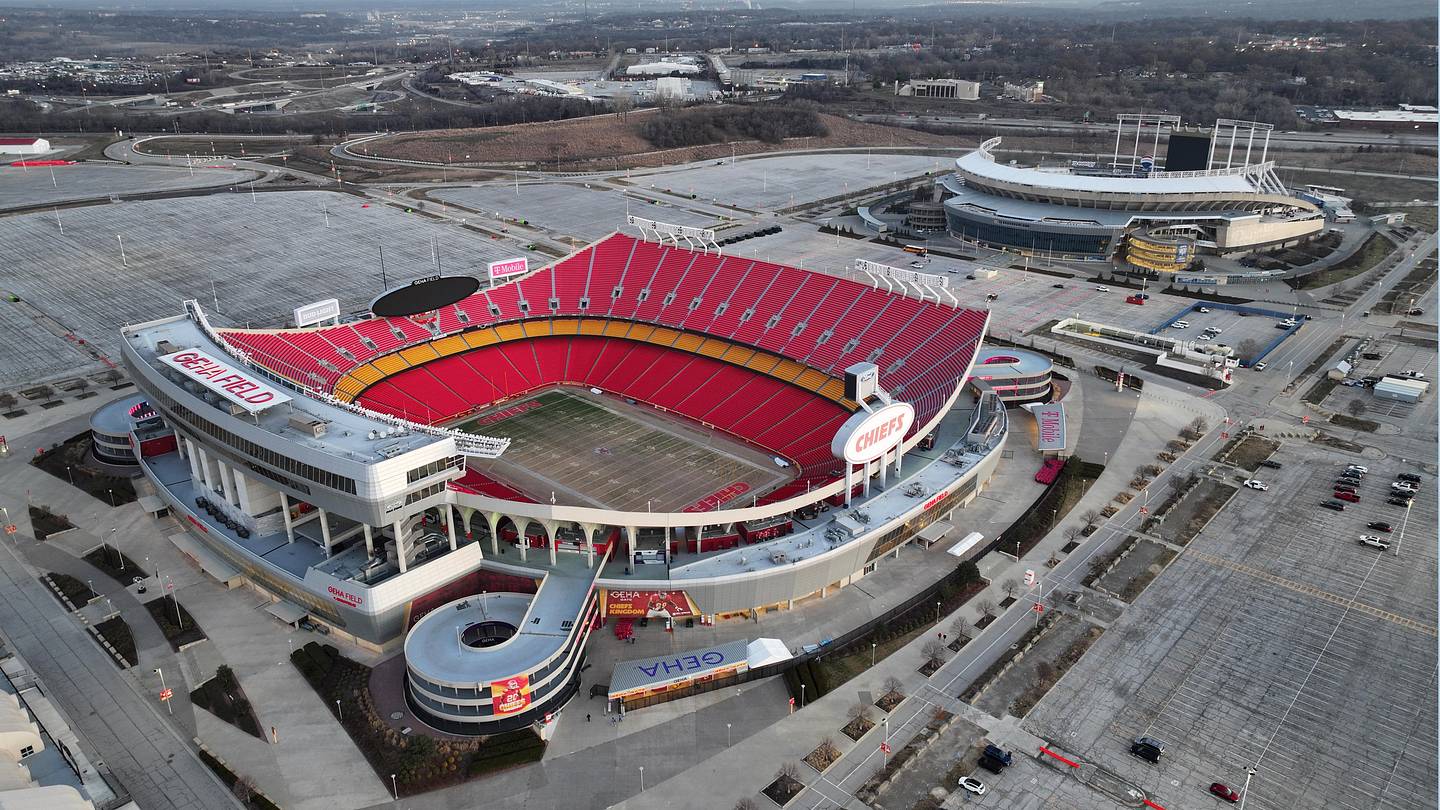
In 1972, the franchise officially bid farewell to Municipal Stadium and made the short geographic jump across town to the newly minted Truman Sports Complex. This ambitious master plan featured two distinct, purpose-built arenas situated side by side: one for baseball, known today as Kauffman Stadium, and one exclusively for football, originally designated as Arrowhead Stadium.
The opening of Arrowhead Stadium marked a monumental milestone in the evolution of the Kansas City Chiefs. With a seating capacity exceeding 76,000, wide concourses, excellent sightlines, and ample tailgating space, the venue quickly established a reputation as one of the most imposing and electric environments in all of professional sports. The stadium design featured stacked seating bowls that trapped sound, creating a deafening acoustic roar that would eventually earn Chiefs Kingdom the Guinness World Record for the loudest outdoor sports stadium in the world.

A Lasting Legacy in Missouri
From their humble origins in Dallas to their permanent sanctuary in Missouri, the journey of the Kansas City Chiefs stands as a testament to visionary ownership and unwavering civic devotion. When Lamar Hunt packed up his franchise in 1963, he did more than just change a mailing address; he forged an unbreakable bond between a city and its team.
Today, whether exploring the vibrant culinary scene featuring world-famous Kansas City barbecue, visiting the jazz heritage districts, or tailgating under the Midwestern sun before a game at Arrowhead Stadium, the legacy of that historic 1963 relocation remains palpable in every corner of the metropolitan area. The move not only saved a fledgling franchise but also created a cultural cornerstone that continues to define modern Kansas City for generations of sports enthusiasts worldwide.
LifeOutOfTheBox is a participant in the Amazon Services LLC Associates Program, an affiliate advertising program designed to provide a means for sites to earn advertising fees by advertising and linking to Amazon.com. Amazon, the Amazon logo, AmazonSupply, and the AmazonSupply logo are trademarks of Amazon.com, Inc. or its affiliates. As an Amazon Associate we earn affiliate commissions from qualifying purchases.