
The Road to Statehood: The Territorial Era
The path to the creation of the 34th state of the United States was neither swift nor peaceful. Long before the official establishment of statehood, the vast expanse of the prairie was home to numerous Indigenous nations, including the Kansa, Osage, and Pawnee peoples. As European explorers and American settlers pushed westward, the geopolitical landscape shifted dramatically. The region was initially acquired by the United States as part of the Louisiana Purchase in 1803, setting the stage for decades of exploration, trade along the Santa Fe Trail, and mounting sectional tensions regarding the expansion of slavery.
The definitive countdown to statehood began with the passage of the Kansas-Nebraska Act of 1854. Championed by Senator Stephen A. Douglas, this legislation repealed the Missouri Compromise and introduced the concept of popular sovereignty. This meant that the white male settlers living within the newly created Kansas Territory would vote on whether to permit or prohibit slavery within their borders. Rather than resolving the national debate, the act turned the territory into a political battleground. Settlers from both northern abolitionist groups and southern slave-holding states flooded the region, each faction desperate to sway the demographic balance and political outcome of the forthcoming territory.
Bleeding Kansas and the Prelude to War
The fierce ideological clash quickly deteriorated into open, violent conflict, earning the region the grim moniker of “Bleeding Kansas.” Armed bands of pro-slavery ruffians from neighboring Missouri frequently crossed the border to disrupt elections, intimidate anti-slavery settlers, and attack free-state strongholds such as Lawrence. In response, anti-slavery militias, led by radical abolitionists like John Brown, retaliated with lethal force, most notably during the Pottawatomie Massacre.
During this turbulent period, residents drafted multiple competing constitutions in an attempt to gain admission to the Union on their own terms:
- The Topeka Constitution (1855): Drafted by free-state advocates, this document banned slavery but was rejected by the United States Congress.
- The Lecompton Constitution (1857): A pro-slavery document engineered through fraudulent voting practices, which ultimately fractured the Democratic Party and was soundly defeated by territorial voters.
- The Leavenworth Constitution (1858): A radical progressive document that extended voting rights to all men regardless of race, though it was never acted upon by Congress.
- The Wyandotte Constitution (1859): The moderate, anti-slavery framework that ultimately paved the way for successful statehood.
The Wyandotte Constitutional Convention
By the summer of 1859, the tide of public sentiment and demographic dominance had turned decisively in favor of the free-state forces. Recognizing that a stable, unified government was necessary to escape the chaos of the territorial period, delegates gathered in Wyandotte (now a part of Kansas City) to draft a fresh foundational document. The convention began on July 5, 1859, and concluded on July 29, 1859, producing the Wyandotte Constitution.

This document reflected the progressive and pragmatic spirit of the anti-slavery majority. It explicitly prohibited slavery, established public education systems, secured property rights for married women—a radical concept at the time—and set the current western, eastern, northern, and southern boundaries of the state. While it unfortunately restricted the right to vote to white males, it represented a monumental step forward in governance and civil stability compared to the chaotic experiments that preceded it.
Securing Congressional Approval
With the Wyandotte Constitution ratified by territorial voters in October 1859, the push for congressional approval intensified. However, federal politics remained paralyzed by the looming threat of national dissolution over the institution of slavery. Southern senators, who held considerable sway in the United States Senate, routinely blocked the admission of Kansas as a free state, fearing it would upset the fragile legislative balance of power in Washington.
The political logjam finally broke in the winter of 1861. Following the election of Abraham Lincoln to the presidency in November 1860, several southern states began the process of secession. As pro-slavery southern senators resigned from Congress and abandoned Washington, the political opposition to Kansas statehood evaporated almost overnight. The remaining members of Congress swiftly approved the Wyandotte Constitution, clearing the final legislative hurdle required to bring the territory into the Union.
January 29, 1861: The Official Birth of Kansas
The culmination of nearly a decade of bloodshed, political maneuvering, and constitutional debate arrived on January 29, 1861. On this momentous day, President James Buchanan signed the Act for the Admission of Kansas into the Union, officially making it the 34th state of the United States.
The new state emerged onto the national stage bearing the motto Ad Astra per Aspera—Latin for “To the Stars through Difficulties”—a phrase that profoundly encapsulated the grueling, arduous journey its citizens had endured to achieve self-governance and freedom. The infant state immediately faced the immense challenges of the American Civil War, contributing thousands of soldiers to the Union Army despite its small population and fragile infrastructure.

Commemorating the Milestone Today
Today, the historic events surrounding the founding of the state are preserved and celebrated across numerous landmarks and cultural institutions. Visitors interested in exploring this rich history can travel to key sites throughout the region:
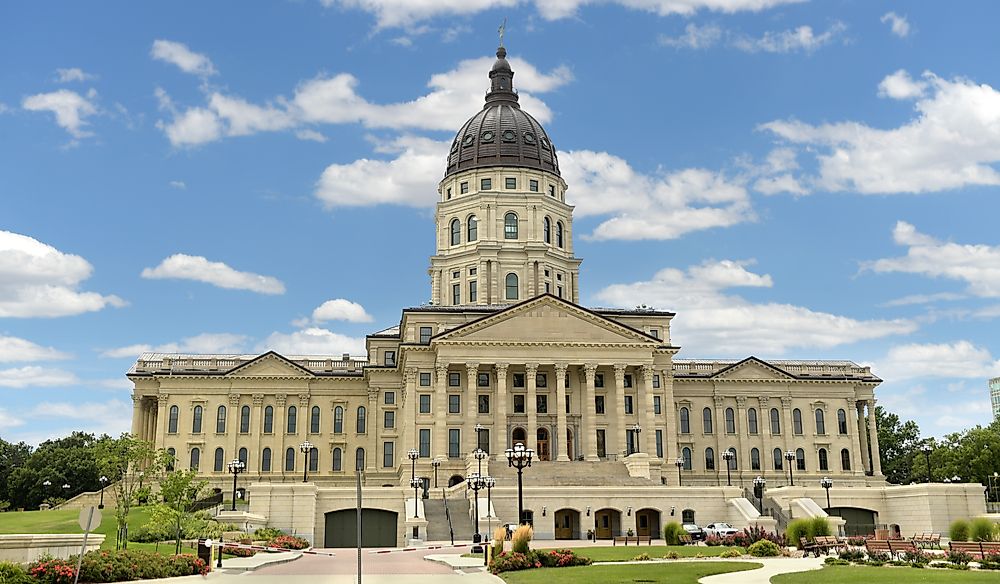
- The Kansas State Capitol Building: Located in Topeka, this architectural masterpiece features stunning murals by artist John Steuart Curry that depict the dramatic struggles of the territorial era.
- Constitution Hall: Situated in Lecompton, this preserved building stands as a testament to the bitter legislative battles fought over the infamous pro-slavery constitution.
- The John Brown Museum State Historic Site: Located in Osawatomie, this site honors the complex legacy of the fiery abolitionist whose actions shaped the fate of the territory.
Understanding when and how Kansas was founded offers profound insight into the broader narrative of American expansion, the fight for civil rights, and the crucible of the Civil War. The anniversary of statehood, celebrated annually on January 29th, serves as a poignant reminder of the resilience required to forge a democratic society out of a divided frontier.
LifeOutOfTheBox is a participant in the Amazon Services LLC Associates Program, an affiliate advertising program designed to provide a means for sites to earn advertising fees by advertising and linking to Amazon.com. Amazon, the Amazon logo, AmazonSupply, and the AmazonSupply logo are trademarks of Amazon.com, Inc. or its affiliates. As an Amazon Associate we earn affiliate commissions from qualifying purchases.