
The pursuit of lightweight backpacking is more than just a trend; it’s a philosophy. It’s about minimizing your burden to maximize your experience in the wilderness. When your base weight—the total weight of your gear excluding consumables like food, water, and fuel—drops significantly, every mile becomes easier, your hiking day lengthens, and the risk of injury decreases.
Transitioning to a lightweight setup requires a mindset shift: moving from preparedness for every eventuality to risk management and prioritizing multi-use items. This guide provides a comprehensive list of high-performance gear designed to keep your base weight under the coveted 10-pound mark (a threshold often defining “ultralight”). Whether you’re planning a weekend trek or a long-distance thru-hike, this strategy will help you build a kit that allows you to go further, faster, and feel lighter.
Understanding the “Big Three”
The foundation of any lightweight kit rests on three items: your backpack, shelter, and sleep system. These three components usually account for the majority of your base weight. Significant weight savings must begin here.
The Lightweight Backpack
In lightweight backpacking, the pack’s primary function shifts from weight carrier to weight holder. Since your total load is much lighter, you don’t need heavy internal frames and thick padding.
- Target Volume: 35 to 50 Liters (L). A smaller pack forces discipline and prevents overpacking.
- Target Weight: 1–2 lbs (0.45–0.9 kg). Look for frameless or minimally framed packs made from lightweight, durable fabrics like Dyneema Composite Fabric (DCF) or high-density nylon.
- Key Features: Minimal padding on the hip belt (since the weight is on your hips, not your shoulders), large external mesh pockets for quick access to water or rain gear, and roll-top closures for volume compression.
The Featherweight Shelter System
Traditional tents use thick poles, heavy rainflies, and large footprints. Lightweight shelters embrace innovation and dual-use gear.
- Target Weight: Under 2 lbs (0.9 kg).
- Freestanding vs. Non-Freestanding: Non-freestanding shelters (tents requiring trekking poles for setup) are significantly lighter. They utilize your existing gear, eliminating the need for dedicated tent poles.
- Materials: Look for shelters made from DCF or high-denier silnylon/silpoly.
- Alternative: A simple tarp or a bivy sack is the lightest option for experienced backpackers in mild climates. For first-timers seeking security, a lightweight two-person tent (to share the load) or checking out the best tents for solo travelers can be a great compromise.
The Optimized Sleep System
Your sleep system must balance warmth, compressibility, and weight. The best way to reduce weight is to optimize the temperature rating.
Sleeping Bag or Quilt
- Target Weight: 1–2 lbs (0.45–0.9 kg).
- Quilts vs. Bags: A quilt is essentially a sleeping bag without a hood or zipper on the bottom. Since a traditional bag’s insulation underneath your body is compressed and useless (a sleeping pad provides the insulation), a quilt saves weight by eliminating it entirely.
- Insulation: Down insulation offers the best warmth-to-weight ratio. Look for high-fill power down (800+ fill power). Always ensure the down is hydrophobic (treated to resist moisture).
Sleeping Pad
- R-Value Focus: R-value determines insulation (the higher the R-value, the warmer the pad). Choose a pad based on the lowest expected nighttime temperature. An R-value of 3–4 is generally sufficient for 3-season camping.
- Type: Inflatable pads are generally lighter and thicker (more comfortable) than closed-cell foam pads, though foam pads are puncture-proof. Look for tapered shapes to reduce bulk.
Kitchen and Hydration: Efficiency and Safety
The kitchen setup is where many beginners add unnecessary bulk. Keep it simple and focused on essentials.
The Minimalist Cooking Setup
The “Cook-in-the-Bag” method eliminates the need for bowls and complex cookware.
- Stove: Choose a small, lightweight canister stove (like an MSR PocketRocket or similar micro-stove).
- Target Weight (Stove only): Under 3 oz (85 g).
- Fuel: Carry only the necessary amount of fuel. Canister stoves are easier and safer for beginners than alcohol stoves.
- Cook Pot: A single titanium pot (around 700–900ml) is all you need. Titanium is extremely lightweight and durable.
- Target Weight (Pot): Under 5 oz (140 g).
- Utensil: A long-handled titanium spoon/spork.
Water Filtration
Reliable water filtration is mandatory for wilderness backpacking.
- Filtration: A squeeze filter (like Sawyer Squeeze) is the gold standard. It weighs only a few ounces and screws directly onto common plastic water bottles or collapsible soft bottles.
- Containers: Two 1-liter plastic Smartwater bottles (lightweight and durable) and a collapsible water bladder (2–3L capacity) for camp use and bulk water carrying.
Clothing: The Layering System
Lightweight clothing means leveraging the layering system to maximize warmth with minimal bulk. Forget cotton; embrace technical fabrics.
Base Layer (The Inner Skin)
- Purpose: Manages moisture and keeps you dry.
- Items: One Merino wool or synthetic long-sleeve shirt and matching bottoms (for sleeping and cold hiking).
Mid-Layer (The Insulation)
- Purpose: Traps heat.
- Items: A lightweight fleece jacket (Polartec Power Grid is popular for its warmth-to-weight ratio) or a synthetic puffy jacket. Synthetic insulation is preferred for wet environments as it maintains warmth even when damp.
Shell Layer (The Protection)
- Purpose: Blocks wind and rain.
- Items: A waterproof/breathable rain jacket (2.5 or 3-layer construction) and lightweight rain pants. These double as the primary wind layer.
Trail Clothing
- Items: 1–2 pairs of quick-drying shorts/pants, 2–3 moisture-wicking synthetic or Merino wool hiking shirts, 2–3 pairs of quality wool/synthetic hiking socks.
Note: Never wear cotton. Cotton absorbs moisture, takes forever to dry, and drastically increases the risk of hypothermia. This is the first rule of survival and mountain trekking.
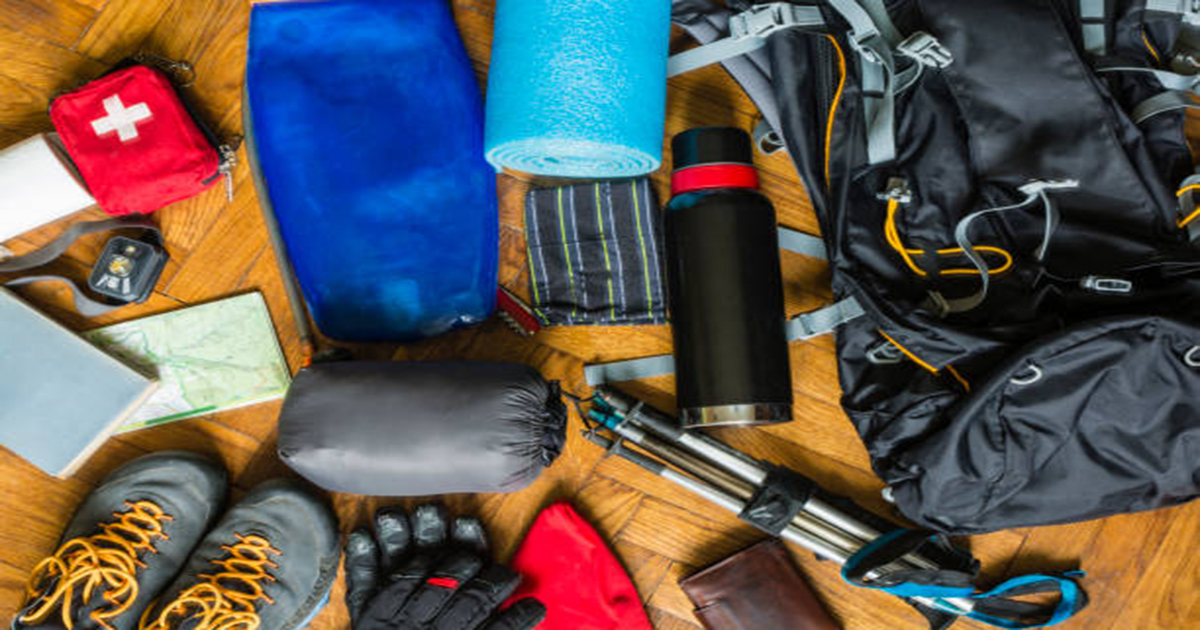
The Ten Essentials (Optimized for Weight)
The traditional “Ten Essentials” must be carried, but they can be upgraded to their lightest modern counterparts.
| Essential Category | Ultralight Gear Choice | Weight Reduction Strategy |
|---|---|---|
| Navigation | Smartphone with downloaded maps (Gaia GPS/AllTrails) + Compass (lightweight) + paper map of the area. | Ditch bulky GPS devices unless navigating remote, off-trail areas. |
| Sun Protection | Sunscreen/hat/sunglasses (all lightweight). | Choose smaller, minimalist containers for sunscreen. |
| Insulation | Down or Synthetic Puffy Jacket (already covered in mid-layer). | Select high-fill power down for best compression. |
| Illumination | Micro-USB rechargeable headlamp. | Check out the best headlamps for night adventures for the smallest options. |
| First Aid | Minimalist kit containing only blister care, essential meds, and trauma essentials. | Pre-package meds into smaller plastic bags. |
| Repair Kit/Tools | Lightweight folding knife/multi-tool, duct tape wrapped around a trekking pole, safety pins, needle and thread. | Every item must be multi-purpose. |
| Fire | Mini-Bic lighter, small amount of cotton balls soaked in petroleum jelly (for wet weather). | Avoid heavy fire starters. |
| Shelter | Emergency Bivy Sack or space blanket (for emergencies outside your main shelter). | Lightweight emergency blanket is crucial for survival. |
| Extra Food | A high-calorie, dehydrated meal or nutrition bar. | |
| Extra Water | A lightweight soft flask or water bladder. |
Gear Reduction Strategies: Shaving Off the Ounces
The final steps in achieving an ultralight kit involve meticulous attention to detail.
The Toothbrush Test
Take a standard toothbrush and cut off the handle. Does it make a huge difference? No. But this mindset—of questioning the necessity of every piece of material—is key to success.
- Cut Straps: If your pack has straps or cords you never use, cut them off.
- Repackage: Transfer toothpaste, soap, and hand sanitizer into the smallest containers possible (even contact lens cases work for tiny amounts).
- The Shared Load: If hiking with a partner, share heavy, common items like the tent, first-aid kit, stove, and repair kit.
The Double-Duty Principle
Every item should ideally perform two functions:
- Trekking Poles: Essential for stability, but they also replace tent poles for non-freestanding shelters.
- Cook Pot: Your mug, bowl, and cooking vessel.
- Neck Gaiter/Buff: Hat, scarf, sleep mask, towel.
Adopting this lightweight backpacking gear list is an ongoing process of refinement and learning. By focusing on the “Big Three” and applying the double-duty principle across your kit, you will unlock a level of freedom and enjoyment on the trail that heavy packers simply cannot match. It’s not about deprivation; it’s about choosing the smartest, most efficient gear available.
LifeOutOfTheBox is a participant in the Amazon Services LLC Associates Program, an affiliate advertising program designed to provide a means for sites to earn advertising fees by advertising and linking to Amazon.com. Amazon, the Amazon logo, AmazonSupply, and the AmazonSupply logo are trademarks of Amazon.com, Inc. or its affiliates. As an Amazon Associate we earn affiliate commissions from qualifying purchases.