
For many investors and prospective homeowners, the allure of Las Vegas extends far beyond the neon lights of the Las Vegas Strip and the high-stakes gaming floors of Caesars Palace. As the city matures into a major metropolitan hub, those looking to purchase long-term residential or investment property often prioritize fiscal planning over nightlife. Understanding the property tax landscape in Nevada is essential for anyone considering a purchase, as the tax structure here is notably different from that of many other United States regions.
The Fundamentals of Property Taxation in Clark County
In Clark County, property taxes are not calculated based on a flat percentage of the market value of a home. Instead, the process involves a specific formula rooted in state law that aims to provide predictability for homeowners while funding essential public services, such as education, public safety, and infrastructure.

Understanding Taxable Value vs. Market Value
The most common point of confusion for new property owners in Henderson or Summerlin is the distinction between “Market Value” and “Taxable Value.” The Assessor’s office determines the taxable value by calculating the cost to replace the structure, subtracting depreciation, and then adding the land value. Because of legislative caps implemented in the state, the taxable value is often significantly lower than what you might pay for the home in an open market.
The Role of the Tax Rate
The tax rate in Las Vegas is expressed as a “tax district rate,” which varies depending on your specific location within the county. These rates are a cumulative total of various levies for schools, the state, cities, and special districts. While the median effective property tax rate in Nevada often hovers around 0.5% to 0.7%, it is imperative to check the specific tax district for a property before closing on a sale, as these rates can fluctuate based on local bond measures.
Legislative Protections: The Abatement Program
One of the greatest benefits of owning property in Nevada is the existence of the Abatement Program. This is a mechanism designed to protect homeowners from massive, sudden tax spikes that often result from skyrocketing real estate appreciation.
Primary Residence vs. Investment Property
The abatement cap functions differently based on how the property is used. For a primary residence, the law limits the annual increase in property taxes to no more than 3% over the previous year. For secondary homes, investment properties, or commercial real estate, the cap is slightly higher, reaching up to 8% annually.
Why This Matters for Long-Term Planning
When you purchase a luxury condominium at The Cosmopolitan of Las Vegas or a family home in Green Valley, these caps provide a level of financial stability that is rare in high-growth markets. While property values in Clark County may climb during a housing boom, your tax bill will not mirror that trajectory, allowing homeowners to budget more effectively over the long term.

Factors Influencing Your Annual Tax Bill
Beyond the base rate and the abatement caps, several external factors contribute to the final number you see on your tax bill. Understanding these can help potential buyers evaluate the true “cost of ownership” for a specific property.
Assessment Cycles
Property assessments are conducted annually. The Assessor’s office analyzes market data to update the taxable value of land and improvements. However, because of the aforementioned caps, your tax bill will rarely jump by the full amount of a market value increase. It is common to see a property’s assessed value remain static or increase only marginally, even if comparable homes nearby have sold for significantly more.
Special Assessments and Districts
Some master-planned communities, such as those found near Red Rock Canyon, may include special improvement districts (SIDs) or local improvement districts (LIDs). These are separate from general property taxes and are typically used to fund infrastructure projects like roads, parks, or utility improvements within that specific development. When researching a home, it is vital to request a breakdown of any SIDs or LIDs, as these represent additional financial obligations that must be paid alongside your standard property tax.
Exemptions That Can Lower Your Liability
Nevada offers several tax exemptions that residents should be aware of, including:
- Veteran Exemptions: Residents who served in the military may qualify for exemptions that reduce the taxable value of their property.
- Disabled Veteran Exemptions: More extensive exemptions exist for veterans with service-connected disabilities.
- Blind Exemptions: Certain tax relief is available for individuals who are legally blind.
Strategic Considerations for Property Investors
For those viewing property in Las Vegas as an investment—perhaps a rental property near the University of Nevada Las Vegas—the tax structure is remarkably friendly compared to states with higher income tax burdens. In fact, Nevada has no state income tax, which allows real estate investors to offset their property tax expenses more effectively than they might in states like California or New York.
Depreciation and Deductions
When calculating the viability of an investment, keep in mind that property taxes are a deductible business expense for rental properties. Because the state’s property tax structure is relatively low and stable, the “carrying cost” of a property in Clark County is often lower than in other major metropolitan areas. This is a primary reason why institutional investors continue to flock to the Las Vegas Valley.
The Value of Professional Appraisal
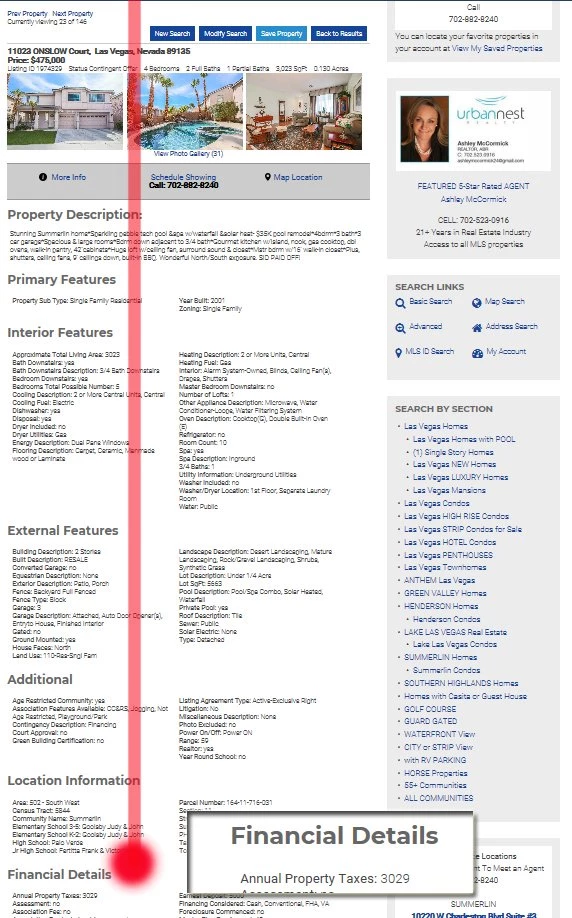
Before finalizing a purchase of a high-value asset, such as a sprawling estate in The Ridges, it is advisable to look at the property’s historical tax records, which are publicly available through the Clark County Assessor. You can view the tax history, the land value, and the improvement value for the last several years. This data provides a clear picture of how much the property has cost in taxes, helping you avoid surprises after you take ownership.
Conclusion: Balancing Costs and Benefits
While the question “How much is property tax in Las Vegas?” does not have a single dollar-amount answer, the reality is that the Nevada system is designed to be equitable and predictable. By pairing relatively low effective tax rates with robust abatement caps, the state creates an environment where homeowners and investors can flourish. Whether you are moving to be closer to the Mount Charleston wilderness or looking for a savvy investment in the urban core, the tax implications of Las Vegas real estate remain one of the most compelling reasons to choose this vibrant, desert metropolis for your next property acquisition. With careful research into your specific district and a solid understanding of your eligibility for exemptions, navigating the property tax landscape in Clark County becomes a straightforward component of your overall financial success.
LifeOutOfTheBox is a participant in the Amazon Services LLC Associates Program, an affiliate advertising program designed to provide a means for sites to earn advertising fees by advertising and linking to Amazon.com. Amazon, the Amazon logo, AmazonSupply, and the AmazonSupply logo are trademarks of Amazon.com, Inc. or its affiliates. As an Amazon Associate we earn affiliate commissions from qualifying purchases.