
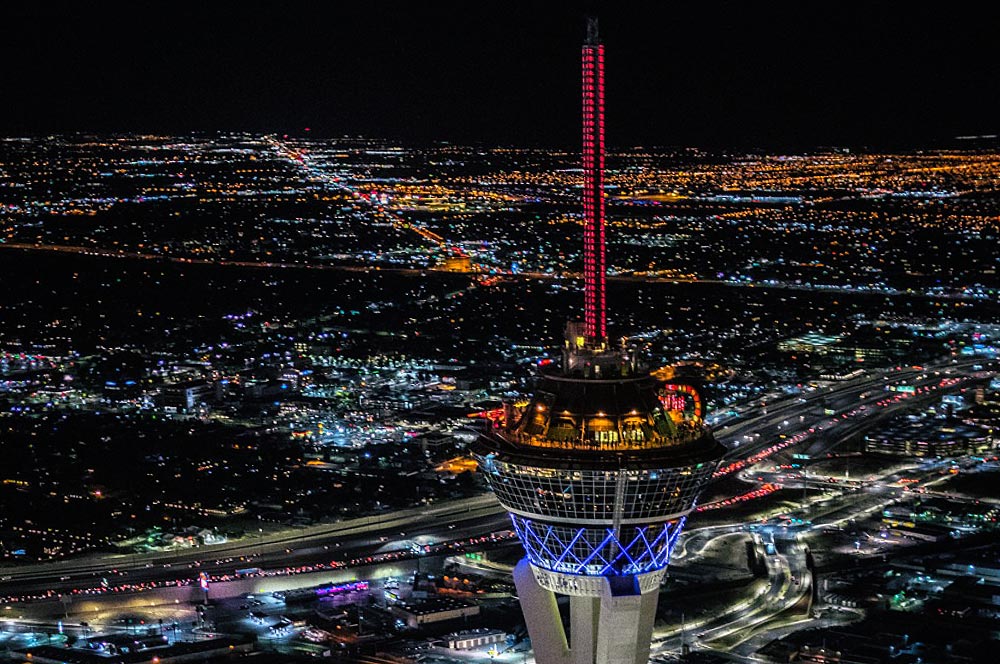
Dominating the horizon of the Las Vegas skyline, the iconic tower formerly known as the Stratosphere and now branded as The STRAT Hotel, Casino & SkyPod serves as a beacon of architectural ambition. Standing as a testament to the city’s penchant for the larger-than-life, this structure is not merely a hotel; it is a vertical destination that has defined the northern end of the Las Vegas Strip since its opening. For visitors and architecture enthusiasts alike, the question of its height is a gateway into understanding the scale and ambition of engineering in Nevada.

The Vertical Magnitude of an Icon
The tower stands at a staggering height of 1,149 feet (350.2 meters). This measurement officially cements its status as the tallest freestanding observation tower in the United States. When considering its place among the architectural marvels of the world, its height is not just a number; it is a vantage point that offers an unparalleled perspective of the Mojave Desert.
Measuring the Peak
To understand how the height is calculated, one must look at the structural pinnacle. The 1,149-foot mark reaches to the very tip of the spire that sits atop the observation pod. While many skyscrapers rely on their floor-to-ceiling mass to gain height, the design here functions differently. The tower is a tripod-based structure, which provides the necessary stability to withstand the high-altitude winds often experienced in the Valley of Fire region.
The Observation Deck Advantage
The primary observation deck, known as the SkyPod, is positioned significantly lower than the absolute peak, yet it remains one of the highest public viewing points in the country. From this elevation, guests can look down upon the neon glow of Fremont Street and the sprawling suburban expanse of Henderson. The elevation change from the base of the resort to the deck provides a dramatic shift in air pressure and temperature, highlighting the sheer scale of the vertical ascent.
Engineering the SkyPod Experience
Constructing a tower of this height in a seismic zone like Southern Nevada required precise engineering. The goal was never just to build high, but to build a platform that could house rotating restaurants, thrill rides, and observation areas without compromising safety.
Structural Integrity and Design
The foundation of the tower consists of massive concrete caissons driven deep into the ground. As the structure rises, it tapers to allow for aerodynamic stability. This shape is crucial for ensuring that the tower can sway slightly during high winds—a necessity for any structure reaching above 1,000 feet. The engineering team behind the project had to account for the unique climate of North America, ensuring that the glass, steel, and concrete could handle the extreme heat of the summer months alongside the structural load of the heavy observation pod.
Vertical Logistics
Moving people to the top of an 1,149-foot structure is a task of logistical complexity. High-speed elevators whisk guests to the top in a matter of seconds, providing a sensation of rapid ascent that rivals the intensity of the amusement rides located at the summit. The transition from the casino floor to the open-air deck is designed to be immersive, stripping away the distractions of the gambling floor and replacing them with the raw, expansive horizon.

Beyond Height: The Thrill of the Summit
While the height of the tower is its most defining physical characteristic, its identity is built upon what that height allows. The SkyPod serves as more than an observation area; it is a laboratory for thrill-seekers.
Record-Breaking Attractions
The tower holds the distinction of hosting some of the highest amusement rides in the world. The Big Shot, for instance, launches riders 160 feet further up from the 1,081-foot mark, briefly propelling them to an elevation of over 1,300 feet. This creates a psychological perception of height that far exceeds the actual structure, as riders are momentarily suspended above the Downtown Las Vegas area.
Dining at the Zenith
The presence of Top of the World restaurant, which rotates 360 degrees, offers a dining experience that is literally elevated. The rotation allows diners to view the Spring Mountains and the Red Rock Canyon as the sun sets. The dining room sits well above the surrounding hotel towers, such as the Circus Circus Hotel and Casino, providing a clear, unobstructed line of sight toward the distant Arizona border.
The Cultural Impact of the Landmark
The height of this structure has made it a focal point for film, photography, and local identity. It serves as a visual marker that divides the Las Vegas Valley into distinct zones.
A Beacon for Navigation
For those driving into Clark County, the tower acts as a natural lighthouse. Whether arriving from California on Interstate 15 or flying into Harry Reid International Airport, the spire is often the first thing identified. Its stature has turned it into a permanent fixture of the city’s brand, appearing in countless films and television shows as the definitive silhouette of the city’s nightlife.
Comparisons and Context
While many modern skyscrapers in cities like New York or Chicago easily exceed the height of the Stratosphere, those buildings are typically offices or residential units. The uniqueness of this tower lies in its singular purpose: to provide a view. Because it sits on a pedestal of entertainment and hospitality rather than commercial real estate, it remains the most accessible “tall” experience in the region. Unlike the Empire State Building, which is embedded in a dense urban grid, this tower stands in relative isolation, allowing it to dominate the skyline in a way that few other structures can replicate.
Conclusion: A Legacy of Elevation
The 1,149-foot measurement of The STRAT Hotel, Casino & SkyPod is more than just a statistic; it represents the spirit of Las Vegas. By defying the flat, desert topography of the surrounding Nevada landscape, the tower provides a vantage point that bridges the gap between the terrestrial world and the sky. Whether one is visiting for the adrenaline-pumping rides, the fine dining, or simply the desire to stand at the top of the tallest building in the region, the experience is defined by that incredible height. As the city continues to evolve and new construction projects change the face of the Las Vegas Strip, the tower remains a constant—a soaring testament to human engineering and the desire to touch the clouds above the Mojave Desert. For any traveler looking to understand the scale of Southern Nevada, a journey to this height is an essential part of the experience.
LifeOutOfTheBox is a participant in the Amazon Services LLC Associates Program, an affiliate advertising program designed to provide a means for sites to earn advertising fees by advertising and linking to Amazon.com. Amazon, the Amazon logo, AmazonSupply, and the AmazonSupply logo are trademarks of Amazon.com, Inc. or its affiliates. As an Amazon Associate we earn affiliate commissions from qualifying purchases.