
Planning a trip to the Happiest Place on Earth often starts with a single, logistical question: how do I get there from the big city? While Los Angeles and Disneyland are often mentioned in the same breath, they are distinct geographical entities. Understanding the distance, the nuances of Southern California traffic, and the various modes of transit available is essential for ensuring your vacation starts with magic rather than frustration.
The Geographical Reality and Driving Distance
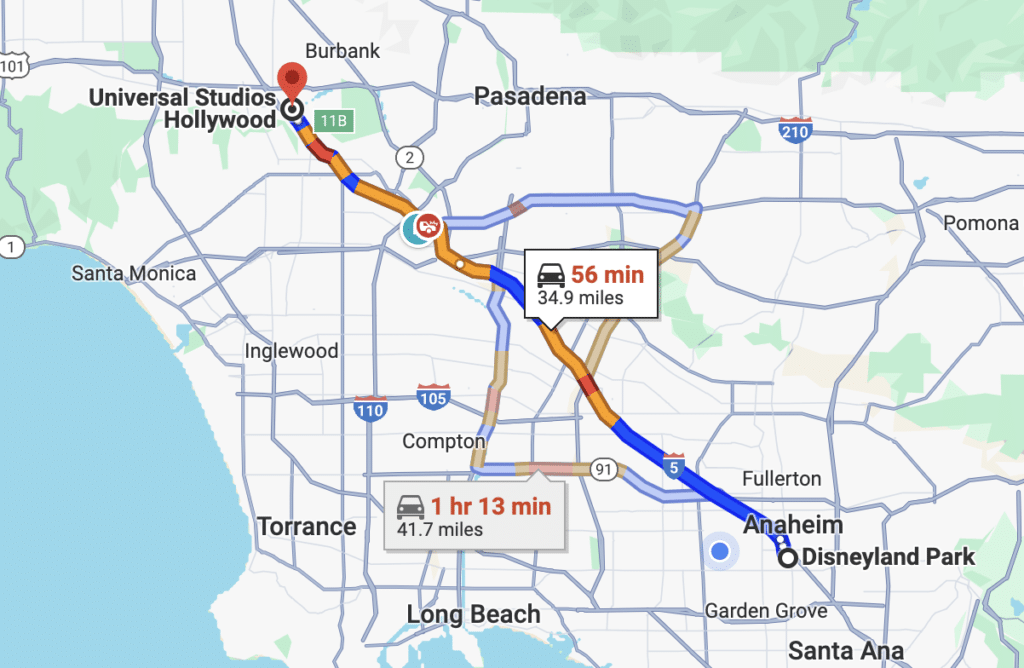
The distance between Los Angeles and Disneyland Park in Anaheim is typically between 25 and 35 miles, depending on your specific starting point. If you are staying in Downtown Los Angeles, you are looking at a relatively direct shot down the I-5 freeway. However, mileage is a deceptive metric in Southern California.

The “Traffic Factor”
In California, distance is measured in time, not miles. During off-peak hours—such as late at night or mid-morning—the drive might take as little as 40 minutes. Conversely, during the infamous weekday rush hour (7:00 AM to 10:00 AM and 3:00 PM to 7:00 PM), the same journey can easily stretch to 90 minutes or even two hours.
Strategic Planning for Drivers
If you are renting a car at Los Angeles International Airport, be prepared for the reality of the 405 Freeway. This artery is legendary for its congestion. For those heading directly to Disneyland Resort, it is often more efficient to check real-time GPS apps like Google Maps or Waze before departing, as they may suggest taking the I-105 to the I-5 as a more consistent alternative.
Public Transportation Alternatives
For travelers who prefer to avoid the stress of driving or the high costs of rental car parking, there are several public transit options available. While not as seamless as transit systems in Europe or New York City, the network connecting the greater metropolitan area is functional.
The Metrolink Experience
The Metrolink commuter train is arguably the most relaxing way to bridge the gap. You can catch a train from Union Station in Downtown Los Angeles directly to the Anaheim Regional Transportation Intermodal Center. From this station, a short ART bus ride or a quick rideshare will drop you at the front gates of the theme park.
Bus and Metro Rail Options
Using the LA Metro combined with local Orange County bus lines is possible but highly time-consuming. This route is generally discouraged for families with small children or those carrying significant luggage, as it involves multiple transfers and can take upwards of three hours. If you are on a strict budget and want to explore the local flavor of the region, it is an option, but it requires patience and a spirit of adventure.
Ridesharing and Shuttle Services
If you do not want to rent a vehicle but need the convenience of a door-to-door service, rideshare apps and private shuttles offer a middle ground between the autonomy of a car and the simplicity of public transport.
The Ease of Rideshare Apps
Services like Uber and Lyft are ubiquitous in Southern California. Booking a ride from Los Angeles to Anaheim is straightforward, though surge pricing during peak hours can significantly increase the cost. It is recommended to check the estimated price on the app prior to your journey to avoid surprises.
Private Shuttles and Car Services
For larger groups or those looking for a premium experience, pre-arranged private shuttle services are often the best choice. Companies that operate specifically within the Disney corridor often provide car seats, specialized luggage handling, and professional drivers who know the best routes to bypass the worst traffic hotspots. These services are typically more expensive than public transit but offer a level of reliability that can be crucial when you have timed-entry park reservations.
Optimizing Your Location
Where you choose to stay significantly impacts your experience of the distance between Los Angeles and Disneyland.
Staying Near the Park
If your primary goal is to spend every waking hour in the parks, the most logical decision is to find accommodation in Anaheim. Many visitors opt to stay at the Disneyland Hotel or the Grand Californian Hotel to be within walking distance of Downtown Disney. By staying in Anaheim, you essentially eliminate the “commute” from Los Angeles from your daily itinerary, allowing you to focus entirely on the attractions.
Balancing Urban Exploration with Theme Park Magic
For those who want to see the sights of Hollywood or the beaches of Santa Monica while also visiting Disneyland, a split-stay strategy is often best. Spend the first few days of your vacation in Los Angeles to experience the Griffith Observatory and Beverly Hills, and then move to a hotel in Anaheim for the remainder of the trip. This prevents the need to commute back and forth across the region, which is the fastest way to fatigue yourself.

Final Travel Tips
Regardless of how you choose to travel, keep the following in mind:
- Water and Snacks: Even a short drive in Southern California can be dehydrating. Always keep supplies in your bag.
- Park Reservations: Remember that even if you make it to the gates in record time, you must have a valid park reservation.
- Timing: If you are driving from Los Angeles on a weekend, you might find the I-5 surprisingly clear on a Sunday morning, whereas a Friday afternoon is almost universally congested.
By acknowledging that Los Angeles and Anaheim are separate hubs, you can better manage your expectations. While the distance is not vast, the environment demands preparation. Whether you choose the efficiency of the Metrolink or the convenience of a direct shuttle, your journey to the magic can be handled with ease, allowing you more time to enjoy the rides, the characters, and the atmosphere that make Disneyland a global icon of entertainment.
LifeOutOfTheBox is a participant in the Amazon Services LLC Associates Program, an affiliate advertising program designed to provide a means for sites to earn advertising fees by advertising and linking to Amazon.com. Amazon, the Amazon logo, AmazonSupply, and the AmazonSupply logo are trademarks of Amazon.com, Inc. or its affiliates. As an Amazon Associate we earn affiliate commissions from qualifying purchases.