
Navigating the complexities of international logistics requires a keen understanding of global supply chains. For business travelers and entrepreneurs coordinating shipments from manufacturing hubs in China to the bustling commercial gateway of Los Angeles, the question of air freight costs is paramount. While maritime shipping remains the standard for bulk goods, air freight serves as the essential lifeline for high-value, time-sensitive, and perishable commodities that demand rapid transit between the United States and the Asia-Pacific region.
The Variables Influencing Air Freight Rates
Calculating the cost of moving goods by air is rarely a fixed science. Unlike courier services with flat-rate boxes, air freight pricing is a dynamic calculation influenced by weight, volume, demand, and the specific nature of the cargo.

Volumetric Weight vs. Actual Weight
The most critical factor in your shipping invoice is the distinction between actual weight and volumetric weight. Airlines charge based on the “chargeable weight,” which is the higher of the two.
- Actual Weight: The physical weight of the cargo as it sits on a scale.
- Volumetric Weight: This calculation accounts for the space the cargo occupies in the aircraft hold. Because air travel is space-constrained, airlines calculate this by multiplying length, width, and height (in centimeters) and dividing by a standard divisor (usually 6,000).
If you are shipping lightweight but bulky items, such as electronics packaging or high-end textiles, you will likely be charged for the volume rather than the weight. Understanding this dynamic is essential for budget forecasting during your business trips to Guangzhou or Shenzhen.
Seasonal Fluctuations and Peak Demand
The logistics industry operates on a cycle of seasonal volatility. Rates from Shanghai to Los Angeles International Airport often spike during the “Peak Season,” which typically spans from September through December. During this period, the surge in demand for consumer goods—driven by global holidays—tightens aircraft capacity. Conversely, shipping during the off-peak months of February or March often yields more favorable rates, as airlines look to maximize load factors during lower-demand cycles.
Strategic Cost Management for Business Shipments
For the professional entrepreneur, air freight is more than just a logistical expense; it is a strategic investment in supply chain agility. To optimize your spend, consider the nuances of transit speeds and service levels.
Express vs. Standard Air Freight
- Express Air Freight: This service prioritizes your cargo, ensuring it is loaded onto the next available flight. It is the most expensive option but is indispensable for launching new products in California or fulfilling urgent back-order requirements.
- Standard Air Freight: This involves a slightly longer lead time, as cargo may be consolidated with other shipments. It offers a balanced compromise between cost and reliability, making it the preferred choice for regular inventory replenishment.

Consolidation and Direct Flights
Direct flights from hubs like Beijing to Los Angeles carry a premium. If your timeline allows, opting for indirect routes or consolidations can significantly lower costs. Consolidation allows several shippers to share the cost of an entire unit load device (ULD), spreading the expense and reducing the per-kilogram rate for individual businesses.
Understanding the “All-In” Price Breakdown
When you receive a quote from a freight forwarder, it is vital to discern what is included in the “all-in” rate. A professional quote should be itemized to prevent surprise surcharges.
Fuel and Security Surcharges
Air freight rates are susceptible to global energy price shifts. Most carriers include a Fuel Surcharge (FSC), which is adjusted periodically based on the price of jet fuel. Additionally, security surcharges are standard, covering the rigorous screening protocols required for international air transit.
Documentation and Handling Fees
Moving goods through customs in China and ensuring they clear through the U.S. Customs and Border Protection requires meticulous paperwork. Your freight forwarder will charge for the preparation of the Air Waybill (AWB), export declarations, and terminal handling charges at both origin and destination airports. When calculating your total budget, remember to include:
- Pickup fees from your supplier’s factory.
- Export clearance costs at the departure airport.
- Airport-to-airport freight (the main transit cost).
- Destination handling and delivery to your warehouse in Los Angeles.
Navigating Logistics Risks and Insurance
The efficiency of air freight is its greatest asset, but it is not without risk. While air travel is statistically safer than ocean transit, weather disruptions, mechanical delays, and airport congestion can impact timelines.
The Necessity of Cargo Insurance
It is common for businesses to overlook insurance, assuming the carrier is liable for the full value of the goods. However, international air transport conventions often limit carrier liability to a small fraction of the shipment’s value, calculated by weight. Securing comprehensive cargo insurance—covering door-to-door transit—is a mandatory best practice for any professional handling high-value imports from Asia.
Building Relationships with Freight Forwarders
The complexity of international trade is best managed through a long-term partnership with a reputable freight forwarder. A professional forwarder does not just book space on a plane; they act as your local eyes and ears in China. They can provide insight into regional port congestion, advise on packaging improvements to minimize volumetric weight, and handle the complexities of compliance with U.S. import regulations.
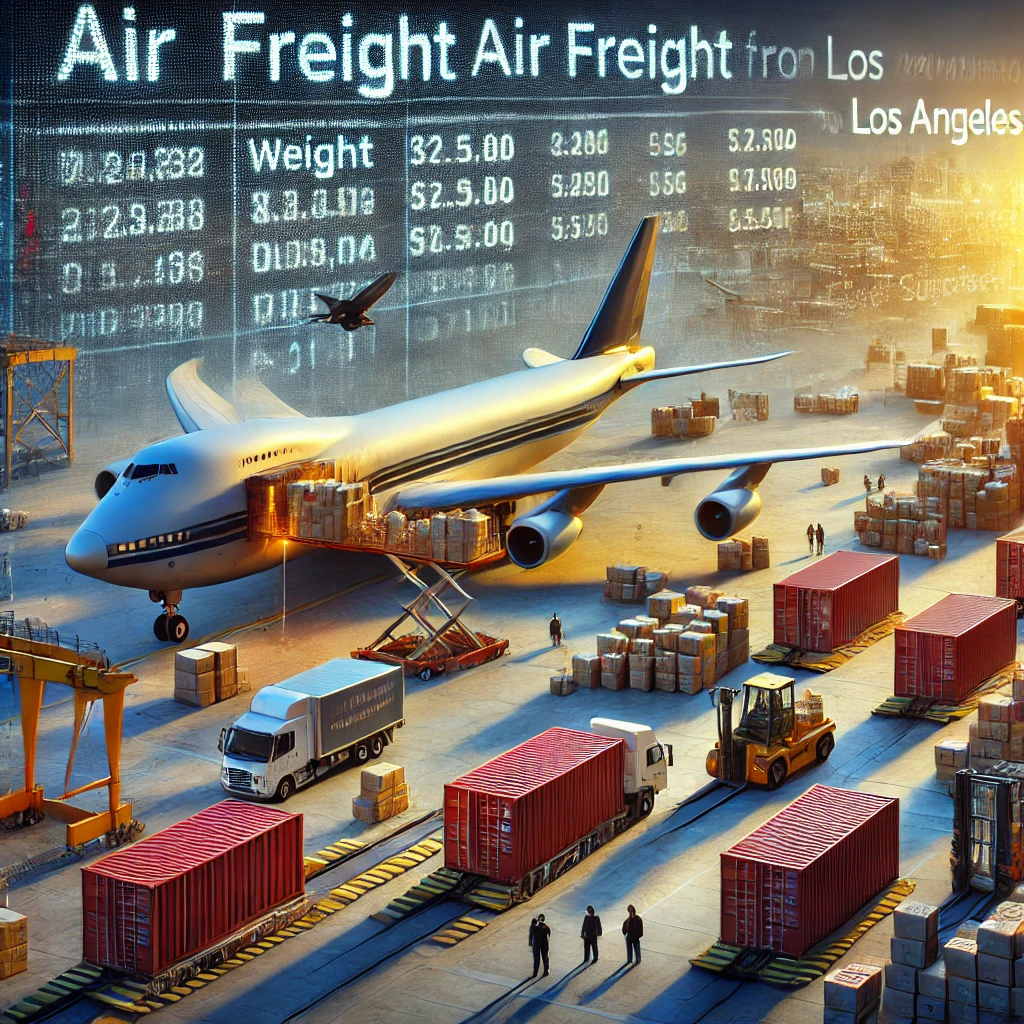
Future Outlook and Digital Transformation
The landscape of air freight is evolving. With the integration of digital tracking, real-time customs clearing, and more efficient ULD management, the cost of doing business is becoming more transparent. As a professional, staying informed on current market trends and maintaining a flexible logistics strategy will ensure that your shipments from China to Los Angeles remain cost-effective.
While air freight will always carry a higher price tag than ocean freight, the value proposition lies in speed, inventory turnover, and the ability to respond instantly to market demand. By carefully evaluating your chargeable weight, negotiating seasonal rates, and securing reliable insurance, you can effectively manage your logistics spend and ensure your goods arrive in Los Angeles precisely when the market requires them. Whether you are dealing with seasonal inventory for the West Coast or high-frequency product launches, informed decision-making remains your most valuable tool in the air freight industry.
LifeOutOfTheBox is a participant in the Amazon Services LLC Associates Program, an affiliate advertising program designed to provide a means for sites to earn advertising fees by advertising and linking to Amazon.com. Amazon, the Amazon logo, AmazonSupply, and the AmazonSupply logo are trademarks of Amazon.com, Inc. or its affiliates. As an Amazon Associate we earn affiliate commissions from qualifying purchases.