
For sports enthusiasts and architectural admirers alike, the home of the Los Angeles Rams is far more than just a football field. It is a landmark of modern engineering and a centerpiece of the Inglewood revitalization. To understand where the stadium is, one must look toward the heart of the South Bay region of Los Angeles County, California. Officially known as SoFi Stadium, this sprawling complex sits on the site of the former Hollywood Park Racetrack, strategically positioned to serve the greater Southern California area.
The Geography of the Sports Mecca
Understanding the precise location of the stadium requires a grasp of its proximity to major transit hubs and iconic regional landmarks. SoFi Stadium is located roughly three miles east of the Los Angeles International Airport, making it one of the most accessible venues for international travelers and fans flying in for game day.

Accessibility and Transportation
The stadium’s location was chosen with accessibility in mind. Nestled within the Hollypark neighborhood, it is easily reachable via the I-405 and I-105 freeways. For those avoiding the legendary traffic of Los Angeles, the development of the Crenshaw/LAX Line of the LA Metro has provided a public transit alternative that connects the stadium to the broader metropolitan grid, effectively linking Downtown Los Angeles to this suburban entertainment hub.
A Master-Planned Destination
The stadium does not exist in a vacuum. It is the anchor of a 298-acre mixed-use development that seeks to transform how fans experience professional sports. By repurposing the historic Hollywood Park site, developers have created a destination that encompasses office spaces, residential units, and extensive retail options. This integration ensures that the area remains a vibrant hotspot even when the National Football League is in its off-season.
Architectural Marvel of the West Coast
The design of the stadium is a direct response to the Southern California climate. Architects sought to create an indoor-outdoor experience that reflects the breezy, sun-drenched aesthetic of the region. The result is a structure that is as much an architectural landmark as it is a sports venue.
The Canopy Design
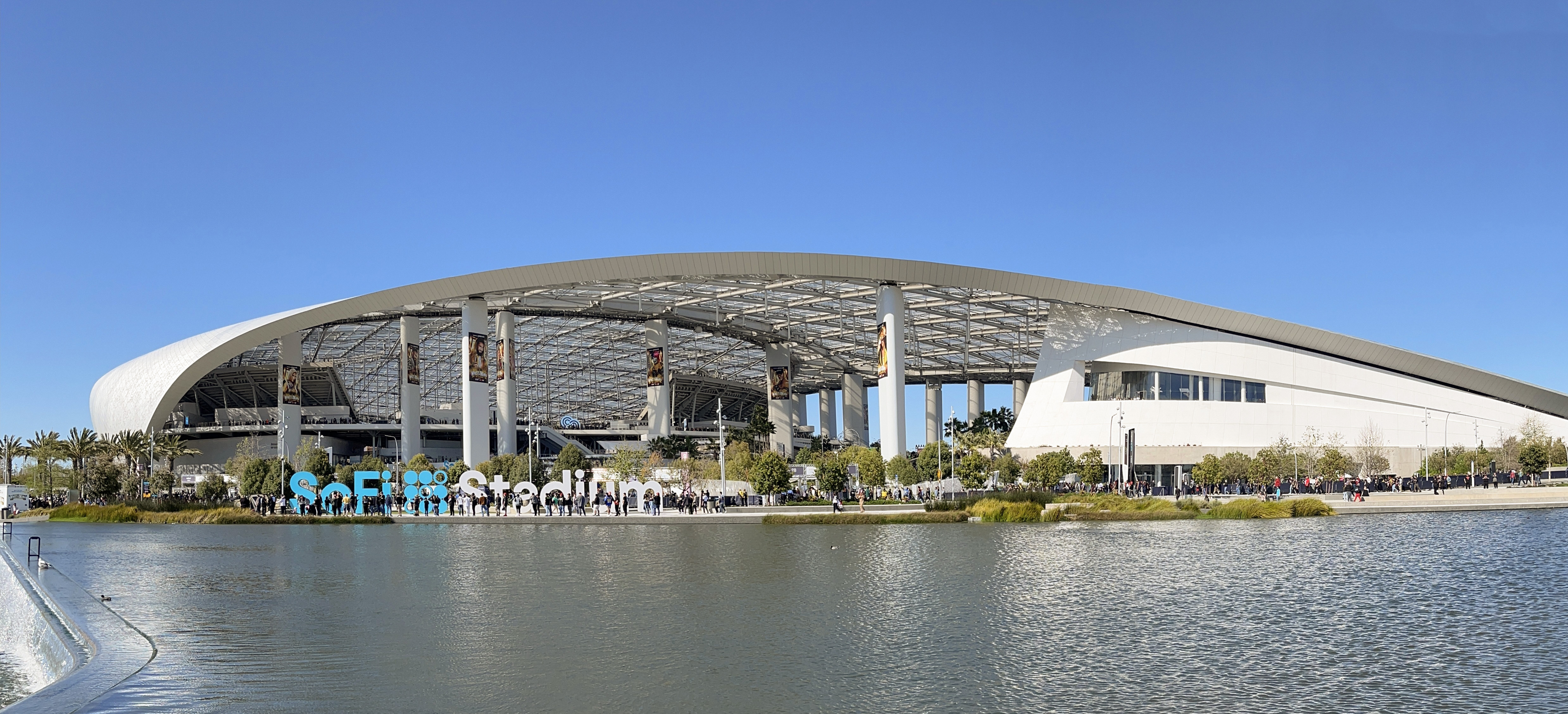
The most striking feature of SoFi Stadium is its massive translucent roof. This canopy covers not only the playing field but also the adjacent American Airlines Plaza and the YouTube Theater. This innovative design allows natural light to flood the interior while providing protection from the elements, ensuring that the stadium remains a year-round venue for concerts, major events, and sporting spectacles.

Integration with the Environment
The stadium is sunken into the ground to comply with height restrictions imposed by the nearby flight path of Los Angeles International Airport. This “dugout” style construction provides a unique intimacy for spectators, as the bowl is designed to keep fans close to the action. Walking into the stadium, one immediately notices the openness of the concourses, which are designed to capture the coastal breeze, reinforcing the connection between the venue and the Pacific Ocean air.
Beyond Game Day: The Surrounding Attractions
For those traveling to see the Los Angeles Rams, the experience extends well beyond the final whistle. The stadium’s location in Inglewood places visitors at the intersection of urban renewal and cultural history.
The Entertainment District
The development of Hollywood Park has sparked a surge in local hospitality. New dining options and event spaces have sprouted in the immediate vicinity, catering to a diverse demographic of fans and tourists. The area is becoming a primary destination for those looking to experience the modern face of California tourism.
Proximity to Cultural Landmarks
Visitors are perfectly positioned to explore other iconic areas once they have toured the stadium grounds. A short drive north brings travelers to the arts and culture scene of Culver City, or further west to the beaches of Manhattan Beach and Hermosa Beach. By anchoring the Rams in this specific locale, the city has successfully bridged the gap between the busy urban core of Los Angeles and the relaxed atmosphere of the coast.
Why Location Matters for the Modern Fan
The placement of the stadium is a testament to the evolution of the stadium-going experience. In the past, massive arenas were often isolated on the fringes of urban centers. Today, the philosophy has shifted toward integration. By placing SoFi Stadium within a walkable, dense development, the Los Angeles Rams have ensured that the venue serves as a communal hub.
The Future of Stadium Tourism
Tourism related to sports architecture is a growing niche. People are not just traveling to see a game; they are traveling to witness the engineering feats of the 21st century. SoFi Stadium stands as a prime example of this trend. Its strategic location makes it an essential stop on any tour of Los Angeles, providing a snapshot of the city’s ambition and its commitment to becoming a global capital for entertainment and sports.
Strategic Planning for Visitors
For those planning a trip, the key is to look at the Hollywood Park master plan. Visitors are encouraged to arrive early, not just to avoid traffic, but to explore the park-like setting surrounding the stadium. Whether you are there to watch a game or simply to admire the HKS Architects design, the location serves as a perfect gateway to discovering the multifaceted charm of Southern California.
The stadium is more than just a pin on a map; it is an experience that encapsulates the spirit of modern Los Angeles. From the moment you arrive in Inglewood, the scale of the SoFi Stadium project is evident, setting a new standard for what a professional sports facility can contribute to its host community. For anyone traveling to California, this landmark remains one of the most compelling destinations in the United States.
LifeOutOfTheBox is a participant in the Amazon Services LLC Associates Program, an affiliate advertising program designed to provide a means for sites to earn advertising fees by advertising and linking to Amazon.com. Amazon, the Amazon logo, AmazonSupply, and the AmazonSupply logo are trademarks of Amazon.com, Inc. or its affiliates. As an Amazon Associate we earn affiliate commissions from qualifying purchases.