
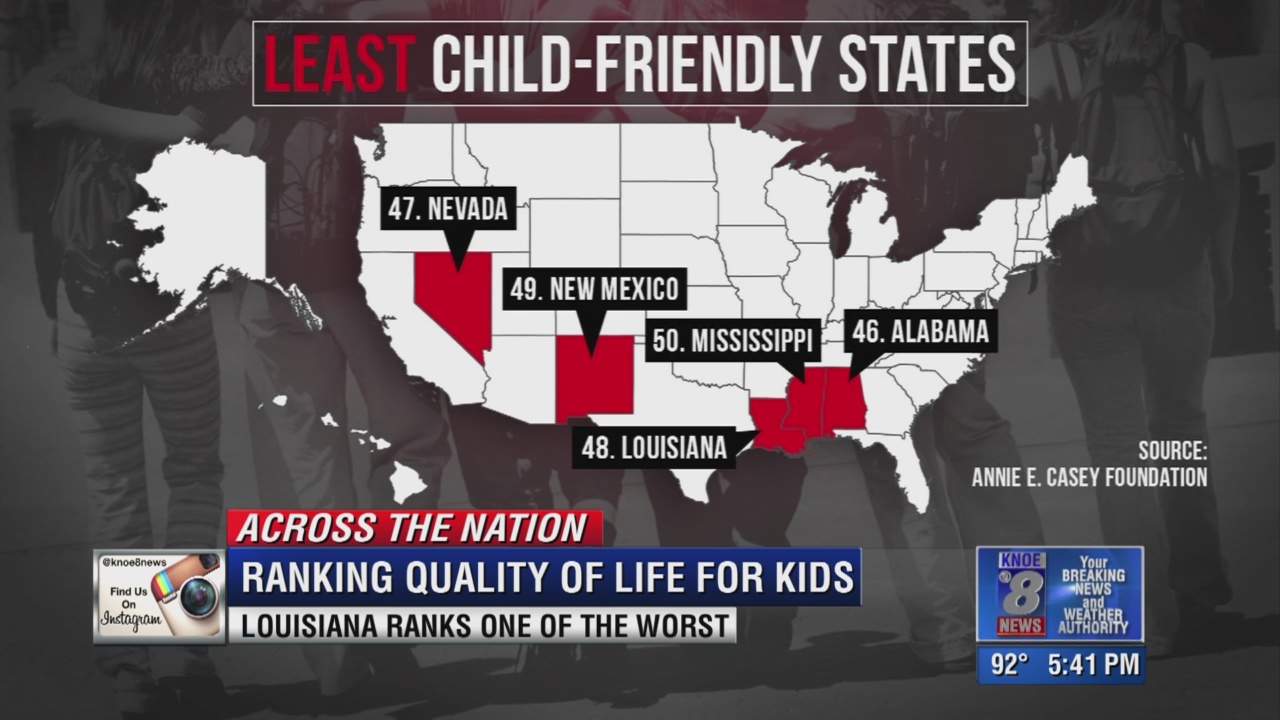
When national rankings are released annually, Louisiana frequently finds itself at the bottom of the list. From educational attainment and healthcare outcomes to economic stability and infrastructure, the statistical data paints a challenging picture for the Pelican State. However, for the millions of people who call this region home and the countless travelers who flock to its borders, these metrics often fail to capture the vibrant, multifaceted reality of life in the deep South. To understand the dichotomy between the dismal rankings and the state’s undeniable allure, one must look beyond the spreadsheets and delve into the complexities of its cultural, social, and geographical landscape.

The Economic and Infrastructural Paradox
Critics often cite economic stagnation and crumbling infrastructure as primary reasons why the state is perceived as a difficult place to reside. Persistent issues regarding poverty rates and a heavy reliance on the petrochemical industry have created an uneven distribution of wealth. In cities like Baton Rouge, the industrial corridor often overshadows the historic charms, leading to concerns about long-term sustainability and environmental health.
Challenges in Public Services
The state’s tax structure, while intended to attract industrial investment, has historically left public coffers depleted. This reality is reflected in the conditions of state-maintained roadways and the recurring fiscal crises in the education sector. When public schools struggle to compete with those in neighboring states, families often look elsewhere for long-term stability. The resulting “brain drain,” where young professionals migrate to more economically diverse states, further stunts the development of a robust, modern local economy.
Climate Vulnerability and Resilience
Perhaps the most significant factor impacting the quality of life is the state’s geographic reality. Situated in the path of Atlantic hurricanes and contending with rising sea levels, coastal communities face an existential threat. For those living in the bayou regions or near New Orleans, the constant cycle of storm recovery can be exhausting. Infrastructure investment is constantly diverted to disaster mitigation, leaving less room for the progressive growth that citizens in other parts of the country might take for granted.
The Cultural Richness That Defies Statistics
While the data suggests that life in the state is fraught with obstacles, the actual lived experience is characterized by a level of cultural richness that is unparalleled elsewhere in the United States. The state’s identity is not defined by its lack of industrial modernism, but by the preservation of traditions that date back centuries.
A Gastronomic Haven
It is difficult to argue that a place is “the worst” when it possesses the most distinct culinary heritage in the nation. From the spicy, soul-warming bowls of gumbo served in Lafayette to the world-renowned beignets at Cafe Du Monde, the food culture serves as a social glue. Residents prioritize communal meals and culinary excellence, often viewing a weekend crawfish boil as more vital to community health than the latest economic indicator. This deep-seated appreciation for craft and tradition keeps many residents anchored to their hometowns, finding joy in the rituals of daily life that simply do not exist elsewhere.

Music and the Spirit of Celebration
The soul of Louisiana is found in the rhythmic beats of jazz, blues, and zydeco. In venues throughout the French Quarter, the music never stops. This cultural output is not merely for tourists; it is a way of life. The willingness to celebrate in the face of adversity—best exemplified by the resilient nature of Mardi Gras—demonstrates a psychological fortitude that isn’t captured in any quality-of-life index.
The Cost of Living Versus Quality of Life
One of the most persistent arguments in favor of staying in the state is the affordability index. Despite the negative headlines, housing remains significantly more accessible here than in the major tech hubs of the West Coast or the dense urban centers of the Northeast.
Economic Accessibility
For young families, the ability to purchase property and maintain a lifestyle that would be prohibitively expensive in cities like San Francisco or New York City is a major draw. The lower cost of living allows residents to invest in experiences, family travel, and social ventures that define the “good life” in their own terms. When people prioritize community bonds and legacy over high-salary, high-stress career paths, the state provides a canvas upon which a meaningful life can be painted.
The Trade-off Between Comfort and Opportunity
The central conflict for any resident is balancing this comfort against the reality of limited local opportunity. Many residents live in a state of cognitive dissonance: they recognize the flaws in the political and educational systems, yet they are unwilling to trade their culture, their family proximity, and their pace of life for the clinical, fast-paced efficiency of more “successful” states. This suggests that the ranking of “worst state to live in” is fundamentally subjective. It measures external success markers—income, test scores, and infrastructure—while ignoring the intangible, internal metrics of happiness, community integration, and historical identity.
Why the Rankings Miss the Point
To classify a place as the “worst” is to imply a standard of living that is universal. However, what constitutes a “good” place to live is deeply personal. For an individual who values historical architecture, a slower pace of life, and an immersive cultural environment, the Garden District or the quiet stretches of the Cajun Country offer a quality of existence that no amount of economic growth could replicate in a sterile suburb.
Reimagining Success
If Louisiana were to rise in the rankings, it would require significant policy reform, particularly in education and environmental stewardship. Yet, the question remains: if the state were to become just like every other state—homogenized, efficient, and modern—would it still be the place that people love so fiercely?
The irony of the state’s low ranking is that it protects it from the very forces of over-development and gentrification that have made other parts of the United States unrecognizable. The “worst” state title is a badge worn by some with a sense of defiance. They know that their home is imperfect, that the roads are bumpy, and that the politics are messy. But they also know that they live in a place with a heartbeat—a place where the past isn’t just remembered, it is lived every single day. For the residents who choose to stay and work toward a better future, the state is not a place to be measured by a list, but a home to be nurtured, celebrated, and improved from within.
LifeOutOfTheBox is a participant in the Amazon Services LLC Associates Program, an affiliate advertising program designed to provide a means for sites to earn advertising fees by advertising and linking to Amazon.com. Amazon, the Amazon logo, AmazonSupply, and the AmazonSupply logo are trademarks of Amazon.com, Inc. or its affiliates. As an Amazon Associate we earn affiliate commissions from qualifying purchases.