
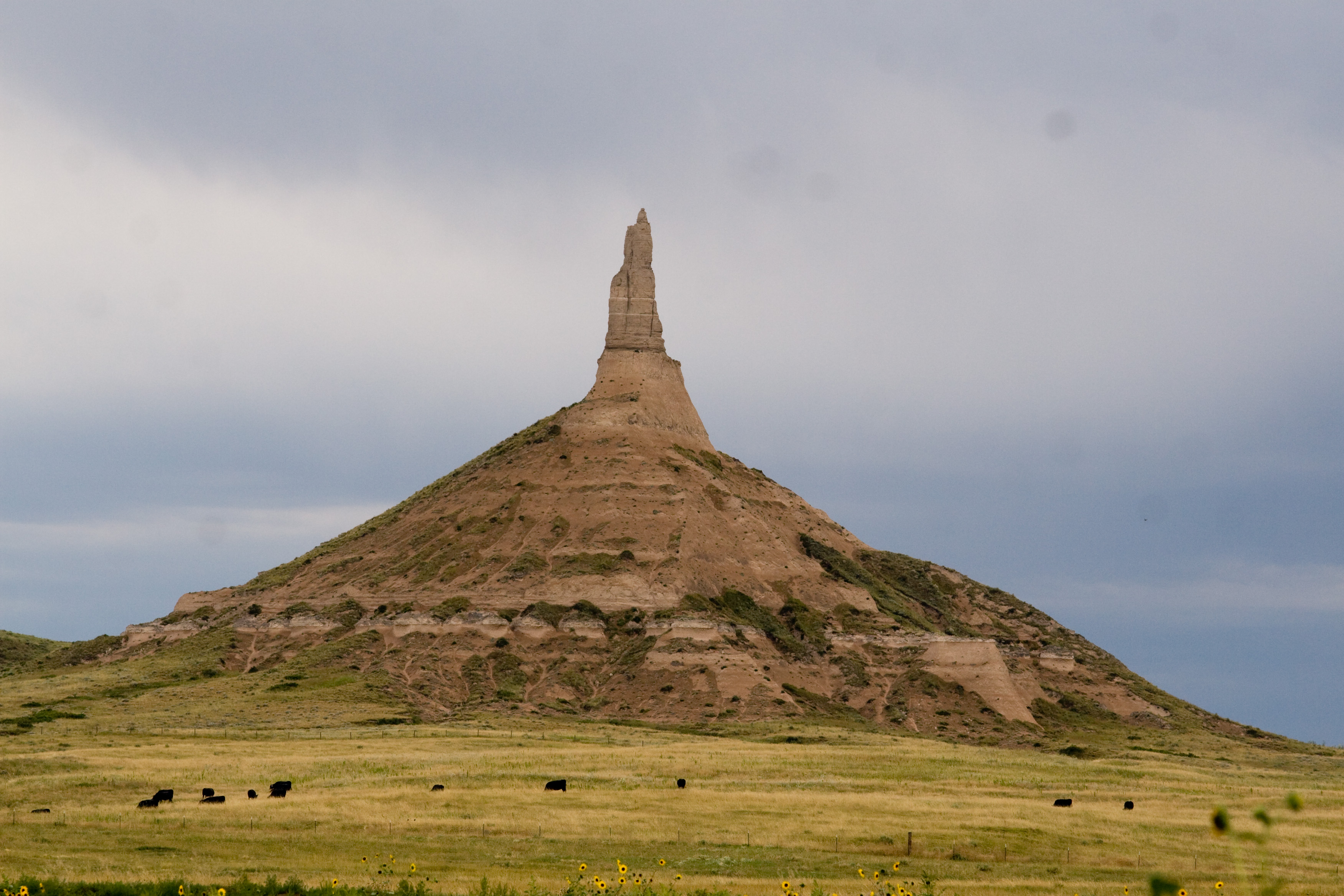
Standing as a silent, jagged sentinel over the vast expanse of the North Platte River valley, Chimney Rock is more than just a geological anomaly; it is an enduring icon of the American West. For thousands of pioneers trekking across the Great Plains, this singular spire served as the most recognizable landmark on their arduous journey toward the Pacific. Today, it remains a site of immense historical significance and natural beauty, drawing visitors who seek to connect with the spirit of westward expansion.
Geographical Positioning and Access
Located in the Panhandle region of Nebraska, Chimney Rock National Historic Site is situated approximately 25 miles southeast of Scottsbluff and about 3.5 miles south of the small town of Bayard. The formation rises roughly 300 feet above the surrounding terrain, reaching an elevation of approximately 4,228 feet above sea level. Its needle-like peak is composed primarily of Brule clay, volcanic ash, and Arickaree sandstone—materials that have resisted erosion while the softer rock around it weathered away over millions of years.
How to Reach the Landmark
Travelers making their way through the United States often encounter the spire while traversing Highway 92. The drive through this part of the state offers an authentic look at the landscape that once challenged the Oregon Trail, the California Trail, and the Mormon Trail. Visitors approaching from the east or west will find well-marked access roads leading to the visitor center, which serves as the primary gateway for those looking to study the geology and history of the region.
Navigating the Local Terrain
The surrounding area, largely characterized by high prairie grasses and arid shrubland, remains relatively undeveloped, preserving the sense of isolation and grandeur that mid-19th-century travelers felt when they first spotted the spire on the horizon. While the structure itself is protected, the surrounding lands offer expansive views that make for excellent photography opportunities, especially during the golden hours of sunrise and sunset.
Historical Significance of the Spire
In the annals of American exploration, Chimney Rock serves as a primary reference point. Beginning in the 1840s, it appeared in the diaries of countless pioneers, who frequently described it as the most impressive sight encountered between the Missouri River and the Rocky Mountains. It was not merely a navigational aid; it was a psychological milestone, signaling that the difficult trek through the flat, featureless plains was transitioning into the more mountainous segments of the journey.
A Beacon for Pioneers
Many emigrants on the Oregon Trail noted in their journals that the spire could be seen for days before they actually reached its base. This optical phenomenon, caused by the clarity of the air and the flatness of the terrain, created a sense of anticipation—and sometimes dread—among families traveling by wagon. The landmark became a symbol of both the progress made and the challenges that lay ahead in the high-altitude passes of the Wyoming territories.

Preservation and Cultural Legacy
Recognized as a National Historic Site, the formation is managed in cooperation with the Nebraska State Historical Society and the National Park Service. This partnership ensures that the geological integrity of the spire is maintained, while the visitor center provides context regarding the cultural history of the Native American tribes who lived in the region long before the arrival of white settlers. These indigenous groups, including the Lakota and Cheyenne, viewed the natural landmark with spiritual reverence, weaving it into their own regional lore and maps.
Natural History and Geological Evolution
The existence of Chimney Rock is a testament to the patient, grinding power of nature. While it appears permanent to the casual observer, it is essentially a relic of a past landscape. The geological forces that shaped the Great Plains have slowly stripped away layers of the earth, leaving behind this durable, volcanic-ash-capped pillar.
The Science of Erosion
The base of the formation is composed of softer, sedimentary rock that is highly susceptible to wind and water erosion. As these layers are worn away, the capstone remains, maintaining the distinctive chimney shape that gives the site its name. Scientific assessments indicate that the spire has gradually diminished in height over the past century due to lightning strikes and natural degradation, though it remains a formidable feature of the landscape.
Ecology of the Panhandle
The Panhandle of Nebraska is home to a unique ecosystem that survives in a semi-arid climate. Visitors to the site often encounter native wildlife, including mule deer, coyotes, and various species of raptors that nest near the rocky outcrops. The interplay between the geological history and the current biodiversity provides a rich educational experience for visitors interested in environmental science and conservation.
Planning Your Visit to Western Nebraska
A trip to see Chimney Rock is often combined with other historical destinations in the region. Because it is located in a rural, sparsely populated area, planning is essential for a smooth and rewarding experience.
Suggested Nearby Attractions
- Scotts Bluff National Monument: Located a short distance away, this massive headland provides a panoramic view of the North Platte River and features tunnels that were part of the early road system for automobiles crossing the plains.
- Legacy of the Plains Museum: This facility in Gering offers deep insights into the agricultural history of the region and the life of pioneers who settled near the rock.
- Courthouse and Jail Rocks: These nearby rock formations served as additional landmarks for travelers on the trail and offer a visual comparison to the majesty of the primary chimney formation.

Essential Travel Tips
For those visiting in the summer, it is important to be prepared for intense heat and rapid, unpredictable weather shifts. The prairie environment can be unforgiving, so hydration and sun protection are mandatory. Furthermore, because the site is located at a distance from major metropolitan centers like Omaha or Denver, travelers should ensure their vehicles are well-maintained and that they have mapped out their route through the United States rural highway system.
The visitor center, which holds a collection of journals, artifacts, and multimedia presentations, is the best starting point for any visit. It provides the necessary background to appreciate why this singular spire became the most famous visual marker in the American imagination during the 19th century. Whether you are a history buff, a geology enthusiast, or a road-trip traveler looking for the authentic heart of the American West, this landmark offers a profound connection to the past. By standing where thousands of weary pioneers once stood, you gain a unique perspective on the scale and ambition of the westward movement that defined the growth of the nation.
LifeOutOfTheBox is a participant in the Amazon Services LLC Associates Program, an affiliate advertising program designed to provide a means for sites to earn advertising fees by advertising and linking to Amazon.com. Amazon, the Amazon logo, AmazonSupply, and the AmazonSupply logo are trademarks of Amazon.com, Inc. or its affiliates. As an Amazon Associate we earn affiliate commissions from qualifying purchases.