
When travelers and architecture enthusiasts traverse the American Midwest, they often encounter massive commercial landmarks that define the identity of a city. One such colossal destination is the Nebraska Furniture Mart, a retail giant that has become as much a point of interest as any traditional tourist attraction. Located in Omaha, Nebraska, this site stands as a testament to American entrepreneurial history and has evolved into a mandatory stop for those exploring the local culture and regional landmarks of the United States.
The Legacy of Rose Blumkin and the Founding Vision
To understand who owns the Nebraska Furniture Mart, one must first look at the incredible story of its founder, Rose Blumkin. Known affectionately as “Mrs. B,” she was an immigrant from Russia who arrived in America with very little and built one of the most successful retail empires in history.

The Foundation of a Retail Empire
In 1937, in the basement of a pawn shop in Omaha, Rose Blumkin started the business with a modest investment of five hundred dollars. Her philosophy was simple: sell goods at the lowest possible price and rely on high volume. This strategy proved revolutionary, turning the store into a regional powerhouse. As the store grew, it moved to larger premises, eventually settling into the sprawling campus that visitors see today.
The Shift in Ownership
For decades, the store remained a family-owned operation, deeply ingrained in the local fabric of the Midwest. However, as the store reached national prominence, it caught the attention of one of the world’s most successful investors. In 1983, Warren Buffett, through his company Berkshire Hathaway, acquired a majority stake in the Nebraska Furniture Mart.
Berkshire Hathaway: The Modern Ownership Structure
Today, the Nebraska Furniture Mart operates as a subsidiary of Berkshire Hathaway. This ownership transition marked a significant milestone in the history of the company, securing its longevity while allowing it to maintain the culture and values established by the Blumkin family.
Why Warren Buffett Invested
Warren Buffett, famously based in Omaha, long admired Mrs. B’s business acumen. He often cited her drive, integrity, and pricing model as exemplary. By acquiring the business, Berkshire Hathaway provided the capital necessary for the Nebraska Furniture Mart to expand beyond its home state. This partnership allowed the brand to scale while preserving its status as a destination for shoppers traveling across the country.
Continued Family Involvement
Despite being owned by a multinational conglomerate, the influence of the Blumkin family did not vanish. For many years, descendants of Rose Blumkin continued to lead the operations, ensuring that the legacy of high-quality service and customer-centric values remained at the core of the business. This blend of corporate strength and familial legacy is what makes the store a unique landmark in the retail landscape of the United States.
Nebraska Furniture Mart as a Tourist Destination
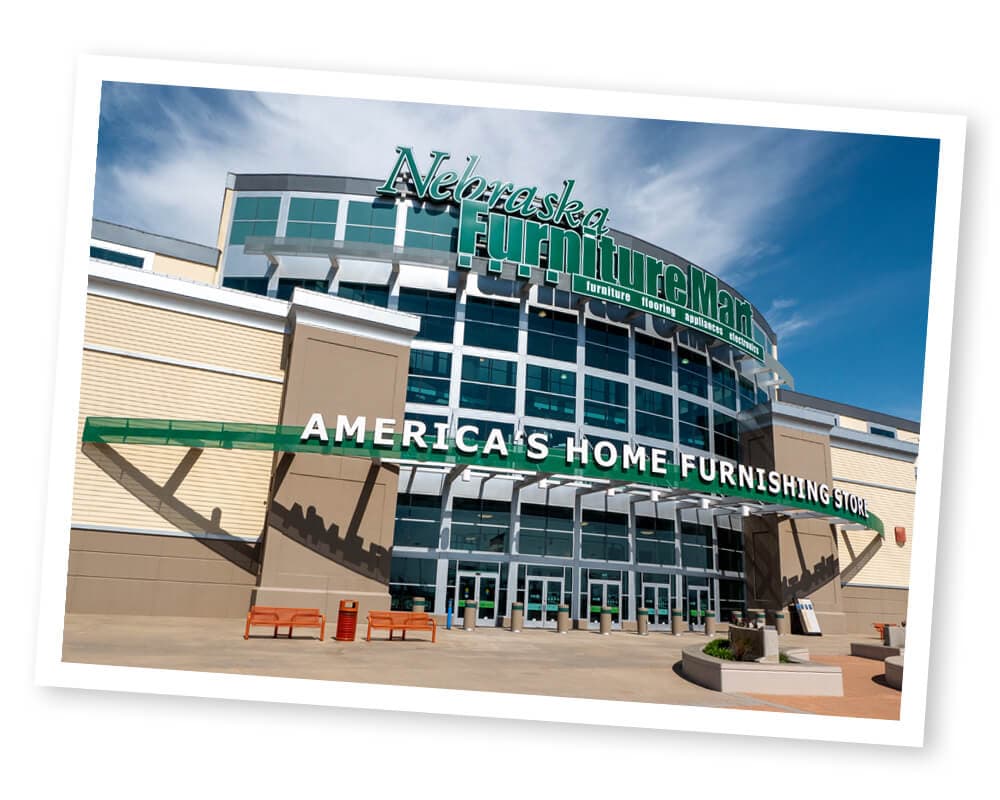
While primarily a retail establishment, the Nebraska Furniture Mart has transcended its original purpose to become a landmark in its own right. Its massive footprint and the sheer scale of its inventory attract visitors from all corners of the country, many of whom integrate a stop here into their broader travel itinerary through the American heartland.
Architectural Scale and Significance
The sheer physical size of the store is breathtaking. For those interested in commercial architecture and logistics, the facility in Omaha provides a fascinating study in space management. Spanning over 450,000 square feet in its main showroom, the complex functions almost like a small city. It represents a significant pillar of the regional economy and is often included in guides for those touring the major landmarks of Nebraska.
The Experience of Visiting
For the modern tourist, a trip to the Nebraska Furniture Mart is an experience in consumer culture. It is not just about furniture; it is about the scale of American ambition. Visitors often spend an entire day navigating the vast aisles that showcase electronics, appliances, and home furnishings. The facility is equipped with various amenities to accommodate the volume of visitors, making it a well-oiled machine that reflects the efficiency and hospitality synonymous with the Midwest.
The Cultural Impact of the Store on Omaha
Beyond its ownership, the Nebraska Furniture Mart has played an instrumental role in shaping the identity of its home city. It stands as a symbol of the “Omaha Dream,” a narrative that attracts historians and business-minded travelers alike.
A Beacon for Local Commerce
The store has transformed the surrounding landscape. What was once a simple retail hub has grown into a bustling district. Many tourists who visit the Henry Doorly Zoo and Aquarium or explore the historic Old Market district in Omaha find that the Nebraska Furniture Mart provides a complementary experience, illustrating the industrial and commercial ingenuity of the region.
The Evolution of the Brand
Under the current ownership of Berkshire Hathaway, the brand has expanded its presence to other major cities, such as Kansas City, Missouri, and The Colony, Texas. Despite this expansion, the flagship location remains the heart of the operation. The store serves as a living museum, preserving the spirit of Rose Blumkin even as it adopts the advanced retail technologies provided by its parent company.

Summary of the Ownership Evolution
To summarize the ownership lineage of this retail icon:
- 1937–1983: The foundational era under the leadership of Rose Blumkin. The store established its reputation for deep discounts and massive inventory, growing from a basement operation into a regional landmark.
- 1983–Present: The transition into the Berkshire Hathaway portfolio. This era secured the store’s financial foundation and enabled national growth, while the brand maintained its commitment to the original vision of the founder.
As travelers continue to explore the United States, the Nebraska Furniture Mart stands as a quintessential American destination. It is a place where retail, history, and corporate legacy converge. Whether one is visiting for the sheer curiosity of its size or to appreciate the history of a business that redefined an industry, the store remains a landmark that speaks volumes about the American experience. Ownership by a global giant like Berkshire Hathaway ensures that this legacy will continue to evolve, standing as a testament to the fact that with enough grit and vision, even a small basement shop can leave an indelible mark on the landscape of the nation.
LifeOutOfTheBox is a participant in the Amazon Services LLC Associates Program, an affiliate advertising program designed to provide a means for sites to earn advertising fees by advertising and linking to Amazon.com. Amazon, the Amazon logo, AmazonSupply, and the AmazonSupply logo are trademarks of Amazon.com, Inc. or its affiliates. As an Amazon Associate we earn affiliate commissions from qualifying purchases.