
For those traveling through the scenic Hudson Valley, the name Hyde Park conjures images of presidential grandeur, sweeping river vistas, and a rich tapestry of American history. Visitors often pull off the main thoroughfare, Route 9, expecting the quintessential “Main Street” experience—a walkable corridor of bustling storefronts, historic brownstones, and sidewalk cafes. Yet, for the uninitiated, the question inevitably arises: Does Hyde Park actually have a downtown?
The answer is nuanced. Unlike its neighbors such as Rhinebeck or Poughkeepsie, Hyde Park does not possess a singular, concentrated central business district. Instead, it offers a decentralized landscape that mirrors its unique history as a collection of vast estates rather than a traditional village center.

The Geography of a Decentralized Destination
To understand the lack of a traditional downtown, one must understand the geography of the town. Hyde Park was historically defined by its prominence as a home for the elite—most notably Franklin D. Roosevelt—rather than as a commercial hub for a dense urban population. The town stretches along the eastern banks of the Hudson River, where sprawling Gilded Age estates prioritized privacy, greenery, and river views over dense, multi-story commercial development.
Defining the “Center” of Town
If you are looking for a singular “Main Street” where you can park once and visit ten shops, you will likely be disappointed. The commercial life of the town is spread along Albany Post Road, the major artery that runs through the heart of the community. Here, the “downtown” experience is fragmented. You will find professional offices, service businesses, and local eateries clustered in small, car-dependent plazas rather than a unified pedestrian plaza.
The Impact of Estates and Public Land
The primary reason for this spatial distribution is the overwhelming presence of public land. Landmarks such as the Home of Franklin D. Roosevelt National Historic Site and the Vanderbilt Mansion National Historic Site occupy massive swathes of land that would, in other towns, have been used for commercial expansion. By prioritizing the preservation of these historical grounds, the town effectively sacrificed a concentrated city center in favor of maintaining the pastoral, quiet character that residents and tourists adore today.
Tourism as the New “Main Street”
While there may not be a traditional downtown filled with high-street retail, Hyde Park functions as a destination in a different way. The town center is, in effect, the collection of cultural institutions that draw thousands of visitors annually. For the modern tourist, the “downtown” is an intellectual and historical experience rather than a commercial one.

The Culinary Capital of the Hudson Valley
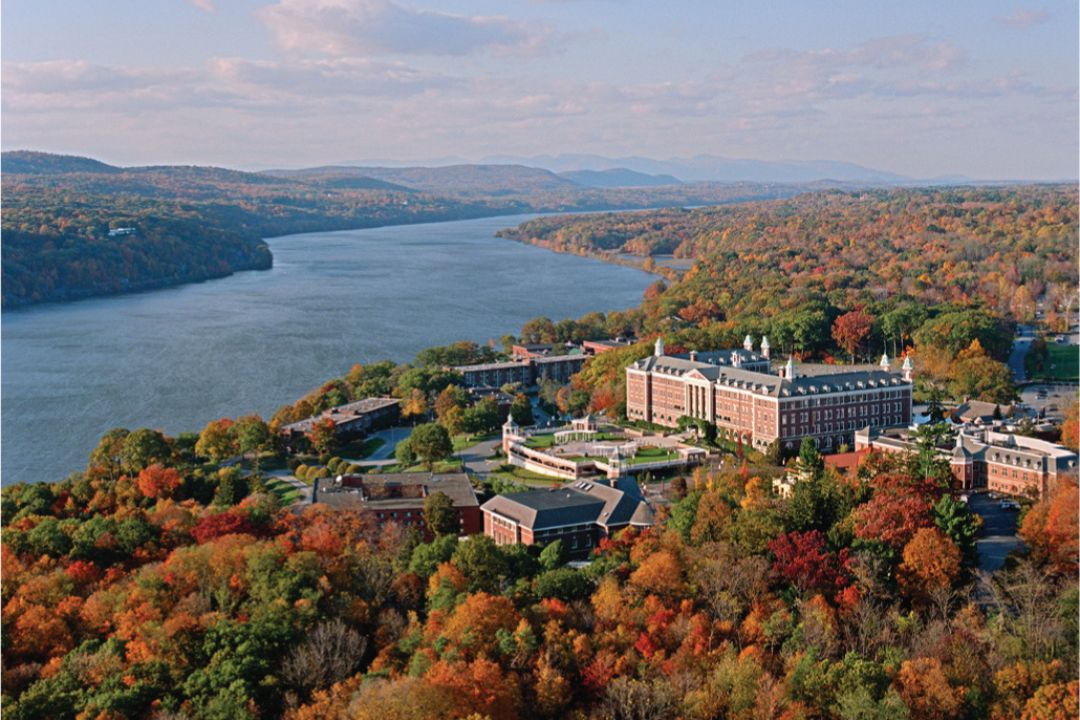
Perhaps the closest thing to a vibrant, concentrated destination in Hyde Park is the Culinary Institute of America. While it is a campus, it acts as the town’s social and gastronomic heart. Visitors from all over the world flock to this site not just to learn, but to dine in its student-run restaurants. In this sense, the CIA serves as the anchor that most traditional downtowns would lack. It provides the high-quality dining, refined atmosphere, and pedestrian activity that one typically seeks in a town center.
Cultural Anchors
Beyond the culinary arts, the Franklin D. Roosevelt Presidential Library and Museum serves as another anchor point. These institutions are the reason people visit. When you walk through the grounds of Springwood or gaze out at the Hudson River Valley, you are engaging with the “downtown” of the town—a space defined by its history, culture, and preservation.
Navigating the Town Like a Local
For travelers determined to find the best of what Hyde Park has to offer, the key is to shift your perspective. Do not look for a traditional grid; look for the “nodes” of activity that make up the community.
Where to Find Local Flavor
While you won’t find a singular downtown, you will find excellent local pockets. The area around St. James’ Episcopal Church offers a glimpse into the town’s historic roots, while the various independent cafes and bistros scattered along the Route 9 corridor provide a taste of local hospitality. You have to be willing to drive from one point of interest to the next, as the “downtown” is quite literally spread out over several miles.
Tips for a Seamless Experience
- Plan for Transit: Because the town is decentralized, a car is essential. Unlike walking-friendly Beacon or Cold Spring, you cannot realistically visit these landmarks on foot.
- Prioritize the Landmarks: Since there is no central business district to browse, spend your time on the historic properties. Dedicate a full day to the FDR Estate and another to the Vanderbilt Mansion.
- Dining Reservations: Because the Culinary Institute of America is the town’s primary gathering place, reservations at its flagship restaurants are a necessity. Treat your meal there as the highlight of your visit.
- Explore the Dutchess County Context: Remember that Hyde Park is part of a larger region. If you find yourself craving a traditional, walkable downtown, a short drive to nearby Rhinebeck will satisfy that desire for boutique shopping and historic architecture.
Reflections on a Unique Landscape
The absence of a traditional, dense downtown is not a failure of Hyde Park; it is a testament to its evolution. It is a town that chose to preserve its open spaces and its Gilded Age legacy over the pressures of modern commercial densification.
When you visit, you aren’t missing out on a downtown; you are witnessing a different model of town planning—one where the soul of the community is found in its historic preservation, its world-class education, and its deep connection to the Hudson River. While you might not spend your afternoon window-shopping on a central main street, you will find something more profound: a preserved piece of American history that has remained largely unchanged for generations.
Ultimately, Hyde Park does not need a downtown to be a premier destination. Its identity is forged in its landmarks, its natural beauty, and its status as a home to presidents. For those who know how to look, the entire town functions as a curated experience—one that asks the visitor to slow down, drive the tree-lined roads, and appreciate the historic grandeur of the Hudson Valley.
LifeOutOfTheBox is a participant in the Amazon Services LLC Associates Program, an affiliate advertising program designed to provide a means for sites to earn advertising fees by advertising and linking to Amazon.com. Amazon, the Amazon logo, AmazonSupply, and the AmazonSupply logo are trademarks of Amazon.com, Inc. or its affiliates. As an Amazon Associate we earn affiliate commissions from qualifying purchases.