
Navigating the transit between John F. Kennedy International Airport and the heart of Manhattan is a rite of passage for millions of travelers visiting New York. While the distance is relatively modest—typically ranging from 15 to 20 miles depending on your specific destination in the borough—the actual travel time is notoriously variable. Because New York City is defined by its complex infrastructure and legendary traffic patterns, understanding the distance requires looking beyond simple mileage.
Understanding the Logistics of the Commute
When travelers ask how far JFK is from the city center, they are usually less interested in the physical distance and more concerned with the temporal cost of getting to their hotel or meeting. The journey can take anywhere from 45 minutes to two hours depending on the mode of transport and the time of day.

The Geography of the Trip
Queens, where the airport is located, serves as a gateway to the rest of the city. The trip involves crossing the Van Wyck Expressway or the Belt Parkway, both of which are famous for significant bottlenecks. If you are heading to Lower Manhattan or Midtown Manhattan, your route will likely take you through Brooklyn, adding another layer of urban density to your transit experience.
Impact of Time and Traffic
Traffic density in New York State fluctuates wildly. Rush hour—defined roughly as 7:00 AM to 10:00 AM and 4:00 PM to 7:00 PM—can turn a 45-minute drive into a grueling 90-minute ordeal. Conversely, late-night arrivals often find the commute surprisingly efficient. It is essential to account for these external factors when planning your arrival into the United States.
Public Transit Options: The Efficient Alternative
For many seasoned travelers and locals, public transportation is the most reliable way to bypass the uncertainty of road traffic. The public rail system provides a consistent travel time that is independent of road congestion.
The AirTrain and Subway Combination
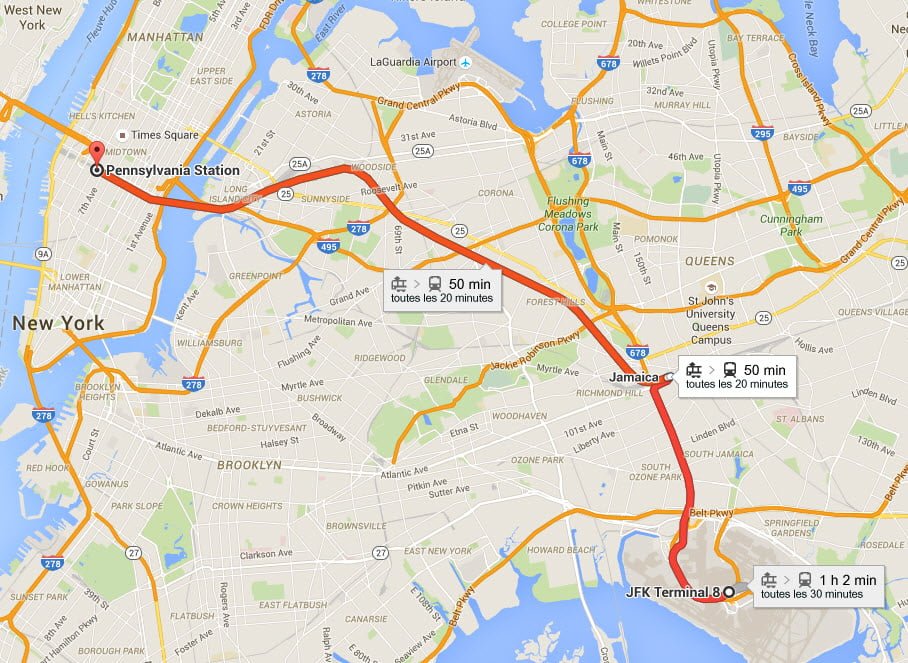
The most cost-effective method is to take the AirTrain from your terminal to Jamaica Station. From there, you can transfer to the E Train or the J Train of the New York City Subway. This route is highly recommended for those staying in Midtown or heading toward Penn Station. The total trip duration is usually around 60 to 75 minutes, offering a predictable schedule regardless of the day of the week.
Long Island Rail Road (LIRR)
For those seeking speed, the Long Island Rail Road is the gold standard. After exiting the airport via the [AirTrain], you can board a commuter train at Jamaica Station bound for Grand Central Terminal or Penn Station. This express service significantly reduces the time spent in transit, typically delivering passengers to the heart of the city in about 35 to 45 minutes. While the fare is higher than the standard subway, the time saved is often well worth the premium for business travelers or those with heavy luggage.

Private Transportation: Taxis, Rideshares, and Black Cars
If you prefer door-to-door convenience, private transit is the preferred choice. However, the cost and time involved depend heavily on the vehicle and route you select.
The Yellow Cab Advantage
New York City Taxis offer a flat-rate fare for trips between [JFK] and [Manhattan]. This fixed-price structure protects passengers from price surges during high-demand periods. Taxis are abundant at every terminal, and you will find an official dispatcher at the taxi stand to help you load your bags. The drivers are experts at navigating the backstreets and expressways, though they are still subject to the realities of New York City traffic.
Rideshare Dynamics
Platforms like Uber or Lyft operate frequently at the airport. Unlike the flat-rate taxis, these services use dynamic pricing. During peak travel times, the cost of a rideshare can significantly exceed that of a taxi. However, for those who prefer the interface of an app and the convenience of tracking their driver, this remains a popular choice. It is crucial to verify the designated pickup zones at your specific terminal, as these are strictly regulated to maintain flow at the busy airport curb.
Essential Tips for a Seamless Arrival
Regardless of your chosen mode of transport, a few proactive steps can make the transition from the runway to the sidewalk much smoother.
Timing Your Arrival
Always check the local traffic reports before you leave. If you are staying in Upper West Side or Upper East Side, remember that crossing Manhattan during peak hours can add a significant amount of time to the final leg of your journey, even after you arrive on the island.
Luggage and Comfort
If you are traveling with significant amounts of luggage, the public subway system can be challenging due to stairs and crowded platforms. In such cases, a Taxi or a private car service is often the most comfortable option. However, if you are traveling light, the AirTrain system is specifically designed with luggage racks and elevators, making it much more accessible than many of the older subway stations in the city.
The Importance of Pre-Booking
If you have a large party or are arriving during a major holiday, consider booking a private car service in advance. This ensures that a driver will be waiting for you, regardless of whether your flight is delayed. It provides peace of mind in a bustling environment like JFK.
Final Considerations
Ultimately, while JFK Airport is approximately 15 to 20 miles from the heart of Manhattan, the “distance” is best measured in time. Whether you choose the rail efficiency of the LIRR or the direct service of a taxi, understanding the geography and the specific transit landscape will ensure you reach your destination in the greatest city in the United States with as little stress as possible. By weighing the cost against the convenience and accounting for the time of day, you can turn a potentially daunting transit leg into a successful start to your trip.
LifeOutOfTheBox is a participant in the Amazon Services LLC Associates Program, an affiliate advertising program designed to provide a means for sites to earn advertising fees by advertising and linking to Amazon.com. Amazon, the Amazon logo, AmazonSupply, and the AmazonSupply logo are trademarks of Amazon.com, Inc. or its affiliates. As an Amazon Associate we earn affiliate commissions from qualifying purchases.