
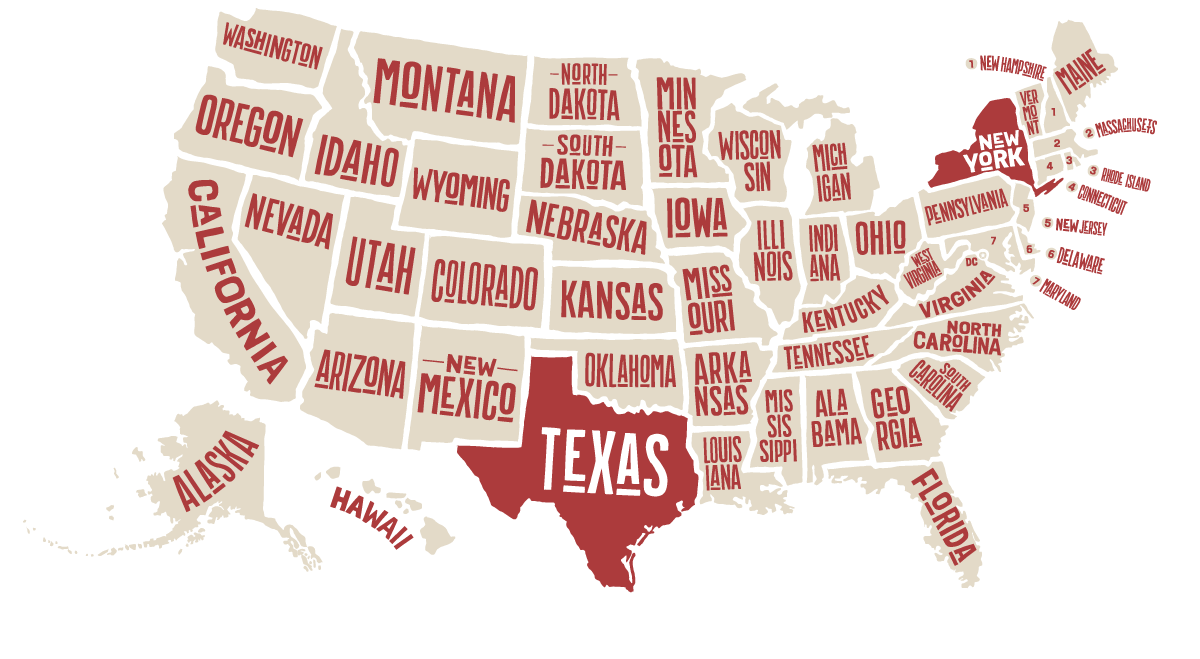
Spanning the vast geographic expanse of the United States, the journey from Texas to New York is more than just a commute; it is a traverse across the heart of the American landscape. Whether you are planning a cross-country road trip, a business itinerary, or an adventurous relocation, understanding the distance between these two iconic states is essential for effective travel planning. The distance between the Lone Star State and the Empire State varies significantly depending on your specific origin and destination points, as both states are massive in land area.
The Aerial Perspective: Flying Between Giants
When considering air travel, the distance is typically measured as a “straight line” or geodesic distance. Because both states are so large, the flight time and distance depend heavily on which city pairs you are navigating.
From the Gulf to the Big Apple
If you are traveling from Houston, the most populous city in Texas, to New York City, you are looking at a flight path of approximately 1,420 miles. Commercial airlines typically cover this distance in roughly three to four hours of flight time. This route is highly frequented by both business travelers and tourists eager to experience the contrast between the Southern charm of Texas and the frantic, electric energy of the Northeast.
Connectivity from Dallas and Austin
Flights from Dallas to New York City are slightly shorter in mileage, averaging about 1,370 miles. Meanwhile, those departing from the growing tech hub of Austin face a trek of roughly 1,500 miles. Because these routes are major corridors for domestic travel, there are numerous non-stop options available, making the transition between the rolling hills of Central Texas and the skyline of Manhattan seamless.
The Road Trip Experience: Mapping the Continental Divide
For the traveler who prefers the open road, the distance is not just about miles—it is about the changing topography. Driving from Texas to New York is a multi-day commitment that offers a profound look at the American interior.
The Northern Route Through the Midwest
Taking the path that leads through Arkansas, Missouri, and Ohio is a popular choice for those leaving Dallas. The total driving distance is approximately 1,600 to 1,700 miles. This route allows travelers to witness the transition from the arid plains of the south to the lush, temperate forests of the Midwest. Depending on your pace, this is typically a three-day journey if you prioritize safety and comfort.

The Southeastern Route via the Deep South
Drivers starting in Houston or San Antonio often find themselves traveling through the Deep South, passing through Louisiana, Mississippi, and Tennessee before heading up through the Mid-Atlantic states. This path offers a unique opportunity to sample the culinary evolution of the United States, moving from the spice of Cajun cuisine to the distinct barbecue styles found as you move toward Virginia and eventually New York.
Navigating Major Hubs and Logistics
The distance between these two states is best understood by looking at the major entry and exit points. Not all miles are created equal, and road conditions, traffic patterns, and stopovers can significantly impact the “perceived” distance of the trip.
Major Airport Gateways
Travelers moving between these regions usually utilize the busiest hubs. In New York, John F. Kennedy International Airport and LaGuardia Airport act as the primary gateways. On the Texas side, Dallas Fort Worth International Airport serves as one of the largest transit hubs in the country, connecting travelers efficiently to the East Coast.
Travel Considerations and Planning
When calculating the “distance” of your trip, consider the following factors:
- Time Zone Shifts: You will cross from Central Standard Time to Eastern Standard Time. While this only adds an hour of difference, it is a psychological transition that travelers often note upon arrival in the Northeast.
- Traffic Density: The distance by road may be 1,600 miles, but the density of traffic as you approach the Tri-State Area can make the final 100 miles feel significantly longer than the first 100 miles in rural West Texas.
- Weather Patterns: During winter months, the distance can become quite challenging for drivers. A storm system moving across the Appalachian Mountains can add hours or even days to a road trip, making air travel a much more reliable option during the colder seasons.
Cultural and Geographic Diversity Across the Miles
The journey from Texas to New York is a testament to the sheer scale of the North American continent. You are essentially traveling from a region defined by its wide-open spaces, ranching history, and distinct border culture to a state defined by vertical density, historical colonial roots, and a status as a global financial and cultural capital.
The Contrast of Landscapes
Leaving the Hill Country, you move into the rolling fields of the South, eventually reaching the dense, deciduous forests of the Northeast. The transition is subtle at first but becomes striking as the terrain shifts from the flat scrublands to the dramatic seasonal changes found in New England and New York.

Final Travel Recommendations
If you are planning to traverse this distance, the best approach is to define your travel goal. If your objective is time-efficiency, non-stop flights between George Bush Intercontinental Airport and New York are unmatched. However, if your goal is an immersive travel experience, the road trip provides an unparalleled look at the cultural fabric of the United States. Whether you are driving through the high-speed corridors of Interstate 35 or boarding a jet for a quick flight, the trip from Texas to New York remains one of the classic journeys in American travel.
Ultimately, knowing that you are spanning over 1,400 miles helps you prepare for the logistical realities of the trip. From packing for the variable climates to preparing for the long stretches of highway, understanding these distances ensures that your journey—no matter which state you start in—is as smooth as the infrastructure connecting these two American icons.
LifeOutOfTheBox is a participant in the Amazon Services LLC Associates Program, an affiliate advertising program designed to provide a means for sites to earn advertising fees by advertising and linking to Amazon.com. Amazon, the Amazon logo, AmazonSupply, and the AmazonSupply logo are trademarks of Amazon.com, Inc. or its affiliates. As an Amazon Associate we earn affiliate commissions from qualifying purchases.