
When planning a journey across the Atlantic, the question of distance is often the first logistical hurdle travelers face. Whether you are traveling from the bustling streets of New York to the historic charm of London, understanding the geography of your route is essential for managing expectations regarding flight times, time zones, and the overall travel experience. While the flight path might seem like a straightforward line on a map, the actual distance depends on the specific path the aircraft takes and the method of calculation used.
Decoding the Great Circle Distance
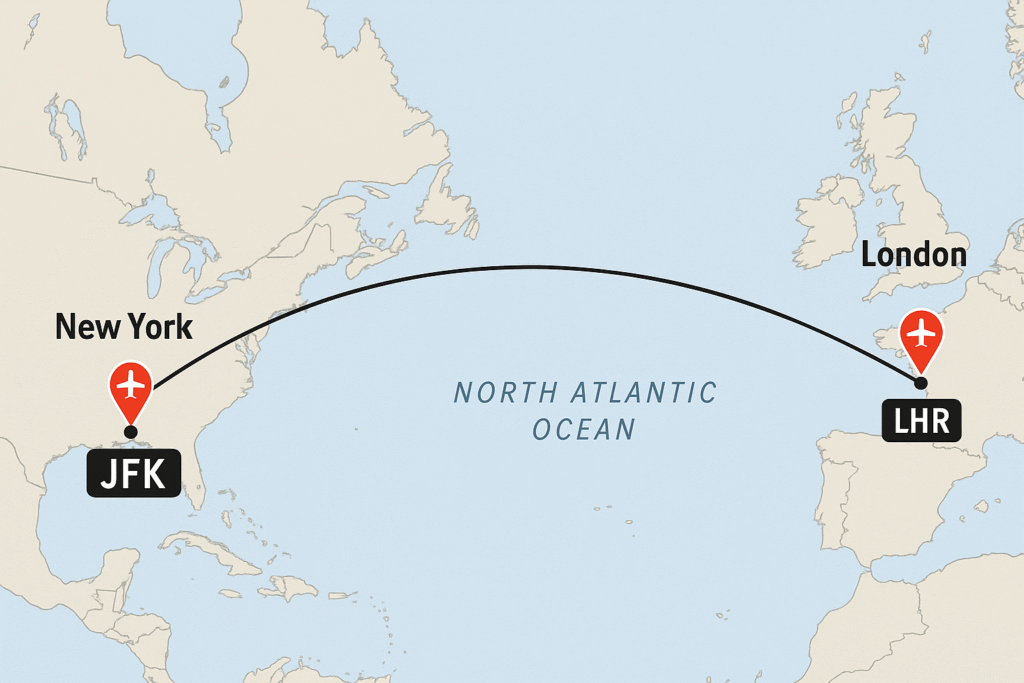
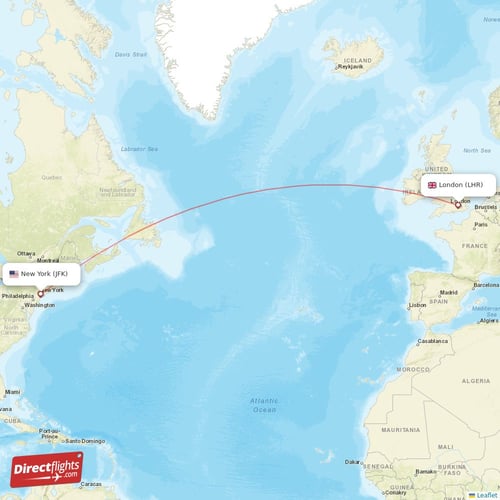
To understand the distance between these two iconic global cities, one must first look at the “Great Circle” route. On a flat map, the earth appears two-dimensional, but because the planet is a sphere, the shortest distance between two points is actually an arc that curves toward the poles.
The Mathematics of the Atlantic Crossing
The Great Circle distance between New York City and London is approximately 3,460 miles, or about 5,570 kilometers. This measurement represents the absolute shortest path across the surface of the Earth. However, rarely does a commercial aircraft follow this exact line with mathematical precision. Factors such as wind currents, air traffic control restrictions, and emergency diversion contingencies play a massive role in the actual distance covered during a flight.
Why Pilots Deviate from the Path
If you have ever tracked your flight across the Atlantic, you may have noticed that the flight path often shifts significantly from day to day. This is largely due to the Jet Stream—a fast-flowing, narrow air current found in the atmosphere. Pilots flying from North America to Europe often look to ride the tailwinds of the Jet Stream to reduce fuel consumption and decrease travel time. Conversely, flights heading west back toward New York often take a more southerly route to avoid battling head-on winds, which can lead to a longer flight distance but a smoother or more fuel-efficient journey.
Factors Influencing Flight Time and Mileage
While 3,460 miles is the geometric constant, the “mileage” a passenger experiences can fluctuate based on several operational realities. It is common to see flight manifests list a travel distance slightly longer than the Great Circle distance because of these variables.
The Role of Air Traffic Control
The North Atlantic Tracks (NATs) are a series of organized flight paths that span the Atlantic Ocean. These tracks are updated every 12 hours based on wind patterns and are designed to keep aircraft separated safely. Because these tracks are highly structured, your flight might follow a path that zig-zags or arches differently than the idealized straight line, effectively adding miles to your journey.
Aircraft Performance and Fuel Efficiency
Modern aircraft, such as the Boeing 787 or the Airbus A350, are designed to maximize efficiency over long-haul distances. Airlines calculate the most economical route, which sometimes involves flying a longer distance to stay within reach of suitable diversion airports. In the event of an engine issue or medical emergency, a plane must be able to land within a certain time frame. This safety requirement sometimes necessitates a route that traces the coastline of Canada or Greenland rather than flying directly over the deep mid-Atlantic.
Preparing for the Transatlantic Experience
Knowing that you are embarking on a journey of roughly 3,500 miles is the first step in preparing for a successful trip. The transition between these two global hubs involves more than just crossing the ocean; it involves managing the physical and mental demands of long-haul travel.
Navigating Time Zones and Jet Lag
Traveling from New York to London involves a five-hour time jump. Because the flight is relatively short—usually between six and seven hours—it is easy to arrive in the United Kingdom feeling disoriented. Many experienced travelers recommend trying to sleep as soon as the cabin lights dim on the overnight leg to better align with local time upon arrival at Heathrow Airport.
The Strategic Choice of Travel Class
Given that the flight distance exceeds 3,000 miles, the physical comfort of your seat becomes a significant factor. For those looking to maximize their rest, the premium cabins offered by major carriers provide lie-flat beds that can turn a mid-Atlantic transit into a productive rest period. If you are traveling on a tighter budget, choosing a seat with extra legroom can make the difference between arriving refreshed and feeling fatigued.
Essential Tips for Long-Distance Passengers
- Hydration: The air at cruising altitude is extremely dry. Aim to drink water throughout the flight to mitigate the effects of the low humidity found in high-altitude cabins.
- Movement: Although it is a relatively short long-haul flight, try to stretch your legs at least once during the journey to maintain circulation.
- Preparation: Download maps, travel guides for London, and any necessary digital documents before leaving the ground. Once you are in the air, internet access can be inconsistent, and having your itineraries saved offline is a lifesaver when navigating through Gatwick Airport or JFK International Airport upon landing.

Why the Route Matters
The journey between New York and London is one of the most heavily trafficked air corridors in the world. It connects two of the most significant financial, cultural, and political centers on the planet. Understanding the scale of this distance—3,460 miles of open ocean and varying atmospheric conditions—offers a unique appreciation for the engineering and logistics that make global travel possible today.
Whether you are crossing this expanse for a business meeting in Canary Wharf or a weekend getaway to see a show in the West End, the knowledge that you are traversing thousands of miles of ocean underscores the speed and safety of modern aviation. As you settle into your seat and watch the distance count down on the cabin screen, you are participating in a tradition of transatlantic travel that has evolved from grueling week-long ship voyages to a matter of mere hours in the sky. While the mileage remains constant, the ease with which we bridge the gap between America and the British Isles continues to bring our world closer together.
LifeOutOfTheBox is a participant in the Amazon Services LLC Associates Program, an affiliate advertising program designed to provide a means for sites to earn advertising fees by advertising and linking to Amazon.com. Amazon, the Amazon logo, AmazonSupply, and the AmazonSupply logo are trademarks of Amazon.com, Inc. or its affiliates. As an Amazon Associate we earn affiliate commissions from qualifying purchases.