
The concept of the New York City region is often misunderstood by casual visitors. While many equate the entirety of the area with the towering skyscrapers of Manhattan, the region is a sprawling, complex tapestry of five distinct boroughs, each functioning as a city unto itself. Understanding this regional identity is essential for anyone looking to grasp the true scale of the nation’s most populous urban center. Beyond the bustling sidewalks of Times Square or the green expanse of Central Park, the region encompasses a vast demographic, cultural, and geographic footprint that shapes the global influence of the United States.

The Five Boroughs: A Mosaic of Identities
The New York City region is defined by its five unique boroughs: The Bronx, Brooklyn, Manhattan, Queens, and Staten Island. Each has evolved independently, creating a multifaceted regional identity that defies a single definition.
The Urban Core: Manhattan
Manhattan serves as the economic and cultural heart of the region. As one of the most densely populated places on earth, it functions as a global hub for finance, media, and technology. From the high-stakes boardrooms of Wall Street to the theatrical glow of Broadway, the borough sets the pace for the entire region. Yet, even within this concentrated space, neighborhoods range from the historic brownstones of the Upper West Side to the grit and artistic resurgence of the Lower East Side.
The Cultural Powerhouses: Brooklyn and Queens
Brooklyn has arguably undergone the most significant transformation in the last three decades, evolving from an industrial manufacturing hub into a trendsetting epicenter of global culture. Its proximity to Manhattan across the iconic Brooklyn Bridge makes it a critical component of the daily commuter flow that defines the region’s geography.
Meanwhile, Queens stands as one of the most ethnically diverse places on the planet. Its regional importance lies in its role as a melting pot; it is home to two major airports, John F. Kennedy International Airport and LaGuardia Airport, which serve as the primary gateways for the entire New York region.
The Greater Metropolitan Sphere
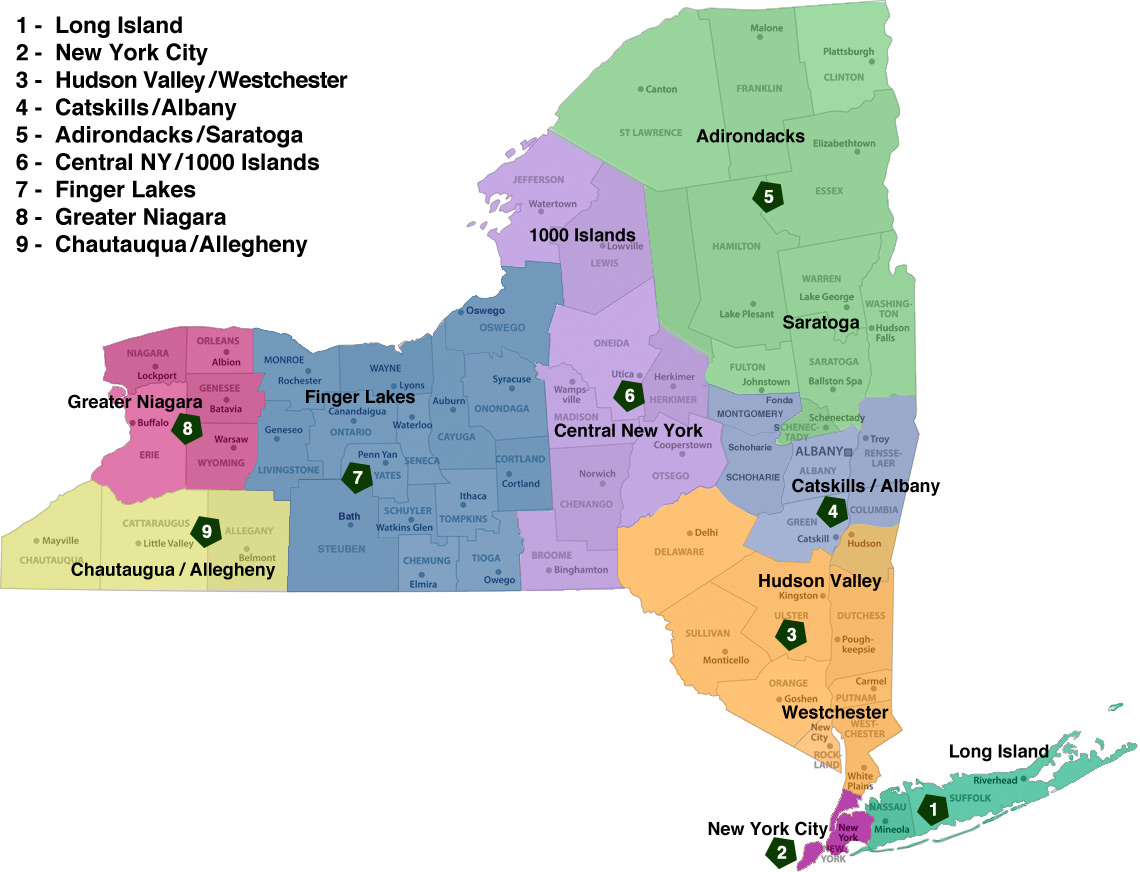
The regional definition of New York City extends far beyond the political borders of its five boroughs. It is deeply integrated into what geographers call the New York Metropolitan Area, a massive urban agglomeration that stretches across New York State, New Jersey, Connecticut, and even parts of Pennsylvania.
The Tri-State Connection
The “Tri-State” area is the functional backbone of the region. Thousands of residents commute daily from suburbs in Westchester County, Long Island, and the Hudson Valley into the urban core. This connectivity is facilitated by an extensive network of transit, including the Metro-North Railroad and the Long Island Rail Road. This interdependence means that the “region” is defined not by lines on a map, but by the movement of people, goods, and ideas.
The Role of New Jersey
Often overlooked, New Jersey cities like Jersey City and Newark are intrinsic to the regional identity. Situated directly across the Hudson River, these urban centers provide essential housing, transportation infrastructure, and logistical hubs for the city proper. Without this satellite connectivity, the intense economic density of Manhattan would be functionally impossible to sustain.
Infrastructure as a Regional Definition
The New York City region is held together by its immense and complex infrastructure. This network is perhaps the clearest marker of where the region begins and ends. The Metropolitan Transportation Authority, which operates the New York City Subway, is the literal circulatory system of the region.
Transportation and Mobility
The subway system is more than just a means of transport; it is a shared social space that defines the regional experience. Whether traversing from the northern reaches of The Bronx to the southern tip of Brooklyn, the system links disparate neighborhoods into a singular, cohesive organism. Outside the city limits, the Port Authority of New York and New Jersey manages the bridges and tunnels that serve as the vital arteries connecting the regional pieces together, including the George Washington Bridge and the Lincoln Tunnel.
Economic Gravity
The economic pull of the New York City region is so powerful that it distorts the demographics and real estate markets of towns hundreds of miles away. This phenomenon, often referred to as “the reach,” means that the regional impact is felt in small, quiet Connecticut towns that operate on the same professional schedule and cultural rhythm as Wall Street.
Why the Regional Distinction Matters
Understanding the New York City region is about appreciating the scale of a megalopolis. It is a region defined by its relentless density, its sheer variety of human experience, and its unparalleled history. When we speak of the region, we are speaking of a place that is simultaneously a global financial capital, a playground for the arts, and a home for millions of people representing every nation on Earth.
A Global Perspective
For the visitor, identifying the region means realizing that one does not simply “see” New York; one experiences a slice of a massive, interconnected machine. From the historic architecture of Ellis Island to the modern innovation hubs in Brooklyn Navy Yard, the region is a living museum of progress.

Looking Toward the Future
As the region continues to grow and evolve, its boundaries will likely continue to expand, pushed by technology and the necessity of space. Yet, the core tenets—energy, diversity, and constant movement—will remain the hallmarks of this unique place. Whether one is walking the High Line or catching a ferry from Staten Island, they are participating in the ongoing story of a region that serves as the world’s front door. The New York City region is not just a location; it is an atmosphere, a pace, and a testament to the endurance of urban civilization in the modern North America.
LifeOutOfTheBox is a participant in the Amazon Services LLC Associates Program, an affiliate advertising program designed to provide a means for sites to earn advertising fees by advertising and linking to Amazon.com. Amazon, the Amazon logo, AmazonSupply, and the AmazonSupply logo are trademarks of Amazon.com, Inc. or its affiliates. As an Amazon Associate we earn affiliate commissions from qualifying purchases.