
The political landscape of California, the most populous state in the United States, has long been a subject of fascination and analysis. Known for its vibrant culture, technological innovation, and diverse geography, the Golden State has also trended consistently Democratic in presidential and statewide elections for decades. Understanding when California last cast its electoral votes for a Republican candidate offers a crucial lens through which to view the state’s evolving political identity and the broader shifts in American political alignment.
A Shifting Political Tide: Tracing Republican Victories in California
California’s history as a bellwether state is complex, marked by periods of both Republican dominance and Democratic resurgence. To pinpoint the last time the state voted Republican in a presidential election requires a deep dive into historical election data and an understanding of the socio-economic and cultural factors that have shaped its political trajectory.

The Reagan Era and Beyond: Republican Peaks in the Golden State
The latter half of the 20th century saw significant Republican successes in California. The election of Ronald Reagan as governor in 1966 and his subsequent two terms as President of the United States (1981-1989) represent a high-water mark for the Republican Party in the state. His conservative platform resonated with a significant portion of the electorate, and his popularity helped propel other Republicans to victories.
The Presidency of George H.W. Bush: A Final Republican Sweep
The last time California officially voted for a Republican president was in the 1988 election, when George H.W. Bush secured the state’s electoral votes. This victory was part of a broader national trend that saw Bush Sr. defeat Democratic candidate Michael Dukakis. The election of 1988 marked the end of a string of Republican presidential wins in California, which had also included victories for Richard Nixon in 1968 and 1972, and Gerald Ford in 1976 (though Ford narrowly lost the state to Jimmy Carter in the popular vote, California ultimately voted for Nixon in 1968 and 1972, and Gerald Ford in 1976. Ronald Reagan won California in 1980 and 1984, and George H.W. Bush won it in 1988. This period highlights the influence of conservative leaders on the state’s political landscape during that era.
The Democratic Ascendancy: A New Political Era
Following the 1988 election, a significant and sustained shift began to occur in California’s voting patterns. Several factors contributed to this transition, including demographic changes, economic developments, and evolving social values.
Demographic Shifts and Urbanization
California’s growing and increasingly diverse population has played a pivotal role in its political realignment. The influx of new residents, coupled with the state’s vibrant urban centers like Los Angeles, San Francisco, and San Diego, has fostered a more liberal political culture. The expansion of minority communities, particularly the Hispanic and Asian populations, has also contributed to the Democratic Party’s growing strength. These communities have, on average, gravitated towards the Democratic Party’s platform, influencing election outcomes.

Economic Drivers and Technological Innovation
The rise of the technology sector in Silicon Valley, the booming entertainment industry in Southern California, and the state’s robust agricultural sector have all shaped its economic and political identity. While economic prosperity has been a hallmark of the state, the specific industries that have driven this growth have often aligned with more progressive policies, contributing to the Democratic tilt. The focus on environmental regulations, labor protections, and social programs, often championed by Democrats, has found fertile ground in the state’s progressive-leaning populace and innovative economy.
The Modern Era: A Consistent Democratic Stronghold
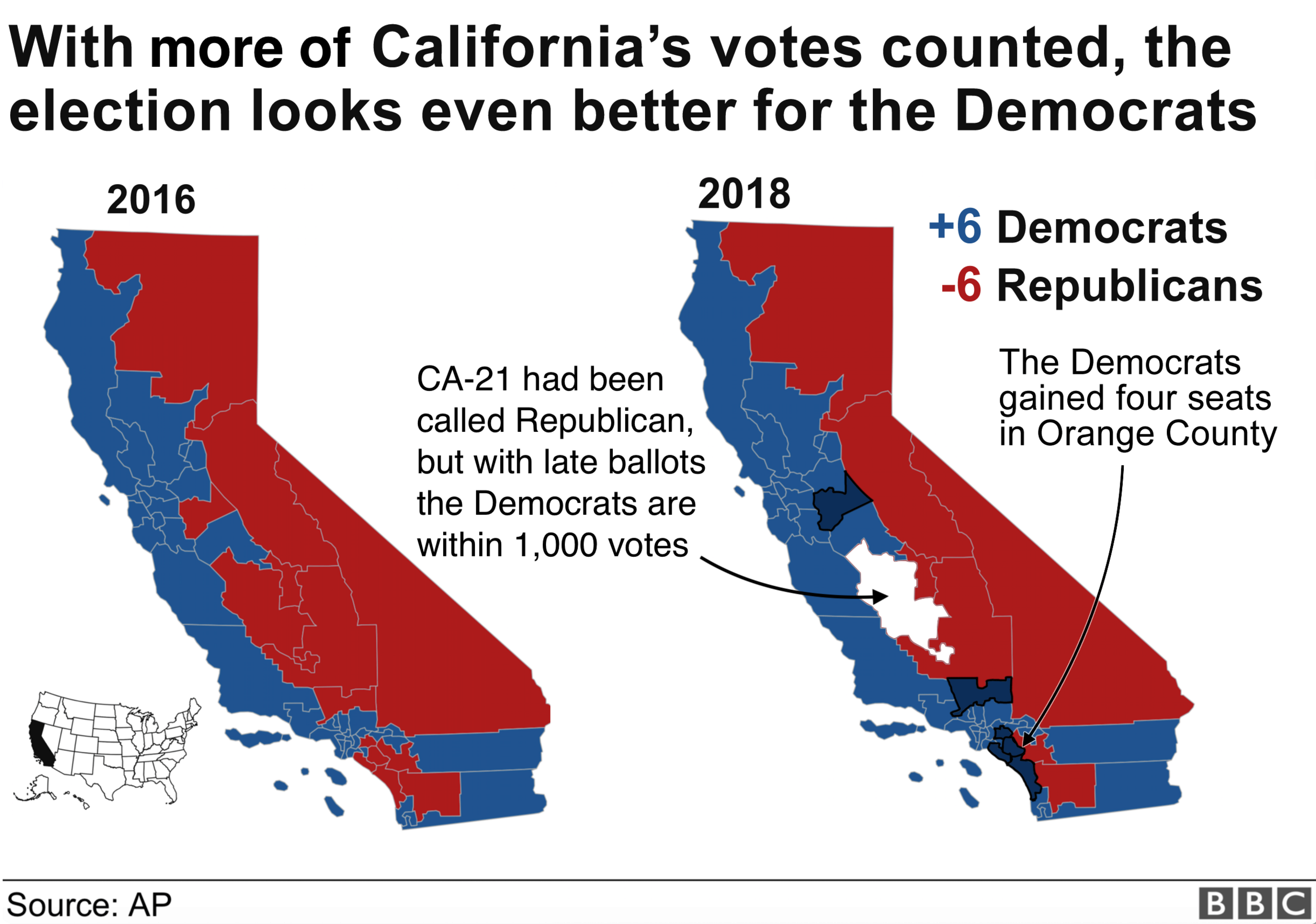
Since 1988, California has consistently voted Democratic in every presidential election. This trend has solidified the state’s reputation as a reliably “blue” state in national politics, significantly impacting the outcome of presidential races and influencing the broader political discourse in the United States.
Presidential Elections Since 1988: A Pattern of Blue
From Bill Clinton’s victories in 1992 and 1996, to Al Gore in 2000, John Kerry in 2004, Barack Obama in 2008 and 2012, Hillary Clinton in 2016, and Joe Biden in 2020, the Democratic candidate has carried California by substantial margins. This consistent pattern underscores the profound political realignment that has occurred in the state over the past several decades. The Republican Party, while still a significant force in local and state legislative races, has struggled to regain a foothold in statewide presidential contests.
Looking Ahead: The Future of Republicanism in California
While California has been a Democratic stronghold for decades, the future of its political landscape remains a subject of ongoing debate and analysis. Understanding the historical context of Republican victories and the factors that led to the current Democratic dominance provides a foundation for anticipating potential future shifts.
The Persistent Influence of Key Demographics
The continuing growth of diverse populations and the increasing urbanization of the state are likely to maintain the Democratic Party’s advantage in the foreseeable future. However, political trends are rarely static. Shifts in national mood, economic downturns, or the emergence of compelling candidates on either side of the aisle could always introduce new dynamics.
The Role of Republican Strategy and Candidate Appeal
For the Republican Party to regain electoral success in California, it would likely require a significant recalibration of its strategy, focusing on outreach to diverse communities and adapting its platform to resonate with the state’s evolving social and economic priorities. The appeal of individual candidates, their messaging, and their ability to connect with a broad spectrum of voters will undoubtedly play a crucial role in any future electoral success. The state’s vastness and diversity, from the tech hubs of the north to the agricultural heartlands and diverse urban centers, present a complex electoral map that requires nuanced approaches.
In conclusion, the last time California voted Republican in a presidential election was in 1988, with George H.W. Bush‘s victory. This marked the end of a period of Republican influence and heralded the beginning of the Democratic Party’s sustained dominance in the state, a trend that has continued for over three decades. The Golden State’s political journey is a compelling case study in the ebb and flow of party fortunes, shaped by demographics, economics, and the enduring, yet ever-changing, spirit of its people.
LifeOutOfTheBox is a participant in the Amazon Services LLC Associates Program, an affiliate advertising program designed to provide a means for sites to earn advertising fees by advertising and linking to Amazon.com. Amazon, the Amazon logo, AmazonSupply, and the AmazonSupply logo are trademarks of Amazon.com, Inc. or its affiliates. As an Amazon Associate we earn affiliate commissions from qualifying purchases.