
When planning a trip to the vibrant metropolis of [Chicago], one of the first questions many travelers ask about navigating this sprawling urban landscape is regarding its public transportation system. Specifically, the query “Does [Chicago] have a subway?” frequently arises. While [Chicago] might not have a system explicitly called a “subway” in the way [New York City] or [London] does, it boasts one of the most iconic and comprehensive rapid transit networks in the [United States]: the ‘L’ train. This unique system combines elevated tracks, at-grade sections, and genuine underground tunnels, offering an experience that is both distinctly [Chicagoan] and remarkably efficient for exploring the city’s myriad attractions, from bustling business districts to charming residential neighborhoods.

Understanding Chicago’s Iconic ‘L’ System
To truly understand public transportation in [Chicago], it’s essential to differentiate between a conventional subway and what the city famously calls the ‘L’. The ‘L’, short for “elevated,” is managed by the Chicago Transit Authority and is the backbone of the city’s public transit. While much of its charm, and indeed its name, comes from the distinctive elevated tracks that wind through and above the downtown [Loop] and various neighborhoods, a significant portion of the ‘L’ system actually runs underground, particularly through the core of the city. This blend of elevated and underground tracks, along with some at-grade sections, makes the ‘L’ a multifaceted system that defies a simple “subway” label yet performs all the functions of one.
What is the ‘L’ and Its Historical Significance?
The [Chicago ‘L’] is one of the oldest and busiest rapid transit systems in the [United States], with parts of its infrastructure dating back to the late 19th century. Its elevated structure was initially a solution to urban congestion, allowing trains to bypass street-level traffic. This innovation quickly transformed [Chicago], facilitating the growth of its downtown core and enabling easier commutes for residents living further afield. The iconic rumbling of trains overhead, the unique views from the car windows, and the historic stations contribute to the ‘L”s distinctive character, making it not just a mode of transport but an integral part of [Chicago]’s identity and a landmark in itself.
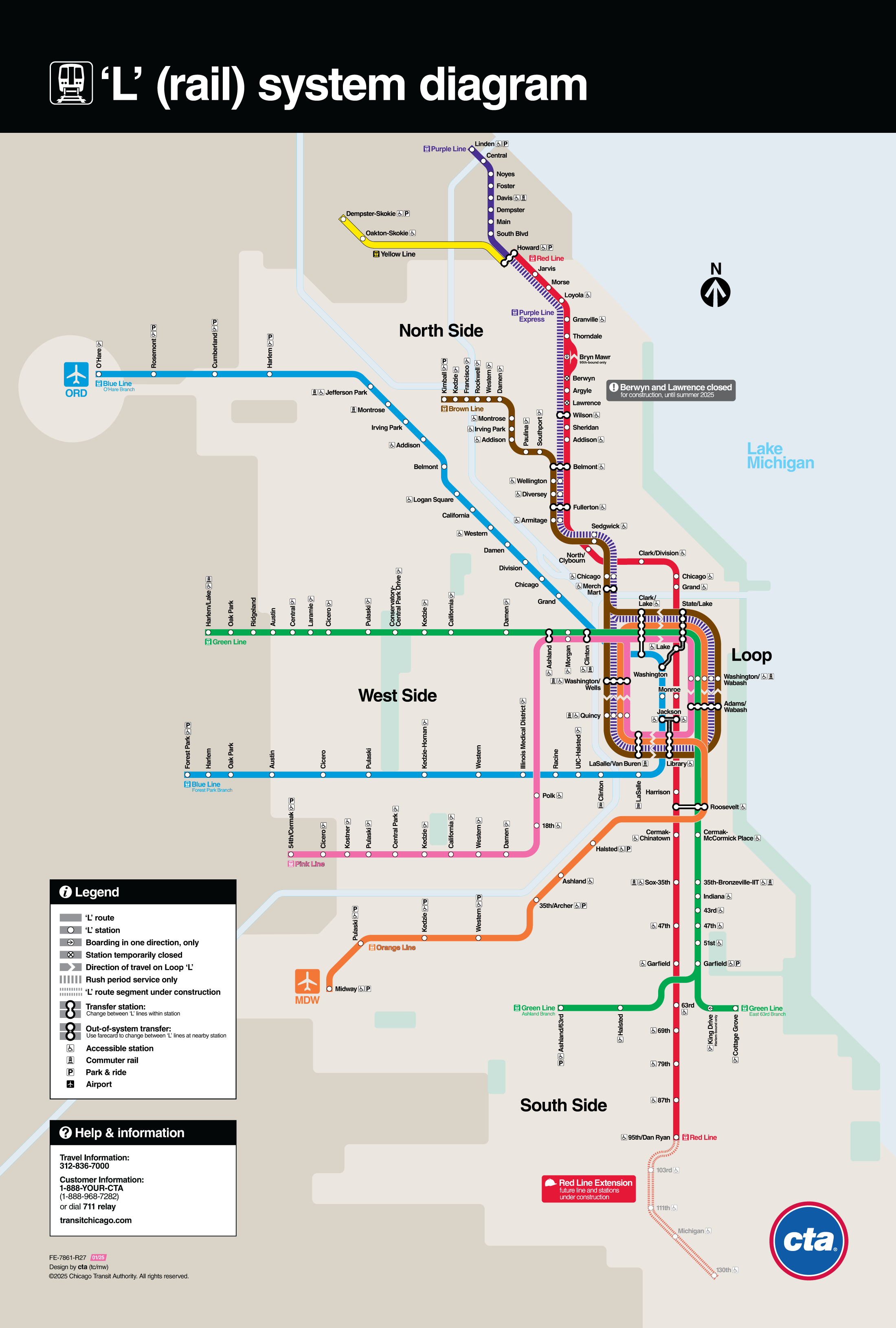
The system comprises eight different color-coded lines, each serving distinct parts of the city and its immediate suburbs. These lines converge in the [Loop], the historic business district defined by the square of elevated tracks that give it its name. For any visitor, understanding the ‘L’ is key to unlocking a truly authentic [Chicago] experience, whether you’re a luxury traveler looking to reach upscale dining in [River North] or a budget-conscious explorer venturing into vibrant cultural enclaves like [Pilsen] or [Chinatown].
Key ‘L’ Lines and Connecting to Chicago’s Landmarks
Each ‘L’ line plays a crucial role in connecting travelers to [Chicago]’s most cherished destinations. For tourists, certain lines become indispensable for accessing major attractions and hotel districts.
- [Blue Line]: This line is a lifesaver for air travelers, providing direct 24/7 service between [O’Hare International Airport] and downtown [Chicago]. It’s the most straightforward and cost-effective way to get from the airport to hotels in the [Loop], [Wicker Park], or [Bucktown]. From downtown, the [Blue Line] also serves areas further west, opening up access to local neighborhoods.
- [Red Line]: Another 24/7 service, the [Red Line] is the busiest of all the ‘L’ routes. It runs north-south, connecting the far [North Side] to the far [South Side] of the city. Crucially for tourists, it provides direct access to popular areas like [Magnificent Mile] (via [Chicago Avenue] or [Grand Avenue] stations), [Wrigleyville] (for [Wrigley Field] and its vibrant surroundings), and the theaters and restaurants of the [Loop]. Many hotels, from boutique stays to large resorts, are just a short walk from a [Red Line] station.
- [Orange Line]: This line offers convenient service to [Midway International Airport], linking it directly to the [Loop]. It’s an excellent option for those arriving at [Midway] and staying in the downtown area or wishing to explore [Chinatown].
- [Brown Line] and [Purple Line]: These lines run primarily on the north side of [Chicago]. The [Brown Line] offers a picturesque ride through several historic neighborhoods before terminating in the [Loop]. The [Purple Line] provides express service during rush hours from the northern suburbs of [Evanston] and [Wilmette] to downtown, and local service in [Evanston] at all times. Both lines offer access to areas with unique shops, local eateries, and residential charm, perfect for experiencing local [Chicago] life.
- [Green Line]: Running from the city’s west side through the [Loop] and then south to areas like [Woodlawn], the [Green Line] provides access to landmarks such as the [Garfield Park Conservatory] and various cultural institutions on the [South Side].
- [Pink Line]: Serving neighborhoods on the near [West Side] like [Pilsen] and connecting them to the [Loop], the [Pink Line] offers a route to explore [Chicago]’s diverse cultural tapestry, renowned for its murals and vibrant community.
- [Yellow Line]: A short, entirely at-grade shuttle line connecting [Skokie] to the [Purple Line] in [Evanston], the [Yellow Line] ([Skokie Swift]) is primarily for suburban commuters but can be useful for visitors exploring these northern communities.
By strategically using these lines, travelers can reach virtually every major [Chicago] attraction, including [Millennium Park] ([Cloud Gate] “The Bean”), the [Art Institute of Chicago], [Navy Pier], the [Museum Campus] ([Field Museum], [Shedd Aquarium], [Adler Planetarium]), [Willis Tower], [875 North Michigan Avenue], and [Lincoln Park Zoo]. The convenience of the ‘L’ makes planning an itinerary focused on landmarks and experiences remarkably straightforward.
Navigating Chicago: A Traveler’s Guide to the ‘L’ Experience
For first-time visitors, the ‘L’ system might seem a bit daunting at first glance, but it’s remarkably user-friendly. Embracing the ‘L’ is not just about getting from point A to point B; it’s about immersing yourself in the rhythm of [Chicago]. It’s an essential part of the local lifestyle, providing insights into the city’s diverse communities and offering unique vantage points of its stunning architecture.
Ticketing, Fares, and Passes
The [CTA] uses the [Ventra Card] system for all its services (including buses). Visitors can purchase a reloadable [Ventra Card] at any ‘L’ station vending machine or major retailers. A single ride typically costs a set fare, but for those planning extensive travel or a longer stay, multi-day passes (1-day, 3-day, 7-day) offer unlimited rides and can significantly reduce costs. These passes are especially beneficial for tourists wanting to maximize their exploration without worrying about individual fares. Children under 7 ride free, and there are reduced fares for seniors and people with disabilities. Always tap your [Ventra Card] or ticket at the turnstile when entering an ‘L’ station.
Accessibility and Rider Etiquette
The [CTA] has made significant strides in improving accessibility across its system. Many ‘L’ stations are equipped with elevators or ramps, making them accessible for wheelchair users, families with strollers, and those with luggage. The [CTA] website and station maps clearly indicate accessible stations. For the most up-to-date information, checking the official [CTA] accessibility page before your journey is recommended.
Rider etiquette on the ‘L’ is similar to most major urban transit systems. Offer seats to the elderly, pregnant individuals, or those with disabilities. Keep personal belongings out of the aisles, and avoid blocking doorways. During rush hour, expect crowded conditions, particularly on the [Red Line] and [Blue Line]. While generally safe, especially in well-trafficked areas, it’s always wise to remain aware of your surroundings, particularly when traveling late at night or in less populated stations. Use the designated waiting areas and trust your instincts.
Beyond the ‘L’: Complementary Transportation Options
While the ‘L’ is incredibly versatile, [Chicago]’s transportation network extends further, offering options that complement the rapid transit system for various travel needs and preferences.
- [CTA] Buses: The [CTA] also operates an extensive network of buses that serve areas not directly reached by the ‘L’ or provide convenient connections. Buses are excellent for shorter distances, reaching specific attractions like [Navy Pier] or traversing the length of the [Magnificent Mile]. Your [Ventra Card] works seamlessly on buses, allowing for easy transfers between bus and ‘L’ services.
- [Metra] Regional Rail: For those planning day trips to [Chicago]’s wider suburbs or traveling longer distances within the metropolitan area, [Metra] commuter rail is the answer. Operating out of major downtown hubs like [Union Station] and the [Ogilvie Transportation Center], [Metra] connects [Chicago] to dozens of communities across [Illinois], [Indiana], and [Wisconsin]. While not part of the [CTA] system, it’s an important regional transport link, particularly useful for business travelers or those exploring destinations beyond the immediate city limits.
- Taxis and Ride-Shares: For direct, door-to-door service, traditional taxis and ride-sharing apps like Uber and Lyft are readily available throughout [Chicago]. These options are particularly convenient for late-night travel, when carrying heavy luggage, or for reaching destinations with limited public transit access. While more expensive than the ‘L’ or bus, they offer unparalleled convenience and privacy, aligning with a more luxurious travel lifestyle.
- Walking and Biking: [Chicago] is a surprisingly walkable city, especially within the downtown [Loop] and adjacent neighborhoods like [River North] and the [Gold Coast]. Many attractions are within comfortable walking distance of each other. Additionally, the city offers a bike-sharing program, [Divvy], with stations strategically located throughout, providing a fun and active way to explore the lakefront trails, [Grant Park], and various neighborhoods, especially during pleasant weather.
The ‘L’ Experience: More Than Just a Ride
The ‘L’ isn’t just about functionality; it’s an integral part of the [Chicago] experience. Riding the elevated tracks offers unique perspectives of the city’s famed architecture, especially when traversing the [Loop]. You’ll get a bird’s-eye view of bustling streets, historic buildings, and glimpses into local life that you wouldn’t see from ground level. This elevated vantage point is particularly captivating after dark when the city lights twinkle and reflect off the glass skyscrapers.
For photography enthusiasts, an ‘L’ ride, particularly on the [Brown Line] or [Loop] sections of other lines, provides countless opportunities for stunning urban shots. For those interested in local culture and food, the ‘L’ opens up a world of culinary adventures. Hop on the [Orange Line] to explore the authentic flavors of [Chinatown], or take the [Pink Line] to [Pilsen] for its vibrant Mexican cuisine. The [Red Line] will take you to diverse dining options from the upscale restaurants of [Gold Coast] to the casual eateries around [Wrigleyville].
Whether you’re a family on vacation, a business traveler attending a conference, or a solo adventurer, the ‘L’ offers a budget-friendly and efficient way to explore [Chicago]’s diverse neighborhoods and attractions. It embodies the city’s dynamic spirit – fast-paced, constantly moving, and deeply connected. So, while [Chicago] may not have a “subway” in the conventional sense, it has something arguably better: the ‘L’ – a historical, architectural, and cultural icon that serves as the city’s vital artery, inviting travelers to discover its heart, one stop at a time. The answer to “Does [Chicago] have a subway?” is therefore nuanced; it has something even more distinctive, a system that uniquely blends elevated and underground travel into an unparalleled urban adventure.# Does Chicago Have A Subway?
When planning a trip to the vibrant metropolis of [Chicago], one of the first questions many travelers ask about navigating this sprawling urban landscape is regarding its public transportation system. Specifically, the query “Does [Chicago] have a subway?” frequently arises. While [Chicago] might not have a system explicitly called a “subway” in the way [New York City] or [London] does, it boasts one of the most iconic and comprehensive rapid transit networks in the [United States]: the ‘L’ train. This unique system combines elevated tracks, at-grade sections, and genuine underground tunnels, offering an experience that is both distinctly [Chicagoan] and remarkably efficient for exploring the city’s myriad attractions, from bustling business districts to charming residential neighborhoods.
Understanding Chicago’s Iconic ‘L’ System
To truly understand public transportation in [Chicago], it’s essential to differentiate between a conventional subway and what the city famously calls the ‘L’. The ‘L’, short for “elevated,” is managed by the Chicago Transit Authority and is the backbone of the city’s public transit. While much of its charm, and indeed its name, comes from the distinctive elevated tracks that wind through and above the downtown [Loop] and various neighborhoods, a significant portion of the [Chicago ‘L’] system actually runs underground, particularly through the core of the city. This blend of elevated and underground tracks, along with some at-grade sections, makes the ‘L’ a multifaceted system that defies a simple “subway” label yet performs all the functions of one.
What is the ‘L’ and Its Historical Significance?
The [Chicago ‘L’] is one of the oldest and busiest rapid transit systems in the [United States], with parts of its infrastructure dating back to the late 19th century. Its elevated structure was initially a solution to urban congestion, allowing trains to bypass street-level traffic. This innovation quickly transformed [Chicago], facilitating the growth of its downtown core and enabling easier commutes for residents living further afield. The iconic rumbling of trains overhead, the unique views from the car windows, and the historic stations contribute to the ‘L”s distinctive character, making it not just a mode of transport but an integral part of [Chicago]’s identity and a landmark in itself.
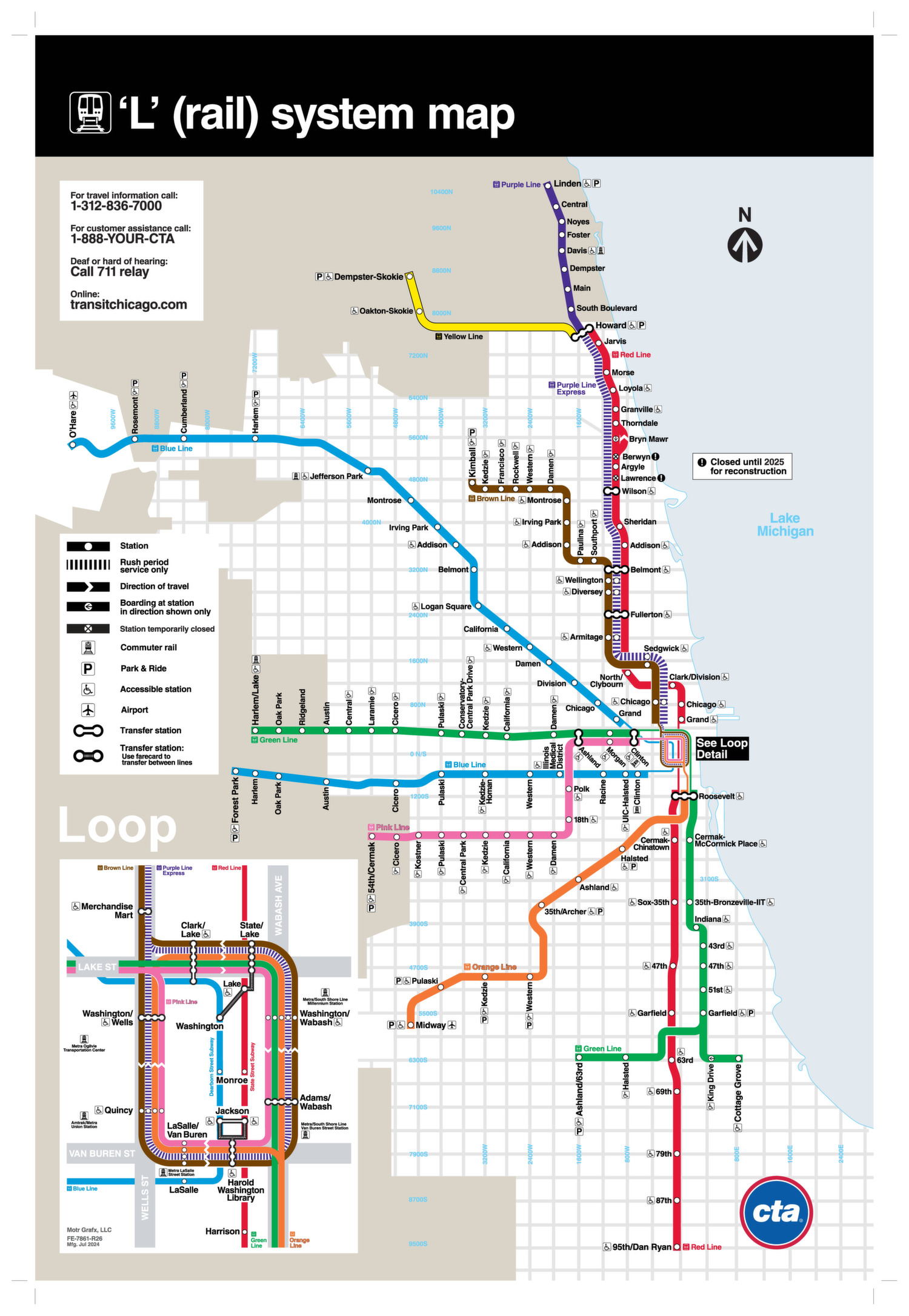
The system comprises eight different color-coded lines, each serving distinct parts of the city and its immediate suburbs. These lines converge in the [Loop], the historic business district defined by the square of elevated tracks that give it its name. For any visitor, understanding the ‘L’ is key to unlocking a truly authentic [Chicago] experience, whether you’re a luxury traveler looking to reach upscale dining in [River North] or a budget-conscious explorer venturing into vibrant cultural enclaves like [Pilsen] or [Chinatown].
Key ‘L’ Lines and Connecting to Chicago’s Landmarks
Each ‘L’ line plays a crucial role in connecting travelers to [Chicago]’s most cherished destinations. For tourists, certain lines become indispensable for accessing major attractions and hotel districts.
- [Blue Line]: This line is a lifesaver for air travelers, providing direct 24/7 service between [O’Hare International Airport] and downtown [Chicago]. It’s the most straightforward and cost-effective way to get from the airport to hotels in the [Loop], [Wicker Park], or [Bucktown]. From downtown, the [Blue Line] also serves areas further west, opening up access to local neighborhoods.
- [Red Line]: Another 24/7 service, the [Red Line] is the busiest of all the ‘L’ routes. It runs north-south, connecting the far [North Side] to the far [South Side] of the city. Crucially for tourists, it provides direct access to popular areas like the [Magnificent Mile] (via [Chicago Avenue] or [Grand Avenue] stations), [Wrigleyville] (for [Wrigley Field] and its vibrant surroundings), and the theaters and restaurants of the [Loop]. Many hotels, from boutique stays to large resorts, are just a short walk from a [Red Line] station.
- [Orange Line]: This line offers convenient service to [Midway International Airport], linking it directly to the [Loop]. It’s an excellent option for those arriving at [Midway] and staying in the downtown area or wishing to explore [Chinatown].
- [Brown Line] and [Purple Line]: These lines run primarily on the north side of [Chicago]. The [Brown Line] offers a picturesque ride through several historic neighborhoods before terminating in the [Loop]. The [Purple Line] provides express service during rush hours from the northern suburbs of [Evanston] and [Wilmette] to downtown, and local service in [Evanston] at all times. Both lines offer access to areas with unique shops, local eateries, and residential charm, perfect for experiencing local [Chicago] life.
- [Green Line]: Running from the city’s [West Side] through the [Loop] and then south to areas like [Woodlawn], the [Green Line] provides access to landmarks such as the [Garfield Park Conservatory] and various cultural institutions on the [South Side].
- [Pink Line]: Serving neighborhoods on the near [West Side] like [Pilsen] and connecting them to the [Loop], the [Pink Line] offers a route to explore [Chicago]’s diverse cultural tapestry, renowned for its murals and vibrant community.
- [Yellow Line]: A short, entirely at-grade shuttle line connecting [Skokie] to the [Purple Line] in [Evanston], the [Yellow Line] ([Skokie Swift]) is primarily for suburban commuters but can be useful for visitors exploring these northern communities.
By strategically using these lines, travelers can reach virtually every major [Chicago] attraction, including [Millennium Park] ([Cloud Gate] “The Bean”), the [Art Institute of Chicago], [Navy Pier], the [Museum Campus] ([Field Museum], [Shedd Aquarium], [Adler Planetarium]), [Willis Tower], [875 North Michigan Avenue], and [Lincoln Park Zoo]. The convenience of the ‘L’ makes planning an itinerary focused on landmarks and experiences remarkably straightforward.
Navigating Chicago: A Traveler’s Guide to the ‘L’ Experience
For first-time visitors, the ‘L’ system might seem a bit daunting at first glance, but it’s remarkably user-friendly. Embracing the ‘L’ is not just about getting from point A to point B; it’s about immersing yourself in the rhythm of [Chicago]. It’s an essential part of the local lifestyle, providing insights into the city’s diverse communities and offering unique vantage points of its stunning architecture.
Ticketing, Fares, and Passes
The [CTA] uses the [Ventra Card] system for all its services (including buses). Visitors can purchase a reloadable [Ventra Card] at any ‘L’ station vending machine or major retailers. A single ride typically costs a set fare, but for those planning extensive travel or a longer stay, multi-day passes (1-day, 3-day, 7-day) offer unlimited rides and can significantly reduce costs. These passes are especially beneficial for tourists wanting to maximize their exploration without worrying about individual fares. Children under 7 ride free, and there are reduced fares for seniors and people with disabilities. Always tap your [Ventra Card] or ticket at the turnstile when entering an ‘L’ station.
Accessibility and Rider Etiquette
The [CTA] has made significant strides in improving accessibility across its system. Many ‘L’ stations are equipped with elevators or ramps, making them accessible for wheelchair users, families with strollers, and those with luggage. The [CTA] website and station maps clearly indicate accessible stations. For the most up-to-date information, checking the official [CTA] accessibility page before your journey is recommended.
Rider etiquette on the ‘L’ is similar to most major urban transit systems. Offer seats to the elderly, pregnant individuals, or those with disabilities. Keep personal belongings out of the aisles, and avoid blocking doorways. During rush hour, expect crowded conditions, particularly on the [Red Line] and [Blue Line]. While generally safe, especially in well-trafficked areas, it’s always wise to remain aware of your surroundings, particularly when traveling late at night or in less populated stations. Use the designated waiting areas and trust your instincts.
Beyond the ‘L’: Complementary Transportation Options
While the ‘L’ is incredibly versatile, [Chicago]’s transportation network extends further, offering options that complement the rapid transit system for various travel needs and preferences.
- [CTA] Buses: The [CTA] also operates an extensive network of buses that serve areas not directly reached by the ‘L’ or provide convenient connections. Buses are excellent for shorter distances, reaching specific attractions like [Navy Pier] or traversing the length of the [Magnificent Mile]. Your [Ventra Card] works seamlessly on buses, allowing for easy transfers between bus and ‘L’ services.
- [Metra] Regional Rail: For those planning day trips to [Chicago]’s wider suburbs or traveling longer distances within the metropolitan area, [Metra] commuter rail is the answer. Operating out of major downtown hubs like [Union Station] and the [Ogilvie Transportation Center], [Metra] connects [Chicago] to dozens of communities across [Illinois], [Indiana], and [Wisconsin]. While not part of the [CTA] system, it’s an important regional transport link, particularly useful for business travelers or those exploring destinations beyond the immediate city limits.
- Taxis and Ride-Shares: For direct, door-to-door service, traditional taxis and ride-sharing apps like Uber and Lyft are readily available throughout [Chicago]. These options are particularly convenient for late-night travel, when carrying heavy luggage, or for reaching destinations with limited public transit access. While more expensive than the ‘L’ or bus, they offer unparalleled convenience and privacy, aligning with a more luxurious travel lifestyle.
- Walking and Biking: [Chicago] is a surprisingly walkable city, especially within the downtown [Loop] and adjacent neighborhoods like [River North] and the [Gold Coast]. Many attractions are within comfortable walking distance of each other. Additionally, the city offers a bike-sharing program, [Divvy], with stations strategically located throughout, providing a fun and active way to explore the lakefront trails, [Grant Park], and various neighborhoods, especially during pleasant weather.
The ‘L’ Experience: More Than Just a Ride
The ‘L’ isn’t just about functionality; it’s an integral part of the [Chicago] experience. Riding the elevated tracks offers unique perspectives of the city’s famed architecture, especially when traversing the [Loop]. You’ll get a bird’s-eye view of bustling streets, historic buildings, and glimpses into local life that you wouldn’t see from ground level. This elevated vantage point is particularly captivating after dark when the city lights twinkle and reflect off the glass skyscrapers.
For photography enthusiasts, an ‘L’ ride, particularly on the [Brown Line] or [Loop] sections of other lines, provides countless opportunities for stunning urban shots. For those interested in local culture and food, the ‘L’ opens up a world of culinary adventures. Hop on the [Orange Line] to explore the authentic flavors of [Chinatown], or take the [Pink Line] to [Pilsen] for its vibrant Mexican cuisine. The [Red Line] will take you to diverse dining options from the upscale restaurants of the [Gold Coast] to the casual eateries around [Wrigleyville].
Whether you’re a family on vacation, a business traveler attending a conference, or a solo adventurer, the ‘L’ offers a budget-friendly and efficient way to explore [Chicago]’s diverse neighborhoods and attractions. It embodies the city’s dynamic spirit – fast-paced, constantly moving, and deeply connected. So, while [Chicago] may not have a “subway” in the conventional sense, it has something arguably better: the ‘L’ – a historical, architectural, and cultural icon that serves as the city’s vital artery, inviting travelers to discover its heart, one stop at a time. The answer to “Does [Chicago] have a subway?” is therefore nuanced; it has something even more distinctive, a system that uniquely blends elevated and underground travel into an unparalleled urban adventure.
LifeOutOfTheBox is a participant in the Amazon Services LLC Associates Program, an affiliate advertising program designed to provide a means for sites to earn advertising fees by advertising and linking to Amazon.com. Amazon, the Amazon logo, AmazonSupply, and the AmazonSupply logo are trademarks of Amazon.com, Inc. or its affiliates. As an Amazon Associate we earn affiliate commissions from qualifying purchases.