
Embarking on an entrepreneurial journey, especially in a state as captivating as Colorado, promises both adventure and opportunity. For those drawn to the majestic landscapes, vibrant cities, and unparalleled lifestyle that Colorado offers, establishing a local business can be a natural extension of their passion. Whether you dream of launching a boutique travel agency, managing a fleet of unique vacation accommodations, providing specialized tourism experiences, or simply running your remote work venture from the comfort of a mountain retreat, understanding how to legally structure your business is paramount.
The Limited Liability Company (LLC) stands out as a highly favored business structure for its blend of personal liability protection and administrative simplicity. It’s an ideal choice for many entrepreneurs, offering a shield between personal assets and business debts, flexibility in management, and pass-through taxation. This guide is tailored for the lifestyle traveler, digital nomad, or prospective Colorado resident looking to root their business ambitions in this incredible state. Let’s explore the steps to create your LLC and integrate it seamlessly into the distinctive Colorado way of life.
Why Choose Colorado for Your Lifestyle Business?
Colorado isn’t just a destination; it’s a lifestyle. Its allure for entrepreneurs stems from a unique blend of natural beauty, a thriving economy, and a culture that values innovation and work-life balance. For those seeking to combine their passion for travel and dynamic living with their business aspirations, Colorado presents an unparalleled backdrop.
Imagine running your online venture from a cozy cabin near Rocky Mountain National Park, developing a new hospitality concept in the bustling heart of Denver, or curating bespoke adventure tours from a base in Aspen or Vail. Colorado’s diverse geography and economic landscape support a wide array of businesses. Denver, the state capital, acts as a major hub for technology, finance, and tourism, offering a robust market and extensive networking opportunities. Cities like Boulder are renowned for their entrepreneurial spirit and outdoor lifestyle, attracting a workforce that prioritizes well-being alongside professional growth. Colorado Springs, on the other hand, boasts a strong military presence and a growing aerospace industry, alongside its natural landmarks.
The state consistently ranks high for its business-friendly environment and quality of life. This reputation attracts a talented workforce and a diverse consumer base. For businesses rooted in the travel and hospitality sectors, Colorado’s status as a premier travel destination is a significant advantage. The constant influx of visitors, coupled with a strong local economy, provides fertile ground for ventures ranging from specialized accommodations and guided excursions to local craft food and beverage enterprises. By establishing your LLC here, you’re not just setting up a business; you’re integrating it into a dynamic ecosystem celebrated for its beauty, innovation, and adventurous spirit.
Laying the Foundation: Essential Steps for Your Colorado LLC
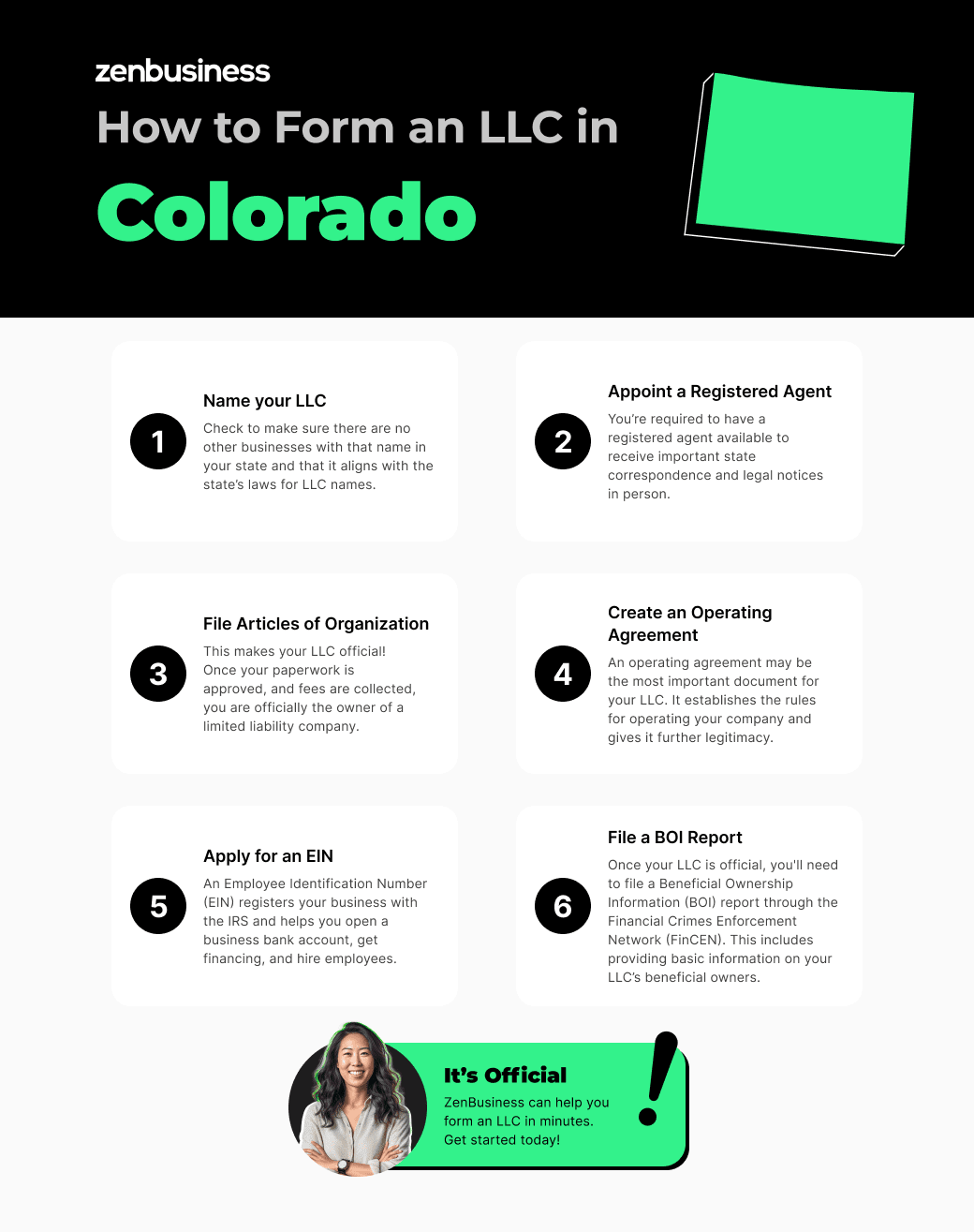
The process of forming an LLC in Colorado is designed to be straightforward, allowing entrepreneurs to quickly establish their legal entity and focus on their core business. While the administrative steps are similar across many United States states, understanding the specific Colorado requirements is crucial. Here, we break down the fundamental stages, ensuring you navigate each one with confidence.
Step 1: Choosing a Unique Name for Your Venture
Your LLC’s name is more than just a label; it’s the public face of your brand, especially important in the competitive travel, hospitality, or lifestyle sectors. In Colorado, your chosen name must meet specific criteria set by the Colorado Secretary of State.
Firstly, the name must include “Limited Liability Company,” “Ltd. Liability Co.,” “Limited Liability Co.,” “LLC,” or “L.L.C.” This clearly identifies your business structure. Secondly, and critically, your chosen name must be distinguishable from other existing business entities registered with the Colorado Secretary of State. This prevents confusion and ensures each business has a unique identity. Before settling on a name, it’s highly recommended to perform a thorough name availability search on the Colorado Secretary of State’s website. This preliminary check can save you time and effort later.
Consider a name that not only reflects your business’s offerings – perhaps a nod to Colorado’s natural beauty for a tour company, or an elegant phrase for a luxury hotel booking service – but also resonates with your target audience. Once you’ve found an available and suitable name, you may want to reserve it with the Colorado Secretary of State for up to 120 days. This gives you time to complete other formation steps without fear of someone else claiming your desired name. Remember to also check for domain name availability and social media handles to maintain brand consistency across all platforms relevant to a modern, travel-oriented business.
Step 2: Designating a Registered Agent
Every LLC in Colorado is required to have a Registered Agent. This is a critical component of your business’s legal presence, particularly important for those who might be traveling frequently or managing their business remotely. A Registered Agent is an individual or a company officially designated to receive legal documents, service of process (lawsuit notices), and official government correspondence on behalf of your LLC.
The Registered Agent must have a physical street address in Colorado and be available during normal business hours. A P.O. Box is generally not acceptable. For digital nomads or those with no fixed Colorado address, using a professional Registered Agent service is an excellent solution. These services offer privacy, ensure compliance, and provide a stable point of contact for your business, regardless of where you are in the world. They will scan and forward any received mail to you promptly, ensuring you never miss important legal notices or official communications.
Choosing a reliable Registered Agent is not just a legal formality; it’s a strategic decision that supports your lifestyle and business operations. It provides peace of mind, knowing that your legal obligations are being met, allowing you to focus on growing your venture, whether it’s expanding your network of vacation rentals or scouting new adventure travel destinations across the state.
Step 3: Filing Your Articles of Organization
The Articles of Organization are the foundational legal document that officially creates your LLC in Colorado. This document is filed with the Colorado Secretary of State and formally registers your business entity. The good news is that Colorado offers an efficient online filing system, making the process relatively quick and user-friendly.
The Articles of Organization typically require basic, yet essential, information about your LLC:
- The name of your LLC: As chosen and checked in Step 1.
- The name and address of your Registered Agent: As designated in Step 2.
- The principal office address: This can be your business mailing address, which doesn’t necessarily need to be in Colorado if your Registered Agent is located within the state.
- The name and address of the organizer: This is the person filing the document (it can be you, an attorney, or a formation service).
- Statement of consent: From the Registered Agent, acknowledging their appointment.

Once submitted and approved by the Colorado Secretary of State, your LLC officially comes into existence. You will receive a stamped copy or an acknowledgment, which serves as proof of your LLC’s formation. This milestone marks the official beginning of your business journey in the Centennial State, paving the way for further growth and engagement with Colorado’s vibrant economy and unique lifestyle offerings. Keep these documents safe, as they will be required for opening bank accounts and other administrative tasks.
Step 4: Crafting Your Operating Agreement
While the Articles of Organization establish your LLC as a legal entity, the Operating Agreement serves as the internal governing document for your business. Crucially, while not required to be filed with the Colorado Secretary of State, a well-drafted Operating Agreement is highly recommended for every LLC, regardless of whether it has one member or multiple. It’s the blueprint for how your business will operate, make decisions, and resolve potential disputes, providing essential clarity and protection.
The Operating Agreement typically outlines key aspects such as:
- Member ownership percentages: How much of the LLC each member owns.
- Voting rights and responsibilities: How decisions are made and who is responsible for what.
- Capital contributions: How much money or assets each member invests in the LLC.
- Profit and loss distributions: How profits and losses are shared among members.
- Management structure: Whether the LLC is member-managed (all members participate in daily operations) or manager-managed (members appoint managers to run the business).
- Procedures for adding or removing members: Important for evolving partnerships, common in many hospitality or travel-related ventures.
- Dissolution procedures: How the LLC would be dissolved if necessary.
For a single-member LLC, an Operating Agreement reinforces your liability protection and proves to banks and others that your business is distinct from your personal affairs. For multi-member LLCs, it’s absolutely vital for preventing misunderstandings and providing a framework for managing a thriving tourism venture or chain of boutique hotels. Think of it as your LLC’s internal constitution, ensuring everyone is on the same page and that your business can adapt and flourish within Colorado‘s dynamic entrepreneurial landscape.
Beyond Formation: Sustaining Your Colorado Business & Lifestyle
Forming your LLC is a significant first step, but the journey of entrepreneurship in Colorado extends beyond initial registration. To ensure your business thrives and remains compliant, a few more administrative and operational considerations are essential. These steps often involve securing necessary identification numbers, understanding your tax obligations, and adhering to ongoing state requirements, all while integrating your business seamlessly into the adventurous Colorado lifestyle.
Obtaining an EIN (Employer Identification Number)
After your LLC is officially formed, the next crucial step is to obtain an Employer Identification Number (EIN) from the IRS. Often referred to as a Federal Tax Identification Number, an EIN is essentially a social security number for your business. It is required for several key business activities:
- Opening a business bank account: Essential for separating your personal and business finances, a fundamental principle for maintaining your LLC’s liability protection.
- Hiring employees: If your Colorado venture, be it a hotel or a travel agency, grows to include staff.
- Filing federal and state taxes: Your LLC will use its EIN for all tax-related filings.
- Applying for certain business licenses and permits: Some licensing bodies may require an EIN.
Even if you are a single-member LLC with no employees, you will need an EIN if you plan to elect to be taxed as an S-Corp or C-Corp, or if you have employees. Obtaining an EIN is a free and relatively quick process that can be completed online directly through the IRS website. Having your EIN in hand allows you to move forward with critical financial operations and solidify your business’s legitimacy in Colorado’s vibrant economic environment.
Understanding Licenses, Permits, and Taxes
Beyond the state-level LLC formation, your Colorado business will likely need to comply with specific local, county, and industry-specific regulations. This is particularly true for businesses in the tourism, accommodation, and hospitality sectors, where health, safety, and operational permits are common.
- State Licenses: Depending on your industry, Colorado may require specific professional licenses (e.g., for real estate brokers managing vacation rentals, or specialized travel guides). The Colorado Department of Revenue is a good starting point for general business licensing information.
- Local Permits: Your city and county (e.g., Denver, Boulder County) will have their own set of requirements, which could include general business licenses, zoning permits (especially important for physical locations like hotels or restaurants), and signage permits. If you’re operating a short-term rental, expect specific municipal regulations and licensing in most Colorado municipalities.
- Sales Tax: If your LLC sells products or taxable services, you will need to register with the Colorado Department of Revenue to collect and remit sales tax. This includes common tourism-related activities such as hotel stays, restaurant meals, and retail purchases.
Navigating these requirements can seem daunting, but local chambers of commerce and small business development centers in Colorado are excellent resources for guidance. Proactive research and compliance ensure your business operates smoothly, avoids penalties, and maintains a positive reputation within the community, allowing you to fully embrace the Colorado entrepreneurial spirit.

Maintaining Compliance and Enjoying the Colorado Lifestyle
Once your LLC is established and operational, ongoing compliance is key to preserving its good standing and enjoying the benefits it offers. The primary annual requirement for Colorado LLCs is filing a Periodic Report with the Colorado Secretary of State. This report confirms or updates your LLC’s basic information, such as its name, Registered Agent, and principal office address, and helps the state keep its records current. It’s a simple online filing that usually carries a small fee.
Beyond this, it’s vital to:
- Keep meticulous records: Maintain clear financial records, meeting minutes (if applicable), and copies of all legal documents.
- Separate business and personal finances: Always use your business bank account for all LLC transactions. This is fundamental for protecting your personal assets.
- Stay informed about tax obligations: Both federal (with the IRS) and state (with the Colorado Department of Revenue) tax requirements. Consult with an accountant familiar with Colorado tax laws to ensure proper filing.
By diligently maintaining compliance, you ensure the longevity and legal integrity of your Colorado LLC. This administrative diligence frees you to focus on what you love – whether it’s exploring new travel routes, discovering hidden gems for your guests, or simply enjoying the abundant outdoor activities that define the Colorado lifestyle. Operating an LLC in Colorado is not just about business; it’s about empowering a lifestyle where professional success and personal fulfillment go hand-in-hand amidst some of the most breathtaking scenery in the United States.
Establishing an LLC in Colorado is a clear path for entrepreneurs, digital nomads, and lifestyle enthusiasts seeking to formalize their business ventures within this captivating state. From selecting a distinctive name that resonates with the adventurous spirit of Colorado to navigating the necessary registrations with the Colorado Secretary of State and beyond, each step is manageable and designed to foster a robust business environment. By understanding and completing these essential stages, you not only secure personal liability protection but also lay a strong foundation for your business to flourish. Whether your dream involves pioneering new travel experiences, offering unique accommodations, or simply running your remote enterprise from the base of the majestic Rocky Mountain National Park, Colorado offers the perfect blend of entrepreneurial opportunity and an unparalleled lifestyle. Embrace the journey, empower your business, and immerse yourself in all that the Centennial State has to offer.
LifeOutOfTheBox is a participant in the Amazon Services LLC Associates Program, an affiliate advertising program designed to provide a means for sites to earn advertising fees by advertising and linking to Amazon.com. Amazon, the Amazon logo, AmazonSupply, and the AmazonSupply logo are trademarks of Amazon.com, Inc. or its affiliates. As an Amazon Associate we earn affiliate commissions from qualifying purchases.