
The precise moment of Connecticut’s founding is not marked by a single, definitive date, but rather a fascinating tapestry woven from early exploration, daring settlement, and revolutionary political thought. While the Connecticut Colony formally established its governmental framework with the Fundamental Orders in 1639, the seeds of this vibrant New England state were planted much earlier, in the bustling era of 17th-century European expansion into North America. Its history is a testament to the pioneering spirit, a deep-seated desire for religious freedom, and an innovative approach to self-governance that laid foundational stones for American democracy. For travelers and history enthusiasts exploring the United States, understanding Connecticut’s origins provides a rich context for its enduring landmarks, charming towns, and unique cultural heritage.

The Dawn of a Colony: Early Exploration and Settlement
The story of Connecticut begins not with English settlers, but with Dutch explorers. In 1614, the intrepid Dutch navigator Adrian Block, sailing for the Dutch East India Company, navigated and mapped the Connecticut River, establishing a claim for the Netherlands in the region. This early exploration led to the establishment of a trading post, the House of Good Hope, near present-day Hartford in 1633. The Dutch were primarily interested in the lucrative fur trade with the native Pequot and Mohegan tribes, and their presence marked the first European attempts at sustained interaction and settlement in what would become Connecticut. This period, though brief in terms of lasting control, highlights the multi-faceted European interest in the burgeoning New World and forms an intriguing part of the state’s historical narrative.
Dutch Explorers and English Arrivals
While the Dutch established the first European presence, it was the English who ultimately colonized the region. Driven by a desire for more fertile land, greater religious freedom, and escape from the strict Puritanical governance of the Massachusetts Bay Colony and Plymouth Colony, English settlers began to migrate westward. The earliest significant English settlement in Connecticut can be traced back to 1633, when a small group from New Plymouth established a trading post in Windsor. This move was, in part, a response to the perceived Dutch threat and an assertion of English territorial claims. The English settlements quickly grew, fueled by the “Great Migration” of Puritans seeking new opportunities and spiritual autonomy.
The Great Migration and the River Towns
The real catalyst for Connecticut’s growth came in the mid-1630s with the arrival of large groups of settlers from Massachusetts. Led by figures like John Oldham, who founded Wethersfield in 1634, and most notably, Reverend Thomas Hooker, these pioneers sought to establish communities based on principles distinct from those of the more rigid Massachusetts Bay Colony. In 1636, Reverend Thomas Hooker famously led a contingent of about 100 settlers from Newtown (now Cambridge, Massachusetts) to found Hartford. These three towns — Windsor, Wethersfield, and Hartford — often referred to as the “River Towns,” formed the nucleus of the future Connecticut Colony. Each of these towns holds fascinating historical sites today, inviting visitors to step back in time and explore the earliest chapters of American settlement.
During this formative period, other important settlements emerged. The Saybrook Colony was established in 1635 at the mouth of the Connecticut River by Lion Gardiner on behalf of English proprietors, its strategic location vital for controlling river access. It eventually merged with the Connecticut Colony in 1644, with its settlement becoming modern-day Old Saybrook. Another significant entity, the New Haven Colony, was founded in 1638 by Theophilus Eaton and Reverend John Davenport. This colony, with its strict adherence to biblical law, maintained a separate identity until its forced absorption into the larger Connecticut Colony in 1665. The distinct character of these early settlements, driven by varied motivations, laid the groundwork for the diverse social and political landscape of Connecticut.
Forging a Commonwealth: The Fundamental Orders and Self-Governance
The burgeoning English settlements in the Connecticut River Valley faced a challenge: establishing a unified government that reflected their unique aspirations. Though initially operating under commissions from the Massachusetts General Court, the settlers soon sought greater autonomy. The defining moment in Connecticut’s foundational history is unequivocally the adoption of the Fundamental Orders of Connecticut in 1639. This pivotal document, often regarded as the world’s first written constitution, formally established the framework for the government of the Connecticut Colony and is celebrated as the true “founding” of Connecticut as a self-governing entity.
The Genesis of Democratic Principles
Inspired by Reverend Thomas Hooker’s sermon in 1638, which proclaimed that “the foundation of authority is laid in the free consent of the people,” the Fundamental Orders of Connecticut created a system of popular sovereignty. Unlike the more restrictive requirements in Massachusetts, voting rights were extended beyond church membership to all adult male landowners, demonstrating a radical commitment to broader democratic participation. The Orders established a General Court (legislature), a governor, and magistrates, outlining their powers and responsibilities. This groundbreaking document predates the United States Constitution by more than a century and a half and profoundly influenced later American political thought. Its principles of self-governance, representative government, and the consent of the governed are cornerstones of democratic societies worldwide, making Connecticut a crucial stop for anyone interested in the roots of American liberty.
The early years of the Connecticut Colony were also marked by conflicts with native populations. The brutal Pequot War of 1637, which saw the English settlers allied with the Mohegan and Narragansett tribes against the Pequots, had a profound impact on the region. The war effectively broke the power of the Pequot tribe and, through the Treaty of Hartford in 1638, allowed for the continued expansion of English settlements. These conflicts, while tragic, are an indelible part of Connecticut’s founding narrative, reflecting the complex and often violent dynamics of colonial expansion.
Consolidation and Charters
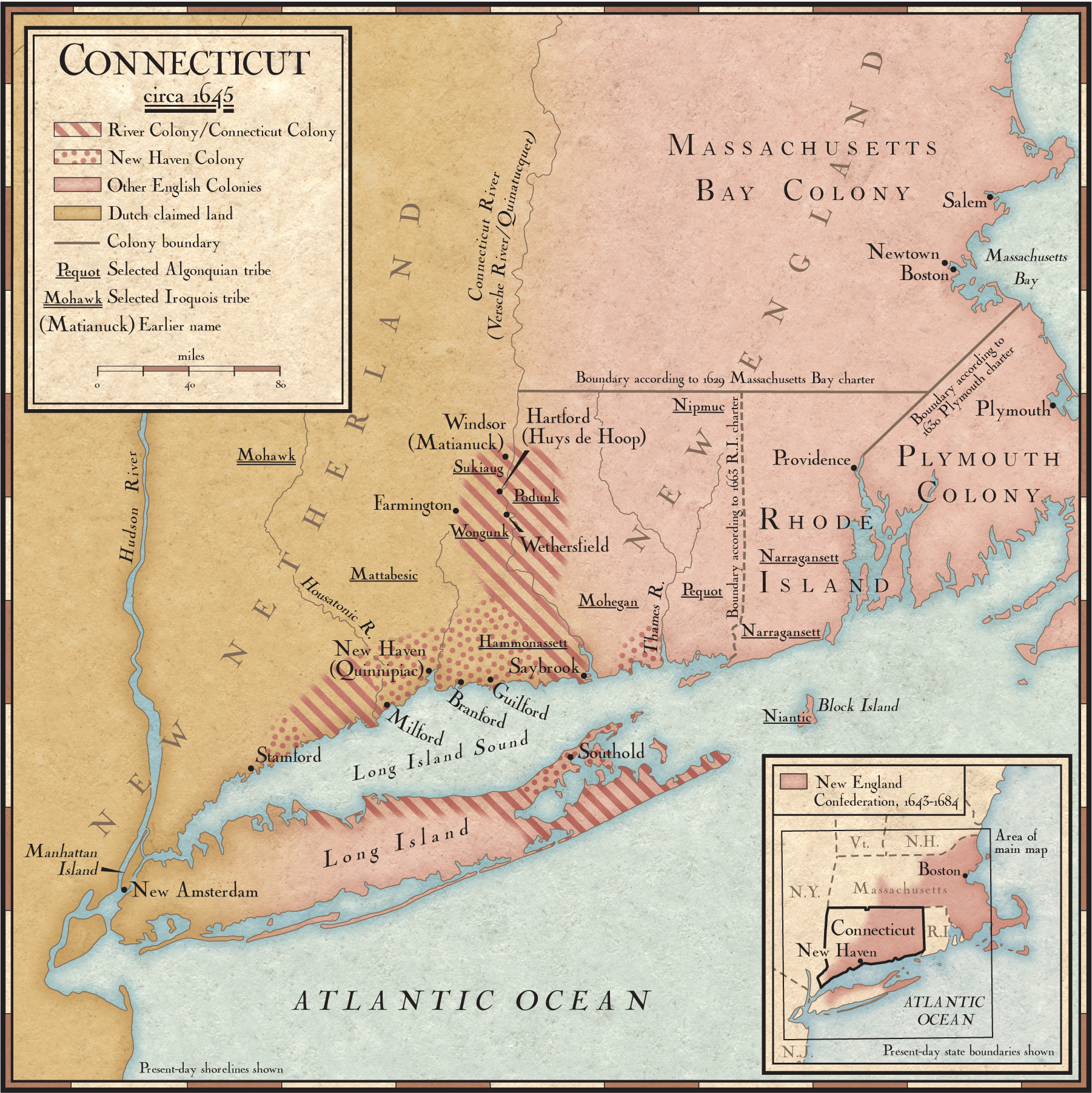
Following the adoption of the Fundamental Orders, the Connecticut Colony continued to grow and assert its independence. A significant moment arrived in 1662 when John Winthrop the Younger, the son of the Massachusetts Bay governor, successfully petitioned King Charles II of England for a royal charter. The Connecticut Charter of 1662 was remarkably liberal, granting the colony vast self-governing powers, including the right to elect its own governor and legislate its own laws, essentially incorporating the principles of the Fundamental Orders into royal decree. This charter also officially absorbed the more religiously conservative New Haven Colony into Connecticut, consolidating the English presence in the region.
The charter’s importance was dramatically underscored during the “Charter Oak incident” of 1687. When Sir Edmund Andros, the royally appointed governor of the unpopular Dominion of New England, attempted to seize Connecticut’s charter to revoke its self-governance, legend has it that the document was secretly hidden in the hollow of a majestic oak tree – the famed Charter Oak. While the Dominion eventually collapsed, the incident became a powerful symbol of Connecticut’s fierce determination to protect its liberties, a spirit that would animate its role in the future American Revolution.
From Colony to State: Connecticut’s Path to Independence
Connecticut’s commitment to self-governance, rooted in the Fundamental Orders and reinforced by the Charter of 1662, naturally positioned it as a strong advocate for independence during the burgeoning conflict with Great Britain. The colony played a significant role in the American Revolution, earning the moniker “The Provision State” for its vital supply of food and war materials to the Continental Army.
Revolutionary Spirit and Statehood
When the Declaration of Independence was signed on July 4, 1776, Connecticut was already effectively an independent entity, having long exercised a degree of autonomy unmatched by many other colonies. After the war, Connecticut was among the first states to ratify the United States Constitution on January 9, 1788, officially becoming the fifth state in the newly formed United States of America. The transition from colony to state was a logical progression for a people who had, for over a century and a half, practiced a unique form of self-rule. This rich history of independence and democratic innovation continues to shape the state’s identity and its appeal to those who value the historical narrative of the United States.
Experiencing Historic Connecticut Today: Travel, Tourism, and Timeless Landmarks
For modern travelers, Connecticut offers a captivating blend of historical depth, cultural richness, and natural beauty, all easily accessible. The state’s founding story is etched into its landscape, towns, and institutions, making it an ideal destination for those seeking to immerse themselves in early American history. Whether you’re interested in colonial architecture, maritime heritage, or simply enjoying the scenic New England charm, Connecticut provides a rewarding experience.
Iconic Historical Sites and Cultural Experiences
Visiting the sites related to Connecticut’s founding offers a tangible connection to its past. In Hartford, the state capital, you can explore the Old State House, a National Historic Landmark completed in 1796, where legislative sessions were held and where the state’s early government operated. While the original Charter Oak fell in 1856, its site is commemorated, and its story is a poignant reminder of Connecticut’s enduring spirit of liberty. The city is also home to the Wadsworth Atheneum Museum of Art, the oldest continuously operating public art museum in the United States, offering a glimpse into the cultural evolution of the region.
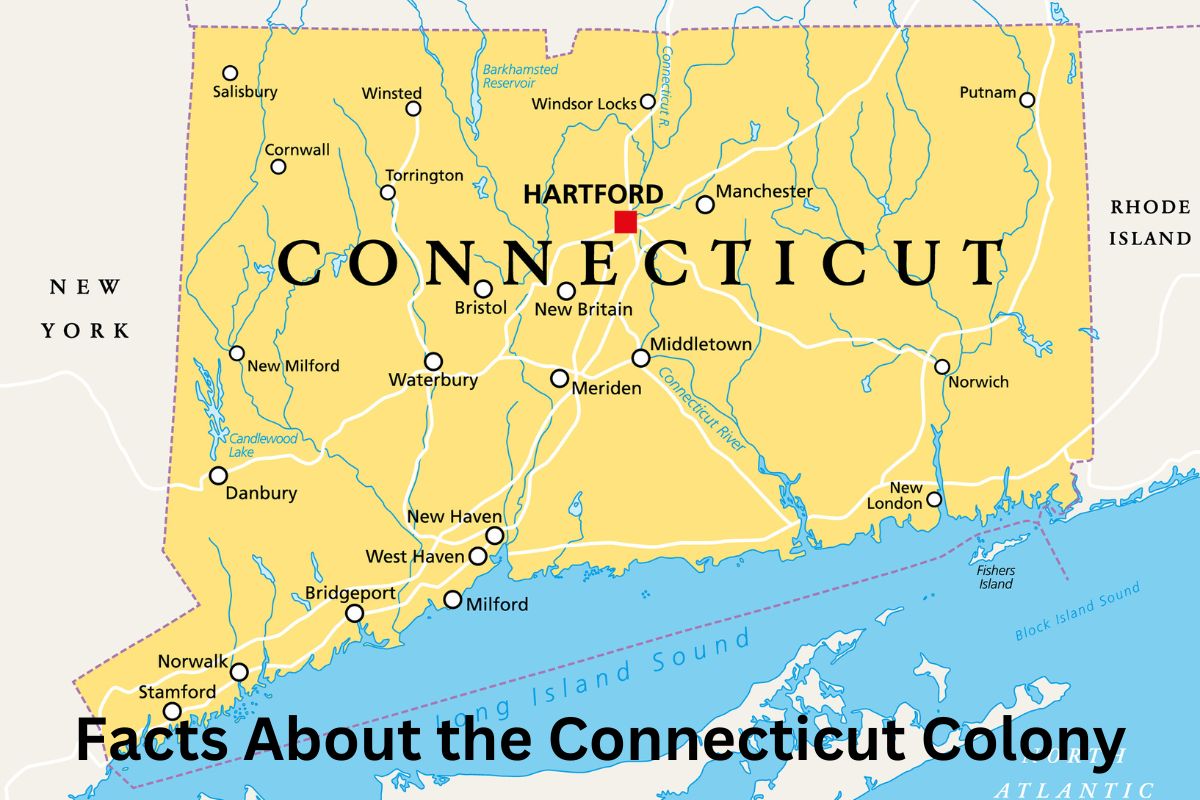
Beyond Hartford, the state abounds with historical treasures. New Haven, site of the former New Haven Colony, is home to the prestigious Yale University, founded in 1701, and boasts a rich architectural heritage and vibrant cultural scene. Along the coast, Mystic Seaport Museum in Mystic offers an immersive journey into Connecticut’s maritime past, with historic ships, a recreated 19th-century seafaring village, and engaging exhibits. Nearby New London, situated on the Thames River, holds Revolutionary War-era forts and a significant whaling history.
For those interested in natural landmarks infused with history, Gillette Castle State Park offers a unique experience, while the picturesque towns of the Litchfield Hills provide a stunning backdrop for exploring quaint villages and historic homes, such as those found in Farmington. Many of these towns offer walking tours, local museums, and preserved colonial-era buildings that bring the stories of the early settlers to life.
Modern Charms and Accommodations
Connecticut today is more than just a historical relic; it’s a dynamic state that caters to a diverse range of lifestyles and travel preferences. For those seeking luxury travel, world-class resorts like Mohegan Sun and Foxwoods Resort Casino offer extensive amenities, entertainment, and fine dining. Boutique hotels and charming bed and breakfasts dot the scenic countryside, providing a cozy and authentic New England experience. From family-friendly attractions to serene natural escapes along the shoreline or in state parks, Connecticut balances its rich past with contemporary attractions.
Whether you’re exploring the academic halls of Yale, delving into the colonial records at the Old State House, or simply enjoying a weekend getaway in a charming historic town, Connecticut invites visitors to uncover its profound legacy. The answer to “When was Connecticut founded?” is multifaceted, pointing to both initial explorations and the groundbreaking adoption of the Fundamental Orders in 1639. This legacy of independence, innovation, and self-determination continues to make Connecticut a compelling destination for anyone eager to journey through the foundational chapters of American history.
LifeOutOfTheBox is a participant in the Amazon Services LLC Associates Program, an affiliate advertising program designed to provide a means for sites to earn advertising fees by advertising and linking to Amazon.com. Amazon, the Amazon logo, AmazonSupply, and the AmazonSupply logo are trademarks of Amazon.com, Inc. or its affiliates. As an Amazon Associate we earn affiliate commissions from qualifying purchases.