
Reno Nevada, often affectionately known as “The Biggest Little City in the World,” offers a unique blend of urban charm and breathtaking natural beauty. Nestled in the high desert at the foot of the majestic Sierra Nevada Mountains, Reno’s climate is as distinctive as its character. For travelers planning a visit, understanding the local weather patterns is paramount, as they significantly influence everything from what to pack to the best time to engage in specific activities or secure the ideal accommodation. Whether you’re considering a ski trip, a summer adventure by Lake Tahoe, or a leisurely exploration of the city’s attractions, a grasp of Reno’s seasonal nuances will ensure a more enjoyable and well-prepared experience.
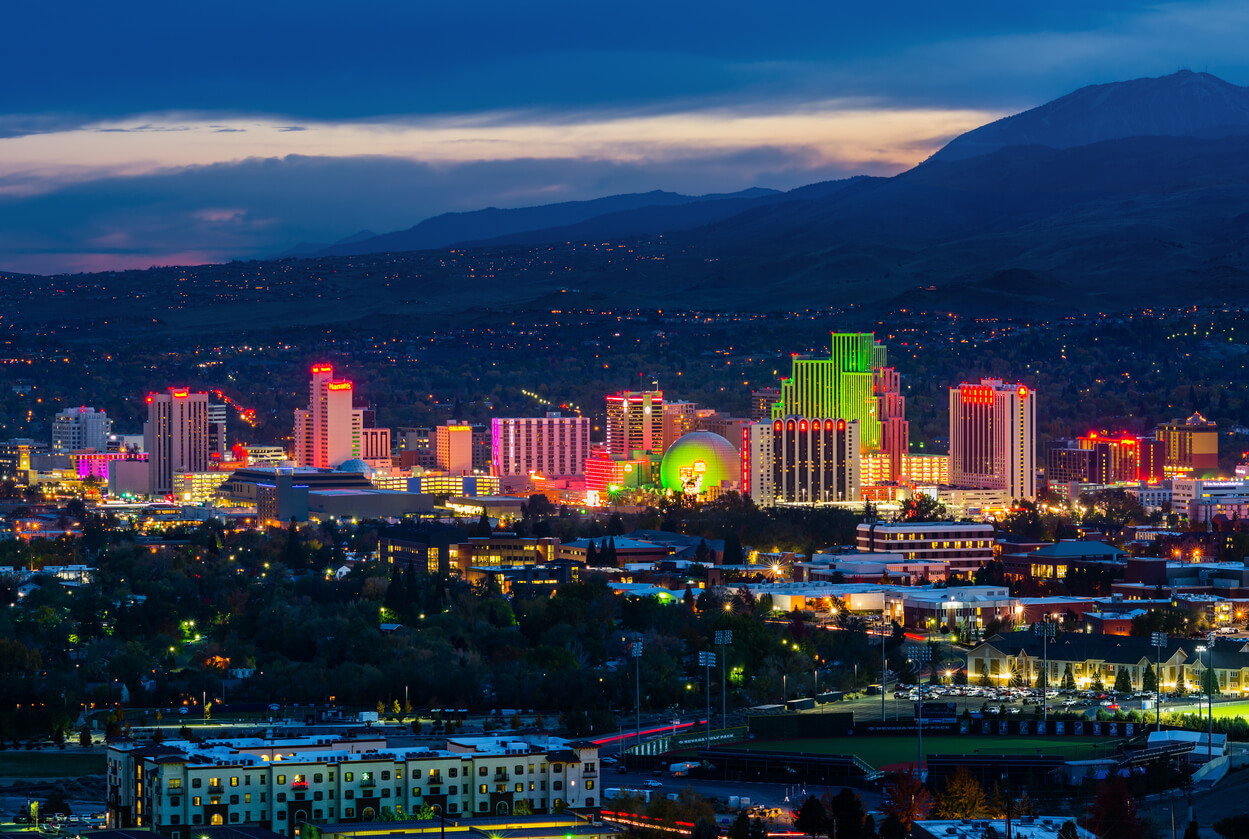
This article delves into the intricacies of Reno’s weather, providing a comprehensive guide for every season. We’ll explore typical temperatures, precipitation levels, and how these conditions shape the travel landscape, tourism opportunities, and the overall lifestyle in this vibrant Nevada gem. From choosing the right resort with the perfect amenities to packing the essential gear, we’ll cover everything you need to know to make your trip to Reno unforgettable, no matter the forecast.
Reno’s Unique High Desert Climate: A Four-Season Playground
Reno’s geographical positioning in the Great Basin, directly east of the formidable Sierra Nevada Mountains, is the primary determinant of its distinctive climate. This high desert environment grants Reno four pronounced seasons, each offering a different set of experiences and atmospheric conditions. The mountains create a significant rain shadow effect, leading to a relatively dry climate with low humidity for much of the year. This means that while temperatures can swing dramatically between day and night, especially in spring and fall, the dryness often makes extreme temperatures feel more manageable.
One of the most appealing aspects of Reno’s weather is the abundance of sunshine, averaging over 250 sunny days per year. This plentiful sunshine, combined with clear skies, contributes to the region’s appeal for outdoor enthusiasts across all seasons. However, the high desert elevation (around 4,500 feet or 1,370 meters) also means that visitors, particularly those from lower altitudes, should be mindful of staying hydrated and protecting themselves from the sun. The crisp air and often brilliant blue skies create a stunning backdrop for the city and its surrounding landmarks. Understanding this overarching climate profile is the first step in preparing for your Reno adventure.
Seasonal Breakdown: What to Expect When You Visit
The best time to visit Reno truly depends on what you’re hoping to experience. Each season presents a unique opportunity, from thrilling winter sports to sun-drenched summer lakeside retreats.
Winter Wonderland (December – February)
Winter in Reno transforms the landscape into a picturesque scene, especially as you ascend towards the surrounding mountains.
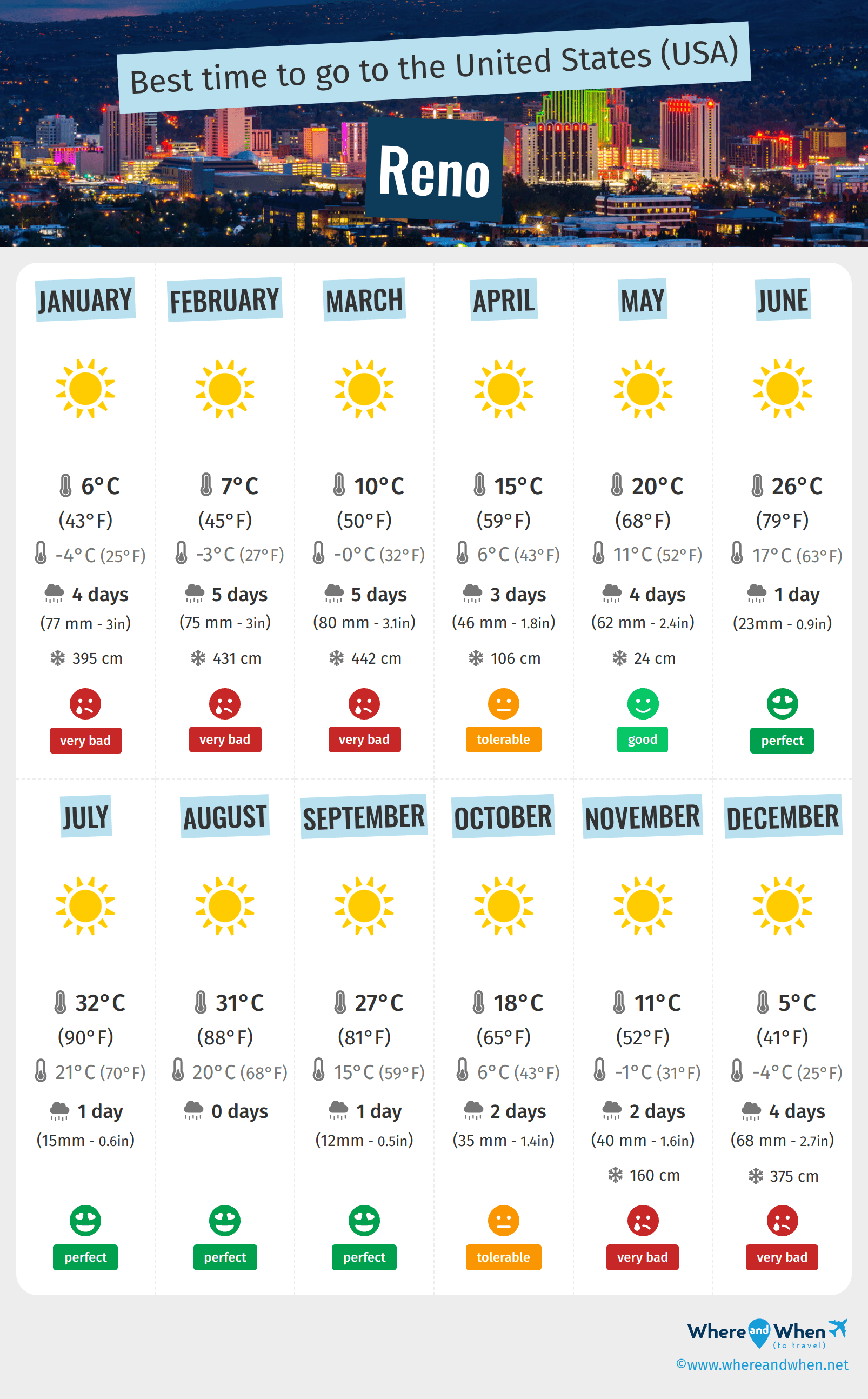
- Temperatures: Daytime highs typically range from the low 40s to mid-50s Fahrenheit (4-13°C), while nighttime lows frequently dip below freezing, often into the 20s F (-6 to -1°C). The cold is usually a dry cold, making it feel less biting than humid climates.
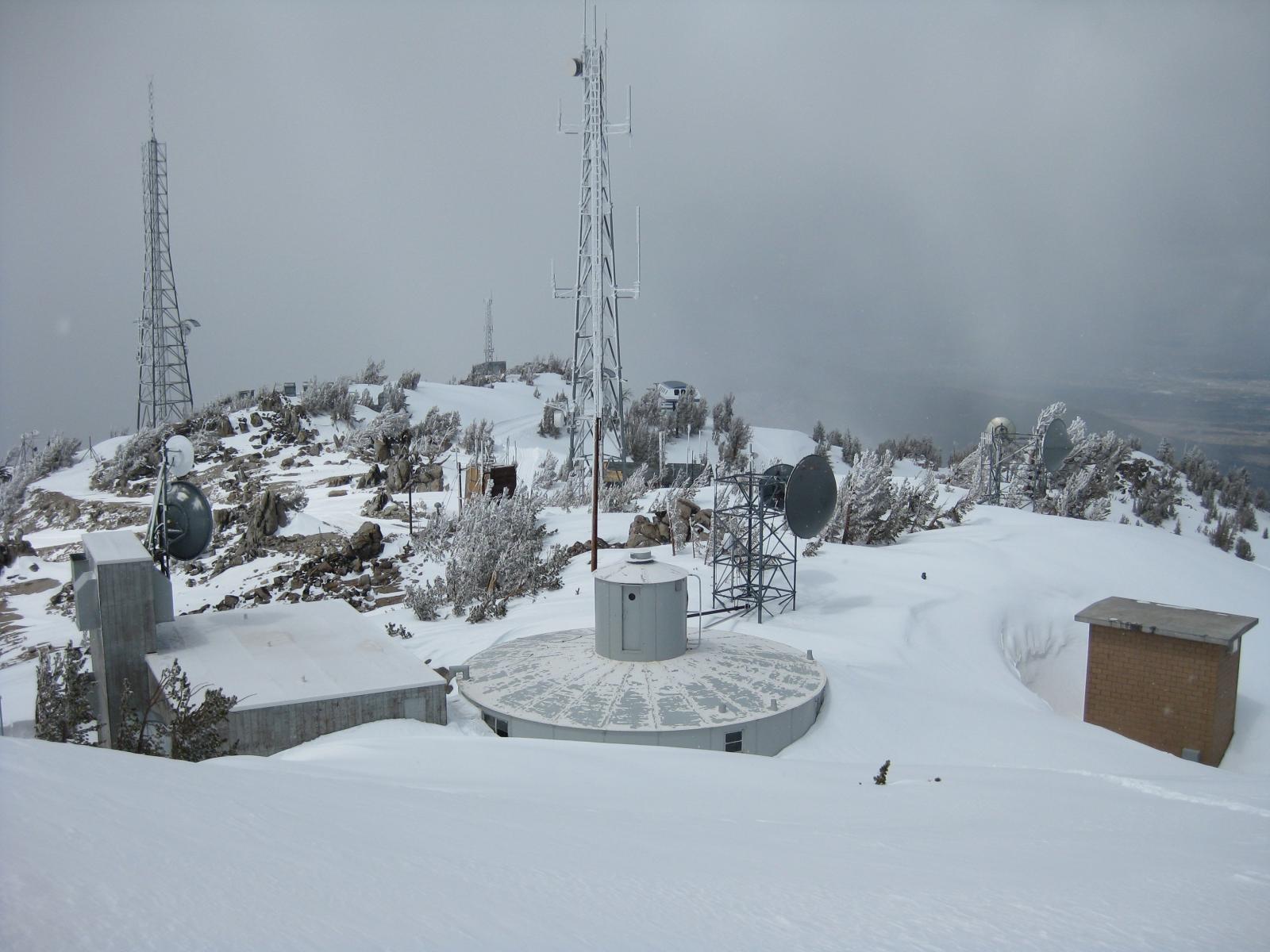
- Precipitation: Reno itself receives a moderate amount of snow, with several dusting events and a few larger storms throughout the season. However, the true magic lies just a short drive away in the Sierra Nevada where heavy snowfall creates world-class conditions for winter sports.
- Activities: This is prime time for skiing and snowboarding at resorts like Mount Rose Ski Tahoe, Palisades Tahoe (formerly Squaw Valley Alpine Meadows), and Heavenly Mountain Resort, all within an hour’s drive of Reno. Beyond the slopes, visitors can explore Reno’s vibrant indoor scene, including its famous casinos, the National Automobile Museum, and numerous restaurants and entertainment venues.
- Travel and Accommodation Impact: Packing warm layers, waterproof outerwear, and sturdy, waterproof boots is essential. For those heading to the mountains, vehicles with four-wheel drive or snow chains are often recommended or even required. Many hotels and resorts in Reno cater to winter visitors, offering heated indoor pools, cozy common areas with fireplaces, and sometimes even ski shuttle services. Long-term stay options might include apartments with access to indoor recreational amenities.
Spring’s Gentle Thaw (March – May)
Spring in Reno is a season of transition, marked by gradually warming temperatures and the subtle awakening of the high desert landscape.
- Temperatures: Early spring sees temperatures similar to winter, with daytime highs in the 50s F (10-15°C), but by late May, they can comfortably reach the 70s F (21-26°C). Nights remain cool, often dipping into the 30s-40s F (0-10°C).
- Precipitation: This period brings occasional rain showers, which nourish the desert flora, leading to beautiful wildflower blooms in certain areas. While the city often sees rain, late-season snow can still fall in the higher elevations, extending the ski season into April or even early May.
- Activities: Spring is ideal for hiking and mountain biking in the foothills as the snow recedes. Golf courses open up, offering verdant greens under pleasant skies. It’s also a fantastic time to explore downtown Reno, visit art galleries, or enjoy a stroll along the Truckee River without the summer crowds.
- Travel and Accommodation Impact: Layered clothing is key for adapting to the fluctuating temperatures throughout the day. Spring is often considered a shoulder season for tourism, meaning visitors can sometimes find better deals on hotels, suites, or villas, making it an attractive option for budget travel. It’s also a great time for families to visit before the peak summer rush, offering a quieter experience.
Sun-Drenched Summer (June – August)
Summer is arguably Reno’s busiest season, drawing visitors to its sunny skies and proximity to outdoor paradise.
- Temperatures: Summers are hot and dry, with daytime temperatures frequently soaring into the 80s and 90s F (27-35°C), and occasionally exceeding 100°F (38°C). The dry heat, however, is often more tolerable than humid conditions. Crucially, evenings cool down significantly, often dropping into the 50s-60s F (10-15°C), providing a welcome respite.
- Precipitation: Summer is the driest season, with very little rainfall. While rare, isolated thunderstorms can occur in late summer, particularly in the mountains.
- Activities: Lake Tahoe becomes the focal point, offering unparalleled opportunities for swimming, boating, paddleboarding, kayaking, and sunbathing. Back in Reno, outdoor festivals like Artown flourish, transforming the city into a hub of arts and culture. Hiking and mountain biking remain popular, with early mornings being the best time to avoid the midday heat.
- Travel and Accommodation Impact: Air conditioning is an absolute necessity in summer accommodation. Hotels with refreshing outdoor pools or those offering easy access to Lake Tahoe are highly sought after. Sun protection (hats, sunglasses, sunscreen) and constant hydration are vital. This is peak tourism season, so booking well in advance is highly recommended, especially for popular resorts and lakeside villas. Luxury travel experiences are abundant, from high-end hotel suites to exclusive lakeside apartments.
Autumn’s Golden Glow (September – November)
Fall in Reno is a spectacular season, cherished for its comfortable temperatures and stunning natural beauty as the leaves change.
- Temperatures: Early fall enjoys pleasant, warm days in the 70s-80s F (21-27°C), gradually transitioning to cooler temperatures in the 40s-60s F (4-15°C) by November. Nights become increasingly crisp, foreshadowing the coming winter.
- Precipitation: Autumn generally remains dry, though precipitation begins to increase towards late fall as winter approaches.
- Activities: This is perhaps the best time for scenic drives, particularly into the Eastern Sierra to witness the breathtaking fall foliage. Hiking and exploring remain popular, with the cooler air making for more comfortable excursions. Events like the world-famous Great Reno Balloon Race in September draw massive crowds, showcasing the clear autumn skies.
- Travel and Accommodation Impact: Packing layers is crucial for autumn, allowing you to adjust to warm afternoons and cool evenings. Like spring, fall can be an excellent shoulder season for travel, offering more moderate crowds and potentially better deals on hotels and accommodation compared to the peak summer months. It’s an ideal time for family trips seeking milder weather and beautiful scenery.
Planning Your Trip: Weather-Wise Travel Tips
Successfully navigating Reno’s varied weather requires thoughtful planning, ensuring your travel experiences are as smooth and enjoyable as possible.
Packing Essentials for Every Season
Regardless of when you visit, layers are universally recommended due to Reno’s significant diurnal temperature swings.
- Winter: Heavy coat, waterproof ski pants, thermal underwear, hats, gloves, scarves, and waterproof boots.
- Spring/Fall: Medium-weight jacket, sweaters, long-sleeved shirts, comfortable walking shoes, and a light rain jacket.
- Summer: Lightweight, breathable clothing, shorts, t-shirts, wide-brimmed hat, sunglasses, plenty of sunscreen, and sandals. Always pack a light jacket or sweater for cool evenings.
Choosing the Best Time to Visit
Your desired activities should dictate your visit timing:
- Skiing/Snowboarding: December to March is prime.
- Lake Activities (swimming, boating): July and August offer the warmest water and air temperatures.
- Hiking, Golf, Sightseeing: Spring (April-May) and Fall (September-October) provide the most comfortable temperatures and stunning natural backdrops.
- Events/Festivals: Check specific event dates, as some, like the Great Reno Balloon Race or Artown, are tied to specific seasons.
Accommodation and Travel Considerations
When booking your stay, think about the weather:
- Winter: Look for hotels or resorts with indoor pools, hot tubs, and fireplaces. Proximity to ski shuttle services can be a huge plus.
- Summer: Air conditioning is non-negotiable. Hotels with outdoor pools are highly desirable. Consider accommodation near the Truckee River for easy access to water-based activities or closer to Lake Tahoe for prime lakeside experiences.
- Transportation: In winter, stay updated on road conditions, especially if you plan to drive to Lake Tahoe or other mountain destinations. Chain controls or 4WD requirements are common. For general travel within Reno, public transport is available, but a car offers the most flexibility for exploring the broader region.
Health and Safety
The high desert environment presents specific considerations:
- Hydration: Always drink plenty of water, especially in the dry summer months and during physical activities.
- Sun Protection: The sun at elevation is intense. Use high-SPF sunscreen, wear hats, and sunglasses year-round.
- Altitude: While Reno isn’t extremely high, some visitors, particularly near Lake Tahoe (6,225 feet or 1,897 meters), may feel the effects of the altitude. Take it easy on your first day, and avoid strenuous activities immediately upon arrival.
Beyond the Forecast: Reno’s Lifestyle Through the Seasons
The weather in Reno isn’t just a backdrop; it’s an integral part of the city’s lifestyle and culture. Renoites have learned to embrace each season, seamlessly transitioning from one outdoor pursuit to the next, fostering a dynamic and adaptable community. This resilience is reflected in the wide array of tourism experiences available, catering to every preference and budget.
For those seeking luxury travel, winter offers opulent ski resorts with gourmet dining and spa amenities, while summer provides exclusive lakeside villas and private boat charters on Lake Tahoe. Many high-end hotels in Reno offer sophisticated suites and impeccable service, ensuring comfort regardless of the weather outside. Conversely, budget travel thrives in the shoulder seasons of spring and fall, with affordable accommodation options and numerous free or low-cost outdoor activities like hiking and exploring the city’s parks.
Family trips will find something to love year-round. Winter means snow play and sledding; spring offers nature walks and playground visits; summer is all about the lake and outdoor festivals; and fall provides pumpkin patches and scenic drives. Each season offers unique opportunities for creating lasting memories, making Reno a versatile destination for all types of travelers. Even business stays benefit from Reno’s climate, with clear skies making for pleasant commutes and the option to unwind with outdoor recreation after work, whether it’s a brisk walk along the Truckee River or a quick ski run depending on the season.
In conclusion, Reno’s weather is a captivating element of its charm, offering distinct seasonal characteristics that shape the rhythm of life and travel in this part of the United States. By understanding and preparing for these climatic variations, visitors can fully immerse themselves in all that “The Biggest Little City” and its spectacular surroundings have to offer. Whether you’re chasing powder in the Sierra Nevada Mountains, soaking up the summer sun on Lake Tahoe, or enjoying the vibrant culture of Reno in the milder seasons, a well-informed approach to the weather will undoubtedly enhance your experience. So, check the forecast, pack accordingly, and get ready to discover the magic of Reno, Nevada, year-round.
LifeOutOfTheBox is a participant in the Amazon Services LLC Associates Program, an affiliate advertising program designed to provide a means for sites to earn advertising fees by advertising and linking to Amazon.com. Amazon, the Amazon logo, AmazonSupply, and the AmazonSupply logo are trademarks of Amazon.com, Inc. or its affiliates. As an Amazon Associate we earn affiliate commissions from qualifying purchases.