
For many, the dream of a life characterized by flexibility, financial independence, and the ability to dictate one’s own professional journey often intersects with the allure of a dynamic location. Few places embody this intersection quite like Florida, a state synonymous with sunshine, captivating destinations, and an ever-evolving landscape of opportunity. If you’ve ever envisioned a career that allows you to assist others in discovering their own slice of paradise – whether it’s a permanent residence, a vacation home, or a shrewd investment property – then delving into how to obtain a real estate license in Florida is your first step toward transforming that vision into a vibrant reality.

The real estate profession in the Sunshine State is far more than just buying and selling properties; it’s about connecting people with lifestyles, facilitating dreams, and playing a pivotal role in the vibrant hospitality and tourism sectors. From the bustling urban energy of Miami and Orlando to the tranquil, pristine beaches of Naples and Sarasota, Florida’s diverse market offers an expansive canvas for ambitious real estate professionals. This guide will navigate you through the essential steps, requirements, and ongoing commitments needed to secure your real estate license, all while highlighting why this career path perfectly complements a passion for travel, luxurious living, and understanding unique accommodation needs.
Why Consider a Real Estate Career in the Sunshine State?
Florida’s magnetic appeal isn’t limited to its world-class attractions and pristine natural landmarks; it extends profoundly to its real estate market. The state consistently ranks among the top destinations for relocation, tourism, and investment, making it a fertile ground for real estate professionals. Becoming a licensed agent here offers an unparalleled opportunity to blend professional aspirations with a desirable lifestyle, directly engaging with the very elements that draw millions to Florida each year.
The Allure of Florida’s Diverse Markets
The real estate landscape in Florida is remarkably varied, catering to an eclectic mix of buyers and investors. This diversity provides agents with numerous avenues for specialization and growth, allowing them to align their professional interests with specific market segments.
For those drawn to the bustling energy of urban centers, the markets in Miami, Fort Lauderdale, and Tampa offer a thrilling environment. Here, agents might specialize in high-rise condominiums, luxury apartments, or commercial properties that house thriving businesses and world-renowned hotels. Imagine facilitating the sale of a prime retail space in South Beach or helping a developer acquire land for a new boutique hotel near the St. Pete Pier. These opportunities directly tie into the hospitality sector, where understanding the nuances of hotel operations, tourism trends, and accommodation demands can give an agent a significant edge.
Conversely, agents with a passion for leisure and relaxation might find their niche in the numerous resort communities and vacation destinations scattered across the state. Areas like Orlando, home to iconic theme parks and countless holiday rentals, or the tranquil Gulf Coast cities like Naples and Sarasota, known for their exquisite beaches and luxury villas, present different but equally exciting prospects. In these markets, agents often assist clients looking for second homes, investment properties to be used as short-term vacation rentals, or even advising on the acquisition of existing hotels or resorts. This involves a deep understanding of the local tourism economy, seasonal demand, and the specific amenities that attract different types of travelers – from family trips to upscale business stays.
Furthermore, Florida’s appeal as a retirement destination creates a consistent demand for residential properties, particularly those offering easy access to recreational activities, healthcare, and cultural experiences. This market segment often involves a more personal touch, helping individuals find their dream long-term stay in communities designed for active adults.
The continuous influx of tourists and new residents means a perpetual demand for accommodation, both temporary and permanent. As a real estate agent, you become a key player in this ecosystem, whether you’re helping a family find their ideal vacation rental near Walt Disney World Resort or assisting an investor in purchasing a hotel for redevelopment. The diverse types of properties available, from quaint cottages to sprawling luxury estates, and the myriad reasons people choose Florida – for travel, relocation, or investment – underscore the dynamic and rewarding nature of a real estate career here.
Lifestyle and Flexibility in a Desirable Location
Beyond the financial prospects, a real estate career in Florida offers significant lifestyle advantages that resonate deeply with those who value freedom and flexibility. The profession is inherently entrepreneurial, allowing agents to largely set their own schedules, manage their client portfolio, and define their work-life balance.
For individuals with a love for travel, this flexibility is invaluable. Imagine structuring your workweek to allow for weekend getaways to the Florida Keys or exploring new destinations within the state, gaining firsthand insight into potential investment hotspots or unique local cultures. Your work can become an extension of your passion for exploration, as you regularly visit different neighborhoods, coastal towns, and natural landmarks, each offering its own charm and appeal to prospective buyers.
The ability to work independently also means that your earning potential is directly tied to your effort and skill. Successful agents often command substantial incomes, which can in turn fund extensive travel experiences, luxury accommodations, and a lifestyle of comfort and adventure. This career path isn’t just about selling homes; it’s about enabling a life where you can enjoy the very best that travel and experiences have to offer, both personally and professionally. Being immersed in a state that is a premier tourist destination means constant exposure to diverse perspectives, global cultures, and an appreciation for what makes a place truly special – all insights that can enhance your effectiveness as a real estate professional.
The Essential Steps to Becoming a Licensed Florida Real Estate Agent
Embarking on a career in Florida real estate requires adherence to a clear set of steps mandated by the state. These steps ensure that all licensed professionals possess the necessary knowledge, ethical standards, and legal understanding to serve the public effectively.
Eligibility Requirements and Pre-License Education
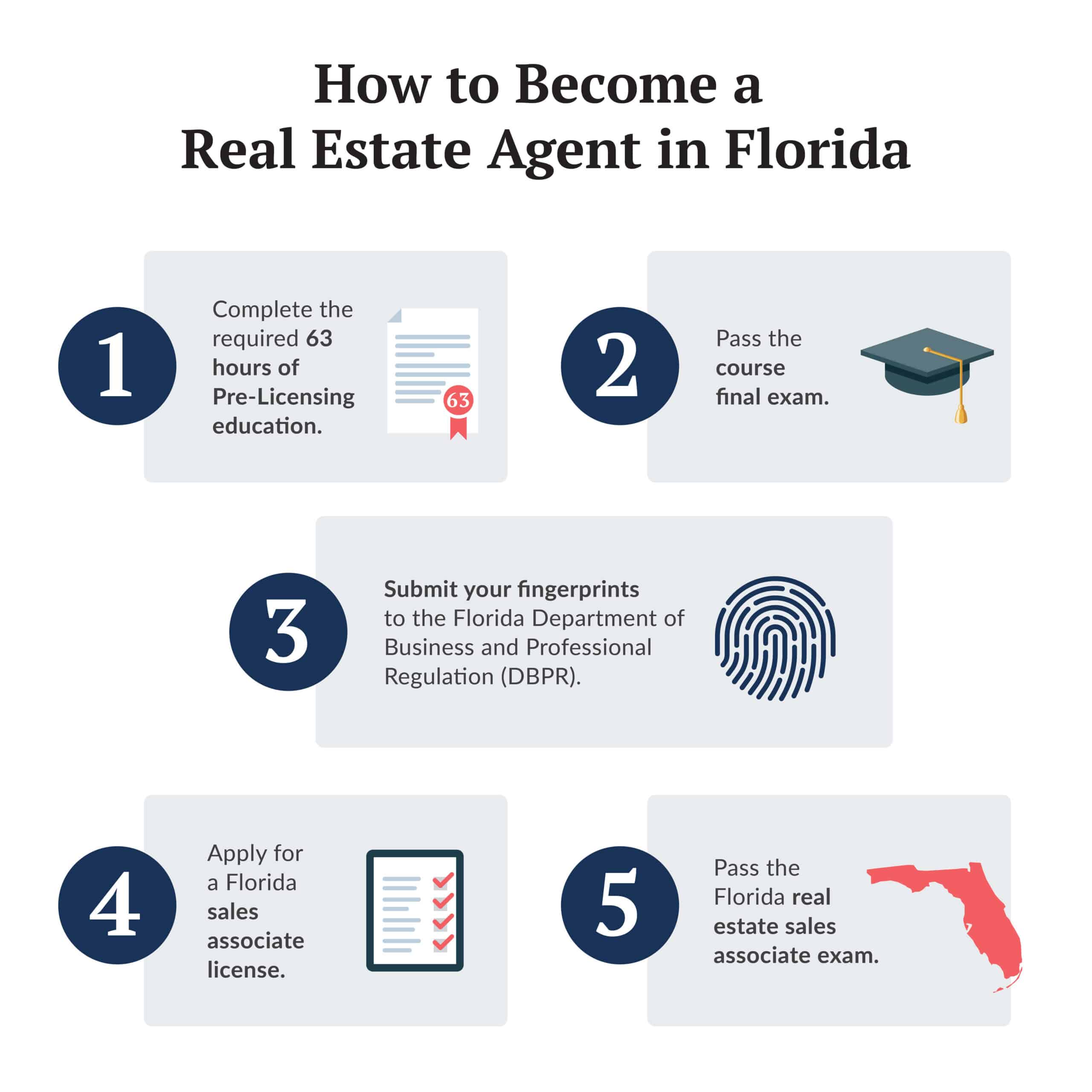
The journey begins with meeting fundamental eligibility criteria. To apply for a real estate sales associate license in Florida, you must be at least 18 years old and possess a high school diploma or its equivalent. Residency in Florida is not a prerequisite to apply for the license, which can be advantageous for those considering a move to the state. Additionally, applicants must hold a valid Social Security number. Honesty and integrity are paramount in real estate, so it’s important to have a clean background, as the application will delve into any prior criminal history or disciplinary actions related to other professional licenses. Any past legal issues must be fully disclosed, as failure to do so can lead to denial of the application.
Once these basic requirements are met, the next critical step is completing the mandatory pre-license education. Florida requires all prospective sales associates to successfully complete a 63-hour pre-license course. This course is comprehensive, covering a broad spectrum of topics essential for real estate practice. Key areas of study include:
- Real Estate Law: Understanding the legal framework governing real estate transactions, contracts, property rights, and agency relationships. This is crucial for protecting both the client and the agent.
- Appraisal Principles: Learning how to estimate property values, which is fundamental for pricing homes correctly and advising clients on investment potential, especially relevant for those looking into vacation properties or commercial hotel sites.
- Brokerage Operations: Gaining insight into how real estate brokerages function, from marketing and advertising to managing trust accounts and overseeing agents.
- Finance: Grasping the basics of real estate finance, including mortgages, loans, and investment analysis, vital for clients purchasing everything from budget-friendly apartments to luxury resorts.
- Property Management: Understanding the principles of managing residential and commercial properties, a skill invaluable for agents working with investors in long-term stays or vacation rentals.
- Ethics and Professional Practices: Developing a strong ethical compass and understanding the professional standards expected of a real estate licensee.
These courses are offered by various state-approved providers, including community colleges and private real estate schools, with options for in-person or online learning. Many aspiring agents choose online programs for their flexibility, allowing them to balance their studies with other commitments, including travel plans. Upon completion of the 63-hour course, students must pass a final exam administered by the school with a score of 70% or higher. This school exam is a prerequisite for being able to sit for the state licensing exam.
Application, Fingerprinting, and State Exam
With the pre-license education successfully completed, the focus shifts to the official application process. The application for a real estate sales associate license is submitted to the Florida Department of Business and Professional Regulation (DBPR). This involves filling out a detailed form, providing personal information, and disclosing any criminal history.
A mandatory part of the application is fingerprinting. All applicants must submit electronic fingerprints for a background check. This process is usually conducted at a state-approved vendor, ensuring that the necessary criminal history record information is forwarded to the Florida Department of Law Enforcement and the Federal Bureau of Investigation (FBI). The results of this background check are crucial for the DBPR’s review of your application. It’s important to submit fingerprints as early as possible in the application process, as processing times can vary.
Once your application is approved by the DBPR, you will receive an authorization to take the state licensing exam. This is the final hurdle to obtaining your license. The Florida Real Estate Sales Associate Examination is a challenging test consisting of 100 multiple-choice questions, with a passing score of 75% or higher. The exam covers all the material taught in the 63-hour pre-license course, assessing your knowledge of real estate principles, practices, and Florida real estate law. It’s administered by a professional testing service at various locations across the state. Many candidates find it beneficial to enroll in exam prep courses or utilize study guides and practice tests to enhance their chances of success. Passing this exam is the culmination of your initial efforts, opening the door to a promising career in Florida’s vibrant real estate market.
Navigating the Post-License Journey and Continued Success
Earning your real estate license is a significant achievement, but it’s merely the beginning of a dynamic and rewarding career. The journey continues with ongoing education, strategic choices in brokerage affiliation, and the opportunity to specialize in niche markets that align with Florida’s unique appeal to travelers, investors, and residents alike.
Post-License Education and Renewal
To maintain an active real estate license in Florida, newly licensed sales associates are required to complete a 45-hour post-license course before their first license renewal. This requirement is crucial; failure to complete the post-license education within the specified timeframe will result in the license becoming null and void, necessitating a complete re-qualification process. The post-license course is designed to expand upon the foundational knowledge gained during pre-licensing, delving deeper into practical applications, current market trends, and advanced topics that help new agents navigate real-world scenarios more effectively. It emphasizes skills essential for sustained success, from marketing strategies to complex transaction management.
After the initial renewal, all Florida real estate licensees must complete 14 hours of continuing education (CE) every two years. This CE requirement ensures that agents remain current with the latest laws, regulations, and industry practices. The 14 hours typically include a core law component and ethics training, alongside elective courses that allow agents to explore areas of personal interest or specialization. This commitment to ongoing learning underscores the professionalism of the industry and helps agents adapt to the evolving needs of clients, whether they are looking for a luxury suite in a resort area, an investment property, or simply general accommodation. These continuing education opportunities often provide insights into new technologies, marketing techniques, and even emerging markets within Florida that might be appealing to tourists and residents.
Specializing in Niche Markets
One of the most exciting aspects of a real estate career in Florida, especially for those interested in travel, hospitality, and luxury lifestyles, is the potential for specialization. By focusing on a particular niche, agents can develop deep expertise, build a strong reputation, and attract a targeted clientele.
Consider the luxury travel market. Florida is replete with high-net-worth individuals and international buyers seeking exclusive properties, whether it’s a beachfront villa in Palm Beach, a sprawling estate in Windermere, or a penthouse overlooking Biscayne Bay. Agents specializing in luxury real estate must possess exceptional negotiation skills, an understanding of global market trends, and a network that extends beyond traditional local buyers. They might cater to clients looking for homes near prestigious golf courses, marinas for their yachts, or properties offering unparalleled amenities and services akin to a five-star hotel. This specialization often involves a high level of personalized service, discretion, and an understanding of the unique requirements of affluent buyers, many of whom frequently travel and demand top-tier accommodation experiences.
Another compelling niche is investment properties and vacation rentals. Given Florida’s status as a top tourist destination, there’s a constant demand for properties that can generate rental income. Agents can become experts in advising clients on purchasing condos in Orlando that cater to theme park visitors, beach houses along the Emerald Coast for seasonal renters, or even multi-unit properties suitable for long-term stays. This requires knowledge of local zoning laws, short-term rental regulations, property management companies, and the specific attractions and amenities that draw tourists to different areas. An agent specializing in this area might also work with investors interested in commercial real estate, such as acquiring existing hotels, resorts, or developing new accommodation options. Understanding the tourism industry’s ebb and flow, booking platforms, and the intricacies of making a property a desirable vacation spot become paramount.
Furthermore, some agents might specialize in commercial real estate, focusing on hotels, resorts, or other hospitality businesses. This niche requires a different skill set, including understanding business valuations, market analysis for the tourism sector, and navigating complex commercial transactions. Imagine assisting in the sale of a historic landmark hotel in St. Augustine or helping an international hotel chain acquire land for a new resort development near a popular natural attraction.
The opportunities to integrate a passion for travel, hotels, tourism, and lifestyle into your real estate career in Florida are vast. By committing to continuous learning and strategically choosing a niche that excites you, you can build a highly successful and personally fulfilling career that not only helps others find their perfect property but also allows you to live out of the box, exploring the incredible destinations and experiences that make Florida so special. The journey to becoming a licensed real estate agent in this dynamic state is an investment in your future, promising a career filled with diverse interactions, intellectual challenges, and the potential for exceptional personal and professional growth.
LifeOutOfTheBox is a participant in the Amazon Services LLC Associates Program, an affiliate advertising program designed to provide a means for sites to earn advertising fees by advertising and linking to Amazon.com. Amazon, the Amazon logo, AmazonSupply, and the AmazonSupply logo are trademarks of Amazon.com, Inc. or its affiliates. As an Amazon Associate we earn affiliate commissions from qualifying purchases.