
Securing a birth certificate in Florida, often known as the Sunshine State, is a crucial administrative task that touches various aspects of life, from travel and identification to legal and educational milestones. Whether you’re a long-time resident, a new parent welcoming a child in this vibrant state, or someone who recently moved here, understanding the process for obtaining this foundational document is essential. A birth certificate isn’t just a piece of paper; it’s a gateway to your identity, allowing you to prove your age, citizenship, and parentage, which are indispensable for countless official procedures. For those who frequently explore new destinations or plan family trips, a certified birth certificate is often the first step in acquiring a passport, making it directly relevant to the world of travel and tourism that LifeOutTheBox celebrates.
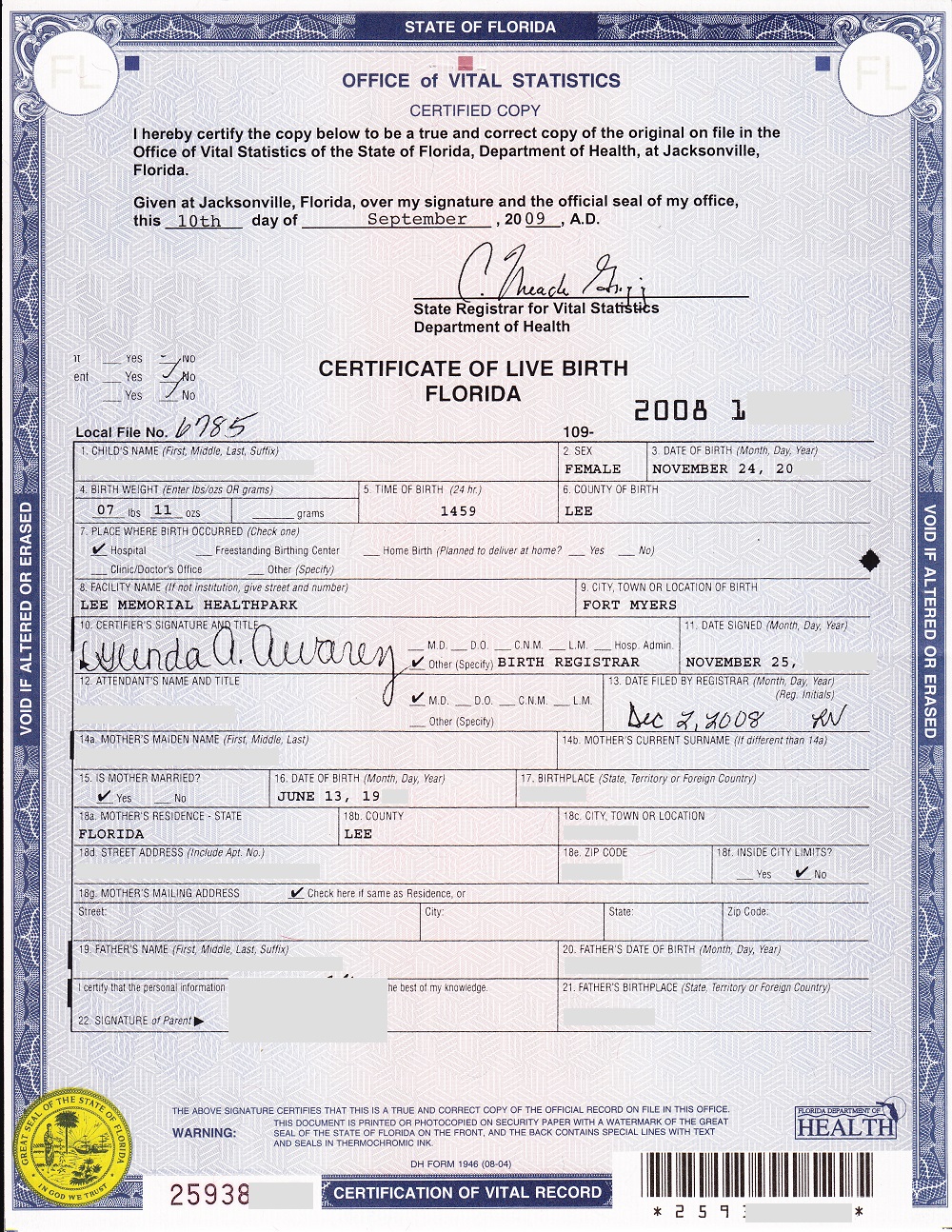
This comprehensive guide will demystify the process of obtaining a birth certificate in Florida, covering everything from who is eligible to request one, to the various application methods, required documentation, associated fees, and processing times. We’ll also delve into special circumstances, such as amendments and retrieving older records, ensuring you have all the information needed to navigate this important administrative journey smoothly.
Understanding Your Need: Why a Birth Certificate Matters in the Sunshine State
A birth certificate is more than just a historical record; it’s a vital identity document with far-reaching implications. For individuals and families in Florida, its importance cannot be overstated, particularly when considering the diverse lifestyle and travel opportunities the state offers.
Essential for Identification and Travel
The most immediate and often recognized use of a birth certificate is as a primary form of identification. It serves as irrefutable proof of your birth date, birthplace, and parentage, laying the groundwork for many other official documents.
- Passport Applications: For any individual, especially families planning international travel from exciting cities like Miami or Orlando, a certified birth certificate is a mandatory document for applying for a United States passport. This is particularly critical for minors, as their birth certificate proves parental relationship for international travel consent.
- Driver’s Licenses and State IDs: While not always required as the only proof, a birth certificate can be a key document when applying for or renewing a driver’s license or state identification card, especially for those new to Florida.
- School Enrollment and Higher Education: From enrolling a child in kindergarten in Tampa to applying for colleges and universities across the state, a birth certificate confirms a student’s age and legal identity.
- Social Security Benefits: Establishing eligibility for Social Security numbers and various benefits requires proof of birth, which a certified birth certificate provides.
- Marriage Licenses and Other Legal Processes: When getting married, obtaining a marriage license in Florida often requires presenting a birth certificate to verify age and identity. It is also critical for inheritance claims, probate, and other legal proceedings.
- Employment Verification: Some employers, particularly those requiring federal identification or background checks, may request a birth certificate as part of the hiring process.
Who Can Request a Certified Copy?
Due to the sensitive nature of the information contained within a birth certificate, access to certified copies is restricted by Florida law to protect individuals’ privacy. Only certain authorized individuals can obtain a certified copy. However, informational copies, which do not carry legal validity, may be accessible more broadly for genealogical purposes.
- The Registrant: The person named on the certificate, provided they are 18 years of age or older.
- Parents Listed on the Certificate: The parents whose names are recorded on the birth certificate can request a copy of their child’s record.
- Legal Guardian: An individual who has been appointed as the legal guardian of the registrant by a court order must present a certified copy of the court order.
- Spouse, Child, or Sibling (if 18 or older): These individuals can obtain a certified copy if they can provide documentation proving their relationship to the registrant. This might include their own birth certificate showing a common parent, or a marriage certificate for a spouse.
- Legal Representatives: Attorneys representing any of the above authorized individuals, or those with a court order, can request a certified copy on behalf of their client.
- Genealogical Requests: While typically not for certified copies, individuals conducting genealogical research can often obtain non-certified, informational copies of older records (usually 100 years or older) that are considered public record, to explore family history.
Understanding these restrictions is crucial to ensure a smooth application process, as improper requests will be denied, leading to delays.
Navigating the Application Process in Florida
Obtaining a birth certificate in Florida involves several steps, from choosing your application method to gathering the necessary documents and understanding the associated fees. The process is designed to be accessible, offering multiple avenues for application depending on your urgency and location.
Where to Apply: Your Options in Florida
Florida provides several convenient options for requesting a birth certificate, catering to different needs and preferences.
- Florida Department of Health, Bureau of Vital Statistics (State Office):
The central repository for all birth records in Florida is the Florida Department of Health, Bureau of Vital Statistics, located in Jacksonville. This office processes mail-in requests from across the state and beyond. While it’s the primary hub, direct walk-in service for individuals is often handled more efficiently at the county level for faster processing. The state office is ideal for those who prefer to apply by mail or for complex requests. - County Health Departments (Local Vital Statistics Offices):
For many residents, the most convenient option is to apply in person at their local county health department. These offices, often referred to as local vital statistics offices, are spread throughout Florida and can issue birth certificates on the spot for births that occurred within the state. This is typically the fastest method for obtaining a certified copy. Whether you’re in Miami, Orlando, Tampa, Fort Lauderdale, or any other county, a quick search for your local health department will provide their specific hours and requirements. This option is especially beneficial for those who need a document quickly for travel plans or other urgent matters. - Online Services (Third-Party Vendors):
Several authorized third-party vendors, such as VitalChek, partner with the Florida Department of Health to offer online ordering services. These platforms provide a convenient way to apply from anywhere, often with options for expedited processing and shipping. While they charge an additional service fee on top of the state-mandated fees, the convenience and speed can be invaluable for individuals who cannot visit an office in person or need their certificate quickly. Always ensure you are using an officially authorized vendor to protect your personal information. - Mail-In Applications:
Applying by mail is a straightforward option, especially for those who do not live near a county health department or prefer to handle the request from home. You will need to download the official application form from the Florida Department of Health website, complete it accurately, have it notarized (if required), include a photocopy of your valid identification, and mail it along with the appropriate payment to the Bureau of Vital Statistics in Jacksonville. While convenient, this method typically has the longest processing times.
Required Documentation and Information
Regardless of the method you choose, you will need to provide specific information and documentation to successfully obtain a birth certificate. Accuracy and completeness are key to avoiding delays.
- Completed Application Form: This form will ask for details about the registrant (the person whose birth certificate is being requested) and their parents, including full names, dates of birth, and the county of birth. Ensure all information matches the original birth record as closely as possible.
- Valid Photo Identification: A clear, legible photocopy of your valid government-issued photo identification is almost always required. Acceptable forms of ID typically include a United States driver’s license, state identification card, passport, or military ID. The ID must be current and show your signature.
- Proof of Relationship: If you are not the registrant or a parent listed on the certificate, you will need to provide documentation proving your legal relationship. For a spouse, a marriage certificate is needed. For a child or sibling, a birth certificate showing common parentage or other legal documents may be required.
- Notarization: Some application forms, particularly for mail-in requests or if your ID is not easily verifiable, may require notarization to verify your identity and signature. Always check the specific instructions on the application form you are using.
- Payment: The correct fee must accompany your application. Payment methods vary by application channel.
Understanding Fees and Payment Methods
The cost of a birth certificate in Florida is standardized, though additional fees may apply depending on your chosen application method and any expedited services.
- Standard Fee: The base fee for a certified copy of a birth certificate is set by the state. This covers the search and issuance of one copy.
- Additional Copies: If you need multiple certified copies (which is often recommended for various official uses), each additional copy requested at the same time typically incurs a smaller, reduced fee.
- Expedited Services: Third-party online vendors and express shipping options will add service charges and shipping costs to the total.
- Payment Methods:
- In-Person: County health departments usually accept cash, credit/debit cards, and money orders.
- Mail-In: Checks or money orders payable to “Vital Statistics” or “Florida Department of Health” are standard. Cash should generally not be sent through the mail.
- Online: Third-party vendors accept major credit and debit cards.
Always verify the current fees on the official Florida Department of Health website or with your local county health department before submitting your application.
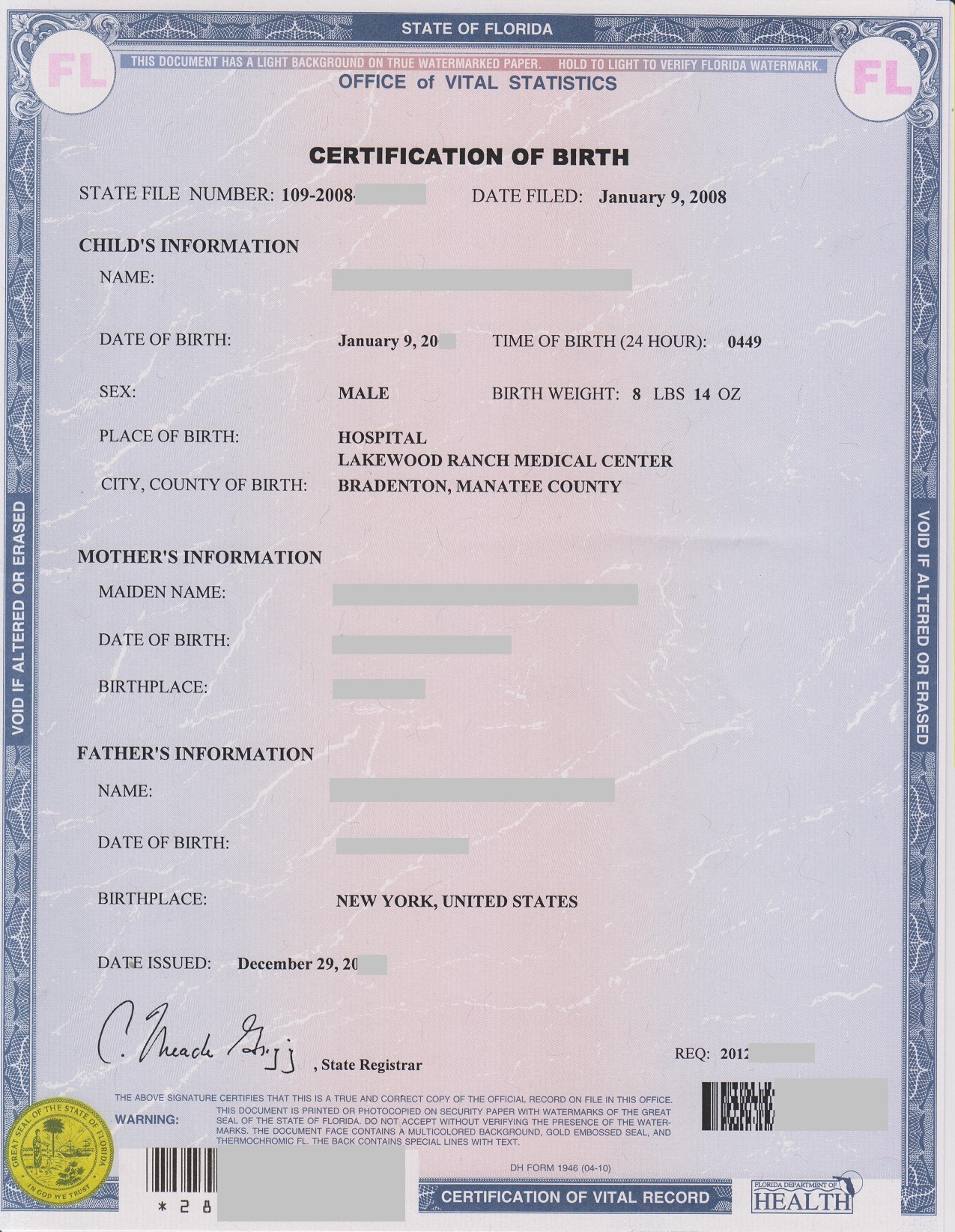
Processing Times and Expedited Services
Understanding how long it takes to receive your birth certificate is critical, especially when planning travel or needing the document for time-sensitive matters. Processing times can vary significantly based on the application method you choose.
General Processing Timelines
- Mail-In Applications: These typically have the longest processing times. After your application is received by the Bureau of Vital Statistics in Jacksonville, it can take several weeks, sometimes even longer during peak periods, for the request to be processed and the certificate mailed back to you. This timeline does not include postal delivery time.
- In-Person Applications at County Health Departments: This is generally the fastest method. Many county health departments are equipped to search for records and print certified copies on the same day, often while you wait. This immediate turnaround is invaluable for urgent needs.
- Online Services (Third-Party Vendors): While the processing time by the state office might be similar to mail-in, authorized online vendors can expedite the submission of your request and offer faster shipping options. The overall time from order to delivery can be significantly shorter than mail, often within a few business days to a week, depending on the shipping method selected.
When You Need It Fast: Expedited Options
For those moments when you realize you need a birth certificate urgently – perhaps for a last-minute passport application before an international flight from Orlando International Airport, or for an unforeseen legal requirement – Florida offers ways to speed up the process.
- Applying In-Person: As mentioned, visiting your local county health department is often the most reliable way to obtain a birth certificate quickly. Many offer walk-in services that result in same-day issuance. It’s advisable to check the specific hours and requirements of your local office before visiting.
- Utilizing Authorized Online Expedited Services: Third-party providers like VitalChek typically offer various levels of expedited service, including express shipping options (e.g., overnight or 2-day delivery). While these come with additional fees, they can significantly reduce the overall waiting period once the document has been processed by the state. Be aware that “expedited” usually refers to the speed of delivery after the record is found and printed, rather than immediately jumping the queue for the initial record search at the state level.
- Contacting the State Office for Special Circumstances: In rare and extreme emergencies, such as a documented medical emergency requiring international travel, it might be possible to appeal to the Florida Department of Health for a more rapid turnaround. However, these situations are evaluated on a case-by-case basis and require substantial proof of urgency.
Always plan ahead whenever possible, especially for travel-related documents, as relying solely on expedited options can incur higher costs and still be subject to unforeseen delays.
Special Circumstances and Common Queries
Beyond the standard application process, individuals may encounter specific situations that require a more nuanced approach to obtaining or modifying a birth certificate in Florida.
Amending a Birth Certificate
Mistakes happen, or life circumstances change, necessitating an amendment to a birth certificate. Florida law allows for corrections and changes under specific conditions.
- Corrections for Errors: If there is a clerical error on the original certificate (e.g., a misspelled name, incorrect date), an amendment can be requested. This typically requires submitting an application for correction along with documentary evidence proving the correct information (e.g., hospital records, older identification).
- Changes Due to Adoption or Paternity Establishment: When a child is adopted, a new birth certificate is issued reflecting the adoptive parents, and the original certificate is sealed. Similarly, if paternity is legally established after the original birth registration, the father’s name can be added to the certificate through an amendment process. These situations require certified court orders.
- Legal Name Changes: If an individual legally changes their name (e.g., through marriage, divorce, or a court order), the birth certificate can be amended to reflect the new name. This requires presenting the official court order or marriage certificate.
The process for amendments often involves submitting a specific amendment application form to the Florida Department of Health, along with supporting legal documents and applicable fees. It’s a more complex process than simply requesting a copy, so thorough preparation is essential.
Births Outside of Florida (or United States)
If you reside in Florida but were born in another state or country, you would need to contact the vital records office of your birth state or the appropriate authority in your country of birth to obtain your birth certificate.
- Born in Another U.S. State: Each state has its own vital records department. You would need to follow the procedures specific to that state.
- Born Outside the United States (U.S. Citizen): For United States citizens born abroad, the official record of birth is typically a Consular Report of Birth Abroad (CRBA) issued by the U.S. Department of State. You would apply for this document through the State Department. If a CRBA was never issued, a foreign birth certificate would be the primary document.
Retrieving Older Records and Genealogical Research
For individuals tracing their family history or needing older records, the access rules can be slightly different.
- Informational vs. Certified Copies: As mentioned, certified copies are restricted to authorized individuals. However, for genealogical purposes, non-certified “informational” copies of older records (typically those 100 years or older) are often considered public record and can be obtained by anyone. These copies bear a stamp indicating they are not for legal use.
- Accessing Older Records: The Florida Department of Health provides information on how to access historical records. Genealogical societies and libraries, especially those in cities like Tallahassee or St. Petersburg which have strong historical archives, can also be valuable resources for finding information related to older birth records.
It’s always best to consult the official guidelines provided by the Florida Department of Health or your local county health department for the most current and accurate information regarding special circumstances.
Conclusion
Obtaining a birth certificate in Florida is a fundamental administrative process that underpins countless aspects of personal identification and legal standing. From securing a passport for international adventures out of bustling Miami, to enrolling children in schools in Sarasota, or simply proving your identity for various services across the Sunshine State, this document is truly indispensable.
By understanding who can request a certified copy, the various application channels available—whether through the state office in Jacksonville, a convenient local county health department, or an authorized online service—and the specific documentation and fees involved, you can navigate this process with confidence. While mail-in applications offer convenience, in-person visits to county health departments remain the fastest option for urgent needs, showcasing Florida’s commitment to accessible public services.
For those planning their next great escape or managing the administrative side of a vibrant lifestyle, having your essential documents in order is paramount. Proactively securing your birth certificate ensures that you’re always ready for whatever life—and travel—throws your way. By following the guidelines outlined in this article, you can efficiently obtain this vital record, allowing you to focus on enjoying all the incredible experiences and opportunities Florida has to offer.
LifeOutOfTheBox is a participant in the Amazon Services LLC Associates Program, an affiliate advertising program designed to provide a means for sites to earn advertising fees by advertising and linking to Amazon.com. Amazon, the Amazon logo, AmazonSupply, and the AmazonSupply logo are trademarks of Amazon.com, Inc. or its affiliates. As an Amazon Associate we earn affiliate commissions from qualifying purchases.