
Miami, Florida – the Magic City – is renowned globally for its vibrant culture, stunning beaches, sizzling nightlife, and, of course, its famously warm weather. For anyone planning a visit, understanding the temperature in Miami isn’t just a matter of curiosity; it’s fundamental to packing appropriately, scheduling activities, and ensuring a comfortable and memorable trip. Unlike many destinations that experience four distinct seasons with dramatic temperature shifts, Miami, located in South Florida, boasts a tropical monsoon climate that largely revolves around two primary seasons: a hot, wet summer and a warm, dry winter. This unique climatic profile is heavily influenced by its proximity to the Atlantic Ocean and the warm Gulf Stream, which keeps coastal temperatures relatively stable year-round.
Whether you’re dreaming of a sun-drenched escape in January or contemplating a summer adventure amidst the city’s lively scene, knowing what to expect from the thermometer is key. From the delightful breezes that temper the winter sun to the intense humidity of the summer months, Miami’s climate dictates much of its unique lifestyle and appeal as a premier travel destination. This guide will delve into the typical temperatures across the year, explain how these conditions impact your travel plans, and offer practical advice for enjoying every moment in this tropical paradise, regardless of when you choose to visit.
Miami’s Tropical Climate: An Overview
Miami’s climate is officially classified as tropical monsoon, meaning it experiences consistently high temperatures throughout the year, with a pronounced wet season and a relatively drier season. This categorization hints at the perpetual warmth that defines the city, making it a desirable escape for those fleeing colder climates. The influence of the ocean is paramount, acting as a natural thermostat that prevents extreme temperature fluctuations, particularly along the coastal areas. While the numbers on the thermometer tell part of the story, understanding the role of humidity and the distinct seasonal patterns is crucial for a complete picture.
Seasonal Temperature Breakdown
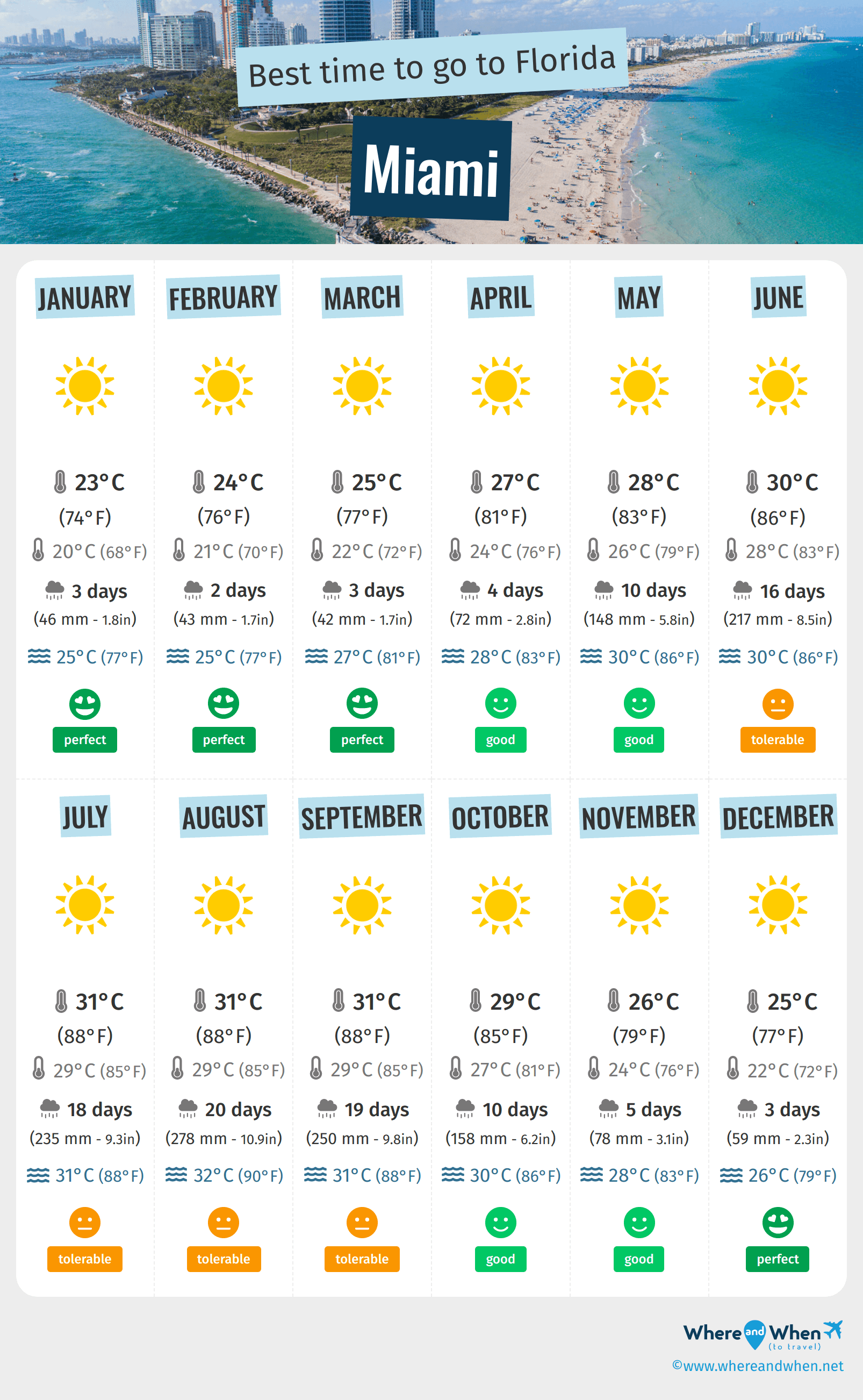
To provide a clear understanding, let’s break down Miami’s temperatures by its approximate seasons:
- Winter (December – February): This is arguably the most pleasant time to visit Miami, offering a delightful respite from the chill that grips much of North America. Daytime highs typically range from 70°F to 78°F (21°C to 26°C), with overnight lows dipping into the 50s and low 60s°F (10°C to 18°C). Humidity is relatively low, and sunshine is abundant. Cold fronts can occasionally bring temperatures down to the high 40s°F (around 8°C) for a day or two, but these instances are rare and short-lived. This period is considered peak season for tourism due to the nearly perfect weather.
- Spring (March – May): As winter transitions into spring, temperatures gradually climb, though the weather remains incredibly inviting. Highs usually hover between 78°F and 85°F (26°C to 29°C), with lows in the mid-60s to low 70s°F (18°C to 23°C). Humidity starts to increase but is still manageable. Rainfall remains relatively low compared to the summer, making spring an excellent time for outdoor activities before the intense summer heat sets in.
- Summer (June – September): This is Miami’s hot and humid season, characterized by consistently high temperatures and frequent, often heavy, afternoon thunderstorms. Daily highs consistently reach the upper 80s to low 90s°F (30°C to 34°C). The nights offer little relief, with lows typically remaining in the mid-70s to low 80s°F (24°C to 27°C). This period also coincides with the Atlantic hurricane season, which officially runs from June 1st to November 30th, though the peak activity is usually from August to October. While direct hits are rare, tropical systems can bring extended periods of rain and wind.
- Fall (October – November): The transition from summer to fall sees a gradual decrease in both temperature and humidity, though the shift is less pronounced than in other parts of the world. Highs generally range from 80°F to 85°F (27°C to 29°C), with lows cooling to the high 60s to low 70s°F (20°C to 23°C). October can still be quite warm and fall within the hurricane season, but by November, conditions typically become much more comfortable, signaling the approach of the delightful winter months.
Humidity and What It Means for Your Visit
Beyond the numbers on the thermometer, humidity plays a significant role in how the temperature “feels” in Miami. Due to its tropical location and proximity to the ocean, Miami experiences high humidity levels for much of the year, especially during the summer.
- High Humidity (Summer): In the summer, relative humidity frequently hovers around 70-80% or even higher. This means that a temperature of 90°F (32°C) can feel like 100°F (38°C) or more due to the heat index. The air feels heavy and sticky, and perspiration doesn’t evaporate as efficiently, making it harder for your body to cool down. During this time, air conditioning becomes your best friend, and planning outdoor activities for early mornings or late evenings is highly advisable.
- Lower Humidity (Winter): During the winter months, humidity levels drop considerably, often into the 50-60% range. This significantly enhances comfort, making the warm temperatures feel much more pleasant and dry. This is why winter is considered the ideal time to fully enjoy Miami’s outdoor attractions, from lounging on South Beach to exploring the Art Deco Historic District on Ocean Drive.
Understanding the interplay of temperature and humidity is crucial for packing smart and planning a comfortable itinerary, regardless of the season.
Planning Your Trip: Best Times to Visit Based on Temperature
Choosing the right time to visit Miami largely depends on your tolerance for heat and humidity, your budget, and the kind of activities you envision for your trip. Each season offers a distinct experience, shaped primarily by the prevailing temperatures and weather patterns.
Winter Escape: Enjoying the Mildest Weather
December to February is unequivocally the most popular time to visit Miami. With average highs in the mid-70s°F (around 24°C) and low humidity, the weather is simply glorious. It’s perfect for basking on the beaches, dining al fresco, exploring neighborhoods like Little Havana and its bustling Calle Ocho, or visiting cultural landmarks such as Vizcaya Museum & Gardens. The gentle breezes make long walks enjoyable, and evenings are cool enough for a light jacket or sweater. This period also coincides with major events like Art Basel and the South Beach Wine & Food Festival, adding to the city’s vibrant atmosphere. However, this popularity comes with a price: expect higher hotel rates and larger crowds. Booking your accommodation and flights well in advance is highly recommended if you plan a winter trip.
Spring Break and Early Summer: Warmth and Vibrant Energy
March to May presents a fantastic shoulder season for travelers. The intense winter crowds begin to thin out, but the weather remains largely spectacular. March, in particular, continues the trend of mild, sunny days, gradually warming into April and May. Highs climb into the low to mid-80s°F (27-29°C), with a noticeable, but not yet oppressive, increase in humidity. This is an ideal time for those who enjoy warm weather without the peak summer intensity. It’s excellent for boat tours on Biscayne Bay, exploring the vibrant murals of the Wynwood Walls, and generally enjoying outdoor attractions before the full force of summer arrives. While hotel prices might be slightly lower than in winter, they still remain elevated due to the pleasant conditions and the lingering allure of spring getaways.
Navigating the Heat: Summer and Early Fall Strategies

June to November encompasses Miami’s warmest and wettest period. Daily temperatures consistently hover in the high 80s and low 90s°F (30-34°C), accompanied by high humidity. Afternoon thunderstorms are a daily occurrence, often providing a dramatic but brief downpour that can temporarily cool things down. This season also falls within the hurricane period. Despite these factors, summer in Miami offers unique advantages.
Travelers who choose this period can often find significant discounts on flights and accommodation, making it a more budget-friendly option. While outdoor activities during midday might be challenging due to the heat, early mornings and late afternoons are perfect for beach visits, swimming, and water sports. The frequent rain showers also lend a lush, green vibrancy to the landscape, particularly visible in places like Everglades National Park (though mosquito repellent becomes an absolute essential). For those who embrace the heat, Miami’s summer offers a lively, less crowded experience, with many indoor attractions, shops, and restaurants providing cool sanctuaries.
Beyond the Thermometer: Activities and Lifestyle in Miami’s Climate
Miami’s climate isn’t just a weather statistic; it’s a defining feature of its lifestyle, influencing everything from fashion to food, and dictating the rhythm of daily life and tourist activities. Understanding this relationship helps travelers truly immerse themselves in the Miami experience.
Outdoor Adventures: Beaches, Parks, and Water Sports
The consistent warmth in Miami makes it a perpetual playground for outdoor enthusiasts.
- Beaches: The city’s iconic beaches, from the lively shores of South Beach to the calmer sands of Key West’s northern sister cities, are central to the Miami experience. During winter and spring, beach days are long and comfortable. In summer, early morning or late afternoon beach visits are popular to avoid the midday sun, followed by a refreshing dip in the warm ocean waters.
- Water Sports: With the Atlantic Ocean and Biscayne Bay at its doorstep, Miami is a hub for water activities year-round. Jet skiing, paddleboarding, kayaking, snorkeling, and diving are all popular. Boat tours, including cruises to the Bahamas or simply around the bay, offer a chance to enjoy the sea breeze.
- Parks and Nature: Miami’s parks and natural areas, such as Everglades National Park (about an hour’s drive west), are best explored during the cooler, drier months of winter and spring. These conditions reduce insect activity and make hiking and airboat tours more enjoyable. Even city parks like Bayfront Park or Crandon Park on Key Biscayne become delightful spots for picnics and leisurely strolls during the cooler season.
Indoor Retreats: Culture, Shopping, and Dining
When the temperatures soar, Miami offers a wealth of air-conditioned sanctuaries.
- Museums and Galleries: The city boasts a thriving arts and culture scene. Institutions like the Pérez Art Museum Miami (PAMM) and the Frost Science Museum provide engaging experiences regardless of the weather outside. The vibrant street art of Wynwood Walls is primarily outdoors but surrounded by galleries and cafes that offer welcome breaks from the sun.
- Shopping: Miami is a shopper’s paradise, from luxury boutiques in the Design District and Bal Harbour Shops to sprawling malls like Aventura Mall. These destinations are perfect for escaping the heat while indulging in retail therapy.
- Dining and Nightlife: Miami’s culinary scene is diverse and dynamic. Restaurants, cafes, and bars across neighborhoods like Brickell, Coconut Grove, and Downtown Miami offer air-conditioned comfort where you can savor everything from Caribbean flavors to gourmet international cuisine. The city’s legendary nightlife truly comes alive indoors during the hotter months, with world-class clubs and lounges keeping the party going into the cool morning hours.
Miami’s Nightlife and Evening Temperatures
One of Miami’s most famous attractions is its electrifying nightlife, and evening temperatures play a significant role in how it’s experienced.
- Winter Evenings: With temperatures often dropping to the high 50s or low 60s°F (10-18°C), winter evenings are refreshingly cool and comfortable. This is ideal for enjoying outdoor patios, rooftop bars, and leisurely strolls along Ocean Drive or the South Beach promenade. A light jacket or stylish shawl is often appreciated.
- Summer Evenings: Evenings in summer are considerably warmer, with temperatures rarely falling below the mid-70s°F (24°C). The air remains humid, making lightweight, breathable clothing essential. Despite the warmth, Miami’s nightlife thrives, with air-conditioned venues offering a cool escape. Many venues feature outdoor elements with fans or misting systems, allowing guests to enjoy the warm tropical nights without excessive discomfort. The warm evenings are also perfect for moonlight walks on the beach or enjoying an outdoor concert by the bay.
Practical Tips for Staying Comfortable in Miami’s Heat
Regardless of the season, a few essential strategies can significantly enhance your comfort and enjoyment in Miami’s warm climate.
Packing Essentials for Every Season
- Winter/Spring: Even in winter, think light layers. Pack breathable fabrics like cotton or linen for daytime. Bring a light jacket, cardigan, or sweater for cooler evenings, especially if you plan to be near the water or in air-conditioned indoor spaces. Swimwear is a must, as is sun protection.
- Summer/Fall: Embrace lightweight, loose-fitting, moisture-wicking clothing. Think shorts, sundresses, t-shirts, and sandals. Due to frequent afternoon showers, a small, collapsible umbrella or a light rain jacket can be useful, although many locals simply duck indoors or embrace the brief downpour. Again, swimwear and robust sun protection are non-negotiable.
Hydration and Sun Protection
This cannot be stressed enough: Miami’s sun is intense, and high temperatures coupled with humidity can quickly lead to dehydration.
- Stay Hydrated: Drink plenty of water throughout the day, even if you don’t feel thirsty. Carry a reusable water bottle and refill it often. Coconut water, readily available in Miami, is also an excellent natural electrolyte.
- Sunscreen: Apply broad-spectrum sunscreen with an SPF of 30 or higher generously and frequently, even on cloudy days. Reapply after swimming or sweating.
- Protective Gear: Wear a wide-brimmed hat, sunglasses, and consider lightweight, long-sleeved UPF (Ultraviolet Protection Factor) clothing, especially during prolonged outdoor exposure. Seek shade whenever possible, particularly during the peak sun hours of 10 AM to 4 PM.

Choosing the Right Accommodation
Your choice of accommodation can greatly impact your comfort.
- Air Conditioning: Ensure your hotel, resort, apartment, or villa has reliable and effective air conditioning. This is paramount, especially during the hotter months, for a restful night’s sleep and a cool retreat from the midday sun.
- Pools: Many Miami hotels and resorts boast impressive pools, which are essential for cooling off. Look for options with shaded pool areas or cabanas.
- Proximity to Activities: Consider accommodation close to the activities you plan to enjoy. If you’re sensitive to heat, staying near indoor attractions, restaurants, or easily accessible public transport can minimize time spent walking in the sun. For instance, hotels in Downtown Miami or Brickell offer proximity to museums and dining, while those in South Beach put you steps from the ocean.
In conclusion, while Miami’s temperatures are consistently warm, understanding the nuances of its tropical climate – particularly the seasonal variations and the impact of humidity – is vital for planning an enjoyable and comfortable trip. Whether you prefer the mild, dry winter or the lively, warm summer, Miami offers a unique blend of vibrant culture, stunning natural beauty, and endless entertainment, all under its perpetually sunny skies. Armed with this knowledge, you are well-prepared to experience the Magic City to its fullest.
LifeOutOfTheBox is a participant in the Amazon Services LLC Associates Program, an affiliate advertising program designed to provide a means for sites to earn advertising fees by advertising and linking to Amazon.com. Amazon, the Amazon logo, AmazonSupply, and the AmazonSupply logo are trademarks of Amazon.com, Inc. or its affiliates. As an Amazon Associate we earn affiliate commissions from qualifying purchases.