
Los Angeles, a sprawling metropolis synonymous with sunshine, Hollywood glamour, and an insatiable thirst for growth, faces a perennial challenge: how to quench its immense water needs. The iconic image of palm trees and swimming pools often belies the arid reality of Southern California. Understanding the intricate network of rivers, aqueducts, reservoirs, and innovative technologies that supply water to this vibrant city is crucial to appreciating its resilience and the ongoing efforts to secure its future. This exploration delves into the primary sources that feed the taps of millions, transforming a desert landscape into a global hub.
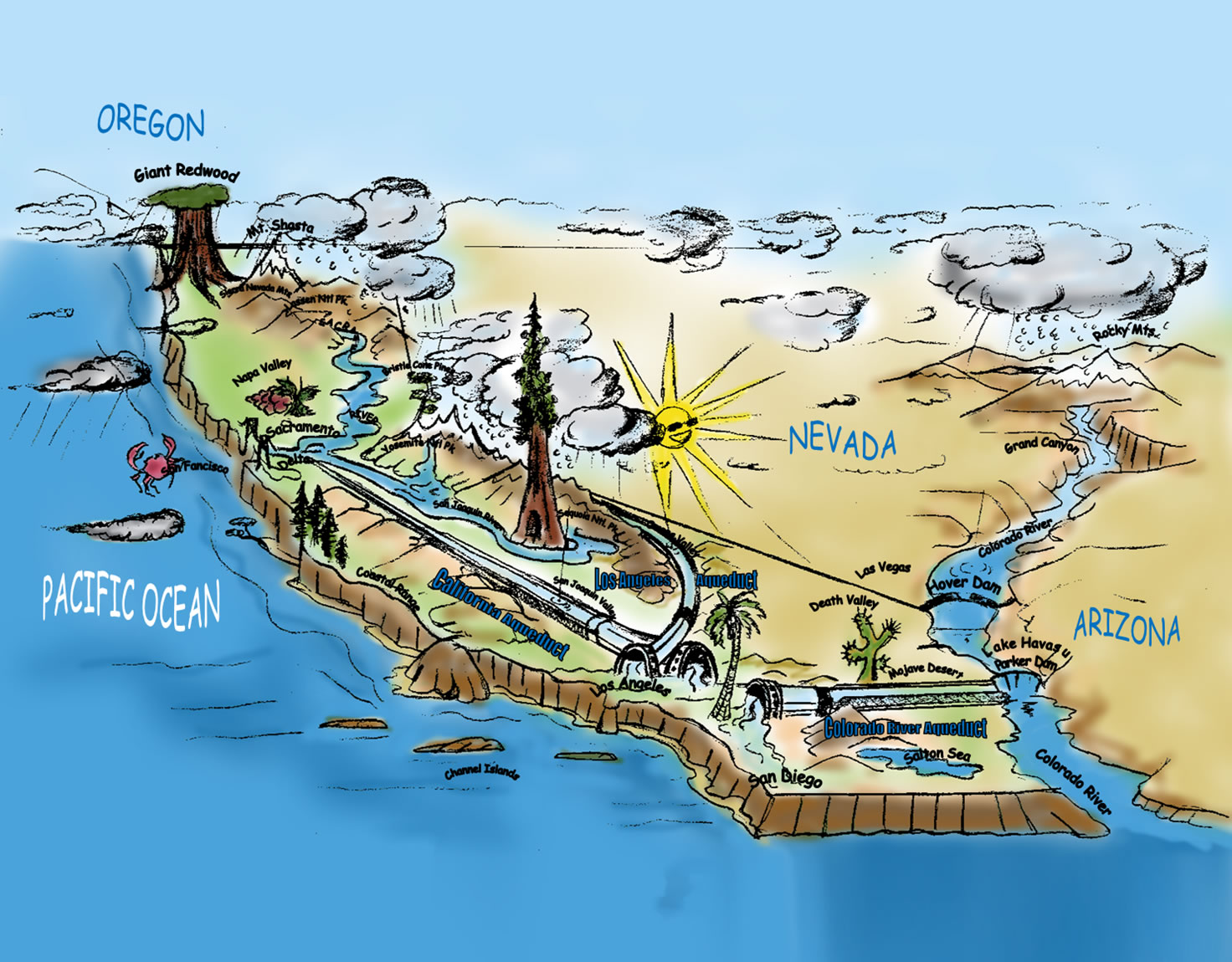
The Colorado River Aqueduct: A Lifeline from the Desert
Perhaps the most monumental engineering feat contributing to Los Angeles’s water supply is the Colorado River Aqueduct. This colossal system, stretching over 242 miles, is a testament to human ingenuity and perseverance, designed to tap into the mighty Colorado River’s flow and transport it across vast desert terrains to the thirsty populations of Southern California.
A Legacy of Arid Aspirations
The vision for the Colorado River Aqueduct was born out of necessity and a burgeoning ambition in the early 20th century. As the population of Los Angeles began its exponential rise, existing local water sources proved increasingly insufficient. The idea of harnessing the power and water of a distant, mighty river emerged as a daring solution. Construction began in 1928, a massive undertaking that involved tens of thousands of workers and spanned over a decade. The project was fraught with challenges, from the harsh desert environment to the sheer scale of the excavation, tunneling, and pumping required.
Pumping Power: The Backbone of Delivery
The aqueduct’s journey from the Colorado River to Los Angeles involves overcoming significant elevation changes. This is achieved through a series of thirteen massive pumping stations strategically located along its route. These stations, powered by hydroelectricity generated from the river itself and other sources, are instrumental in lifting the water to a higher elevation, allowing it to flow by gravity for much of its remaining journey. The energy required to operate these pumps is substantial, highlighting the interconnectedness of water and power infrastructure in the region.
Serving Millions: The Metropolitan Water District
The Colorado River Aqueduct is operated and maintained by the Metropolitan Water District of Southern California (MWD), a wholesale water agency that supplies imported water to 26 member agencies serving over 19 million people across six counties. MWD’s role is critical in managing the complex allocation agreements for Colorado River water, ensuring a reliable supply for its member cities, including the vast network of municipalities that make up the city of Los Angeles.
The Los Angeles Aqueduct: California’s Own Lifeline
Complementing the imported water from the Colorado River is the Los Angeles Aqueduct system, a network that draws water from the Owens Valley in the Sierra Nevada mountains. This system represents a significant portion of the city’s water, showcasing its ability to manage and transport water from its own backyard, albeit a relatively distant one.
A Pioneering Project in the Owens Valley
The construction of the first Los Angeles Aqueduct, completed in 1913 under the leadership of William Mulholland, was a groundbreaking achievement that fundamentally shaped the growth of Los Angeles. This 233-mile aqueduct diverted water from the Owens River and surrounding tributaries, bringing it down to the rapidly expanding city. The project, while instrumental in enabling unprecedented urban development, also had profound environmental and social consequences for the Owens Valley, sparking decades of controversy and legal battles.
Expansion and Enhancement: The Second Los Angeles Aqueduct
Recognizing the limitations of the original aqueduct and anticipating future demand, a second aqueduct was constructed parallel to the first, with construction starting in the 1930s and largely completed by the 1970s. This expansion significantly increased the capacity to transport water from the Owens Valley to Los Angeles, further solidifying its reliance on this critical water source. The two aqueducts together are a monumental symbol of the city’s historical development and its ongoing dependence on distant water resources.
Managing a Complex System: Challenges and Innovations

The operation of the Los Angeles Aqueduct system involves careful management of snowmelt from the Sierra Nevada, the flow of the Owens River, and the storage in reservoirs along the route. Over the years, innovations have been introduced to enhance efficiency and mitigate environmental impacts, including sophisticated water management techniques and efforts to restore parts of the Owens Valley ecosystem.
Local Groundwater and Surface Water: The Intrinsic Resources
While imported water from the Colorado River and the Owens Valley form the backbone of Los Angeles’s water supply, the city also relies on its local groundwater basins and surface water sources. These intrinsic resources, though diminished in comparison to the large-scale aqueduct systems, play a vital role in the overall water portfolio.
The San Fernando Valley Groundwater Basin
One of the most significant local water sources for Los Angeles is the San Fernando Valley groundwater basin. This vast underground reservoir, replenished by rainfall and managed by the Los Angeles Department of Water and Power (LADWP), has historically been a cornerstone of the city’s water supply. However, increased reliance and past pumping practices have led to depletion and contamination issues, necessitating careful management and extensive treatment processes.
Surface Water from Local Mountains
Rainfall and snowmelt in the local mountains surrounding Los Angeles, such as the San Gabriel Mountains, contribute to surface water flows in rivers like the Los Angeles River. While much of the Los Angeles River is now channelized and does not serve as a direct drinking water source, managed recharge operations capture stormwater and allow it to percolate into the groundwater basins. Reservoirs in these mountain ranges also store some surface water for local use.
Challenges of Local Supply: Drought and Contamination
The reliability of local groundwater and surface water is significantly impacted by drought conditions, which reduce replenishment rates. Furthermore, urban runoff and historical industrial activity have led to contamination in some groundwater basins, requiring advanced treatment to make the water potable. These factors underscore the importance of a diversified water supply strategy.
The Future of Water: Conservation, Recycling, and Desalination
Given the finite nature of traditional water sources and the increasing pressures of climate change and population growth, Los Angeles is actively pursuing a multi-pronged strategy to ensure its water security. This includes aggressive conservation efforts, advanced water recycling programs, and the development of desalination technologies.
Conservation: The Cheapest and Cleanest Water
Perhaps the most impactful and cost-effective strategy is water conservation. Los Angeles has implemented numerous programs, from tiered water pricing and rebates for water-efficient appliances to public awareness campaigns promoting mindful water use. Residents and businesses are encouraged to adopt drought-tolerant landscaping, fix leaks, and reduce their overall water footprint. The success of these conservation measures directly reduces the demand on the city’s water infrastructure.
Water Recycling: A Closed-Loop Approach
Water recycling, also known as water reuse, is becoming an increasingly vital component of Los Angeles’s water portfolio. Advanced treated wastewater is purified to meet strict standards and can be used for various purposes, including irrigation, industrial processes, and, increasingly, to replenish groundwater basins. Projects like the Groundwater Replenishment System aim to create a sustainable source of recycled water that can be introduced back into the potable water supply after rigorous purification and natural filtration through the earth.

Desalination: Tapping the Pacific Ocean
The prospect of desalination—removing salt from seawater—offers another potential source of water, particularly for a coastal city like Los Angeles. While historically facing challenges related to high energy costs and environmental concerns, advancements in technology are making desalination more feasible. The Metropolitan Water District has explored desalination projects, recognizing its potential to diversify supply and reduce reliance on imported water, though the long-term environmental and economic implications are still under careful consideration. Together, these innovative approaches are shaping the future of water for Los Angeles, demonstrating a commitment to a sustainable water future in a region that has long defied its arid surroundings.
LifeOutOfTheBox is a participant in the Amazon Services LLC Associates Program, an affiliate advertising program designed to provide a means for sites to earn advertising fees by advertising and linking to Amazon.com. Amazon, the Amazon logo, AmazonSupply, and the AmazonSupply logo are trademarks of Amazon.com, Inc. or its affiliates. As an Amazon Associate we earn affiliate commissions from qualifying purchases.