
Embarking on a journey to the bustling metropolis of New York City is an exhilarating prospect for any traveler. From the iconic skyscrapers of Manhattan to the vibrant neighborhoods of Brooklyn and Queens, the city offers an endless array of experiences. However, amidst the excitement of planning your itinerary, booking accommodations, and envisioning your adventures, there’s a crucial detail that often gets overlooked but can significantly impact your trip: understanding New York’s time zone.
For globe-trotters and even domestic travelers crisscrossing the United States, time zone differences can be more than just an inconvenience; they can lead to missed flights, botched reservations, and the dreaded jet lag that saps energy from your precious travel days. Knowing precisely what time zone New York operates under, and how it shifts throughout the year, is fundamental to a seamless and enjoyable visit. This comprehensive guide will demystify New York’s time zone, delve into its implications for your travel plans, and provide practical tips to ensure your clock is always perfectly synchronized with the rhythm of the city that never sleeps.
Understanding New York’s Time Zone: EST and EDT
At its core, New York adheres to the Eastern Time Zone, a designation shared by much of the eastern seaboard of the United States and Canada. However, this isn’t a static designation; it fluctuates between two primary states depending on the time of year: Eastern Standard Time (EST) and Eastern Daylight Time (EDT).
Eastern Standard Time (EST) and Eastern Daylight Time (EDT)
Most of the year, New York operates on Eastern Standard Time (EST). This is five hours behind Coordinated Universal Time (UTC) or Greenwich Mean Time (GMT), which is often expressed as UTC-5 or GMT-5. This means that when it’s 12:00 PM (noon) UTC, it’s 7:00 AM in New York during the EST period.
However, like many regions across the globe, New York observes Daylight Saving Time. During this period, the clocks spring forward by one hour, shifting the city into Eastern Daylight Time (EDT). This moves the offset to four hours behind Coordinated Universal Time, or UTC-4 (GMT-4). When it’s 12:00 PM (noon) UTC during Daylight Saving Time, it’s 8:00 AM in New York.
This one-hour shift, while seemingly minor, is crucial for travelers to grasp. It directly impacts arrival times, scheduled tours, and even how early or late the sun sets and rises, influencing activities and perceptions of the day.
The Mechanics of Daylight Saving Time in New York
Daylight Saving Time in New York, consistent with most of the United States, typically begins on the second Sunday in March and concludes on the first Sunday in November.
- Spring Forward: On the second Sunday in March, at 2:00 AM EST, clocks are advanced to 3:00 AM EDT. This means an hour of sleep is “lost,” but the evenings become brighter for longer. For travelers arriving around this time, it’s vital to adjust watches and devices immediately to avoid missing early morning engagements or check-in times.
- Fall Back: On the first Sunday in November, at 2:00 AM EDT, clocks are moved back to 1:00 AM EST. This means an hour is “gained,” and mornings become brighter earlier. While often welcomed for the extra hour of sleep, it can still cause confusion for schedules, especially for those departing or booking activities on that specific Sunday.
For example, if you have a Broadway show booked for 7:00 PM on a Saturday in mid-March, and Daylight Saving Time shifts on Sunday morning, your understanding of the showtime will be correct. However, if your flight lands on that Sunday morning and you forget to reset your watch, you might be an hour off, potentially impacting your hotel check-in or any immediate plans. Always confirm the exact date of these shifts if your travel falls close to these periods.
Travel Implications: Why Time Zones Matter for Your New York City Trip
Understanding New York’s time zone goes far beyond a simple numerical offset; it’s a critical component of successful travel planning, directly influencing your physical well-being, scheduling accuracy, and communication effectiveness.
Battling Jet Lag: Tips for a Smooth Transition
Jet lag is the physiological disruption that occurs when your body’s internal clock (circadian rhythm) is out of sync with the time zone of your destination. Traveling to New York from a significantly different time zone, particularly eastward flights, can lead to symptoms like fatigue, insomnia, irritability, and digestive issues.
Here are strategies to minimize jet lag when traveling to New York:
- Pre-Adjust Gradually: A few days before your trip, try to shift your sleep schedule by an hour or two in the direction of New York’s time. If traveling eastward, go to bed and wake up earlier.
- Hydrate and Avoid Alcohol/Caffeine: Drink plenty of water before, during, and after your flight. Dehydration can exacerbate jet lag symptoms. Limit alcohol and caffeine, especially on the plane, as they can disrupt sleep patterns.
- Adjust Immediately Upon Arrival: As soon as you land in New York, set your watch and mind to local time. Try to immerse yourself in the local rhythm, even if you’re tired.
- Seek Sunlight: Exposure to natural light helps reset your circadian rhythm. Spend time outdoors during daylight hours. A stroll through Central Park or visiting the Statue of Liberty can be both enjoyable and therapeutic.
- Strategize Sleep: If you arrive in the morning or afternoon, try to stay awake until early evening to align with a natural sleep cycle. If you absolutely need a nap, keep it short (20-30 minutes) to avoid falling into deep sleep. Conversely, if you arrive late at night, try to get straight to bed.
- Mindful Activity: Engage in light activities like exploring a museum such as The Metropolitan Museum of Art or enjoying a meal. Avoid strenuous exercise immediately after arrival, which can be counterproductive.
By proactively addressing jet lag, you can maximize your energy levels and fully enjoy iconic New York City experiences, from seeing a show on Broadway to visiting the Empire State Building.
Scheduling and Bookings: Keeping Your Itinerary on Track
Perhaps the most tangible impact of time zones for travelers is on their meticulously planned itineraries. New York City is a city of bookings and timed entries. Whether it’s a coveted dinner reservation at a Michelin-starred restaurant, tickets to a world-class performance, or a guided tour of a landmark, precision is key.
- Flight and Train Schedules: Always confirm your departure and arrival times in local time zones. A flight arriving at 9:00 AM New York time might seem early, but if you’re coming from the Pacific Time Zone, it means waking up at 6:00 AM your original time to catch a 6:00 AM Los Angeles flight.
- Hotel Check-in/Check-out: Be aware of your hotel’s local check-in and check-out times. Arriving too early or too late due to time zone confusion can lead to waiting or unexpected fees. Many hotels, from luxury suites in Midtown to boutique apartments in Greenwich Village, are strict with these schedules.
- Dining Reservations: A reservation for 7:00 PM New York time is exactly that. Showing up an hour late because your internal clock is still on Central Time will likely mean losing your table, especially in popular dining spots across Manhattan.
- Attraction Tickets and Tours: Many popular attractions, like the Museum of Modern Art or timed entry to Top of the Rock at Rockefeller Center, operate on strict schedules. Missing your slot due to time confusion can mean forfeiting your tickets or enduring long waits. Always double-check confirmation emails for the local time.
- Business Meetings: For business travelers, being punctual for meetings is paramount. Ensure your devices are correctly synchronized to New York time to avoid embarrassing and unprofessional delays.
Communication Across Time Zones
Staying connected with loved ones or colleagues back home requires an understanding of time differences. Whether it’s a casual video call with family in Europe or a critical conference call with a team on the West Coast, miscalculating the time can lead to missed connections or inconvenient interruptions.
- Family and Friends: Before calling home, quickly reference a world clock app. A “good morning” call for you in New York might be a late-night disturbance for someone in Asia or an early afternoon call for someone in Europe.
- Business Communications: For professionals, scheduling remote meetings or calls necessitates careful time zone conversion. Always state the time zone explicitly (e.g., “3:00 PM EST”) to avoid ambiguity. This is particularly crucial for those balancing work while enjoying a “bleisure” trip in New York.
New York and the Broader U.S. Time Zone Map
While focusing on New York’s time zone is key, it’s helpful to understand its place within the broader U.S. time zone framework, especially if your trip involves multiple domestic destinations or if you’re communicating with people across the country.
Major U.S. Time Zones at a Glance
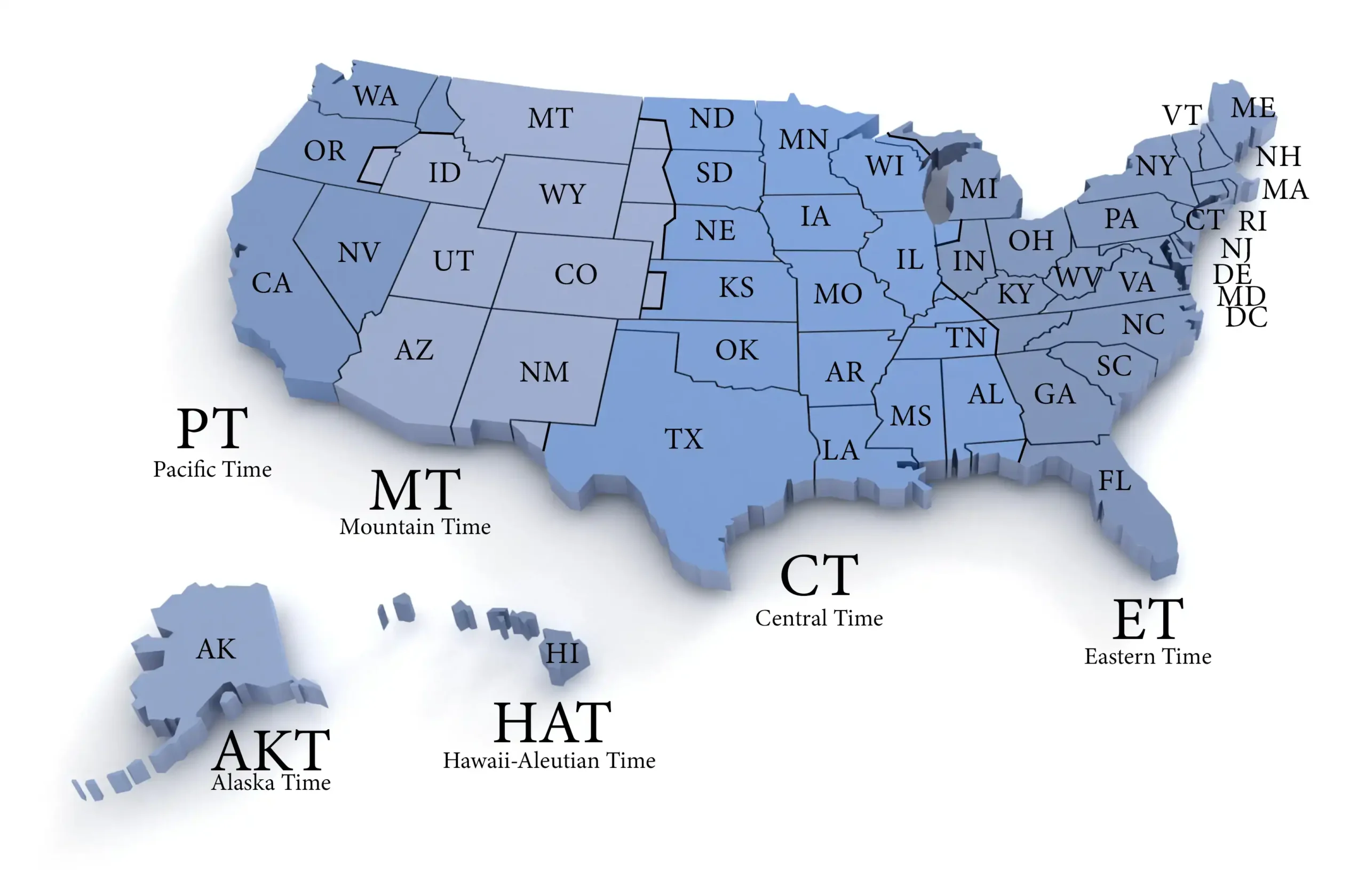
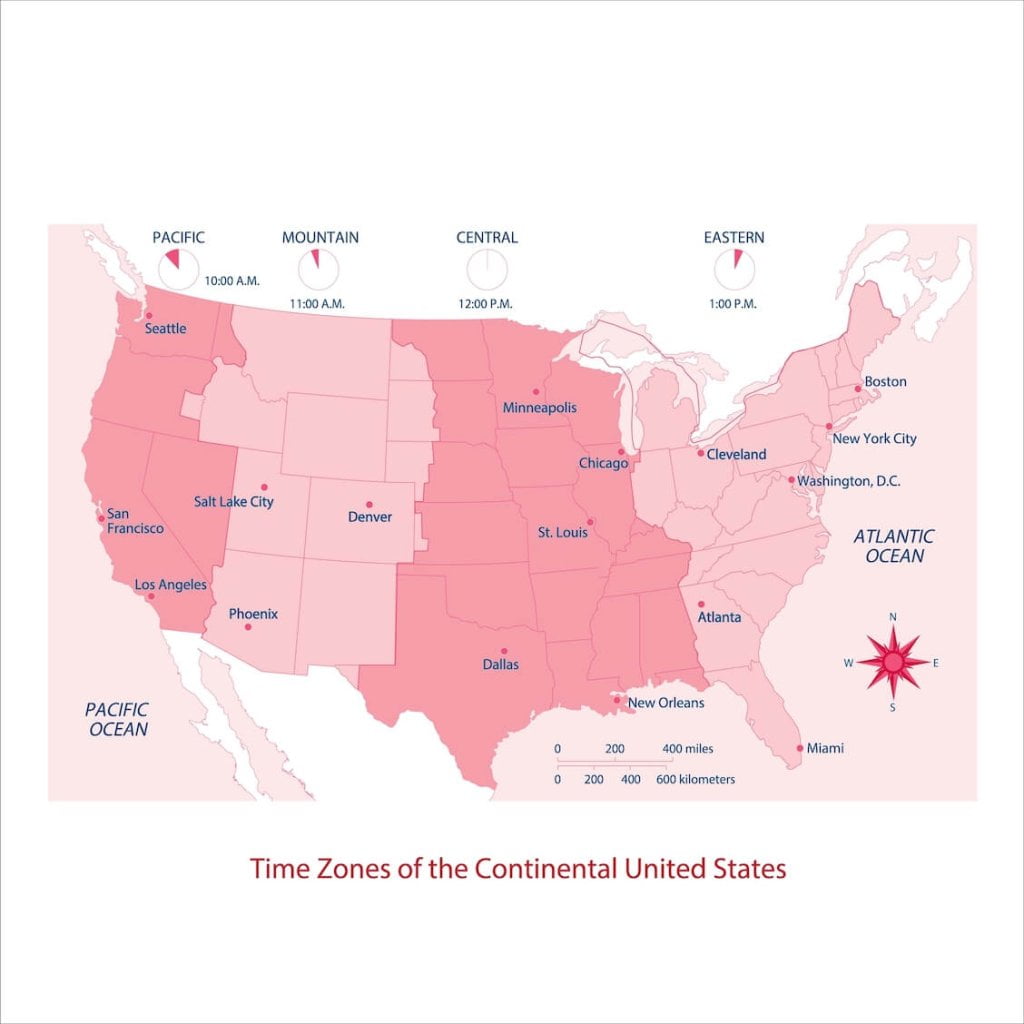
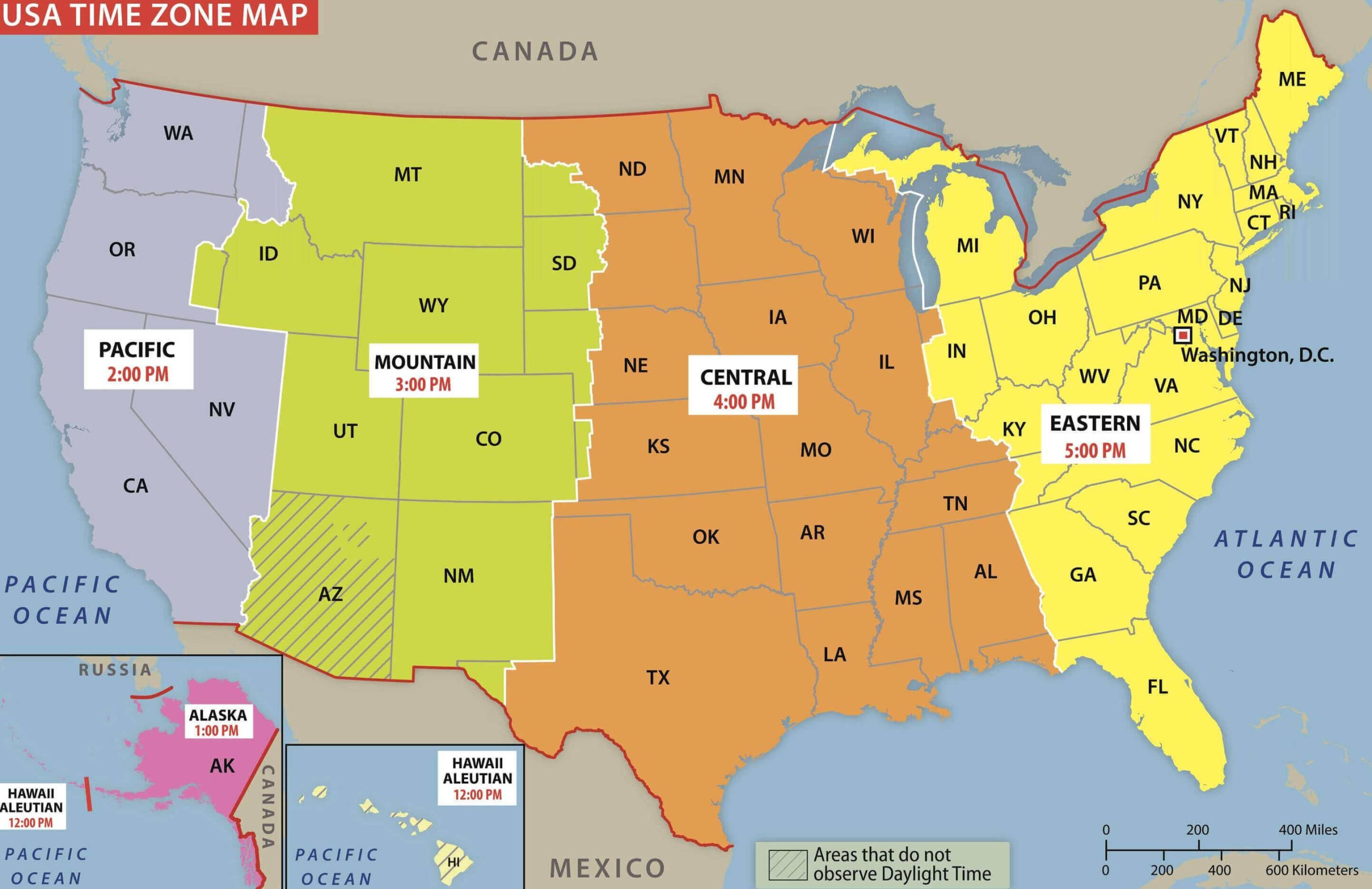
The continental United States is primarily divided into four standard time zones, plus Alaska and Hawaii. All observe Daylight Saving Time with the same start and end dates, except for Arizona (which largely doesn’t observe it) and Hawaii.
Here’s a quick overview relative to New York’s Eastern Time (ET):
- Eastern Time (ET): This is New York’s time zone. Includes states like Florida, Georgia, Maine, Massachusetts, North Carolina, Ohio, Pennsylvania, and Washington D.C..
- Central Time (CT): One hour behind ET. States include Illinois, Texas, Louisiana, Missouri, and parts of others. So, when it’s 12:00 PM in New York, it’s 11:00 AM in Chicago.
- Mountain Time (MT): Two hours behind ET. Covers states like Colorado, Montana, Utah, and most of Arizona (though Arizona typically doesn’t observe DST, meaning it aligns with Pacific Time during DST). So, when it’s 12:00 PM in New York, it’s 10:00 AM in Denver.
- Pacific Time (PT): Three hours behind ET. Includes California, Oregon, Washington, and Nevada. So, when it’s 12:00 PM in New York, it’s 9:00 AM in Los Angeles or San Francisco.
- Alaska Standard Time (AKST): Four hours behind ET.
- Hawaii-Aleutian Standard Time (HAST): Five hours behind ET (does not observe DST, so the difference expands during EDT).
Understanding these differences is crucial for any domestic traveler venturing beyond New York or for coordinating with contacts across the vast American landscape.
Time Zone Tools and Resources for Travelers
In the age of smartphones and omnipresent internet access, keeping track of time zones is simpler than ever. There are numerous tools and resources available to assist travelers:
- Smartphone Auto-Update: Most modern smartphones automatically update to the local time zone when connected to a cellular network or Wi-Fi. Ensure this feature is enabled in your phone’s settings.
- World Clock Apps: Built-in world clock functions on smartphones (e.g., iPhone’s Clock app, Android’s Clock app) allow you to easily add multiple cities and compare times at a glance.
- Online Converters: Websites like WorldTimeBuddy, TimeAndDate.com, and Google’s built-in time zone converter provide quick and accurate conversions. Simply type “time in New York now” into a search engine.
- Travel Planning Apps: Many popular travel apps and airline apps incorporate time zone information into flight details and itineraries.
- Local Clocks: Keep an eye out for clocks in public spaces like Times Square or your hotel lobby as a visual confirmation.
While technology is a great aid, always have a backup plan or manually double-check crucial times. For instance, confirm the time directly with a hotel or tour operator if you’re unsure, especially for bookings made weeks or months in advance that might span a Daylight Saving Time shift.
In conclusion, knowing New York’s time zone – Eastern Standard Time (UTC-5) or Eastern Daylight Time (UTC-4) – is not merely a piece of trivia. It’s a foundational element of effective travel planning that impacts everything from managing jet lag and securing reservations to staying connected with your world. By understanding these dynamics and utilizing available tools, you can ensure your visit to New York City is as smooth, enjoyable, and punctual as the city’s famed subway system. So, set your watches, embrace the rhythm of the East Coast, and prepare to explore the wonders of one of the world’s most captivating destinations.
LifeOutOfTheBox is a participant in the Amazon Services LLC Associates Program, an affiliate advertising program designed to provide a means for sites to earn advertising fees by advertising and linking to Amazon.com. Amazon, the Amazon logo, AmazonSupply, and the AmazonSupply logo are trademarks of Amazon.com, Inc. or its affiliates. As an Amazon Associate we earn affiliate commissions from qualifying purchases.