
New York City, a global tapestry woven from countless stories, has always been a beacon of hope and a crucible of human experience. Within its vibrant history lies the haunting echo of a place known as Five Points, a neighborhood that, for much of the 19th century, was synonymous with poverty, crime, and an extraordinary melting pot of cultures. Today, the physical boundaries of Five Points have largely faded from the contemporary map of Manhattan, yet its legacy continues to fascinate historians, urban explorers, and visitors keen to delve beneath the polished surface of modern New York City. Understanding where Five Points was is not just a geographical exercise; it’s an invitation to explore a pivotal chapter in American urban development, immigration, and the enduring human spirit. For those planning travel to the metropolis, discovering the historical landmarks of the past can profoundly enrich the modern tourism experience, offering a deeper appreciation of the city’s complex evolution.
The Geographic Enigma: Pinpointing Five Points
To truly grasp the essence of Five Points, one must first understand its peculiar genesis and subsequent physical transformation. Unlike easily definable districts, Five Points didn’t emerge from a master plan but rather from the haphazard urban sprawl around a unique natural feature that would prove to be its ultimate undoing.
From Collect Pond to Confluence
The story of Five Points begins not with streets and buildings, but with water. In the late 18th century, a pristine freshwater lake known as the Collect Pond dominated the landscape of what is now Lower Manhattan. This beautiful natural resource, once used for fishing and ice skating, quickly became a polluted industrial cesspool as the burgeoning city expanded. Tannery runoff, slaughterhouse waste, and human refuse turned the pond into a noxious blight, a public health hazard that ultimately forced city officials to undertake an ambitious, if flawed, urban renewal project: filling it in.
The ambitious task of filling the approximately 48-acre Collect Pond with earth began in 1807 and was completed by 1813. The land, however, proved unstable. The soft, marshy ground, built on decaying organic matter, made proper drainage impossible and led to frequent flooding and structural instability for any buildings erected upon it. It was upon this problematic foundation that Five Points emerged.
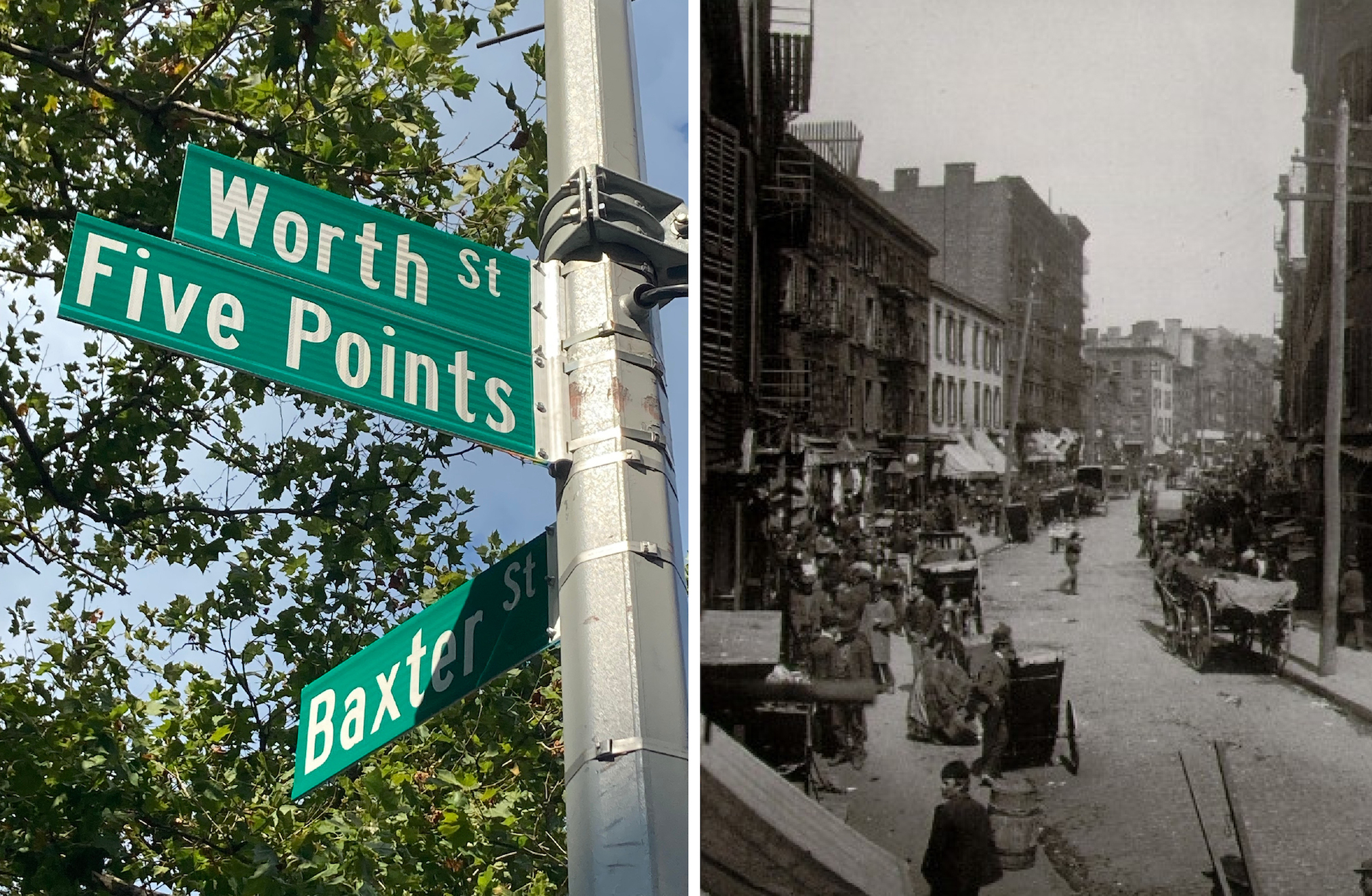
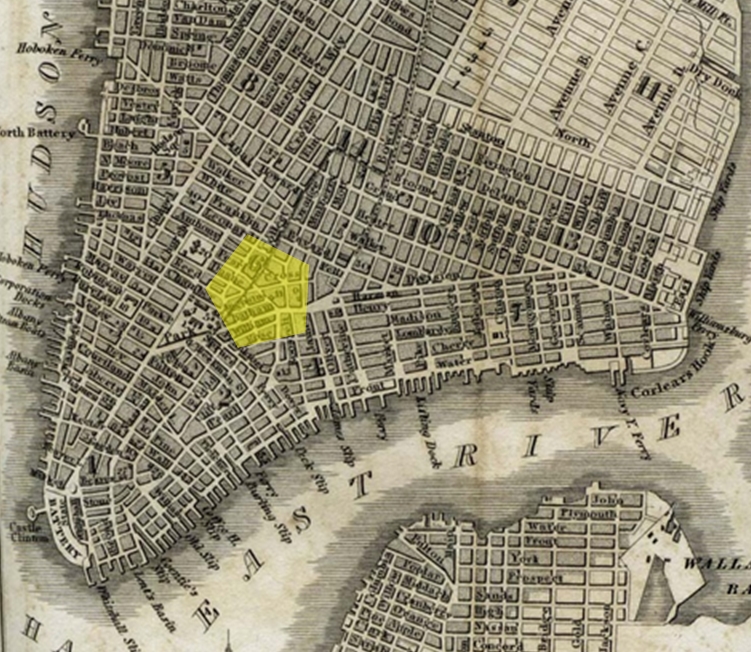
The name “Five Points” itself referred to the intricate intersection formed by Orange Street (now Baxter Street), Cross Street (now Park Row), and Anthony Street (now Worth Street), where two additional unnamed alleys converged, creating a complex, star-like junction. This was the undisputed heart of the district, and for decades, it was the focal point of its notoriety. The area was roughly bounded by what are now Centre Street to the east, Broadway to the west, Canal Street to the north, and Park Row to the south. Essentially, it occupied the land between today’s Chinatown and the Civic Center.
The Modern Landscape: What Stands There Today?
Today, a visitor walking through this part of Manhattan would be hard-pressed to identify any remnant of the infamous Five Points. The streets have been reconfigured, renamed, and entirely built over. The area is now largely dominated by the towering edifices of the city’s legal and governmental institutions.
If you stand at the intersection of Baxter Street and Worth Street, you are essentially standing in the heart of what was once Five Points. Surrounding you are impressive structures like the New York County Courthouse (also known as the Manhattan Criminal Courts Building), the Jacob K. Javits Federal Building, and the Manhattan Municipal Building. A short walk will take you to City Hall Park, which borders the historic Tweed Courthouse, another significant landmark.
To the immediate north and east, the vibrant streets of Chinatown have expanded, a dynamic testament to New York City’s continuous evolution as an immigrant gateway. To the west, the financial powerhouses of Wall Street and the historic sites like Federal Hall are just a stone’s throw away, a stark contrast to the former squalor of Five Points.
Perhaps the most poignant and direct connection to the past of Five Points for today’s travelers lies slightly to the west of its core, at the African Burial Ground National Monument. This significant site, discovered during construction in the early 1990s, reveals the burial grounds of enslaved and free Africans who lived and worked in 17th and 18th-century New York. While not directly within the infamous 19th-century Five Points area, it underscores the deep historical roots of marginalized communities in this very part of Manhattan and serves as a powerful memorial for reflection during your visit.
A Crucible of Cultures: Life and Hardship in Five Points
The geographical challenges of Five Points — its marshy, unstable ground and poor sanitation — were compounded by societal issues, creating an environment ripe for both immense suffering and an extraordinary, albeit harsh, brand of resilience.
Immigration, Poverty, and Disease

The 19th century witnessed unprecedented waves of immigration to the United States, and New York City was the primary port of entry. Countless newcomers, particularly the impoverished Irish escaping famine and political unrest, arrived with little more than the clothes on their backs. They congregated in districts like Five Points because the low-lying, poorly drained land meant cheap rent and available, albeit squalid, tenement housing. These overcrowded buildings, often lacking basic plumbing, ventilation, or light, became breeding grounds for disease. Cholera, tuberculosis, and typhoid ravaged the population, leading to some of the highest mortality rates in the city.
Despite the hardships, Five Points was a vibrant, if chaotic, hub of activity. African Americans, many of whom had settled in the area before the Irish influx, lived alongside the new arrivals. Later, Jewish and Italian immigrants also made their homes there. This unique demographic mix fostered a complex cultural exchange. Dances, music, and food traditions blended and evolved, creating a distinct “American” identity that would later influence the broader culture of New York and beyond. Visitors like famed author Charles Dickens, who toured Five Points in 1842, described it as a place of unimaginable destitution and despair, yet even he noted the palpable energy and resilience of its inhabitants.
The Birthplace of American Gangsterism
The dire conditions of Five Points also made it fertile ground for crime and violence. The lack of legitimate economic opportunities, coupled with systemic neglect from city authorities, allowed criminal enterprises to flourish. Various street gangs, often organized along ethnic lines, vied for control of the district’s illicit activities. Names like the Dead Rabbits, the Whyos, and the Bowery Boys became infamous, engaging in turf wars that frequently erupted into brutal street brawls.
The most enduring image of Five Points in popular culture, particularly for modern audiences, comes from Martin Scorsese’s 2002 epic film, Gangs of New York. While dramatized for cinematic effect, the movie, starring Daniel Day-Lewis as the notorious Bill the Butcher Poole, vividly portrayed the brutal realities of life and death in this notorious district. It brought to life the bitter ethnic rivalries, political corruption, and sheer struggle for survival that characterized Five Points during its peak. The film, in many ways, solidified the district’s place in the collective memory as a symbol of urban decay and frontier justice.
Despite its dark reputation, it’s crucial to remember that the vast majority of Five Points residents were not criminals, but hardworking individuals and families striving for a better life. They worked in the city’s burgeoning industries, built its infrastructure, and contributed to the social fabric of New York City under incredibly challenging circumstances. Their stories of resilience are as much a part of the Five Points legacy as its infamy.
The Legacy Underfoot: Experiencing Five Points Today
The physical presence of Five Points may be gone, but its historical significance lingers. For modern travelers interested in a deeper understanding of New York City’s past, exploring the former site of Five Points offers a profound, if subtle, historical journey. It’s a journey that connects the struggles of past immigrants to the vibrant, multicultural identity of the city today.
Walking Through History: Modern Landmarks and Memorials
While there are no original buildings from the Five Points era still standing, several key landmarks in the immediate vicinity offer context and a tangible link to its story.
- The African Burial Ground National Monument: As mentioned, this site on Broadway near Duane Street is an essential stop. It offers powerful insights into the lives of early African residents, many of whom would have lived near or worked in the developing areas surrounding the future Five Points. The visitor center provides detailed exhibits and a serene outdoor memorial for reflection.
- Columbus Park: Situated just to the east of the former Five Points intersection, Columbus Park was once part of the notorious “Bloody Angle” – a particularly dangerous stretch of Mulberry Street known for its violence. Today, it’s a lively public space in Chinatown, often filled with people playing cards, practicing tai chi, or simply enjoying the open air. It’s a stark reminder of urban transformation and a testament to the community’s enduring spirit.
- Museum of Chinese in America (MOCA): Located a bit further north but still within walking distance of the broader historical area, MOCA offers fascinating insights into the experiences of Chinese immigrants in New York City. While focused on a later wave of immigration, its themes of cultural adaptation, community building, and overcoming adversity resonate deeply with the immigrant narratives of Five Points.
- The Civic Center: Walking through the grand governmental buildings of the Civic Center – the courthouses, administrative offices, and City Hall – one can appreciate the scale of urban renewal that swept away the old Five Points. These structures symbolize the city’s aspirations for order and progress, a stark contrast to the chaos they replaced.
Engaging with these sites, perhaps even with a historical walking guide or an audio tour app, can bring the forgotten streets of Five Points to life, allowing visitors to visualize the teeming tenements and bustling, dangerous alleys that once stood where modern administrative buildings now rise. It’s an immersive historical experience that offers a unique perspective on New York’s intricate past.
Planning Your Visit: Travel and Accommodation Insights
For travelers drawn to the historical depths of New York City, understanding the story of Five Points adds another layer to their travel itinerary. This district, though gone, is a powerful backdrop to understanding Lower Manhattan’s evolution, its architecture, and its incredible blend of local culture.
When planning your visit, consider lodging in Lower Manhattan, Chinatown, or even the nearby Financial District. These areas offer a wide range of accommodation options, from luxury hotels and boutique hotels with stunning views of the Statue of Liberty and Ellis Island, to more budget travel friendly apartments and suites suitable for family trips or longer stays. Many resorts and suites in this part of Manhattan boast excellent amenities and are within easy reach of major subway lines, allowing convenient access to all of New York City’s attractions, from Broadway shows to the bustling energy of Times Square.
For those interested in the full scope of New York City tourism, exploring the former Five Points area can be part of a broader itinerary. You could combine a historical exploration of the Civic Center and the African Burial Ground with sampling the incredible food scene in Chinatown or Little Italy, or even walk across the iconic Brooklyn Bridge for breathtaking skyline views. There are numerous guides and tips available for maximizing your New York City experience, whether you’re embarking on luxury travel or seeking budget travel options. Checking reviews and comparison sites for accommodation booking can ensure you find the perfect stay, whether for a quick business stay or an extended long-term stay.
In conclusion, while the physical entity of Five Points has been systematically erased and built over, its profound impact on New York City and American history remains. It serves as a powerful reminder of the challenges and triumphs of immigrant populations, the complex forces of urban development, and the enduring human spirit that shapes a city. For those who seek more than just superficial attractions, a journey to where Five Points once stood offers an unparalleled historical experience and a deeper connection to the living, breathing history of one of the world’s greatest destinations.
LifeOutOfTheBox is a participant in the Amazon Services LLC Associates Program, an affiliate advertising program designed to provide a means for sites to earn advertising fees by advertising and linking to Amazon.com. Amazon, the Amazon logo, AmazonSupply, and the AmazonSupply logo are trademarks of Amazon.com, Inc. or its affiliates. As an Amazon Associate we earn affiliate commissions from qualifying purchases.