
Life, in its boundless and often unpredictable journey, frequently takes us to extraordinary places – whether it’s exploring the vibrant culture of Austin, indulging in the culinary delights of Houston, or basking in the coastal charm of Galveston. For those who embrace a lifestyle of travel, international living, or simply seek to navigate life’s complexities with preparedness, understanding key administrative processes is paramount. While it’s a topic many would rather not contemplate, the need to obtain a death certificate is a critical aspect of life’s administrative landscape, especially for individuals with ties to the Lone Star State.
For global citizens, expatriates, and frequent travelers, the intricacies of obtaining a death certificate in Texas can seem daunting, particularly when dealing with the emotional weight of loss. Yet, this document is far more than just a record of passing; it is a foundational legal instrument essential for myriad practical applications, from settling estates that span continents to processing international insurance claims. This comprehensive guide aims to demystify the process, offering clarity and actionable steps for securing a death certificate in Texas, ensuring peace of mind for those living “out of the box.”
The Global Significance of a Texas Death Certificate: More Than Just a Local Record
In a world increasingly connected, where families often live across borders and financial assets are diversified globally, a death certificate issued in Texas carries profound international implications. For the individual whose lifestyle involves frequent travel, long-term stays abroad, or maintaining assets in multiple countries, understanding the critical role of this document is not merely about bureaucracy; it’s about safeguarding legacies, ensuring legal compliance, and facilitating necessary arrangements across international jurisdictions.
Navigating Life’s Unforeseen Journeys: Why This Document Matters for Travelers and Expats
Imagine a scenario where a beloved family member, who divided their time between a charming villa in Tuscany and a historic home in San Antonio, passes away in Texas. Or consider a business traveler on assignment in Dallas when an unexpected tragedy occurs. In these instances, the Texas death certificate becomes the linchpin for a multitude of subsequent actions that often have international ramifications.
-
International Estate Planning & Succession: For individuals with global assets – bank accounts in Switzerland, properties in Mexico, or investments managed by firms in London – the death certificate is the primary legal proof required to initiate probate, transfer ownership, and distribute assets according to a will or local succession laws. Without it, international financial institutions and legal systems cannot proceed, potentially leading to lengthy and costly delays that disrupt the entire estate settlement process.
-
Travel and Life Insurance Claims: If a death occurs while traveling or if the deceased held various life insurance policies, the certified death certificate is indispensable for filing claims. Travel insurance, for example, often covers medical evacuation, repatriation of remains, or family travel for bereavement, all of which require official proof of death. Similarly, life insurance companies, whether based in the United States or abroad, will require this document to release funds to beneficiaries. For those who meticulously plan their adventures, including robust travel insurance, knowing how to facilitate this step is a critical part of the preparedness strategy.
-
Repatriation and International Logistics: In the deeply distressing event of a loved one passing away far from their home country or desired final resting place, the death certificate is a foundational document for organizing the repatriation of remains. This complex process involves working with consulates, international transport services, and local authorities, all of whom will require a certified copy to authorize and facilitate the movement across borders. Understanding this administrative necessity can, unfortunately, ease some of the logistical burdens during a profoundly difficult time.
-
Proof for Foreign Governments and Institutions: Beyond financial and estate matters, a Texas death certificate might be required by foreign governments for purposes such as canceling passports, notifying pension funds, or adjusting immigration statuses. For expatriates or dual nationals, this document is a vital piece of personal identification that crosses international boundaries, ensuring compliance and recognition in various administrative contexts worldwide.
Who Can Request a Certified Copy? Understanding Eligibility in Texas
The sensitive nature of a death certificate necessitates strict rules regarding who can access it. In Texas, access to certified copies of death certificates is primarily restricted to individuals with a “direct lineal interest.” This regulation is in place to protect the privacy of the deceased and their families.
-
Direct Lineal Interest Explained: This typically refers to immediate family members. Eligible individuals include the deceased’s:
- Spouse
- Parent
- Child
- Sibling
- Grandparent
- Grandchild
- Legal guardian
- Legal representative (an attorney representing one of the above, or acting on behalf of the deceased’s estate)
It’s important to note that aunts, uncles, cousins, and other more distant relatives generally do not qualify for a certified copy unless they can demonstrate a direct legal interest or are acting as a legal representative.
-
Required Identification and Proof of Relationship: When applying for a certified copy, you will need to provide valid identification, typically a government-issued photo ID such as a driver’s license, passport, or military ID. Furthermore, you must provide documentation proving your direct lineal relationship to the deceased. This could include birth certificates, marriage licenses, or court orders. If you are a legal representative, documentation like a power of attorney, letters testamentary, or other court orders will be required.
Understanding these eligibility requirements from the outset can prevent delays and streamline the application process, particularly for those who may be coordinating from a different state or country.
A Step-by-Step Guide: Obtaining Your Texas Death Certificate
Navigating the bureaucratic landscape to obtain a death certificate doesn’t have to be an overwhelming ordeal, especially when equipped with clear instructions. For residents, travelers, or those managing affairs remotely, understanding each phase of the process is key to a smooth and efficient acquisition.
The Initial Filing Process: From Funeral Home to State Records
The journey of a death certificate begins immediately after a death occurs. It’s a multi-faceted process that involves medical professionals, funeral directors, and vital statistics registrars.
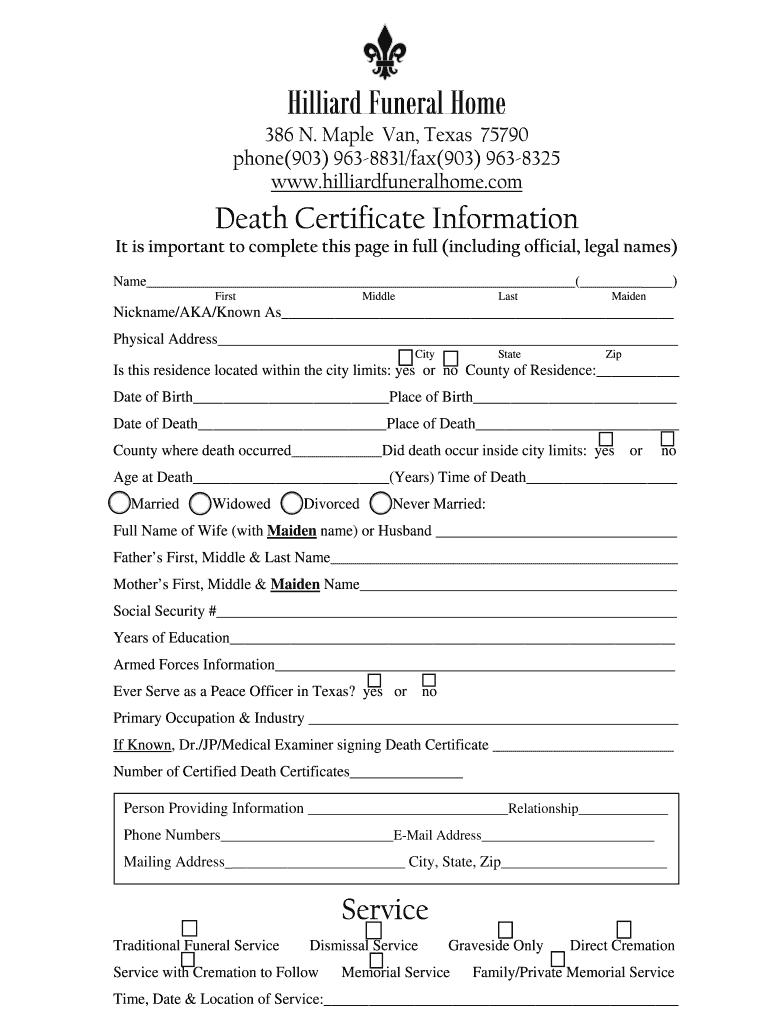
- Role of Funeral Directors: In Texas, the funeral director or an authorized representative of the institution handling the disposition of the remains (e.g., a crematorium) typically initiates the death certificate filing process. They act as an intermediary, gathering necessary information from the family and liaising with medical certifiers and the local registrar. This is often the most critical first step for families, as the funeral home takes on the burden of accurately compiling and submitting the initial data.
-
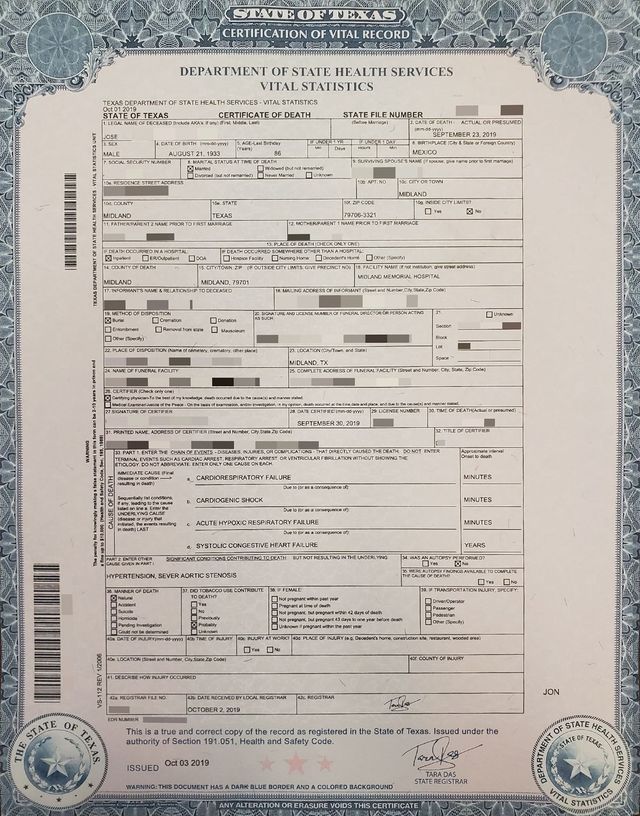
Information Required from Informants: To complete the death certificate, the funeral director will require specific personal and demographic information about the deceased, often provided by a family member or close friend (the “informant”). This includes the deceased’s full legal name, date and place of birth, social security number, marital status, education level, usual occupation, parents’ names (including mother’s maiden name), and the spouse’s name (if applicable). Providing accurate and complete information at this stage is crucial, as errors can lead to significant delays and complications later on.
-
Medical Certification and Cause of Death: A physician, medical examiner, or justice of the peace is responsible for certifying the cause and manner of death. This medical information is a critical component of the death certificate. The medical certifier must sign the document, typically within five days of the death. Once the medical portion is complete, the funeral director files the death certificate with the local registrar, who then forwards it to the Texas Department of State Health Services (DSHS) Vital Statistics Section.
Requesting a Certified Copy: Methods for In-State and Out-of-State Applicants
Once the death certificate has been officially filed, eligible individuals can request certified copies. Texas offers several avenues for this, catering to different needs and geographical locations, making it accessible even for those managing affairs from Europe or Asia.
-
Online Portals: For convenience, especially for those living outside Texas, online services are a popular choice. The Texas DSHS Vital Statistics website provides information on how to order online through their authorized third-party vendor (currently,
Texas.gov/VitalRecords). These services typically offer expedited processing and various shipping options, which can be invaluable when time is of the essence for international affairs. Be aware that third-party vendors will charge additional service fees. -
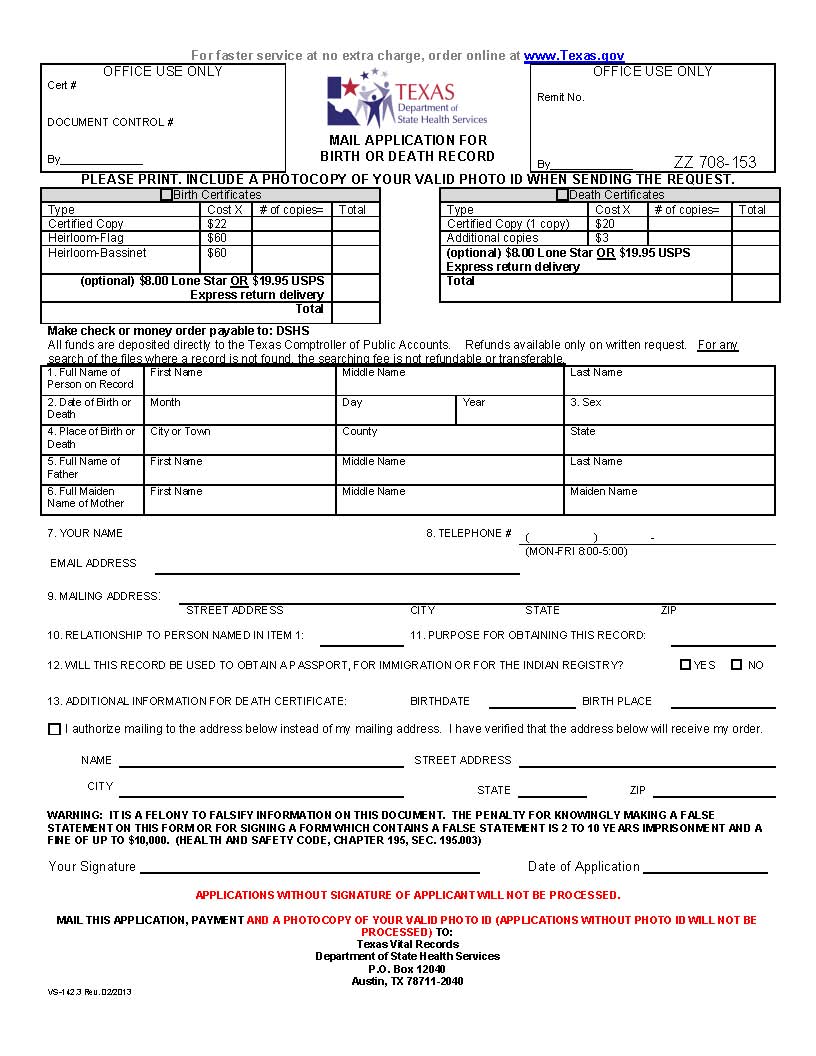
Mail Applications: If you prefer a traditional method or are unable to use online services, you can request a death certificate by mail. You’ll need to download the application form from the DSHS Vital Statistics website, complete it thoroughly, have your signature notarized, and include a photocopy of your valid identification, proof of relationship, and a check or money order for the fees. Mail it to the Texas Department of State Health Services in Austin. This method is suitable for those not requiring immediate access but offers a reliable paper trail.
-
In-Person Requests: For the quickest service, especially if you are in Texas, you can visit a local Vital Records Office. This could be the County Clerk’s office in the county where the death occurred, or a local registrar’s office in a major city like Houston, Dallas, or San Antonio. The DSHS Vital Statistics Section also maintains walk-in service centers. Bring your valid photo ID, proof of relationship, and payment. Many locations can issue a certified copy on the spot, making it the most efficient option for urgent needs.
-
Essential Documents for the Requester: Regardless of the method, always be prepared to provide:
- A completed application form.
- Valid government-issued photo identification.
- Documentation proving your direct lineal relationship to the deceased (e.g., your birth certificate showing parentage, a marriage license, or court orders).
- If you are a legal representative, appropriate legal documentation (e.g., Letters Testamentary, Power of Attorney).
-
Fees and Payment Options: The cost for a certified copy of a death certificate in Texas is typically around $21 for the first copy, with additional copies purchased at the same time usually costing less (e.g., $4 each). Payment options vary by application method but generally include credit/debit cards for online and in-person requests, and checks or money orders for mail-in applications. Always verify current fees on the DSHS website or with the specific office you plan to visit.
Special Considerations for a Global Lifestyle
For individuals leading a global lifestyle, the utility of a Texas death certificate often extends beyond the borders of the United States. Understanding specific procedures for international use and preparing for potential challenges can significantly reduce stress during an already difficult period.
Beyond the Border: Apostilles and Authentications for International Use
When a Texas death certificate needs to be recognized as legitimate in a foreign country, an additional layer of certification is often required. This is particularly relevant for those managing international estates, filing claims with overseas insurance providers, or dealing with foreign governmental agencies.
-
What is an Apostille? An Apostille is a certification issued by a government that authenticates the signature and seal on a public document (like a death certificate) so that it can be recognized as valid in foreign countries that are parties to the 1961 Hague Convention Abolishing the Requirement of Legalisation for Foreign Public Documents. It simplifies the process of document legalization by replacing the traditional, often lengthy, “chain authentication” process. For example, if you need to settle an estate in France, a country that is part of the Hague Convention, a Texas death certificate with an Apostille will be readily accepted.
-
When is it Needed? An Apostille is necessary when the country where you intend to use the death certificate is a signatory to the Hague Convention. If the country is not a signatory, a more traditional “authentication” process is required, which typically involves further certification by the U.S. Department of State and the embassy or consulate of the destination country. It is crucial to determine the specific requirements of the country where the document will be used well in advance. For globetrotters with international ties, this distinction can save considerable time and effort.
-
How to Obtain One in Texas (Secretary of State): In Texas, Apostilles and Authentications are issued by the Office of the Texas Secretary of State.
- First, you must obtain a certified copy of the death certificate from DSHS Vital Statistics or a local registrar.
- Then, you submit this certified copy, along with a completed
Form 2101 (Request for Authentication of Document), and the required fee, to the Texas Secretary of State’s Authentications Unit. - Applications can be submitted by mail or in person at their office in Austin. Processing times can vary, so it’s advisable to check the current schedule on their website. For those overseeing estates from a distance, coordinating these steps can be crucial for smooth international transactions.
Addressing Challenges and Ensuring Accuracy
Even with a clear guide, administrative processes can sometimes present unexpected hurdles. Being aware of common issues and knowing how to address them can alleviate stress and ensure a smoother path.
-
Common Reasons for Delays: Delays in obtaining a death certificate can arise from several factors:
- Incomplete Information: If the initial information provided to the funeral director is inaccurate or missing, it can slow down the filing process.
- Medical Certifier Delays: Sometimes, the physician or medical examiner may take longer than the mandated five days to certify the cause of death, especially in complex cases requiring further investigation.
- Application Errors: Mistakes on your application form for a certified copy, such as incorrect dates, names, or insufficient proof of relationship/ID, will lead to its rejection and require resubmission.
- High Volume: During peak times or public health crises, vital records offices may experience higher volumes of requests, leading to extended processing times for mail or online orders.
-
Correcting Errors on a Death Certificate: Discovering an error on a certified death certificate can be distressing, but it is rectifiable. To correct a factual error on a filed death certificate, you typically need to submit an
Application for Correction (Form VS-170)to the Texas DSHS Vital Statistics Section. This application must be accompanied by supporting documentation that proves the correct information (e.g., a birth certificate, marriage license, or court order) and usually requires an affidavit from the informant or funeral director. Be prepared for this process to take some time, as it involves verification and amendment of official state records. -
Seeking Professional Assistance: For complex situations, such as international inheritance disputes, significant estate holdings in multiple countries, or persistent difficulties in obtaining the document, it is highly advisable to seek professional assistance. An attorney specializing in probate, estate law, or international law can provide invaluable guidance, navigate the legal intricacies, and even act as your legal representative to acquire the death certificate on your behalf. Consular services from your home country may also offer assistance if the deceased was a foreign national.
Life out of the box means embracing diverse experiences, but also being prepared for all of life’s events, including those that are difficult. While discussing death certificates is a solemn affair, understanding the procedural steps and international implications empowers individuals to manage sensitive situations with greater confidence and efficiency. Whether you are planning your next grand adventure, managing an international family, or simply preparing for life’s inevitable administrative tasks, being informed about how to obtain a death certificate in Texas is a crucial step towards ensuring peace of mind for yourself and your loved ones, no matter where life’s journey takes you.
LifeOutOfTheBox is a participant in the Amazon Services LLC Associates Program, an affiliate advertising program designed to provide a means for sites to earn advertising fees by advertising and linking to Amazon.com. Amazon, the Amazon logo, AmazonSupply, and the AmazonSupply logo are trademarks of Amazon.com, Inc. or its affiliates. As an Amazon Associate we earn affiliate commissions from qualifying purchases.